Table of Contents >> Show >> Hide
- What Is the Nanz Door Lever 2096?
- Key Dimensions You Should Know Before You Fall in Love
- Where the 2096 Fits: Mortise Locks, Multi-Point Doors, and Tilt & Turn Windows
- Choosing the Right Function: Passage, Privacy, Entry, or Dummy
- Accessibility and Everyday Ergonomics
- Finishes: Why Nanz Hardware Ages Like a Good Leather Jacket
- Spec’ing the Nanz 2096 Like a Pro
- Installation Reality Check: DIY or Call a Pro?
- Who Should Choose the Nanz Door Lever 2096?
- FAQ: Fast Answers for Real-World Decisions
- Conclusion: A Modern Lever That Nails the “Quiet Luxury” Brief
- Real-World Experiences With the Nanz Door Lever 2096 (What People Notice After Living With It)
Some people collect art. Others collect sneakers. And then there are the quietly obsessed among us who notice door hardware
like it’s jewelry for your house (because… it kind of is). The Nanz Door Lever 2096 is one of those pieces that
looks simple at first glancealmost shyuntil you actually use it. Then you realize it’s doing that classic modern-design trick:
fewer lines, more impact.
In this guide, we’ll break down what the No. 2096 is, what makes it feel “expensive” in all the right ways, how to specify it
correctly, and where it shines (plus where it might be overkillyes, that is possible). We’ll also talk finishes, lock compatibility,
installation realities, and the little day-to-day details that matter once you’re living with it.
What Is the Nanz Door Lever 2096?
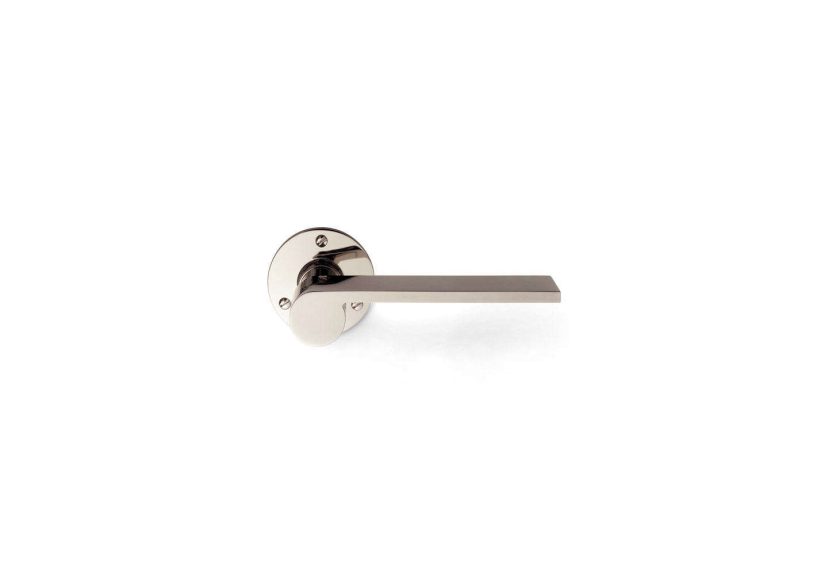
The No. 2096 is a modern lever handle from NANZ & Company, associated with the
Bauhaus collection. In design terms, it’s a study in disciplined geometry: a thin, flat plane forms the lever,
running tangentially from a cylindrical shank. The round rose (backplate) keeps things clean and balanced, and the
exposed screws give it a purposeful, “honest hardware” vibe instead of trying to pretend it’s floating on the door.
The result is a handle that feels architecturallike it belongs in a modern renovation, a gallery-like new build, or any interior where
you want hardware to be minimal but intentional. Think: calm lines, crisp edges, and a silhouette that doesn’t shout, yet somehow
gets noticed anyway.
Key Dimensions You Should Know Before You Fall in Love
Door hardware is the rare category where a quarter inch can be the difference between “sleek” and “why does my knuckle hate me?”
Here are the published dimensions for the No. 2096:
- Length: 4-5/8″
- Projection: 2-3/8″
- Rose diameter: 2-1/4″
How those measurements affect real life
Length influences grip comfort and leverage. A 4-5/8″ lever is long enough to feel confident in your hand without
looking oversized on typical interior doors.
Projection (how far it sticks out) matters for tight hallways, doors near trim, and anything close to a wall. If a door
swings near a perpendicular wall, a larger projection can lead to scuffsso check clearance, door stops, and nearby millwork.
Rose diameter impacts proportions and coverage. A 2-1/4″ rose can look elegantly compact, but it also means you should
confirm it will cover any existing bore marks or finish “shadows” if you’re replacing older hardware.
Where the 2096 Fits: Mortise Locks, Multi-Point Doors, and Tilt & Turn Windows
One reason designers and builders specify Nanz is that many of their designs aren’t trapped in “standard residential latch world.”
The No. 2096 can be used with traditional full-mortise locksets or manufactured for
multi-point doors and tilt & turn windows. Translation: it’s not just pretty; it’s adaptable.
Mortise locksets (the “classic heavyweight” option)
A mortise lock sits inside a pocket cut into the edge of the door, rather than using the more common cylindrical
bored-hole approach. Mortise systems are often chosen for premium doors, older homes, and high-use situations because they can be
robust and offer flexible functions (like integrated deadbolts, different latch types, and trim choices).
If your project involves solid wood doors, custom doors, or a historic renovation where a mortise pocket already exists, the 2096 is
right in its element.
Multi-point doors (patio doors, large openings, and “I want it sealed tight” projects)
Multi-point locking systems secure a door at multiple points along the edge. They’re common in higher-performance exterior doors
and certain modern door systems because they help with compression and sealing. If the 2096 is being specified for a multi-point door,
make sure the trim is configured for that exact mechanismthis is a “match the system” scenario, not a “close enough” scenario.
Tilt & turn windows (European-style function, American-level obsession)
Tilt & turn windows use a handle/lever to shift the sash between positions (tilt for ventilation, turn for full opening). That
handle needs to feel precise and solidbecause it gets used a lot. The 2096’s clean geometry and compatibility make it a design-forward
choice when you want window hardware to match door hardware instead of looking like it came from a different planet.
Choosing the Right Function: Passage, Privacy, Entry, or Dummy
The same lever design can often be specified in different “functions.” This is where projects either stay elegant… or spiral into a
spreadsheet of door-by-door decisions (welcome, you’re among friends).
Common lever functions and where they belong
- Passage: No lockingjust latch and go. Great for halls, closets with a latch, and any door that doesn’t need privacy.
- Privacy: Locks from the inside (typically no keyed cylinder). Used for bedrooms and bathrooms.
-
Entry: Keyed function or paired with a keyed cylinder/lock body depending on the system. Used for exterior doors and
any interior door needing real access control. -
Dummy (non-turning): Decorative trim with no latch operation. Often used on pantry doors, closets that use magnets,
or on one side of double doors when the active leaf has the latch.
With Nanz projects, the function is frequently driven by the lock body you’re pairing it with. Nanz offers a range of mortise locks
and latches across many functions (including options designed to meet higher performance requirements in the right contexts), so it’s
smart to specify lever trim and lock body as a coordinated set.
Accessibility and Everyday Ergonomics
Lever handles are popular for a simple reason: they’re easier to operate than round knobs for most people, especially when your hands
are full or your grip is limited. Accessibility guidelines often prefer levers because they can be pushed down with the palm, elbow,
or side of the handno tight twisting required.
The 2096’s planar form makes it feel modern, but it still behaves like a proper lever: intuitive, quick, and comfortable when installed
at the right height with the right spring tension in the lock.
Pro tip
If you’re specifying the 2096 in a commercial or public-facing space, confirm compliance requirements earlyhardware performance is a team
sport involving the lever trim, the lock body, the door closer (if any), and the door construction itself.
Finishes: Why Nanz Hardware Ages Like a Good Leather Jacket
Nanz is known for finishes that aren’t just “picked from a dropdown.” Their finishes are hand-applied, and the company notes that metal
finishes can naturally change through use and environmental interactionmeaning variation is expected, and character is part of the appeal.
They also offer a very wide range of finish options.
How to choose a finish for the 2096
-
Unlacquered brass: If you love patina, fingerprints, and that warm “living finish” look, this is the bold romantic choice.
It won’t stay pristineand that’s the point. -
Nickel tones: If you want clean, modern, and easy to pair with appliances and plumbing fixtures, nickel finishes are usually
the “safe but not boring” option. -
Bronze/darker finishes: Great for contrast against light doors, limestone walls, or white oak interiorsespecially in modern
rustic or “soft industrial” projects. - Pewter/softer metals: Ideal when you want hardware that feels subtle and architectural instead of shiny.
Maintenance without ruining your finish (a love story)
Brass and plated finishes don’t always want the same cleaning routine. Some brass-plated pieces should be handled gently (think mild soap and
water) rather than aggressive polishing. For solid brass, gentle DIY cleaning methods exist, but acids and abrasives can do damage if used
too aggressively or left too long. The safest move for premium hardware is usually: start mild, test in an inconspicuous spot, and avoid harsh
chemicals that can strip or blotch finishes.
Spec’ing the Nanz 2096 Like a Pro
Here’s the checklist that keeps your project from becoming a “why doesn’t this fit?” mystery novel.
1) Confirm door type and prep
Are you using a mortise lock body, a multi-point mechanism, or a standard bored/cylindrical setup? Mortise and multi-point installations can
require specialized prep, so align the trim to the mechanism before ordering.
2) Measure door thickness and backset
Backset is the distance from the edge of the door to the center of the bore or lock axis. In many U.S. residential bored-lock situations,
common backsets are 2-3/8″ or 2-3/4″. Mortise setups are different, but backset still matters because it affects lever position and comfort.
3) Choose function and trim details
Decide passage vs. privacy vs. entry vs. dummy early. Then coordinate any additional trim: thumbturns, cylinders, escutcheons, or matching
hardware elsewhere.
4) Think through handing and swing
Some levers are universal and can be flipped; others require handing. Also consider how the lever sits relative to door stops, wall returns,
cabinetry, and nearby trim. The best-looking lever is the one that doesn’t smash into a wall at 7 a.m. when you’re half awake.
5) Match the vibe across the whole project
The 2096 is a modern statement in a refined voice. Pair it with clean-lined hinges, minimal rosettes, and thoughtfully chosen finishes. If you
mix it with overly ornate pieces, it can feel like a modern chair placed in a Victorian tea partytechnically allowed, emotionally confusing.
Installation Reality Check: DIY or Call a Pro?
If you’re swapping a basic cylindrical lock on a standard interior door, you might be comfortable doing it yourself with careful measuring.
But if you’re dealing with a mortise lockset or a multi-point system, installation is more technicaloften
requiring precise pocket cutting, alignment, and sometimes coordination with door manufacturers or fabricators.
A good rule: if you find yourself saying, “How hard can it be?” while holding a chisel, pause and consider hiring someone who owns chisels
professionally.
Who Should Choose the Nanz Door Lever 2096?
It’s a great fit if you want…
- A modern lever with strict geometry and an architectural feel
- Hardware that pairs well with mortise locks or higher-end door systems
- A compact rose with visible screws (intentional, not “oops, forgot the cover plate”)
- A wide finish palette and a willingness to embrace natural variation over time
You might pick something else if you want…
- Ultra-soft curves or traditional ornament
- Something designed specifically for budget replacement of standard bored locks
- Hardware that stays “factory perfect” forever without patina or finish evolution
FAQ: Fast Answers for Real-World Decisions
Is the Nanz 2096 more “design piece” or “workhorse”?
Bothdepending on what you pair it with. The lever itself is a design-forward component, but when matched with a properly specified lock body
(especially in mortise configurations), it can absolutely handle daily use in high-end residential and design-driven commercial spaces.
Will the exposed screws look “unfinished”?
Not if the rest of the room speaks the same language. Exposed fasteners can read as intentional and functionalespecially in modern interiors.
If your space leans ornate or historically detailed, you may prefer a style that hides hardware fasteners.
Can I use it on a bathroom door?
Yeswhen specified with the correct privacy function and compatible lock body/trim. Bathrooms are also where finish choice matters most because
moisture and cleaning routines can accelerate patina.
What’s the easiest way to keep it looking good?
Wipe it gently with a soft cloth, avoid harsh chemicals, and treat it like the premium component it is. If you choose living finishes like
unlacquered brass, remember: “perfectly uniform” is not the goalbeautifully lived-in is.
Conclusion: A Modern Lever That Nails the “Quiet Luxury” Brief
The Nanz Door Lever 2096 is modern hardware done with discipline: a thin planar lever, a clean circular rose, and details that
look purposeful instead of over-designed. Its dimensions make it compact and refined, and its compatibility with mortise locksets and more
specialized door/window systems gives it real architectural range.
If you’re building or renovating a space where every detail is intentionalwhere the door hardware matters because your eye actually lands on
itthe 2096 is the kind of choice that pays off every single day. It’s the handshake your home offers to everyone who walks in. Might as well
make it a good one.
Real-World Experiences With the Nanz Door Lever 2096 (What People Notice After Living With It)
Because I can’t live in your house (and your dog would probably object), the best way to talk about “experience” is to describe what homeowners,
designers, and installers typically notice once a modern lever like the 2096 moves from “spec sheet” to “daily life.” And yesdoor levers do
have a daily-life personality. Some are floppy. Some are stiff. Some feel like a polite handshake. The 2096 tends to land in the “confident,
calm, and precise” categoryespecially when paired with a high-quality lock body and installed square.
The first thing people often comment on is the feel of the lever plane. The 2096 isn’t a chunky, rounded handle that disappears
in your palm. It’s slimmer and more architectural, which makes the tactile impression slightly different: you notice the geometry. In a modern
interior, that’s a feature, not a bug. It feels intentionallike the hardware was chosen by someone who cares about details. In everyday use,
many users appreciate that the lever is long enough to give good leverage without looking oversized on the door, and the projection typically
provides comfortable finger clearance. That said, in very tight hallways or doors that swing near a wall return, people learn quickly to verify
clearances (and install a door stop) so the lever isn’t the first thing to greet the drywall.
The exposed-screw rose is another “experience” point. Some people love it immediately because it reads honest and functional
like good architecture that doesn’t hide how it’s assembled. Others worry it will look too utilitarian. In practice, it usually settles into
the background once the whole room is complete. On painted doors, it can look crisp and graphic. On stained wood doors, it can feel like a
refined industrial accent. The key is consistency: when other hardware elements (hinges, pulls, plumbing) share a modern language, the rose
looks like it belongs. When everything else is ornate, it can feel like you brought a minimalist chair to a baroque banquet.
Over the first few months, the big “experience” shift tends to be finish behavior. If the project uses a living finish (like
unlacquered brass), people often report a short adjustment period where they realize the hardware is going to changeand that fingerprints are
basically part of the design. Then, surprisingly often, they start to like it. Patina becomes a story: the guest room looks newer because it’s
used less; the kitchen pantry lever has more character because it’s opened 12 times a day; the primary suite feels “worn in” faster because it’s
part of your routine. If the project uses more stable finishes (like certain nickel options), the experience is simpler: wipe, admire, repeat.
Installers, meanwhile, tend to focus on the behind-the-scenes experience: alignment, door prep, and lock compatibility. When a lever like the 2096
is properly matched to the lock body and the door is prepped cleanly, the action feels smooth and decisive. When prep is offmisaligned mortise
pockets, door warping, incorrect spindle sizingthe lever becomes the messenger for a deeper problem. That’s why many pros recommend not treating
higher-end hardware like an afterthought. The best “experience” is the one where you don’t think about the door lever at all… except for that tiny
moment when you notice how good it looks and wonder why all hardware isn’t made this way.
Finally, there’s the emotional experience: the 2096 tends to make spaces feel more finished. People often describe it as a small detail that
changes the perceived quality of the whole room. It’s not loud, but it’s exact. And in modern design, exactness is basically a love language.