Table of Contents >> Show >> Hide
Some events are easy to explain. A concert is a concert. A film festival is a film festival. A hackathon is a caffeinated blur of code, snacks, and questionable posture. But a demoparty? That takes a minute. It is part art show, part programming Olympics, part underground music gathering, part reunion for people who genuinely think making a computer do something impossible is a fun way to spend a weekend. And yes, they are absolutely right.
Outline 2022, held in the Netherlands, is a perfect example of why everyone with even a tiny interest in creativity, coding, retro tech, computer graphics, digital music, or beautifully nerdy communities should go to a demo party at least once. Not because you need to understand every shader trick or recognize every platform from across the room like some kind of pixel archaeologist. You should go because demo parties reveal what technology feels like when it is used for joy, style, and bragging rights instead of productivity dashboards and password resets.
If modern tech culture often feels like a parade of subscriptions, updates, and “AI-powered synergy,” a demo party is the opposite. It asks a much more interesting question: what can human beings create when they mix code, music, visual design, hardware obsession, and a healthy amount of competitive chaos? Outline 2022 answered that question with style.
What Was Outline 2022?
Outline 2022 was a demoparty held from May 26 to May 29, 2022, in Ommen, the Netherlands. The event was part of the long-running Outline series, which began in 2004 and built a reputation as one of the Netherlands’ signature demoscene gatherings. Outline started with strong Atari roots, but over time it evolved into a multiplatform event while keeping its retro soul intact. In other words, it grew up without becoming boring. That is harder than it sounds.
The party took place at a farm-style venue, the kind of location that instantly makes the whole thing feel less like a corporate conference and more like a secret society of coders, musicians, artists, and hardware tinkerers. According to party records and event listings, Outline 2022 featured a broad mix of competitions, usually called “compos,” including animation, demo, executable graphics, freestyle graphics, music, newskool intros, oldskool intros, and photo categories. That spread alone tells you a lot. This was not just a room full of people staring at hexadecimal soup. It was a full-spectrum digital arts event.
Some of the winning entries from Outline 2022 show just how varied the scene can be. “Doe Maar” by Trepaan won the main demo competition. “Mine Storm 4D” won animation. “Orders of Magnitude” took executable graphics. “IndustrialPope” topped freestyle graphics. “Line Out” won music. And in one of the most beloved demoscene traditions of all, “Thrive” won the newskool 256-byte intro category. Yes, 256 bytes. That is not a typo. That is barely enough room for a proper excuse, yet demosceners turn it into art.
What Even Is a Demo Party?
A demoparty is a gathering where people create and present “demos,” which are real-time audiovisual computer programs. A demo is not just a video file playing back. The computer generates the visuals and sound live while the program runs. That detail matters. It is the difference between watching a movie and watching someone juggle flaming chainsaws while solving equations on a trampoline. Both are impressive. One is a lot more nerve-racking.
The demoscene has roots in the home-computer era, when programmers, artists, and musicians pushed machines like the Commodore 64, Atari, Amiga, and later PCs far beyond what anyone expected. Over time, that culture became its own creative movement. The scene values technical elegance, artistic flair, and a willingness to squeeze absurdly ambitious ideas into tiny technical limits. In the demo world, restrictions are not obstacles. They are invitations.
That is why intros with strict size limits are such a big deal. A 64K intro means the whole audiovisual experience has to fit into 65,536 bytes. A 4K intro is even tighter. At Outline 2022, the byte-sized categories went smaller still, with 128-byte and 256-byte intros split into oldskool and newskool formats. To non-sceners, this sounds mildly unhinged. To sceners, this is Tuesday.
Why Outline 2022 Made the Case for Demo Parties
1. It Turned Computers Back Into Instruments
Most people use computers as appliances. We open tabs, answer messages, lose documents, update drivers, and quietly accept that something somewhere will break five minutes before a deadline. At Outline 2022, computers were treated like instruments. They were expressive tools. They became visual synthesizers, sound machines, design canvases, and performance devices.
That shift is powerful. It reminds people that a machine is not just a consumption box. It is also a medium for craft. You do not need to be a genius coder to appreciate that. You only need to see a room reacting to a piece of real-time graphics synced to music and realize: oh, this is what digital culture looks like when it is alive.
2. It Mixed Old Hardware With New Ideas
One of the best things about Outline is the platform mix. You can see modern Windows productions, fantasy console experiments, browser-based work, and tiny intros alongside productions built for Amiga, Atari, Game Boy, Apple II, ZX Spectrum, and other old-school systems. That is not nostalgia for nostalgia’s sake. It is creative continuity.
Outline’s wider identity has long embraced both retro and multiplatform work, and that matters. It creates a space where old hardware is not treated like a museum fossil and new tools are not treated like cheating. Instead, everything becomes part of the same conversation: how do you make something beautiful, surprising, and technically sharp with the tools you have?
That makes a demo party unusually welcoming for people from different backgrounds. Retrocomputing fans can geek out over platform quirks. Game developers can admire optimization. musicians can appreciate tracked sound and streaming compositions. Designers can obsess over motion, typography, color, and timing. Hardware hackers can stare lovingly at weird machines on tables and pretend they are being normal about it.
3. It Was Competitive Without Feeling Soulless
The modern internet is full of competition that feels exhausting. Metrics, rankings, follower counts, engagement farming. The demoscene has competition too, but it is much healthier in spirit. People vote on entries. Winners matter. Reputation matters. Yet the underlying culture is about respect for craft, curiosity about technique, and shared excitement around making cool things.
Outline 2022 reflected that balance. The compo list was broad, the categories invited different skills, and the event format encouraged both rivalry and celebration. You can lose a category and still leave inspired, because the point is not just to beat someone. It is to see what is possible. That kind of competition tends to make communities stronger instead of more miserable.
4. It Offered a Real Community, Not a Buzzword Version of One
Tech companies love the word “community.” Usually it means a Discord server, a branded hoodie, and a newsletter nobody asked for. A real community is something else. It has rituals, shared language, welcoming entry points, old legends, new talent, inside jokes, and a sense that people are here because they care.
That is what demo parties offer. The Dutch cultural-heritage description of the demoscene emphasizes weekend gatherings, public screening, voting, and open participation. Anyone can enter. Participating matters more than winning. That spirit is part of what makes demo parties special. You can arrive as an outsider and still understand the emotional logic of the room pretty quickly: people are here to show what they made, cheer for clever work, learn from each other, and stay up too late for entirely respectable reasons.
What You Learn at a Demo Party
Going to a demo party like Outline 2022 teaches a few lessons fast. First, constraints are not the enemy of creativity. They are often the engine of it. When people have limited memory, limited instructions, limited hardware, or limited time, they stop padding and start inventing. Second, technical skill and artistic expression are not separate worlds. The demoscene has spent decades proving that code can be choreography, sound design, storytelling, and visual poetry all at once.
Third, a lot of modern digital culture owes more to this scene than it gets credit for. The demoscene helped shape attitudes around optimization, procedural generation, real-time rendering, tracker music, audiovisual experimentation, and the idea that technical mastery can itself be an art form. Even academic and cultural institutions have increasingly recognized that significance. In 2023, the Netherlands added the demoscene to its inventory of intangible cultural heritage, reinforcing the idea that this is not just a niche hobby. It is an enduring creative tradition.
Why Non-Coders Should Still Go
Here is the best part: you do not have to be a programmer to enjoy a demo party. You do not need to know assembly language. You do not need to understand raster tricks, shader pipelines, or why someone is grinning like they just robbed a bank after fitting an effect into 128 bytes. You can simply show up and enjoy the spectacle.
If you love music, there are music compos. If you love graphic design, there are graphics compos. If you love photography, there may be photo entries. If you love live events, there is the screening energy of a room reacting together. And if you just like being around people who are deeply into making things for the sheer thrill of doing it well, a demo party is basically catnip.
Think of it this way: plenty of people attend jazz festivals without being trumpet players. Plenty of people go to film festivals without knowing how to light a scene. The same logic applies here. A demo party is a place to appreciate craft, not a final exam.
Outline 2022 Proved the Scene Is Still Vibrant
There is always a lazy theory floating around that handmade digital culture belongs to the past, that the weird golden age is over, that communities built around deep craft eventually get flattened by convenience. Outline 2022 argues the opposite. The scene is still making new work, still mixing platforms, still hosting competitions, still producing memorable winners, and still attracting people who care enough to build something for the projector instead of the algorithm.
That matters in a time when so much digital life feels prepackaged. At a demo party, the work is specific. It has fingerprints. It reflects taste, technique, and personality. You can tell that someone obsessed over the sync, or the color palette, or the tiny miracle that made an impossible effect run on elderly hardware that probably deserves a pension.
Experience Section: What It Feels Like to Go to a Demo Party
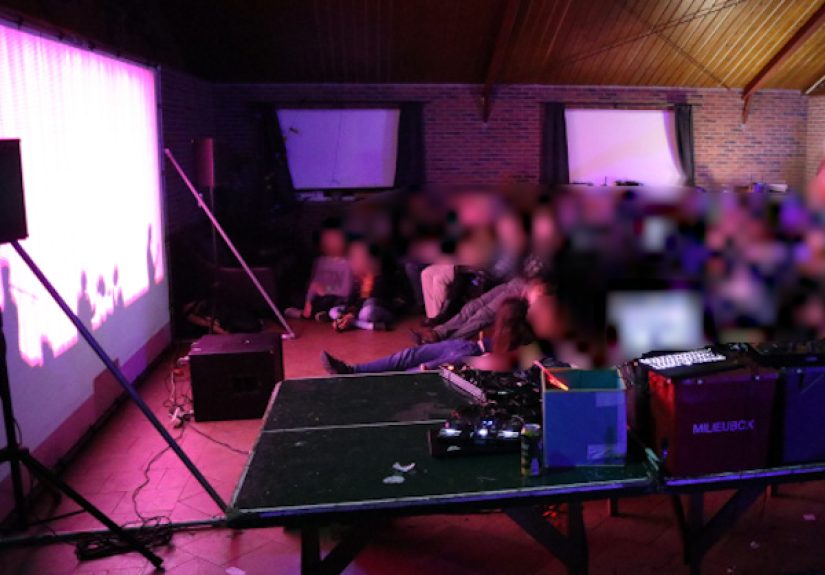
Imagine arriving at Outline 2022 with only a vague idea of what a demoparty is. You pull up to a venue that feels less like a trade show and more like a weekend hideout for brilliant misfits. There are laptops, retro machines, cables, stickers, music, improvised workstations, and people who look like they could either fix a synthesizer, write a shader, or explain the strengths of three different Atari models without taking a breath. It is wonderfully disorienting.
At first, you notice the gear. A modern PC sits next to old hardware that looks like it has survived several eras of computing and at least one emotional breakup. Someone is tweaking code. Someone else is testing audio. Another person is casually discussing compression tricks with the kind of calm intensity usually reserved for bomb disposal. Then the room changes. The lights drop, the projector matters, and suddenly everyone is watching.
That is the moment a demoparty gets under your skin. A production starts. The visuals hit. The soundtrack lands. The crowd reacts, not like consumers watching content, but like insiders recognizing skill. You may not understand every technical detail, but you understand excellence when you see it. You understand timing, surprise, humor, atmosphere, confidence. You understand when a room collectively decides, yes, that was filthy, in the highest possible sense.
Between compos, the social side takes over. You talk to people. That part is easier than expected. Demo parties tend to be full of people who are serious about craft and refreshingly unserious about pretending to be cool. Someone shows you a retro machine. Someone explains why a tiny intro is harder than it looks. Someone recommends a classic production you need to watch later. Someone else argues that one platform has the best sound chip and another person, as tradition demands, disagrees immediately.
Meals, coffee, snacks, late-night conversations, accidental workshops, strange in-jokes, and technical rabbit holes all blend together. The atmosphere becomes half festival, half laboratory. Nobody is there to optimize their personal brand. They are there because they made a thing, or want to make a thing, or want to be near people who make ridiculous digital things for the pure thrill of it. That sincerity is rare. It is also contagious.
By the end of the weekend, you start seeing computers differently. Not as devices that demand your attention, but as materials you can shape. You leave with names of demos to watch, categories you suddenly care about, and maybe a dangerous new thought: “Could I make something for one of these?” That is how the demoscene gets you. Not through marketing. Through fascination.
And that is why everyone should go to a demo party. Even once. Especially once. Because the first visit tends to rearrange your assumptions about digital art, technical skill, and what a healthy creative community can look like. Outline 2022 was not just an event. It was proof that code can still feel human, playful, communal, and gloriously alive.
Conclusion
Outline 2022 showed exactly why demo parties deserve more attention. They are spaces where art and engineering stop pretending to be strangers. They turn limitation into spectacle, competition into community, and old hardware into fresh creative territory. They welcome specialists, curious newcomers, retro obsessives, designers, musicians, and anyone who still believes computers can be used for wonder instead of just workflow.
So yes, everyone should go to a demo party. Go for the graphics, the music, the code, the impossible tiny intros, the hardware oddities, the applause after a great compo entry, and the rare pleasure of seeing digital culture made by people who are clearly having the time of their lives. You may arrive thinking you are just visiting an eccentric subculture. You will probably leave wondering why the rest of tech forgot how to have this much fun.