Table of Contents >> Show >> Hide
- Why a Portable Tire Inflator Belongs in Your Car
- Does the Portable Tire Inflator Source Matter?
- Which Inflator Source Is Best for You?
- The Features That Actually Matter
- Portable Tire Inflator Safety Basics Every Driver Should Know
- How to Use a Portable Tire Inflator the Right Way
- When a Portable Tire Inflator Is Not Enough
- Buying Advice: The Best Portable Tire Inflator Mindset
- Real-World Experiences With Portable Tire Inflators
- Conclusion
- SEO Tags
Every driver has a fantasy version of roadside trouble. In that fantasy, the weather is mild, the shoulder is wide, your coffee is still hot, and a magical service station appears out of nowhere with free air, clean restrooms, and absolutely no weird hot-dog roller in sight. Real life, as usual, is less cinematic. Tires lose pressure when temperatures swing, nails have a terrible sense of timing, and many modern vehicles no longer come with a full-size spare. That is exactly why the portable tire inflator has gone from “nice little car gadget” to “please live in my trunk forever.”
But here is the part many shoppers miss: the source of your portable tire inflator matters almost as much as the inflator itself. A compact unit with a built-in battery may be perfect for topping off a sedan in a grocery-store parking lot. A 12V inflator might be the most practical choice for everyday drivers. And a more powerful tool-battery or battery-clamp model can make a lot more sense if you drive a truck, SUV, or anything that sees rough roads, heavy loads, or long trips.
This guide breaks down how portable tire inflators work, why their power source matters, which features are genuinely useful, and how to choose one without getting hypnotized by giant “150 PSI!!!” stickers. Because yes, marketing departments love exclamation points almost as much as drivers love not being stranded.
Why a Portable Tire Inflator Belongs in Your Car
A portable tire inflator, also called a portable air compressor or car tire inflator, is a compact pump designed to add air to your tires wherever you are. That sounds basic, but the benefits are bigger than convenience.
Proper tire pressure affects safety, handling, durability, and fuel use. Underinflated tires can wear unevenly, run hotter, reduce fuel economy, and increase the risk of tire failure. They can also make braking and steering feel sloppier than they should. In plain English: your car gets thirstier, your tires get crankier, and your day gets more expensive.
Pressure changes also happen more often than people think. Temperature swings can change tire pressure quickly, and even healthy tires lose air over time. If you have ever seen a dashboard warning light pop up on the first cold morning of the season, congratulations: you have met the laws of physics before breakfast.
That is why a portable inflator is one of the most practical car gadgets you can own. It gives you the ability to top off a low tire before a road trip, address a mild leak long enough to reach a shop, and maintain your tires regularly without hunting for an air pump at a gas station that may or may not function like it was designed during the Truman administration.
Does the Portable Tire Inflator Source Matter?
Yes, absolutely. The tire inflator power source affects inflation speed, convenience, portability, price, and how many tires you can fill in one session. In other words, the source is not some boring footnote hidden behind the pretty product photos. It is the whole personality of the gadget.
1. 18V or 20V Tool-Battery Inflators
These models run on the same removable battery platforms used by popular power tools. They are often the quickest and strongest portable options, which is why they appeal to drivers who already own compatible batteries from brands like Milwaukee, DeWalt, or Craftsman.
Why they are great: They tend to inflate faster, often include memory presets, and are especially useful for frequent use. If you already own the battery system, this route can be efficient and convenient.
Where they fall short: If the battery is dead, your fancy inflator becomes a plastic paperweight. If you do not already own the charger and batteries, the real cost can climb fast.
Best for: drivers who want power, use inflators often, own compatible tools, or need better performance for larger tires.
2. 12V Outlet or Direct-to-Battery Inflators
These models pull power from your vehicle, either through the 12V outlet or by clamping directly to the battery. For a lot of drivers, this is the sweet spot. You do not have to remember to keep a separate battery charged, and many 12V units are reasonably priced.
Why they are great: They are usually ready whenever your vehicle has power, and they work well for roadside emergencies and routine maintenance. Some are surprisingly fast, especially the heavy-duty units that connect directly to the battery.
Where they fall short: You are tethered by the cord or hose. If the reach is poor, getting to all four tires can feel like solving a yoga puzzle in a parking lot. And if your vehicle battery is dead, that can complicate things fast.
Best for: most everyday drivers, commuters, and road-trippers who want reliable on-the-go inflation without battery-management drama.
3. Built-In Rechargeable Battery Inflators
These are the compact, highly portable models that look sleek on a shelf and often come with USB charging, digital displays, and accessories for sports balls, bikes, and inflatables. They are handy and usually easy to store.
Why they are great: Small, lightweight, and convenient. They are easy to toss in a trunk, glove box, or cargo organizer. Many are great for topping off car tires, bike tires, or smaller inflatables.
Where they fall short: They are often the least powerful option. Some take longer to inflate a tire, and their smaller batteries may not handle multiple tires before needing a recharge.
Best for: compact cars, occasional use, apartment dwellers, and anyone who wants maximum portability with minimum fuss.
Which Inflator Source Is Best for You?
There is no universal winner, only the right match for your vehicle and habits.
- Choose a tool-battery inflator if you want speed and already live in a cordless-tool ecosystem.
- Choose a 12V inflator if you want the best balance of cost, readiness, and practicality for normal car ownership.
- Choose a built-in rechargeable inflator if your priority is compact size, quick top-offs, and simple storage.
If you drive a pickup, large SUV, or vehicle with higher tire pressures, lean toward a stronger inflator with more reach and a better duty cycle. If you drive a small sedan and mostly want protection against slow leaks and seasonal pressure drops, a compact rechargeable model or a good 12V unit can be more than enough.
Translation: the best portable tire inflator is not always the one with the most muscle. Sometimes it is the one you will actually keep charged, packed, and ready to use instead of “meaning to set up eventually.”
The Features That Actually Matter
When shopping for a portable tire inflator for cars, do not get distracted by bloated spec sheets. Focus on features that make life easier when you are tired, in a hurry, or standing on the side of the road pretending you totally know what you are doing.
Auto Shutoff
This is one of the best features you can get. You set the target PSI, start the inflator, and it stops automatically when the pressure is reached. It helps avoid overinflation and makes the tool more convenient.
Accurate Digital Gauge
A readable digital display makes setup easier, especially at night. Some better-tested inflators also come closer to the target pressure consistently, which saves time and reduces guesswork.
Reach
Hose length and power-cord length matter more than shoppers expect. A powerful inflator is less impressive when it cannot comfortably reach the far tire. If you buy a corded model, make sure it can access all four tires on your vehicle.
Pressure Range and Duty Cycle
Most passenger vehicles do not need outrageously high PSI, but trucks, some heavy-duty tires, and certain bike tires may demand more pressure. A better duty cycle means the pump can run longer without overheating, which matters if you need to inflate multiple tires.
Extra Adapters and Built-In Light
These are not must-haves, but they are useful. A flashlight helps during night-time emergencies, and valve adapters make the inflator more versatile for bikes, balls, and other inflatables.
Storage Case
This sounds minor until the hose, cord, nozzles, and power accessories turn your trunk into a spaghetti drawer. A case keeps everything together and makes the inflator far more likely to stay in the car long-term.
Portable Tire Inflator Safety Basics Every Driver Should Know
A portable inflator is helpful, but it is not a magic wand. Smart use matters.
Check Pressure When Tires Are Cold
Tire pressure should be checked before driving or after the tires have had time to cool down. Warm tires can give you a higher reading, which makes accurate inflation harder.
Use the Door-Jamb Placard, Not the Sidewall Number
Your correct tire pressure is usually listed on the sticker inside the driver’s door jamb or in the owner’s manual. Do not use the maximum pressure printed on the tire sidewall as your everyday target. That number is not your vehicle’s recommended operating pressure.
Temperature Changes Matter
A drop in temperature can lower tire pressure noticeably. That is why tires that seemed perfectly happy last week may suddenly trigger a warning light after a cold snap. Checking pressure monthly and before long trips is a smart habit.
Do Not Ignore Visible Damage
If the tire has a sidewall bulge, a deep cut, exposed cords, or obvious structural damage, adding air is not the solution. That tire needs professional attention. Inflating a damaged tire can be risky.
Do Not Overinflate a Leaking Tire Just to “Make It There”
If you know the tire has a leak, resist the temptation to keep stuffing extra air into it. Overinflation can increase the chance of trouble, especially if the tire is already compromised.
How to Use a Portable Tire Inflator the Right Way
- Park in a safe location away from traffic.
- Check the recommended PSI on the driver’s door placard.
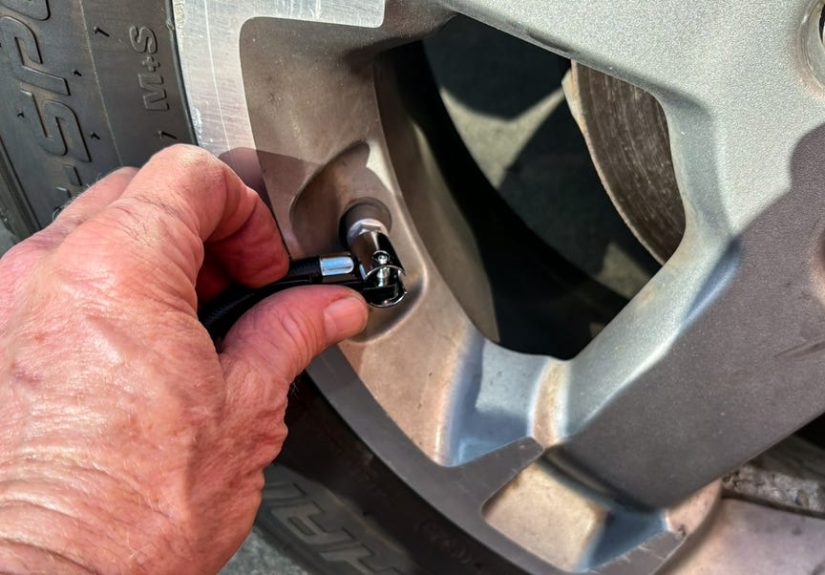
- Remove the valve cap and attach the inflator hose securely.
- Power the inflator from its battery, built-in battery, 12V outlet, or vehicle battery clamps.
- Set the target pressure if the inflator has a preset function.
- Inflate until the desired PSI is reached.
- Disconnect the hose, replace the valve cap, and double-check the pressure if needed with a separate tire gauge.
- Let the inflator cool before storing it, then recharge it if required.
That entire process can take only a few minutes with a solid inflator. The key is not waiting until you are already deep into Tire Drama O’Clock to learn how your unit works.
When a Portable Tire Inflator Is Not Enough
A portable inflator is great for low pressure, slow leaks, and routine maintenance. It is not a full replacement for a spare tire, professional repair, or roadside assistance.
If the puncture is in the sidewall, the tire is shredded, the bead has separated, or the tire will not hold pressure after inflation, stop and get help. Some vehicles come with tire-inflator kits that include sealant, but sealant should be treated as a temporary last resort rather than a permanent fix. It may not help with every type of damage, and it can complicate later repairs.
This is also why your inflator should be part of a larger car emergency kit, not the entire plan. A useful kit may also include a pressure gauge, flashlight, jumper cables or jump starter, gloves, and basic roadside gear.
Buying Advice: The Best Portable Tire Inflator Mindset
If you are shopping for the best portable tire inflator, think in scenarios, not marketing slogans.
- City commuter: a compact rechargeable or 12V model with auto shutoff and a digital display is probably perfect.
- Family road-tripper: choose a 12V or dual-power unit with good hose reach, clear controls, and a carrying case.
- Truck or SUV driver: look for stronger output, higher PSI capability, better duty cycle, and enough reach for larger vehicles.
- DIY gear lover: a removable-battery model may be the smartest long-term pick if it matches tools you already own.
The smartest purchase is not the flashiest inflator. It is the one that fits your car, your storage space, and your maintenance habits. An inflator you trust and understand is better than a “pro-level” monster unit that never leaves the garage shelf.
Real-World Experiences With Portable Tire Inflators
Here is where the topic gets personal, because portable tire inflators stop being abstract the minute a warning light appears twenty minutes before work. One of the most common real-world experiences drivers report is discovering a low tire at the worst possible time: early morning, bad weather, a packed schedule, and no interest in becoming best friends with the nearest gas station air pump. In those moments, a small inflator in the trunk feels less like a gadget and more like a quiet hero with a power cord.
A typical experience goes like this: the TPMS light comes on after a cold night. The tire is not flat-flat, just visibly a little low. With a decent inflator, you check the placard, set the PSI, plug in or attach the battery, and top off the tire in a few minutes. That simple routine can save a commute, a school drop-off, or a weekend road trip. It also saves you from driving on an underinflated tire and pretending you will “deal with it later,” which is a famous last sentence in car maintenance.
Drivers who use inflators regularly often say the biggest surprise is not how often they need one for emergencies, but how useful it becomes for ordinary maintenance. Once you own one, you tend to use it before long drives, during seasonal weather changes, or after noticing the car feels a little soft and sluggish. It becomes one of those tools that quietly upgrades ownership. Not glamorous, not flashy, but weirdly satisfying.
There are also clear differences in experience based on the inflator source. People with 12V models often appreciate the readiness factor. As long as the car has power, the inflator is available. That simplicity is a huge plus. Meanwhile, drivers with built-in rechargeable units love the compact size and ease of storage, but they also learn a valuable lesson: rechargeable devices only help when someone remembers to recharge them. A neglected battery is basically optimism in a hard plastic shell.
Tool-battery inflators create a different kind of experience. They tend to feel faster, sturdier, and more serious, especially for larger tires. Drivers who already own compatible batteries often swear by them. But they also tend to be the people who think in terms like “battery platform synergy,” which is either impressive or slightly terrifying depending on how much shelf space is left in the garage.
Another common experience happens on family trips. The trunk is packed, the kids are asking for snacks they definitely rejected at the last stop, and a tire warning appears. A portable tire inflator can turn what could have been a full roadside headache into a short delay. The best part is psychological: instead of panic, you have options. That alone makes the gadget worth carrying.
In the end, the portable tire inflator earns its place because it helps drivers stay calm, safe, and mobile. It does not solve every tire problem. It will not charm a shredded sidewall back to life. But for low-pressure issues, seasonal maintenance, and everyday peace of mind, it is one of the most useful car gadgets you can buy. And unlike some “must-have” accessories that exist mainly to impress your online shopping cart, this one actually has your back.
Conclusion
The best portable tire inflator is not just about PSI claims or clever design. It is about choosing the right power source, the right features, and the right level of readiness for your vehicle and driving life. If you want maximum speed and already own cordless tools, go with a removable-battery inflator. If you want practical everyday reliability, a 12V model is hard to beat. If you want compact convenience for occasional use, a rechargeable unit may be the best fit.
However you choose, the real win is simple: properly inflated tires are safer, more efficient, and easier on your wallet. A good inflator helps you maintain all three without drama. That is not just smart shopping. That is smart driving.