Table of Contents >> Show >> Hide
- Why Stress Feels So Intense (Even When You’re “Fine”)
- The Core Idea: Downshift Your Nervous System
- 7 Relaxation Techniques That Actually Work in Real Life
- 1) Box Breathing: The “Meeting Starts in 30 Seconds” Reset
- 2) Extended-Exhale Breathing: Fast Calm Without a Yoga Mat
- 3) Progressive Muscle Relaxation (PMR): Unclench What Stress Tightened
- 4) Mindfulness in Mini-Doses: 60 Seconds Counts
- 5) Guided Imagery: Give Your Brain a Better Movie
- 6) Movement as Stress Medicine: Walk, Stretch, or Do Gentle Yoga
- 7) Journaling for Nervous System Relief: Get It Out of Your Head
- Build a Stress-Resistant Day (Without Rebuilding Your Entire Life)
- Common Mistakes in Stress Management (and Better Swaps)
- When to Get Professional Support
- Conclusion: Calm Is a Skill You Can Train
- Extended Real-Life Experiences (500+ Words)
If stress had a ringtone, most of us would hear it 24/7. It buzzes during traffic, dings during deadlines, and somehow starts singing opera at 2:13 a.m. when your brain remembers an awkward thing you said in 2018. The good news: your body is not broken, and your calm switch is still installed. You can train it.
This guide pulls together practical, evidence-informed stress management ideas from major U.S. health organizations and medical systemsthen translates them into real-life, human language. No incense requirement. No “move to a mountain cave” plan. Just realistic, repeatable relaxation techniques you can use at work, at home, in the car (parked), or in line for coffee.
You’ll learn how to use deep breathing exercises, mindfulness meditation, progressive muscle relaxation, guided imagery, movement, journaling, and sleep-friendly routines to manage stress and recover your focus. Think of this as a toolkit, not a single magic trick. Different tools work on different daysand that’s normal.
Why Stress Feels So Intense (Even When You’re “Fine”)
Stress is your body’s alarm system. Useful in short bursts. Exhausting in marathon mode.
A quick challenge (an interview, exam, presentation) can sharpen attention. But when stress becomes chronic, your system may stay revved up: muscles tighten, sleep gets messy, mood dips, patience evaporates, and your to-do list starts looking like a hostile legal document.
Common Signs Your Stress Load Is Too High
- Frequent headaches, jaw clenching, neck/shoulder tightness
- Racing thoughts, irritability, or feeling “on edge”
- Trouble falling asleepor waking up tired anyway
- Overeating, undereating, or stress snacking with Olympic commitment
- Procrastination, brain fog, or low motivation
- Withdrawing from people and things you usually enjoy
Notice the pattern: stress shows up in your body, thoughts, emotions, and behavior. That’s why the best stress management plan is multi-layered. One breathing technique is great. A tiny system of daily habits is better.
The Core Idea: Downshift Your Nervous System
When stress rises, your body leans into fight-or-flight mode. Relaxation practices help activate the opposite: rest-and-digest. In plain language, they tell your system, “Hey, danger level is lower now. You can unclench.”
The trick is consistency over intensity. You do not need 90-minute wellness rituals. In most cases, 1–10 minutes done repeatedly beats one heroic session done once and never again.
7 Relaxation Techniques That Actually Work in Real Life
1) Box Breathing: The “Meeting Starts in 30 Seconds” Reset
If your heart is racing and your thoughts are sprinting, start here. Box breathing is simple and discreet.
- Inhale through your nose for 4 counts.
- Hold for 4 counts.
- Exhale slowly for 4 counts.
- Hold for 4 counts.
- Repeat for 4 rounds.
Why it helps: paced breathing can reduce stress intensity, support calmer physiology, and improve your sense of control. If you’re new to breathwork, keep it gentle. No force. No dramatic gasping performance.
Pro tip: If 4 counts feels tight, use 3-3-3-3, then build up.
2) Extended-Exhale Breathing: Fast Calm Without a Yoga Mat
The simplest version:
- Inhale for 4 counts
- Exhale for 6 counts
- Continue for 1–3 minutes
A longer exhale often helps your body shift out of high alert. It’s excellent before difficult conversations, sleep, or after doomscrolling yourself into existential confusion.
3) Progressive Muscle Relaxation (PMR): Unclench What Stress Tightened
Stress often hides in muscles before you notice it emotionally. PMR teaches your body what “relaxed” actually feels like.
- Start at your feet and move upward.
- Tense one muscle group for 5 seconds (firm, not painful).
- Release for 10–15 seconds and notice the contrast.
- Move to calves, thighs, hands, arms, shoulders, face.
This is especially helpful at bedtime, after long desk hours, or when your shoulders are trying to become earrings.
4) Mindfulness in Mini-Doses: 60 Seconds Counts
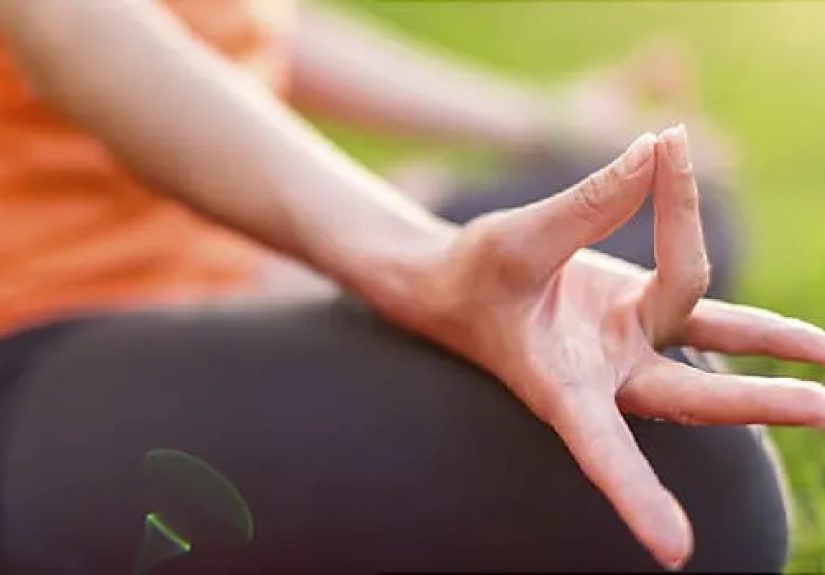
Mindfulness meditation doesn’t require an empty mind. It requires a returning mind.
Try the 5-step “micro-mindfulness” practice:
- Pause and place both feet on the floor.
- Take one slow inhale and one slow exhale.
- Name 3 things you can see.
- Name 2 things you can feel (air, fabric, chair support).
- Name 1 thing you can hear.
That’s it. Your brain wandered? Perfectly normal. Gently come back. Every return is a rep.
5) Guided Imagery: Give Your Brain a Better Movie
Your imagination can fuel stressor calm it. Guided imagery uses detailed mental scenes to relax the body.
Quick script:
- Close your eyes and breathe slowly.
- Picture a place that feels safe and peaceful (beach, forest, favorite room).
- Add sensory detail: sounds, temperature, scents, textures.
- Stay there for 2–5 minutes.
If visualization is hard, use audio guidance from trusted health programs. You’re not failing; you’re learning a skill.
6) Movement as Stress Medicine: Walk, Stretch, or Do Gentle Yoga
Physical activity is one of the most practical anti-stress tools available. It can lower short-term anxiety, improve sleep, and support mood regulation.
You don’t need a bootcamp montage. Start with 10–20 minutes:
- Brisk walk between meetings
- Light mobility routine in the morning
- Beginner yoga or tai chi session
- Stairs and short movement breaks during work blocks
Build gradually toward weekly movement goals. Think “frequent and doable,” not “perfect and punishing.”
7) Journaling for Nervous System Relief: Get It Out of Your Head
A crowded mind feels heavier than a crowded inbox. Journaling helps offload mental noise and organize worries.
Use this 5-minute structure:
- Brain dump: Write everything stressing you out (uncensored).
- Sort: Circle what you can control this week.
- Tiny next step: Pick one action that takes under 15 minutes.
- Gratitude line: Write one specific thing that went okay today.
This helps reduce emotional overload and turns “I’m drowning” into “I can do the next right thing.”
Build a Stress-Resistant Day (Without Rebuilding Your Entire Life)
The 10-10-10 Routine
If you want a plug-and-play system:
- 10 minutes morning: breathing + stretch
- 10 minutes midday: walk + hydration + sunlight
- 10 minutes evening: journaling + PMR or guided imagery
That’s 30 minutes total, split across the day. More realistic than one giant “wellness block” that keeps getting canceled by life.
Stress-Proof Your Evenings
- Set a digital sunset: reduce intense news and scrolling before bed.
- Keep caffeine earlier in the day when possible.
- Do a 2-minute worry list, then close the notebook.
- Use a wind-down cue: same music, same lamp, same breathing pattern.
- Aim for a consistent sleep schedule most nights.
Common Mistakes in Stress Management (and Better Swaps)
| Mistake | Why It Backfires | Better Swap |
|---|---|---|
| Waiting until you’re overwhelmed | Harder to calm when stress is already at 9/10 | Practice 2–5 minutes daily at baseline |
| Using only one technique | Different stressors need different tools | Build a 3-tool kit: breath + movement + journaling |
| All-or-nothing mindset | Miss one day, quit entirely | Use “minimum dose” days (60 seconds is valid) |
| Over-caffeinating through fatigue | Can worsen jittery stress loop | Hydrate, move, breathe, and protect sleep timing |
| Ignoring social support | Isolation amplifies stress load | Text/call one trusted person when stress spikes |
When to Get Professional Support
Self-care tools are powerful, but they’re not the only optionand they’re not meant to replace medical or mental health care.
Reach out to a licensed professional if stress is persistent, worsening, or interfering with sleep, work, school, relationships, or daily functioning.
Seeking support is not a failure of resilience; it is resilience. Think of it like hiring a coach when your strategy stops working.
Conclusion: Calm Is a Skill You Can Train
Managing stress is less about becoming a permanently serene forest monk and more about building repeatable recovery moments into ordinary life.
Use what works today: one breathing round, one short walk, one page of journaling, one earlier bedtime.
Small actions, repeated often, change your baseline.
If you remember one thing, let it be this: your nervous system listens to what you practice. Practice panic, and panic gets faster. Practice recovery, and recovery gets easier.
Start tiny. Start today. Start before your inbox starts singing again.
Extended Real-Life Experiences (500+ Words)
The most useful stress advice is the kind that survives real lifesick kids, delayed flights, surprise deadlines, and that mysterious moment when a “quick” meeting becomes a two-hour saga. Below are composite, real-world style experiences that show how relaxation techniques work outside perfect conditions.
Experience 1: The Deadline Spiral That Finally Broke
“Alex,” a project manager, used to run on urgency. Coffee in one hand, phone in the other, heart rate in low orbit. By afternoon, Alex felt tense, reactive, and oddly tired while still wired. Traditional advice like “just relax” felt insulting. So Alex tried a tiny experiment: box breathing before every major meetingfour rounds, no exceptions.
Week one felt awkward. Week two felt useful. By week four, Alex noticed fewer panicked responses and fewer “reply-all regret” moments. The big shift wasn’t mystical. It was timing. Breathing happened before stress peaked. Alex also added a two-minute brain dump at 4:30 p.m. to prevent evening rumination. Sleep improved, and Sunday-night dread dropped from “thunderstorm” to “light drizzle.”
Experience 2: New Parent, No Spare Time, Still Less Stress
“Maya,” a new parent, couldn’t do long workouts or quiet meditation sessions. The house was noisy. Sleep was fragmented. Calm felt like a luxury product sold out everywhere. Instead of aiming for perfect routines, Maya used “micro-recovery”: 60-second extended-exhale breathing while warming a bottle, shoulder release while the kettle boiled, and guided imagery at bedtime (on nights when sleep allowed).
The result wasn’t “no stress.” It was faster recovery. Maya described it as “I still get stressed, but I don’t stay there as long.” That’s an important metric many people miss: success is not zero stress; success is less time stuck in overload.
Experience 3: Student Overload and the Journal Reset
“Jordan,” a college student, felt constant pressure from classes, part-time work, and social comparison online. Stress showed up as procrastination, late-night scrolling, and feeling behind all the time. Jordan started a nightly 5-minute journal routine:
- Write everything that feels urgent
- Circle what can be done tomorrow
- Choose one 15-minute task for the morning
- Write one gratitude line
After a month, Jordan reported fewer racing thoughts at bedtime and better follow-through in the morning. The key insight: journaling didn’t remove workload, but it reduced mental clutter and decision fatigue.
Experience 4: Caregiver Stress and the Power of Guided Imagery
“Renee,” caring for an aging parent, felt emotionally drained and physically tight by evening. Renee tried PMR but found the full sequence too long on hard days. Guided imagery became the fallback toolthree minutes in a parked car before walking into appointments, imagining a quiet lakeside path and focusing on breathing plus sensory details.
Over time, this became a transition ritual: from crisis mode to steady mode. Renee said, “It didn’t make the situation easy, but it made me easier to be with in the situation.” That’s a powerful outcome for caregivers: preserving emotional bandwidth.
Experience 5: Freelancer Burnout and Movement Breaks
“Sam,” a remote freelancer, worked long seated hours and often skipped meals, then crashed at night with jaw tension and poor sleep. Sam tried one large evening workout, but consistency was low. The better approach: 10-minute movement snacks between work blocks, a mid-afternoon walk, and a no-news wind-down 60 minutes before bed.
Within six weeks, stress spikes felt less extreme, and sleep was more predictable. Sam also noticed improved concentration and fewer afternoon energy crashes. The lesson was simple: frequent light movement plus evening boundaries beat occasional heroic workouts.
Across these experiences, the pattern is clear. People who improved stress management did three things:
they started small, practiced consistently, and matched the technique to the moment. Breathing for immediate overload. Journaling for mental noise. Movement for mood and tension. Mindfulness for attention. PMR or guided imagery for evening downshift.
If you’re waiting to feel “ready,” don’t. Pick one technique and do it today for two minutes. Then repeat tomorrow. Calm grows by repetition, not by motivation speeches. Your life doesn’t need to get less busy first. Your recovery can start in the life you already have.