Table of Contents >> Show >> Hide
- Why the Olympic Qualification System Looks So Weird From the Outside
- No, Most People Cannot “Just Qualify” For the Olympics
- Where the Loophole Talk Comes From
- The Difference Between a Loophole and a Universality Spot
- Why Nationality and Representation Complicate Everything
- Not Every Viral Olympic Controversy Is Proof of a Scam
- What Actually Makes an Olympic Qualification System Vulnerable
- So, Can Anyone Trick the System and Qualify for the Olympics?
- Conclusion
- Extra Perspective: What This Feels Like in Real Life
The internet loves a simple sports take, especially when it sounds deliciously scandalous. One of the juiciest is this: Anyone can trick the system and qualify for the Olympics. It is the kind of claim that spreads fast because it mixes outrage, comedy, and just enough truth to make people lean in. After all, every few years a viral athlete appears, social media loses its collective mind, and suddenly everybody becomes an expert in quota math and international eligibility rules.
But here is the less dramatic, more accurate, and still pretty fascinating reality: no, not anyone can just roll out of bed, grab a tracksuit, and moonwalk into the Olympic Village. Olympic qualification is usually brutal, highly technical, and stacked in favor of truly elite athletes. That said, some qualification systems have had soft spots. In a few sports, shallow talent pools, ranking quirks, nationality rules, host-country places, and universality invitations have created openings wide enough for determined opportunists to squeeze through.
So the viral claim is wrong in the broad sense, but not completely invented either. The better headline would be something like this: the Olympic qualification system is complicated enough that edge cases can expose loopholes. Not as catchy, sure. Also terrible on a T-shirt. But it is a lot closer to the truth.
Why the Olympic Qualification System Looks So Weird From the Outside
The first thing to understand is that there is no single Olympic qualification system. Every sport has its own path. Some rely on world rankings. Others use world championships, continental events, last-chance qualifiers, minimum performance standards, or a mix of all four. Then you add host-country quota places, continental representation rules, and universality spots designed to make the Games more global, and suddenly the whole process starts to look less like a ladder and more like a bowl of spaghetti with accreditation badges.
That complexity exists for a reason. The Olympics are not just a contest to identify the absolute best athletes on Earth. They are also a global event built around representation. The movement wants excellence, yes, but it also wants countries from every region to show up. That is why some sports reserve spots for smaller delegations, some cap the number of entries per country, and some guarantee host-nation participation. The goal is part meritocracy, part world fair, part diplomatic miracle with timing chips.
And that balancing act is exactly where the controversy begins. Whenever rules try to reward both elite performance and broad participation, someone will eventually ask whether the door was left open a little too wide.
No, Most People Cannot “Just Qualify” For the Olympics
Let us kill the biggest myth first. The average person cannot simply outsmart the Olympics like it is a coupon code. In most sports, the qualification path is far too demanding. Track and field athletes need world-class times or rankings. Swimmers generally need tough entry standards or a specific universality route. Combat sports require success in rankings and qualification tournaments. Team sports demand national-level depth, years of federation support, and a giant amount of luck, funding, and talent. You cannot fake your way through that with a confident smile and a spreadsheet.
Even the so-called easier paths are not exactly easy. Athletes still need eligibility through a National Olympic Committee, recognition by the sport’s governing body, and compliance with nationality, anti-doping, and event-specific rules. In many cases, countries do not even qualify athletes directly; they qualify quota places, and then their national federations decide who gets the ticket. That means the athlete has to beat not only the international standard but also their own domestic competition. The Olympics are many things, but they are not an open mic night.
Where the Loophole Talk Comes From
The claim that “anyone can trick the system and qualify for the Olympics” usually comes from a handful of famous cases. These stories matter because they show where Olympic rules can be stretched, misunderstood, or publicly mocked.
1. Elizabeth Swaney: The Case Everyone Brings Up
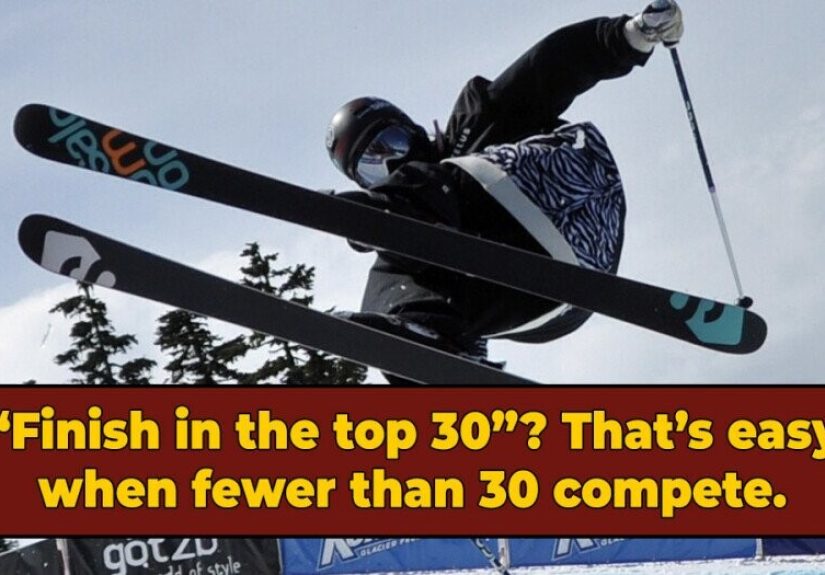
If there is one athlete who turned Olympic loopholes into a permanent dinner-table debate, it is Elizabeth Swaney. Her 2018 women’s halfpipe run became infamous because she performed no meaningful tricks and still made the Games. Viewers were baffled. Commentators were baffled. The internet, naturally, was overjoyed.
What made Swaney’s story so explosive was not just the performance itself. It was the method. She competed consistently in a discipline with a relatively shallow field, finished enough events, avoided crashes, and accumulated enough qualifying points to become eligible. She did not smash through an elite field. She simply stayed upright while the system rewarded participation and completion in a sport that did not yet have enough depth.
That is the closest modern example of someone “gaming” Olympic qualification without technically breaking rules. She did not hack the system in a criminal sense. She exploited a weak one. And that distinction matters. The scandal was not that she cheated. The scandal was that the rules allowed a visibly noncompetitive performance to reach the Olympic stage.
2. Eddie the Eagle: The Old-School Warning Label
Long before social media could turn every strange Olympic moment into a meme factory, there was Eddie the Eagle. Michael Edwards became a folk hero at the 1988 Winter Olympics because he was wildly outclassed in ski jumping but full of guts and charm. He also exposed a qualification problem. His appearance helped trigger stricter standards later on, including what became known as the “Eddie the Eagle Rule,” which raised the bar for would-be qualifiers.
Eddie’s story is important because it shows the system can learn. When the Olympics decide a pathway has become too loose, the rules can tighten fast. In other words, yes, outsiders have slipped through before. But history shows that once a loophole becomes embarrassing enough, sports federations tend to slam the window shut.
3. Eric the Eel: Not a Fraud, but a Feature
Then there is Eric Moussambani, the swimmer from Equatorial Guinea who became beloved at the Sydney Olympics after struggling heroically through the 100-meter freestyle. On paper, his performance looked like proof that Olympic standards had collapsed. In reality, it was something else entirely: a visible example of universality.
Universality places exist so nations with small delegations and limited resources still have representation at the Games. They are not loopholes for random people. They are policy choices meant to make the Olympics global rather than a private club for sporting superpowers. That is why calling every underdog a “system trickster” misses the point. Some athletes are not exploiting the spirit of the Games. They are part of it.
The Difference Between a Loophole and a Universality Spot
This is where public conversation often goes off the rails. People see a lesser-known athlete in a high-profile event and assume something fishy happened. But there is a big difference between an athlete exploiting ranking mechanics and an athlete entering through a legitimate universality pathway.
A loophole is usually an unintended byproduct of rule design. Think: a points system that rewards attendance in thin fields, or a ranking pathway that does not adequately measure competitiveness. A universality place, by contrast, is intentional. It is there on purpose. It is the Olympics saying, “We want broader participation, even if the athlete is not medal-caliber.”
That distinction matters for fairness. If you mock every nontraditional qualifier as a fraud, you are basically criticizing the Olympics for being global. If you ignore real loopholes, though, you risk pretending there is no problem when a weak system clearly exists. The trick is knowing which is which.
Why Nationality and Representation Complicate Everything
Another reason this topic gets messy is that Olympic qualification happens through countries, not just individuals. Athletes with dual citizenship or family heritage may represent nations other than the country where they were born or trained. That can look suspicious to casual fans, especially when an athlete seems to face less domestic competition by competing for a smaller nation.
But using lawful eligibility routes is not automatically shady. It can be strategic, yes. It can also be deeply personal. Athletes may choose a nation because of heritage, family connection, opportunity, or federation support. The issue is not the passport by itself. The real question is whether the qualification structure still guarantees a credible Olympic standard once that athlete enters the pipeline.
Swaney’s story sparked debate partly because it combined both issues: nationality flexibility and a qualification system with obvious soft edges. That is why it became internet legend. It was not one gray area. It was a gray area riding another gray area piggyback style.
Not Every Viral Olympic Controversy Is Proof of a Scam
One reason this topic needs a little adult supervision is that the internet now treats every surprising performance as evidence of corruption. That is sloppy. A good example is the controversy around Australian breaker Rachael “Raygun” Gunn after Paris 2024. Online critics rushed to accuse her of manipulating the qualification process, but official responses pushed back on those claims and called the allegations misleading.
That episode is a reminder that a performance people dislike is not the same thing as proof of a rigged pathway. Sometimes an athlete qualifies fairly under the rules and then has a rough outing under a global microscope. The internet, which has never once overreacted to anything, may decide that a weird performance must mean a weird conspiracy. Usually, life is less cinematic than that.
What Actually Makes an Olympic Qualification System Vulnerable
When loopholes do appear, they usually come from the same structural weaknesses.
Thin Competitive Fields
If too few athletes compete in a discipline, simply finishing events can become more valuable than actually performing at a truly Olympic level. That was central to the Swaney discussion.
Ranking Systems That Reward Participation Too Heavily
A points system can accidentally encourage quantity over quality. If showing up often matters more than demonstrating elite ability, a determined grinder may beat a better athlete with fewer opportunities.
Quota Reallocation
Sometimes higher-ranked athletes or nations do not use their spots. When quotas get reallocated, the door can open for lower-ranked athletes. This is legal and common, but it can produce a field that looks odd to casual viewers.
Mixed Goals
The Olympics want both excellence and universality. Those goals can pull in opposite directions. The broader and more inclusive the Games become, the more edge cases the public is likely to notice.
So, Can Anyone Trick the System and Qualify for the Olympics?
Not really. But a small number of athletes have shown that some qualification systems can be bent without technically being broken. That is the real lesson. Olympic qualification is not a giant scam. It is a giant bureaucracy. And giant bureaucracies have blind spots.
Most Olympians are still astonishingly good. They survive brutal domestic selection, world-class qualifying events, and years of international competition. Their journey has nothing to do with loopholes and everything to do with excellence. Yet the edge cases matter because they reveal where rules stop measuring what fans assume they measure.
If a qualification path is meant to identify the best competitors in a discipline, it should not be possible to reach the Games while looking dramatically out of place. If a path is meant to promote representation, the public should understand that clearly and stop acting shocked when a universality athlete is not a medal favorite. Better communication would help. Better rule design would help more.
Conclusion
The real reminder is not that anyone can trick the system and qualify for the Olympics. It is that the Olympic qualification system is only as strong as the rules behind it. Most of the time, those rules produce elite fields that deserve every ounce of respect. Sometimes, however, they create loopholes, misunderstandings, or symbolic entries that confuse viewers and fuel hot takes.
The smart response is not to sneer at every unexpected Olympian. It is to ask better questions. Was this athlete exploiting a thin-field ranking system? Using a legitimate universality place? Benefiting from quota reallocation? Or simply competing under rules the public never bothered to learn before posting a 47-part thread about “how I could totally make the Olympics too”?
In the end, the Olympics remain both a merit-based competition and a global showcase. That tension is not a bug. It is the whole design. The challenge is making sure the pathways stay credible enough to preserve excellence and open enough to preserve what makes the Games feel like the world, not just a leaderboard with flags.
Extra Perspective: What This Feels Like in Real Life
There is also an emotional side to this debate that numbers and quota charts cannot fully capture. Watching a loophole case unfold can feel strangely unsettling, especially for fans who love the Olympics because they represent the highest level of sport. You tune in expecting a cathedral of excellence and suddenly get a moment that feels more like a clerical error with a parade uniform. It can be funny, sure, but it can also feel unfair to the athletes who spent years chasing fractions of a second, tiny rankings points, and impossible standards.
At the same time, these moments often reveal something very human about the Games. People are fascinated not only by dominance but by ambition. There is something oddly compelling about a person who studies a rulebook, finds an opening, and decides to drive straight through it with absolute confidence. Part of the public response is outrage, but another part is grudging admiration. Not because people think the system should be exploited, but because there is something undeniably bold about someone treating Olympic qualification like a final exam in administrative creativity.
For athletes, though, the experience looks different. Imagine being a genuine contender in a sport with a shallow field and realizing that someone can reach the same event by simply surviving the process rather than mastering the discipline. That has to sting. It turns qualification from a test of excellence into a test of who understands the machine best. And elite athletes usually want to be beaten by greatness, not by loophole literacy.
For smaller nations, the emotional reality can be the opposite. Universality athletes often carry enormous pride, even when the public treats them like a punchline. Their presence may represent the first serious international exposure for a sport back home. It may inspire funding, youth participation, and national attention that would never happen otherwise. To wealthy sporting nations, these athletes can look outmatched. To their own communities, they can look like pioneers.
Fans experience both reactions at once. One minute they are laughing at the absurdity of a visibly uncompetitive performance. The next minute they are reminded that the Olympics are supposed to be more than a pure efficiency contest. That tension is why these stories stick. They force people to decide what they want the Games to be: a ruthless summit of only the best, or a broader stage that still leaves room for symbolism, access, and imperfect representation.
Personally, the most interesting part of these episodes is not the viral clip. It is what comes after. Rule changes. Public debate. Governing bodies suddenly rediscovering the word “integrity.” Fans learning that qualification systems are far stranger than they assumed. Every time a loophole case explodes, it becomes a stress test for the Olympic idea itself. And in a weird way, that may be useful. It reminds us that the Olympics are not magical. They are built by people, managed by committees, and shaped by rules that can always be improved.
So yes, these stories can be messy, frustrating, hilarious, and occasionally inspiring all at once. That is probably why people keep talking about them. They are not just about whether one athlete belonged. They are about what belonging is supposed to mean on the biggest stage in sports.