Table of Contents >> Show >> Hide
- Why This Cranberry Meringue Pie Works
- Ingredients for Cranberry Curd and Fluffy Meringue Pie
- Equipment You Will Need
- Step-by-Step Recipe Instructions
- Recipe Tips for the Best Cranberry Curd Pie
- Make-Ahead and Storage Instructions
- Flavor Variations
- What to Serve With Cranberry Curd and Meringue Pie
- Common Mistakes to Avoid
- Experience Notes: What Making This Pie Teaches You
- Conclusion
If holiday desserts had a red carpet, this showstopper cranberry curd and fluffy meringue pie recipe would arrive in sunglasses, wave once, and immediately steal the photographers from pumpkin pie. It is glossy, ruby-red, sweet-tart, creamy, cloud-topped, and just dramatic enough to make guests whisper, “Did you really make that?” Yes. Yes, you did. And you did not even need a culinary degree, a pastry internship, or a tiny French chef shouting from your countertop.
This pie combines three dessert superpowers: a buttery blind-baked crust, a smooth cranberry curd filling, and a fluffy meringue topping toasted until golden. The cranberry curd delivers a bright, tangy punch that keeps the pie from feeling too heavy, while the meringue adds height, softness, and that bakery-window finish. It is festive enough for Thanksgiving, Christmas, New Year’s Eve, or any dinner where you want dessert to enter the room before you do.
Unlike some fruit pies that rely on thick chunks of filling, this cranberry meringue pie is all about contrast. The crust is crisp. The curd is silky. The meringue is billowy. The flavor moves from buttery to tart to sweet in one forkful. It is basically a tiny holiday parade, except edible and far less likely to block traffic.
Why This Cranberry Meringue Pie Works
Cranberries are naturally tart, brightly colored, and rich in pectin, which makes them especially useful for curds, sauces, and fillings that need body. When cooked with sugar and citrus juice, the berries burst and release their vivid color. Once blended and strained, they become a smooth base for a custard-style curd.
The secret to a good cranberry curd pie is balance. Cranberries alone can be aggressively tart, like they are auditioning to become edible fireworks. Sugar rounds out the sharpness, orange juice or lemon juice adds brightness, egg yolks create richness, and butter gives the filling a luxurious texture. A small pinch of salt keeps everything from tasting flat.
The meringue topping also matters. A fluffy meringue pie should not be foamy, watery, or grainy. It should be glossy, stable, and soft enough to slice cleanly. Heating the egg whites with sugar before whipping helps create a more stable topping, especially for a pie that needs to sit in the refrigerator before serving.
Ingredients for Cranberry Curd and Fluffy Meringue Pie
For the Pie Crust
- 1 single 9-inch pie crust, homemade or store-bought
- 1 large egg white, lightly beaten, for sealing the crust
- Pie weights or dried beans, for blind baking
For the Cranberry Curd Filling
- 12 ounces fresh or frozen cranberries
- 1 cup granulated sugar
- 1/2 cup fresh orange juice
- 1 tablespoon fresh lemon juice
- 1 teaspoon finely grated orange zest
- 1/4 teaspoon fine salt
- 3 large egg yolks
- 2 large whole eggs
- 6 tablespoons unsalted butter, cut into pieces
- 1 teaspoon vanilla extract
For the Fluffy Meringue
- 4 large egg whites
- 3/4 cup granulated sugar
- 1/4 teaspoon cream of tartar
- 1/8 teaspoon fine salt
- 1 teaspoon vanilla extract
Equipment You Will Need
You do not need a professional pastry kitchen to make this cranberry curd pie, but a few tools will make the process much smoother. Use a 9-inch pie plate, a medium saucepan, a fine-mesh sieve, a whisk, a heatproof bowl, and either a stand mixer or hand mixer. A kitchen thermometer is helpful for the meringue, and a kitchen torch gives the topping that beautiful toasted finish. If you do not have a torch, the broiler can work, but it requires close attention. Meringue can go from golden to “campfire accident” very quickly.
Step-by-Step Recipe Instructions
Step 1: Blind Bake the Pie Crust
Preheat the oven to 375°F. Roll your pie dough into a 9-inch pie plate, trim the edges, and crimp as desired. Chill the shaped crust for at least 20 minutes. Chilling helps the dough hold its shape while baking.
Line the crust with parchment paper and fill it with pie weights or dried beans. Bake for 15 minutes, then remove the parchment and weights. Brush the inside lightly with beaten egg white and bake for another 8 to 12 minutes, or until the crust is golden and fully baked. Let it cool completely before adding the cranberry curd.
The egg white creates a thin barrier that helps protect the crust from becoming soggy. This small step is like giving your pie crust a raincoat. A buttery, flaky raincoat, but still.
Step 2: Cook the Cranberries
In a medium saucepan, combine the cranberries, sugar, orange juice, lemon juice, orange zest, and salt. Cook over medium heat, stirring often, until the cranberries burst and soften, about 8 to 10 minutes. The mixture should look thick, glossy, and jammy.
If using frozen cranberries, there is no need to thaw them first. Add a couple of extra minutes to the cooking time and stir until the berries fully soften. Frozen cranberries work beautifully in this recipe, which is good news if you are the kind of person who buys extra bags in November and discovers them in the freezer in March.
Step 3: Blend and Strain the Cranberry Base
Carefully transfer the cranberry mixture to a blender and blend until smooth. You can also use an immersion blender directly in the saucepan. Once blended, press the mixture through a fine-mesh sieve into a clean bowl or saucepan. This removes skins and seeds, giving the cranberry curd its smooth, velvety texture.
Do not skip the straining step. The difference between strained and unstrained curd is the difference between silk and a sweater. Both have a place in life, but only one belongs in this pie.
Step 4: Make the Cranberry Curd
In a separate bowl, whisk the egg yolks and whole eggs until smooth. Slowly whisk about 1/2 cup of the warm cranberry mixture into the eggs to temper them. This prevents scrambling. Then whisk the egg mixture back into the saucepan with the remaining cranberry base.
Cook over medium-low heat, whisking constantly, until the curd thickens enough to coat the back of a spoon, about 6 to 8 minutes. Do not let it boil. Remove from the heat and whisk in the butter, one piece at a time, followed by the vanilla extract.
The finished cranberry curd should be glossy, thick, and deeply red. If it looks a little loose while warm, do not panic. It will continue to set as it cools. Pour the curd into the cooled pie crust and smooth the top with a spatula.
Step 5: Chill the Pie
Refrigerate the filled pie for at least 4 hours, or preferably overnight. This gives the cranberry curd time to firm up so each slice holds its shape. A properly chilled pie cuts more cleanly and tastes brighter because the flavors have had time to settle down and become friends.
Step 6: Make the Fluffy Meringue
Combine the egg whites, sugar, cream of tartar, and salt in a heatproof bowl set over a saucepan of gently simmering water. Whisk constantly until the sugar dissolves and the mixture feels smooth between your fingers. For best stability, heat the mixture until it reaches about 160°F to 175°F on a kitchen thermometer.
Transfer the warm egg white mixture to a stand mixer fitted with the whisk attachment. Beat on medium-high speed until glossy, thick peaks form and the bowl feels cool to the touch, about 5 to 8 minutes. Beat in the vanilla extract near the end.
This style of meringue is fluffy but more stable than a basic uncooked meringue. It is ideal for a cranberry curd pie because the filling is chilled and the topping needs to hold its dramatic peaks without slumping into dessert soup.
Step 7: Top and Toast the Pie
Spoon the meringue over the chilled cranberry curd, spreading it all the way to the crust edge. This helps seal the topping and reduces shrinking. Use the back of a spoon to create swoops, peaks, and dramatic waves. Think “snowdrift,” not “office ceiling texture.”
Toast the meringue with a kitchen torch until golden brown in spots. If using the broiler, place the pie under the broiler for 30 to 90 seconds, watching constantly. The goal is toasted marshmallow, not volcanic evidence.
Recipe Tips for the Best Cranberry Curd Pie
Use Fresh Citrus
Fresh orange juice and lemon juice give the curd a cleaner, brighter flavor than bottled juice. Orange pairs naturally with cranberry, while lemon sharpens the filling just enough to keep it lively.
Strain for Smoothness
Cranberry skins are edible, but they can interrupt the silky texture of curd. Straining the cooked mixture makes the filling look polished and taste refined.
Do Not Rush the Chill
The curd needs time to set. If you slice too early, the pie may slump. It will still taste delicious, but it may look like it had a long day.
Toast Right Before Serving
For the prettiest presentation, add and toast the meringue the day you plan to serve the pie. The crust and cranberry curd can be made ahead, then topped closer to dessert time.
Make-Ahead and Storage Instructions
This cranberry meringue pie is an excellent make-ahead dessert. Bake the crust and prepare the cranberry curd one day in advance. Fill the crust, cover loosely, and refrigerate overnight. Make the meringue and toast it a few hours before serving.
Store leftovers in the refrigerator for up to 2 days. The meringue may soften over time, but the pie will still taste wonderful. For clean slices, use a sharp knife dipped in warm water and wiped dry between cuts.
This pie does not freeze well once topped with meringue. The curd can become watery and the meringue can lose its airy texture. If you want to work ahead, freeze only the baked, unfilled crust, then make the curd fresh when needed.
Flavor Variations
Cranberry Orange Meringue Pie
Increase the orange zest to 2 teaspoons and add a tiny splash of orange extract for a stronger citrus note. This version tastes especially festive and pairs well with holiday dinners.
Cranberry Lemon Meringue Pie
Replace the orange juice with lemon juice for a sharper, lemon-meringue-inspired pie. Add extra sugar to taste because lemon is more acidic than orange.
Gingersnap Cranberry Pie
Use a gingersnap crumb crust instead of traditional pie dough. The warm spice is excellent with cranberry and makes the whole pie taste like December found a dessert fork.
Mini Cranberry Meringue Tartlets
Divide the crust, curd, and meringue among small tart shells. These are perfect for parties because guests can grab one without committing to a full slice. They will probably come back for another, but that is between them and the dessert table.
What to Serve With Cranberry Curd and Meringue Pie
This pie works beautifully after rich meals because its tartness refreshes the palate. Serve it after roast turkey, glazed ham, prime rib, or a cozy vegetarian holiday spread. It also pairs nicely with coffee, black tea, sparkling cider, or a simple glass of cold milk.
Because the pie is visually bold, keep garnishes simple. A few sugared cranberries, a sprinkle of orange zest, or a light dusting of powdered sugar can look elegant without making the dessert feel crowded.
Common Mistakes to Avoid
Boiling the Curd
High heat can cause the eggs to curdle. Cook the filling gently and whisk constantly. If you see steam, thickness, and a glossy texture, you are on the right track.
Skipping the Thermometer for Meringue
A thermometer helps ensure the egg whites are heated properly and the sugar is dissolved. This improves both safety and texture.
Adding Meringue to Warm Curd
This recipe works best when the curd is fully chilled before the meringue is added. Warm filling can soften the topping and make slicing messy.
Underbaking the Crust
The filling does not bake after it goes into the crust, so the crust must be fully baked first. Look for a golden color and a dry surface before cooling.
Experience Notes: What Making This Pie Teaches You
Making a showstopper cranberry curd and fluffy meringue pie recipe is one of those kitchen projects that feels fancy but teaches very practical baking skills. The first lesson is patience. Pie is not difficult because it is mysterious; pie is difficult because it refuses to be rushed. The crust wants to chill. The curd wants gentle heat. The finished filling wants several hours in the refrigerator. The meringue wants clean tools and attention. In other words, pie is a dessert with boundaries, and honestly, we should respect that.
The cranberry curd stage is especially satisfying. At first, the berries look hard and stubborn in the saucepan, bouncing around like tiny red marbles. Then the heat gets involved, the skins split, and suddenly the mixture turns into a glossy ruby sauce. That moment feels like kitchen magic. Once blended and strained, the cranberry base becomes smooth enough to look professionally made. It is the kind of transformation that makes you briefly consider opening a bakery, then remember that bakeries start work before sunrise.
The meringue is where confidence grows. Many home bakers are nervous around egg whites, but the process is more forgiving when you understand the rules. Keep the bowl clean, dissolve the sugar, add a little acid for stability, and whip until the peaks are glossy. The first time the meringue climbs up the whisk and holds its shape, it feels like a small victory. The second victory comes when you spread it on the pie and realize that dramatic swoops hide almost every imperfection. Meringue is generous like that.
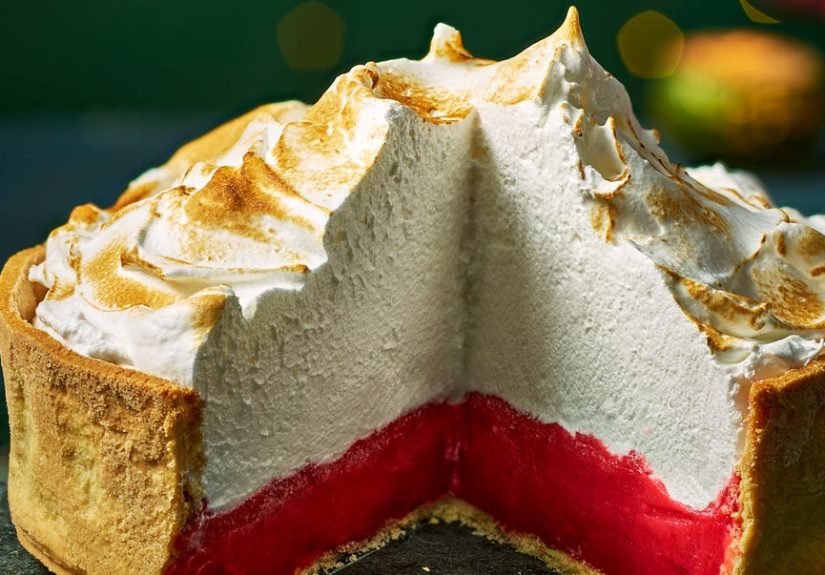
Serving this pie is also an experience. People notice it immediately because the color contrast is striking: deep cranberry red under a toasted white cloud. It looks festive without needing plastic decorations, edible glitter, or a centerpiece that blocks everyone’s view of the mashed potatoes. When sliced, the pie reveals its layers cleanly: crisp crust, smooth curd, soft meringue. The first bite usually gets a pause. Cranberry is not as expected as apple or pumpkin, so the flavor feels fresh, bright, and a little surprising.
One useful lesson from making this pie is that tart desserts often feel more balanced after a heavy meal. A super-sweet dessert can be wonderful, but after holiday dishes loaded with butter, gravy, stuffing, and casseroles, a cranberry curd pie brings welcome brightness. It cuts through richness and wakes up the palate. That is why this recipe works so well for Thanksgiving and Christmas, but it is also excellent in winter when citrus and cranberries feel especially right.
Another experience worth mentioning is that this pie rewards preparation. If you make the crust and curd the day before, the final assembly is surprisingly calm. On serving day, all you need to do is whip the meringue, decorate the top, and toast it. This makes the recipe look more impressive than the effort required at the last minute. That is the best kind of entertaining trick: maximum applause, minimum panic.
Finally, this cranberry meringue pie reminds you that homemade desserts do not need to be perfect to be memorable. Maybe one slice leans a little. Maybe the meringue has one dramatic peak that looks like a snowy mountain with ambition issues. Maybe the crust edge is rustic, which is the polite baking word for “not symmetrical.” None of that matters. What matters is the contrast of flavors, the beauty of the color, and the pleasure of sharing something made with care. This pie is not just dessert; it is a conversation starter, a table centerpiece, and a very delicious reason to keep cranberries in the freezer.
Conclusion
This showstopper cranberry curd and fluffy meringue pie recipe brings together everything a memorable dessert should have: bold color, balanced flavor, creamy texture, crisp crust, and a topping that looks like it belongs in a bakery case. The tart cranberry curd keeps the pie bright and refreshing, while the fluffy toasted meringue adds softness and height. It is elegant enough for a holiday table but approachable enough for a confident home baker.
Make it when you want something different from the usual pumpkin or pecan pie. Make it when you want a dessert that photographs beautifully. Make it when you want guests to ask for the recipe before they have finished their slice. Most importantly, make it because cranberry, citrus, butter, and meringue are a truly excellent team.