Table of Contents >> Show >> Hide
- First, the non-negotiable truth: standard solar panels don’t make power at night
- What “24/7 solar electricity” really means in the real world
- Pathway #1: Solar + battery storage (today’s main road to 24/7)
- Pathway #2: Concentrating solar power with thermal storage (solar that keeps working after sunset)
- Pathway #3: Nighttime solar concepts (the “this is wild, but real” category)
- So… can solar really be 24/7? Yesif you design the system for it
- Common misconceptions (because the internet loves a good misunderstanding)
- Conclusion: the 24/7 promise is realjust not in the way most people picture it
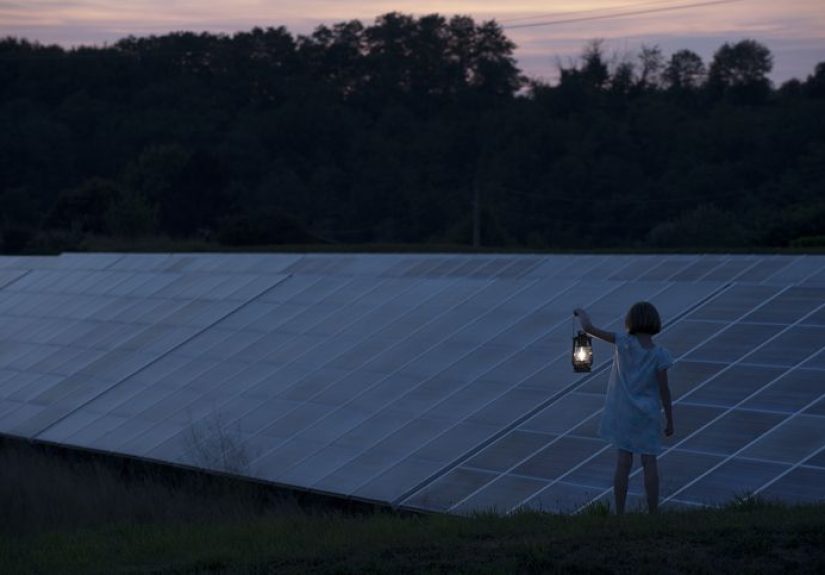
Solar panels are amazing… but they’re not vampires. They do not thrive in the dark.
Traditional photovoltaic (PV) panels generate electricity when light hits themso once the sun clocks out, the panel’s “shift” ends.
And yet, you’ve probably heard the bold claim that solar can be “24/7.”
Is that marketing sparkle, wishful thinking, or a real engineering pathway?
Here’s the honest, useful answer: a solar-powered energy system can deliver reliable electricity around the clock by combining solar with storage,
smart system design, andin some early-stage researchdevices that harvest energy from the temperature difference between Earth and the night sky.
“24/7 solar” is less about a single panel doing overtime and more about building a team: panels, batteries, controls, and sometimes thermal storage.
First, the non-negotiable truth: standard solar panels don’t make power at night
Conventional PV panels convert sunlight into electricity. No sunlight (or bright enough light), no meaningful PV output.
Moonlight won’t cut it for anything beyond tiny trickle-level curiosity projects, and porch lights aren’t a retirement plan.
So if you’re imagining a normal rooftop panel quietly cranking out kilowatts at midnightsorry. That’s not how today’s mainstream PV works.
But that doesn’t kill the dream. It clarifies it. “24/7 electricity from solar” becomes realistic when you ask a better question:
How do we supply electricity 24/7 using solar as the primary energy source?
What “24/7 solar electricity” really means in the real world
In energy planning, there’s a difference between generation and availability.
Solar generation is naturally intermittent; electricity availability can be continuous if you shift, store, or supplement that energy.
Think of solar like cooking: you don’t have to keep the oven on all night if you meal-prepped.
There are three practical pathways to “solar-based 24/7”:
- Solar + batteries (most common today)
- Solar thermal + heat storage (concentrating solar power in the right locations)
- Emerging nighttime solar concepts (promising for small power, still early)
Pathway #1: Solar + battery storage (today’s main road to 24/7)
How it works
During the day, solar panels power your loads and charge a battery. In the evening and overnight, the battery discharges to keep things running.
On the grid, solar-plus-storage can also shift daytime solar into peak evening hours and help stabilize supply and demand.
Why this is the default option right now
Batteries are modular, scalable, and increasingly common at every sizefrom single-home setups to utility-scale plants.
A battery system is typically described by two numbers: how much power it can deliver (kW or MW) and how much energy it can store (kWh or MWh).
The ratio of those numbers gives you “duration” (how many hours it can deliver its rated power).
Many grid batteries are designed around a few hours of dischargeenough to move solar output into the evening, support peak demand,
and provide grid services. That’s a big deal for “24/7” reliability because evening is when solar fades but people keep doing, well, life.
A concrete example: a home aiming for “solar all night”
Imagine a household that uses about 25–35 kWh per day (totally plausible for a U.S. home with normal appliances and some HVAC).
They install a solar array sized to cover daytime use plus enough extra to fill a battery.
At night, the battery covers essentials: refrigeration, lighting, internet, fans, and selective HVAC.
The key lesson: achieving “overnight solar” isn’t just about buying a batteryit’s about matching three things:
your nighttime load, your battery capacity, and how reliably your solar can recharge it the next day.
Cloudy streaks, winter sun angles, and heat waves are the plot twists.
How utilities do it: solar farms + batteries
Utility-scale solar-plus-storage plants can charge batteries when solar generation is high and discharge later when demand rises.
This doesn’t magically make solar output constant, but it can make solar energy dispatchable over more hours.
If you’ve noticed more headlines about battery projects popping up near solar plants, that’s because the grid likes flexibility.
Batteries can respond quickly, support reliability, and reduce the need for fossil generation during certain peak periods.
The limitation: “24/7” over many days needs more than short-duration storage
A few hours of batteries can carry you through evenings and short gaps. But true “24/7” through storms or multi-day low-sun events can require:
- More storage duration (longer-hour batteries or different storage tech)
- Oversizing solar to charge storage even on weak-sun days
- Load shifting (running flexible loads when the sun is strong)
- A backup source (grid, generator, or another clean resource like wind)
This is why many “100% solar 24/7” claims quietly rely on a system-level mix. The panel is the star, but the supporting cast matters.
Pathway #2: Concentrating solar power with thermal storage (solar that keeps working after sunset)
What it is
Concentrating solar power (CSP) uses mirrors to focus sunlight to produce heat. That heat can make steam and drive a turbine to generate electricity.
The special trick: CSP can store heat (often in molten salt) and use it later, which allows electricity generation when the sun is down.
Why it matters for 24/7
Thermal storage is a different flavor than batteries. Instead of storing electrons, you store heat and convert it to electricity later.
In regions with strong direct sunlight (high “DNI”direct normal irradiance), CSP with thermal storage can extend solar electricity into the evening
and sometimes through much of the night depending on storage size and dispatch strategy.
CSP isn’t a universal solutionlocation matters more than with PV, and economics depend on project specifics.
But it’s an important proof point: solar energy can be captured in the day and converted into electricity later, after dark.
That’s a core building block for “24/7 solar-powered supply.”
Pathway #3: Nighttime solar concepts (the “this is wild, but real” category)
Now for the part where science does that thing where it feels like magic, but it’s actually physics wearing a lab coat.
Researchers have explored ways to generate electricity at night using the fact that Earth radiates heat into cold outer space.
If a device can radiate heat away and become cooler than the surrounding air, that temperature difference can be used to generate electricity
(often through a thermoelectric generator).
Radiative cooling + thermoelectrics
Some research prototypes use radiative cooling surfaces that “see” the cold sky and create a temperature gradient.
Pair that with thermoelectrics and you can generate electricity at nighttypically small amounts, but potentially useful for sensors,
low-power devices, and niche off-grid applications where a tiny trickle of reliable nighttime energy is valuable.
Translation: this is not about running your dishwasher at 2 a.m. on “night sun.”
It’s about expanding what solar-adjacent technology can do when the sun isn’t available.
“Anti-solar” or nighttime photovoltaic ideas
Another concept flips the idea of a solar cell: instead of absorbing sunlight, the device emits infrared radiation and generates power from the
temperature difference between the device and its environment. Under ideal conditions, concept studies suggest meaningful power density might be possible,
but these ideas remain far from being a mainstream rooftop product.
The important takeaway is not “buy nighttime solar panels tomorrow.” It’s this:
the phrase “solar can work 24/7” has a legitimate technical foundation, even if parts of it are early-stage.
So… can solar really be 24/7? Yesif you design the system for it
For homes
A realistic “24/7 solar-powered home” usually means:
- Solar PV sized for annual needs (often larger than “just daytime”)
- Battery storage sized for nighttime loads and desired backup time
- Smart load management (especially for HVAC, EV charging, and water heating)
- Optional grid connection for extended cloudy periods (or a generator/microgrid plan)
Many homeowners start with “solar to reduce bills,” then add storage for resilience.
The moment you want “solar all night,” you’re no longer just shoppingyou’re planning.
For businesses and campuses
Commercial sites often chase “24/7” for a different reason: downtime costs money.
Data centers, hospitals, labs, and manufacturing lines can justify storage because reliability is part of the product.
These sites may pair solar with batteries, backup generation, demand response programs, and sometimes additional renewables to smooth the profile.
For the grid
Grid-scale “24/7 clean electricity” is usually a portfolio: solar plus storage, wind, hydropower, geothermal, transmission upgrades,
and demand flexibility. Solar can become a dependable contributor when it’s paired with resources that fill the gaps.
Common misconceptions (because the internet loves a good misunderstanding)
“Solar panels store energy.”
Panels generate electricity. Storage stores energy. If your panel is “saving power,” that’s your battery doing the heavy lifting.
The panel is the paycheck; the battery is the savings account.
“If I get a big enough solar system, I’ll never need the grid.”
Sometimes true, often expensive. Going fully off-grid means planning for worst-case weeks, not average days.
Many people choose a hybrid approach: solar + batteries for backup, plus grid connection for the long tail of bad weather.
“Nighttime solar will replace batteries.”
Nighttime generation research is exciting, but today it’s not a substitute for batteries in most residential and commercial “keep the lights on” use cases.
Think “supplement” and “new applications,” not “overnight takeover.”
Conclusion: the 24/7 promise is realjust not in the way most people picture it
Standard solar panels don’t generate meaningful electricity at night. But solar-based systems can supply electricity 24/7 by storing daytime energy,
shifting loads, and using technologies like batteries or thermal storage. Meanwhile, emerging nighttime solar concepts show that the boundary between
“day power” and “night power” is not as fixed as it used to be.
If you want “24/7 solar,” the winning strategy is to stop thinking in terms of a single panel and start thinking like a system designer:
generation + storage + controls + backup plan. That’s not less excitingit’s the part where solar grows up and starts paying the rent.
Experiences: What “24/7 solar” feels like in real life (about )
People who live with solar day-to-day tend to describe the “24/7” journey as a series of small “aha” momentsusually triggered by something mundane,
like realizing the laundry is cheaper at 1 p.m. or that the air conditioner is the real boss of the electric bill.
A common first experience is watching an app on a sunny day and thinking, “We’re basically a tiny power plant.” Then evening arrives and the graph drops,
and the second thought is, “Oh right… the sun sleeps.”
Homeowners who add batteries often report that the biggest change isn’t just backup powerit’s confidence.
A brief outage goes from “Where’s the flashlight?” to “Did the Wi-Fi blink?”
But that confidence is paired with a new habit: paying attention to what’s running at night.
People start labeling loads as “must-have” (fridge, lights, medical devices), “nice-to-have” (TV, ceiling fans), and “please don’t” (electric dryer,
pool heater, and anything that sounds like it has a motor the size of a small bear).
The most interesting “24/7 solar” experience is how quickly behavior adapts.
EV owners, for example, often shift charging into midday windows when solar is strongest.
Some families pre-cool homes in the afternoon so HVAC can coast longer into the evening.
Businesses do the same thing at larger scale: running energy-intensive processes when onsite solar is abundant, then using stored energy or grid power
later. It’s not about deprivation; it’s about timinglike using the express lane instead of sitting in traffic.
On the commercial side, facilities teams commonly describe solar-plus-storage as a new tool in the reliability toolbox.
Batteries can smooth short spikes, support critical circuits, and help avoid demand charges in some rate structures.
The “experience” becomes less about the romance of sunshine and more about operational control: fewer surprises, more predictable costs, and a stronger
plan for outages. That said, most also learn quickly that storage sizing is a strategy decision, not a guess.
A battery sized for “ride through short outages” feels very different from one sized for “run the building overnight,” and both feel different from
“operate through multiple cloudy days.”
Finally, people who chase the full 24/7 visionespecially off-grid or microgrid userstend to become accidental energy nerds.
They learn local seasonal patterns, track weather forecasts like a hobby, and develop a deep appreciation for efficiency upgrades:
insulation, heat pumps, smart thermostats, and LED lighting start to look less like boring home projects and more like extra battery capacity you
don’t have to buy. The lived lesson is simple: “24/7 solar” isn’t one productit’s a lifestyle of smarter energy use, backed by solid engineering.