Table of Contents >> Show >> Hide
- What Is the “Space Metal” Everyone Is Talking About?
- Scientists Are Learning to Make Cosmic Metal on Earth
- Why Rare-Earth Magnets Matter So Much
- The Critical-Mineral Problem Is Bigger Than Geology
- Could Space Metal Transform Electric Cars?
- Why Space Itself Is Becoming a Materials Laboratory
- What About Mining Asteroids?
- The Legal Side of the Space-Metal Economy
- Why the Popular Mechanics Issue Still Feels Relevant
- Will Tetrataenite Really Change the World?
- Experience and Perspective: Following the Space-Metal Story Beyond the Headline
- Conclusion: The Future May Be Forged One Atom at a Time
- SEO Tags
Imagine discovering a material with the magnetic muscle needed for electric cars, wind turbines, robots, aircraft, and high-performance electronicsbut instead of depending on difficult-to-source rare-earth elements, its main ingredients are ordinary iron and nickel. There is just one tiny complication: nature has traditionally preferred to make the good stuff inside meteorites over geological time scales.
Welcome to the wonderfully strange story of tetrataenite, sometimes described as a cosmic or “space metal.” It is an ordered iron-nickel alloy that has attracted serious interest as researchers search for alternatives to rare-earth permanent magnets. The subject received a particularly flashy spotlight in a Popular Mechanics special digital issue that also explored stealth aircraft, artificial intelligence, and warp-drive physics. Apparently one futuristic rabbit hole per issue was simply not enough.
Behind the dramatic headline, however, is a genuine materials-science story with implications for manufacturing, energy, defense, supply chains, and possibly the future space economy. Researchers have learned how to create tetrataenite-like structures much faster than the incredibly slow natural process associated with meteorites. At the same time, NASA and commercial researchers are investigating how metals, alloys, crystals, and other advanced materials behave when gravity stops bossing them around.
Space metal may not literally save civilization next Tuesday. But the science behind it could help reshape how civilization makes some of its most important machines.
What Is the “Space Metal” Everyone Is Talking About?
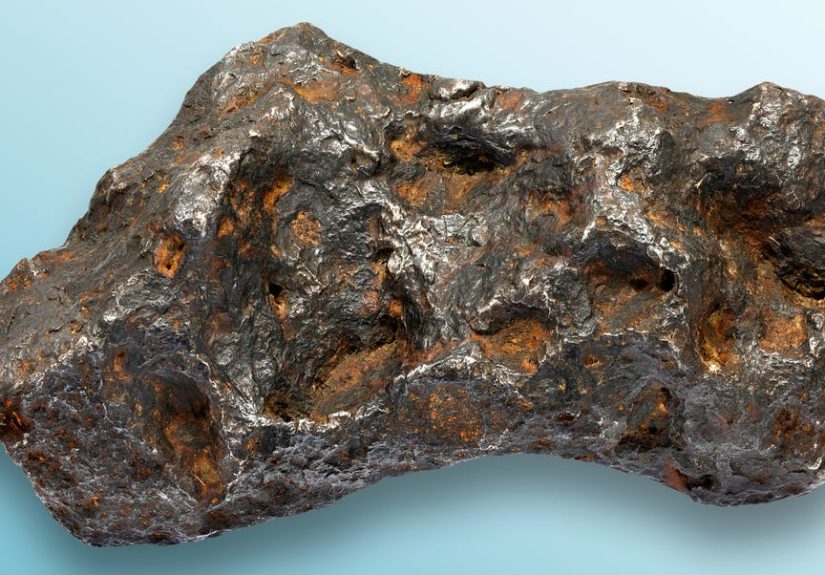
The star of this particular materials-science adventure is tetrataenite, an iron-nickel mineral with an unusually ordered atomic structure. Natural tetrataenite is strongly associated with meteorites, where iron and nickel can cool exceptionally slowly and gradually arrange themselves into the required crystal pattern.
That atomic ordering matters because it gives tetrataenite properties desirable in a permanent magnet. Permanent magnets need more than the ability to stick your grocery list to a refrigerator. High-performance versions must maintain strong magnetization while resisting heat, mechanical stress, and opposing magnetic fields.
Rare-earth magnets currently excel at this job. Neodymium, praseodymium, dysprosium, and terbium are especially valuable in advanced magnetic materials. Unfortunately, mining and processing these elements can be complicated, environmentally intensive, and geographically concentrated.
Tetrataenite presents an intriguing alternative because its basic ingredientsiron and nickelare far more conventional industrial metals.
The Catch: Nature Normally Takes Forever
Natural tetrataenite forms under conditions that are hilariously inconvenient for factory managers. The iron and nickel atoms must become highly ordered, a process traditionally associated with meteorites cooling at extraordinarily slow rates.
A production manager cannot exactly tell a customer, “Your magnets should be ready shortly after the next ice age.”
For decades, researchers therefore faced a difficult question: Can the atomic organization found in meteoritic tetrataenite be recreated quickly enough for industrial manufacturing?
Recent research suggests the answer may eventually be yes.
Scientists Are Learning to Make Cosmic Metal on Earth
Materials scientists have demonstrated methods for accelerating the formation of tetrataenite-like iron-nickel structures. One important line of research found that adding phosphorus to an iron-nickel mixture can dramatically influence atomic movement and encourage formation of the desired tetragonal structure.
Researchers at Northeastern University have explored another route involving mechanical processing and stress designed to encourage iron and nickel atoms to adopt the necessary arrangement.
These developments do not mean mass-produced tetrataenite motors will suddenly appear in every new electric vehicle. Producing a promising crystal phase in a laboratory and producing millions of inexpensive, durable magnets are two very different engineering challenges.
The discoveries are important because they attack what once seemed like tetrataenite’s most ridiculous limitation: time.
If engineers can reliably produce the material at industrial speeds while achieving the required magnetic strength, thermal stability, durability, and manufacturability, tetrataenite could join the growing portfolio of rare-earth-free magnet technologies.
Why Rare-Earth Magnets Matter So Much
Permanent magnets hide inside an astonishing amount of modern technology. They appear in electric motors, generators, speakers, sensors, industrial machinery, computer equipment, consumer electronics, aerospace systems, and defense technologies.
High-strength magnets are particularly important where engineers need significant power from a compact, lightweight system.
Electric Vehicles
Many electric motors use permanent magnets to convert electrical energy into mechanical motion efficiently. Strong magnets can help engineers build motors that are compact, powerful, and responsive.
Wind Turbines
Permanent-magnet generators are used in parts of the wind-energy industry, particularly where manufacturers seek high efficiency and lower maintenance requirements.
Robotics and Automation
Industrial robots, drones, actuators, precision machinery, and automated production lines depend on increasingly sophisticated motors. As robotics expands, demand for high-performance magnetic materials is unlikely to become less important.
Defense and Aerospace
Advanced aircraft, radar systems, guidance equipment, sensors, communications hardware, and other defense technologies rely on critical minerals and specialized magnetic materials. That turns what sounds like a niche metallurgy problem into a national-security issue.
The Critical-Mineral Problem Is Bigger Than Geology
The phrase critical minerals does not simply mean “rocks we really like.” In the United States, criticality is tied to economic importance, national security, and vulnerability to supply disruption.
The U.S. Geological Survey’s 2025 critical-minerals list contains 60 minerals, illustrating how deeply advanced manufacturing depends on materials whose supply chains can become vulnerable. Rare-earth elements remain especially important because they support electronics, energy equipment, advanced manufacturing, and defense applications.
This is why a rare-earth substitute can be valuable even if the world is not literally about to run out of rare earths.
The bigger questions are where materials are mined, where they are refined, how environmentally demanding processing is, whether production is concentrated among a small number of suppliers, and how quickly alternative supply chains can respond to geopolitical disruption.
A material based largely on iron and nickel could therefore have strategic value well beyond the price printed on a commodity chart.
Could Space Metal Transform Electric Cars?
Electric vehicles are one of the most obvious potential applications because their motors reward magnets that are strong, compact, efficient, and capable of handling heat.
If tetrataenite eventually becomes a commercially competitive permanent-magnet material, automakers could gain another option for designing motors with less dependence on rare-earth elements.
That does not guarantee that every manufacturer would switch.
Engineering is an endless festival of trade-offs. A new magnetic material must compete on magnetic strength, coercivity, operating temperature, corrosion resistance, weight, manufacturability, consistency, availability, and price. It also has to survive years of vibration, temperature cycling, potholes, impatient drivers, and whatever mysterious substance children spill in the back seat.
Tetrataenite therefore has to become not merely scientifically fascinating but industrially boring. In manufacturing, “boring” is a compliment: predictable performance, repeatable production, manageable costs, and millions of parts that behave exactly as expected.
Why Space Itself Is Becoming a Materials Laboratory
The space-metal story has another dimension. Researchers are not only studying materials that originated in extraterrestrial environments; they are increasingly using space itself to investigate and manufacture advanced materials.
Microgravity changes the behavior of molten metals, fluids, crystals, and multiphase materials. On Earth, gravity creates effects such as convection, buoyancy, and sedimentation. Remove or greatly reduce those influences and researchers can observe physical processes that are difficult to isolate in terrestrial laboratories.
The International Space Station has hosted experiments involving metal solidification, brazing, crystal growth, exotic glasses, semiconductors, superalloys, and additive manufacturing.
Stronger and More Uniform Alloys
When an alloy cools from a liquid into a solid, microscopic crystal structures develop inside it. Their shapes and distribution strongly influence properties such as strength and durability.
Microgravity allows scientists to study solidification without some of the gravity-driven movement that occurs on Earth. The resulting knowledge can improve both future space manufacturing and terrestrial casting techniques.
Metallic Glasses
NASA has also investigated bulk metallic glassesmetals whose atomic structures differ from ordinary crystalline alloys. These materials can offer useful mechanical and wear-resistant properties.
Experiments involving metallic glass combined with tungsten are particularly interesting because large density differences make certain mixtures difficult to study under normal gravity. Microgravity provides researchers with a cleaner environment in which to understand how the materials interact.
Manufacturing Parts Where They Are Needed
The long-term vision extends beyond producing exotic laboratory samples. Future lunar bases, orbital facilities, and deep-space missions may need the ability to fabricate replacement parts, tools, structural components, wires, rods, and other products without ordering overnight delivery from Earth.
Shipping a wrench across a continent is easy. Shipping it to Mars is a logistics department’s cry for help.
In-space metal processing and additive manufacturing could therefore become essential infrastructure for sustained human activity beyond Earth.
What About Mining Asteroids?
Whenever space and metals share a headline, asteroid mining eventually enters the room wearing a very expensive spacesuit.
Asteroids contain iron, nickel, water-bearing materials, andin some casesvaluable metals such as platinum-group elements. The theoretical attraction is obvious: the solar system contains an enormous quantity of raw material.
The economic reality is much less obedient.
A useful asteroid-mining business must locate an appropriate target, reach it, characterize it, extract material in extremely low gravity, process the material, transport valuable products, and somehow accomplish all of this for less money than the resulting resources are worth.
Those are not small footnotes.
As of today, asteroid mining remains an emerging technological and commercial frontier rather than an established mining industry. Yet companies and researchers continue developing prospecting, extraction, robotics, and in-space manufacturing technologies because the economics could improve dramatically as launch systems, automation, and orbital infrastructure mature.
The First Space Resources May Stay in Space
One of the most sensible early business cases may not involve returning giant piles of metal to Earth at all.
Resources extracted from the Moon or asteroids could be enormously useful in space. Water can support crews and potentially be separated into hydrogen and oxygen for propellant. Metals can become construction feedstock. Lunar material may eventually contribute to shielding, landing infrastructure, or habitats.
Using local resources avoids launching every kilogram from Earth’s gravity well, which is why NASA considers in-situ resource utilization important for long-duration exploration.
The Legal Side of the Space-Metal Economy
The technology is futuristic, but lawmakers have already started wrestling with ownership.
U.S. law provides rights for American citizens and companies to possess, transport, use, and sell asteroid or space resources they commercially recover, subject to applicable law and U.S. international obligations.
The Artemis Accords also address space resources, supporting extraction and utilization conducted consistently with the Outer Space Treaty and emphasizing peaceful, sustainable activity.
That framework does not magically settle every international question. If commercial lunar and asteroid activity becomes profitable, debates over access, environmental responsibility, operational safety, interference, resource concentration, and global benefit will become much more intense.
Humans have argued over valuable territory and minerals for several thousand years. Adding rockets probably will not suddenly make everyone unusually relaxed about it.
Why the Popular Mechanics Issue Still Feels Relevant
The Popular Mechanics special issue that promoted the “space metal” story bundled it with features involving advanced stealth aviation, artificial intelligence and immortality, and theoretical warp-drive research.
That mixture sounds eclectic, yet all four topics share a common theme: technologies that once belonged largely to speculative fiction are increasingly being discussed through real engineering, physics, and policy.
Tetrataenite is an excellent example. A meteorite-derived magnetic structure sounds like something Tony Stark would discover five minutes before the final battle. In reality, researchers are examining crystal ordering, diffusion, phosphorus content, mechanical processing, magnetic anisotropy, and scalable production methods.
The science is considerably less cinematicand much more interesting.
Will Tetrataenite Really Change the World?
Possibly, but scientific breakthroughs rarely travel in straight lines from laboratory discovery to global domination.
Tetrataenite still has to prove itself as a manufacturable magnet technology. Researchers must demonstrate reliable production, desirable magnetic properties, durability, thermal stability, scalability, and competitive economics.
Meanwhile, governments and industry are pursuing multiple strategies to strengthen critical-mineral supply chains: developing domestic mines and processing capacity, recycling electronic waste, recovering minerals from unconventional feedstocks, diversifying international suppliers, reducing material usage, and creating substitutes.
Space metal is therefore not a single magical solution. It is part of a much larger materials revolution.
And that may be the more exciting interpretation.
The technologies that reshape this century may depend less on discovering one miraculous element than on learning how to arrange familiar atoms in dramatically better ways.
Experience and Perspective: Following the Space-Metal Story Beyond the Headline
Reading about “space metal that could change the world” creates a predictable first reaction: you picture astronauts drilling into a glittering asteroid while trillion-dollar chunks of platinum float politely into cargo containers. Spend a little more time following the science, however, and the experience becomes far more groundedand more rewarding.
The first useful habit is separating origin from application. Tetrataenite became famous because of its association with meteorites, but the practical goal is not necessarily to harvest meteorites for magnets. Researchers want to understand the atomic arrangement nature produced and learn how to recreate it efficiently with materials available on Earth. It is closer to reverse-engineering a cosmic recipe than opening an extraterrestrial mine.
That distinction completely changes how the story feels. The meteorite is no longer simply a valuable rock. It becomes a laboratory notebook written by the solar system.
A second useful experience is comparing the glamorous headline with the engineering checklist underneath it. Once you ask how a material would actually become a commercial motor magnet, the questions multiply quickly. Can factories make tons instead of grams? Are batches consistent? Does the magnet remain strong at high temperatures? Can it tolerate vibration? Is machining difficult? How easily does it corrode? What is the total manufacturing cost?
This is where futuristic technology becomes pleasantly practical. World-changing inventions survive because engineers eventually answer hundreds of boring questions extremely well.
Following NASA’s materials research produces a similar shift in perspective. Microgravity is often described visuallyastronauts floating through a stationbut its industrial value becomes clearer when you think about what is not happening. Heavy particles are not settling in the usual way. Buoyancy-driven flows are reduced. Convection behaves differently. Molten materials can reveal properties that gravity normally hides.
Suddenly the International Space Station looks less like an orbiting campsite and more like a laboratory with a physical environment that cannot be conveniently reproduced on Earth.
The most eye-opening part of following the topic is realizing how tightly materials science connects industries that appear unrelated. Better permanent magnets can affect electric vehicles, turbines, robotics, aerospace hardware, consumer electronics, and defense equipment. Better knowledge of metal solidification can influence terrestrial factories while helping engineers design lunar manufacturing systems. Improvements in launch economics can strengthen an entirely new class of orbital factories.
There is also a valuable lesson in avoiding technological extremes. One extreme says asteroid mining and space manufacturing will immediately create unlimited wealth. The other dismisses everything because today’s economics are difficult. History suggests technologies often spend years in an awkward middle stagetechnically possible, economically questionable, steadily improvingbefore finding the application that finally makes them useful.
That is probably the smartest way to experience the “space metal” story: stay excited, but keep your calculator nearby.
Conclusion: The Future May Be Forged One Atom at a Time
“Space metal” makes an excellent magazine headline, but the real story is larger than one meteorite mineral. Tetrataenite represents a new way of thinking about materials: instead of accepting scarce ingredients and vulnerable supply chains as permanent limitations, scientists can study unusual structures created by nature and search for practical ways to reproduce their advantages.
At the same time, microgravity research is showing that space can become more than a destination. It can be a materials laboratory, manufacturing environment, and eventually a source of industrial resources.
None of this guarantees an imminent asteroid-mining boom or the overnight replacement of rare-earth magnets. The toughest workscaling, testing, manufacturing, regulation, economics, and infrastructureis exactly the work that comes after the exciting discovery.
But if researchers succeed, the consequences could spread across clean energy, electric transportation, robotics, aerospace, advanced manufacturing, and national-security supply chains.
The future, in other words, may not arrive aboard a warp-drive starship. It may quietly appear inside a motor as a carefully organized stack of iron and nickel atoms. For once, the universe’s most interesting technology might fit comfortably in the palm of your hand.
SEO Tags
Note: This article is an original synthesis based on established materials-science research, U.S. government information on critical minerals and space resources, NASA microgravity research, academic findings on tetrataenite, and reporting about emerging space-manufacturing technologies. Scientific and commercial outcomes discussed as future possibilities should not be interpreted as guaranteed developments.