Table of Contents >> Show >> Hide
- Why it matters: safety, costs, and diagnosis
- How termites damage wood: patterns, pellets, and mud tubes
- How wood rot (fungal decay) works: moisture is the villain
- Side-by-side: key differences you can test at home
- Simple inspection steps (do this before you call someone)
- Treatment & repair: different fixes for different foes
- When to call a pro
- Prevention: common-sense home armor
- Costs ballpark
- Quick checklist: is it termites or rot?
- Conclusion
- Personal & Practical Experiences (expanded ~)
Intro: Finding soft or damaged wood in your home is like hearing a strange creak in the middle of the night you don’t want to ignore it. But before you call in a wrecking crew or a hazmat team, take a breath: not all ruined-looking wood is created equal. Termite damage and wood rot (fungal decay) both weaken structures, but they leave very different clues. This guide walks you through the signs, causes, fixes, and prevention tactics so you can diagnose the problem like a pro (or at least not panic like one).
Why it matters: safety, costs, and diagnosis
Both termites and wood rot can lead to structural failure, but they have different root causes and treatments. Termites are insects that eat wood; rot is caused by fungi that thrive in moisture. Fix the wrong problem and you’ll waste time, money, and patience and invite more damage. Early and correct diagnosis can save hundreds to thousands of dollars in repairs and prevent unsafe living conditions.
How termites damage wood: patterns, pellets, and mud tubes
What termites do: Termites consume cellulose in wood, creating galleries and tunnels inside timbers. They can attack from the ground up (subterranean termites) or live inside the wood itself (drywood termites). Subterranean types often build mud tubes along foundation walls or framing to maintain moisture while they travel. Drywood termites leave behind tiny, sawdust-like droppings called frass a key giveaway.
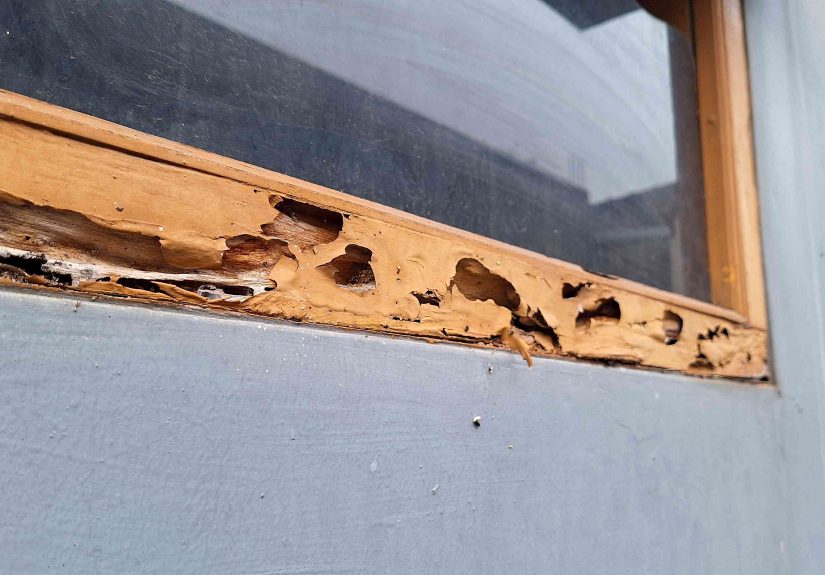
Look for: hollow-sounding wood when tapped, long smooth galleries running parallel to the grain (subterranean) or across the grain (drywood), piles of pellet-like frass, discarded wings near windows or lights, and mud tubes on exterior or interior walls. Live termites or shed wings are definitive signs. If you tap a beam and it sounds hollow like a coconut, that’s a red flag.
Real-world example
Imagine an old deck post that’s soft at the bottom where it touches soil. If you pry a sliver of wood and find narrow, smooth tunnels and a small pile of dark pellets nearby, termites are likely the culprit.
How wood rot (fungal decay) works: moisture is the villain
What rot does: Wood rot is the result of fungi breaking down wood fibers usually where moisture content remains high over time. There are different rot types (wet rot, dry rot, brown rot, white rot) with slightly different appearances and spread patterns, but they all need moisture to survive. Rot softens wood, leaving it spongy, stringy, or crumbly depending on the species and stage.
Look for: discolored wood (often darker or bleached), spongy or flaky texture, a musty or moldy smell, surface fungal growth (sometimes visible as white strands or mushroom-like fruiting bodies), and paint or varnish that bubbles or peels where moisture has been trapped. Crumbling wood that breaks into cube-like pieces is a classic sign of decay.
Real-world example
Consider a bathroom window sill with peeling paint and a damp, musty smell. If the wood crumbles under a fingernail and you see white fuzzy fungal threads in hidden crevices, you’re looking at wood rot not termites.
Side-by-side: key differences you can test at home
- Sound & touch: Tap the wood. Termite- eaten wood often sounds hollow and breaks into long splinters; rotten wood is often soft, spongy, and crumbles or flakes.
- Visual pattern: Termite galleries are smooth and patterned; rot produces irregular, often cubical or stringy decay and surface fungal growth.
- Debris: Termites may leave frass or mud tubes; rot often leaves sawdusty powder, mold, or fruiting bodies (mushrooms).
- Location and moisture: Rot is almost always connected to persistent moisture (leaks, poor ventilation, ground contact). Termites like moisture too, but they can be active in drier timber (especially drywood termites). Always check whether wood contacts soil or if a leak exists.
Simple inspection steps (do this before you call someone)
- Look for external clues: mud tubes, frass, shed wings, mushroom-like growths, or bubbling paint.
- Tap test: gently tap suspect wood with a screwdriver handle or hammer; hollow = maybe termites; soft/spongy = probably rot.
- Probe test: use an awl or screwdriver to poke the woodrot will usually allow deep penetration; termite damage may break off in long sections.
- Trace the moisture: check nearby plumbing, roof overhangs, gutter function, and ground slopes directing water to the foundation. Moisture meters can confirm high wood moisture content.
Treatment & repair: different fixes for different foes
Termite treatment: Eradication usually requires a licensed pest control operator. Treatments include soil-applied termiticides, baiting systems, localized wood treatments, or fumigation for drywood infestations. After treatment, structural repairs often include replacing damaged framing or sistering new joists.
Wood-rot repair: Stop the moisture source first (fix leaks, improve drainage, ventilate crawl spaces). Remove all decayed wood until only sound timber remains; replace or treat the area with preservative; consider pressure-treated or rot-resistant wood for the replacement. In cases of dry rot (a fungus that can spread across masonry), professional remediation may be necessary.
When to call a pro
Call a licensed pest-control company if you find active termites (live insects, mud tubes, frass piles). Call a building contractor or restoration specialist if the rot affects structural members or if the moisture source is complex (e.g., foundation leaks, chronic condensation). If you’re unsure, many pest pros and home inspectors can give a quick assessment to tell you which problem you have.
Prevention: common-sense home armor
Preventing both problems largely comes down to moisture management and classic maintenance: keep wood away from soil, maintain gutters and downspouts, grade the landscape so water flows away from the foundation, avoid over-mulching against siding, and fix plumbing leaks promptly. For termite-specific defense, store firewood away from the house and maintain at least a six-inch clearance between soil and wood siding or framing. Periodic professional inspections (especially in termite-prone regions) are a wise investment.
Costs ballpark
Estimates vary widely: local termite treatments might run a few hundred to several thousand dollars depending on the method and infestation size; structural repairs can add thousands more. Rot repairs depend on how much needs replacement and whether water damage has spread to finishes or systems. Early detection makes both problems far less expensive.
Quick checklist: is it termites or rot?
- Frass or mud tubes? → Termites.
- Fuzzy fungus, musty smell, spongy wood? → Rot.
- Hollow sound when tapped? → Likely termite but confirm with probe.
- Persistent moisture source present (leak, poor drainage)? → Rot (or at least rot risk).
Conclusion
Termite damage and wood rot both chew away at your home’s integrity, but they leave different fingerprints. Termites carve internal galleries and may leave frass or mud tubes; rot softens and crumbles wood and often brings visible fungal growth and musty smells. Use the tap/probe/visual checklist above, address moisture problems fast, and bring in licensed pros if insects or extensive structural damage are involved. Detecting the problem early is the homeowner’s best defense and cheaper than rebuilding a porch at midnight.
Publication-ready metadata
Sapo (short summary)
Not all damaged wood is the same. Termites and wood rot both weaken structures but show different clues: termites hollow and tunnel, leaving frass and mud tubes; wood rot leaves spongy, discolored, musty-smelling timber with fungal growth. This guide gives simple inspection steps, clear visual and tactile differences, treatment paths, prevention tips, and when to call the pros everything a homeowner needs to diagnose and act fast. Protect your home by stopping moisture, watching for insect signs, and getting early professional help when needed.
Keywords
termite damage, wood rot, dry rot, wet rot, termite signs, frass, mud tubes
Personal & Practical Experiences (expanded ~)
Over the years of helping friends and doing house projects, I’ve seen the exact same “mystery wood” scenario at least a dozen times. One memorable case: a 100-year-old farmhouse with a sagging porch. The homeowner assumed rot after all, the porch had never been painted properly and water pooled at the base. I poked around and found long smooth galleries in the support beams and a tiny pile of pellet-like droppings tucked under a railing. Termites had silently hollowed the joists. The fix required targeted fumigation, replacement of the worst beams, and raising the porch footings to eliminate wood-to-soil contact. Lesson learned: never assume moisture is the whole story.
Another time, a rental property had a damp smell in the hallway and peeling paint under a rotted baseboard. A quick probe showed soft, soakable wood and white mycelial threads classic fungal rot. The tenant had been putting wet umbrellas and mop buckets in the closet, and condensation from a nearby bathroom was soaking the wall from the inside. In that case, the solution was straightforward: stop the moisture source, remove the decayed wood, treat the remaining timber with a preservative, and replace the baseboard. No tenting, no frass just a messy leak and a teachable maintenance moment.
Practical tips from these experiences:
- Always look up and down. A drip in an attic often shows up months later as rot in a ceiling joist or as termite activity where water softened the wood. Fix roofing and plumbing first.
- Use simple tools: a flathead screwdriver, a small flashlight, and a moisture meter can save time and false assumptions. If the screwdriver slips in more than ¼”, that’s a serious probative sign.
- Know your region. I’ve noticed more drywood termite problems in beach towns and more subterranean activity inland where damp crawl spaces exist. Your local extension office or pest pros can tell you which pests are common in your county.
- Don’t patch paint over suspect areas. Painted-over termite damage sometimes hides large galleries that will collapse later. If you find bubbling paint, peel it back and probe you might find rot or insect activity underneath.
- When in doubt, document. Take photos before you fix anything: pest control companies and insurance claims both appreciate clear evidence of pre-existing conditions versus new damage.
Finally, I recommend a seasonal 10-minute check: walk your home’s perimeter, look for mud tubes or signs of frass, check gutters and downspouts, and ensure wood doesn’t touch soil. These small checks have saved friends the stress of major repairs. In short be curious, be methodical, and fix the moisture before you replace the wood.
End of article