Table of Contents >> Show >> Hide
- Table of Contents
- What “Worst Anime Parents” Actually Means Here
- 1) Gendo Ikari (Neon Genesis Evangelion)
- 2) Shou Tucker (Fullmetal Alchemist)
- 3) Ragyo Kiryuin (Kill la Kill)
- 4) Akemi Hinazuki (ERASED)
- 5) Kagemitsu Daigo (Dororo)
- 6) Mayu’s Parents (Elfen Lied)
- 7) Medusa Gorgon (Soul Eater)
- 8) Vinsmoke Judge (One Piece)
- 9) Kikyo Zoldyck (Hunter x Hunter)
- 10) Ging Freecss (Hunter x Hunter)
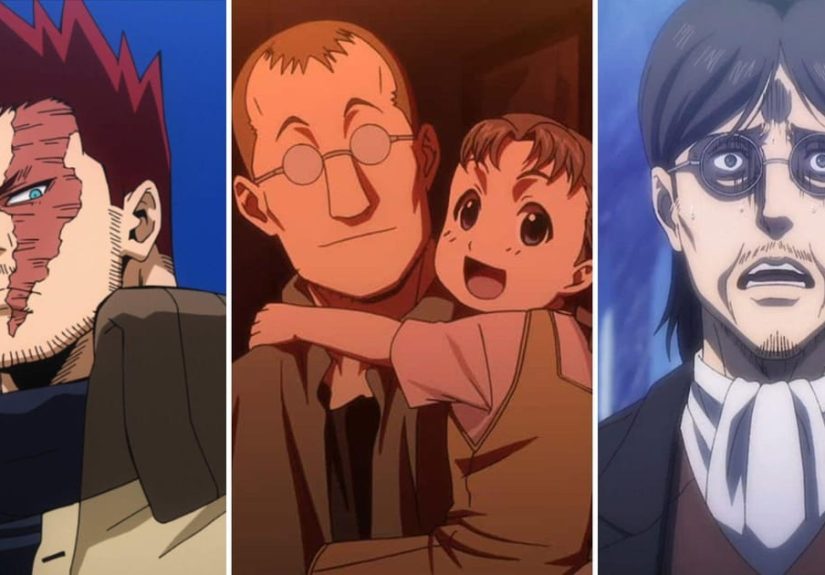
- 11) Enji “Endeavor” Todoroki (My Hero Academia)
- 12) Hiromi Shiota (Assassination Classroom)
- 13) Momiji’s Mother (Fruits Basket)
- 14) Charles zi Britannia (Code Geass)
- 15) Dario Brando (JoJo’s Bizarre Adventure)
- 16) Yūjirō Hanma (Baki)
- 17) Dr. Nakabachi / Shouichi Makise (Steins;Gate)
- 18) Toji Fushiguro (Jujutsu Kaisen)
- 19) Gambino (Berserk)
- 20) Lordgenome (Gurren Lagann)
- 21) Rod Reiss (Attack on Titan)
- What These Parents Teach Us (Unfortunately)
- on the Viewer Experience: Why This Topic Hits So Hard
- Conclusion
Anime gives us found families, wholesome dads who pack bento like they’re prepping for the Olympics, and moms who can heal a bad day with one look.
And then… it gives us these parents.
This list isn’t “parents who made one questionable choice in Episode 3.” This is the hall-of-shame for guardians who weaponize parenting:
the manipulators, the exploiters, the control freaks, the “my child is a business plan” types, and the ones who treat love like a coupon that expires.
Some are villains. Some are frighteningly realistic. All of them make you want to file a complaint with the Anime Child Protective Services Department
(which, sadly, only exists in our dreams).
Quick spoiler note: We’ll keep major twists vague, but we will discuss character behavior and family dynamics.
If you’re mid-series, consider this your friendly “proceed with caution” sign.
Table of Contents
What “Worst Anime Parents” Actually Means Here
“Worst” isn’t just “strict” or “embarrassing in public.” The parents below land here for patterns like:
abuse, neglect, exploitation, emotional manipulation,
endangering their kids, or turning family into a power game.
In other words: the kind of parenting that creates protagonists… and therapy bills.
1) Gendo Ikari (Neon Genesis Evangelion)
Why he’s awful
Gendo is what happens when “emotionally unavailable” evolves into a full-time career track. He treats parenting like a cold email:
minimal warmth, maximum agenda. His son becomes a tool in a larger plan, and affection is rationed like it’s classified information.
Why fans still talk about him
Gendo’s damage isn’t cartoonishit’s chillingly personal. He’s the “I’m doing what’s necessary” parent who never asks what the kid needs.
It’s the kind of neglect that can be louder than yelling.
2) Shou Tucker (Fullmetal Alchemist)
Why he’s awful
Shou Tucker is infamous because he crosses a line that most stories won’t even approach: using his child as raw material for ambition.
He doesn’t just fail as a fatherhe actively betrays the most basic duty of a parent: protect your kid.
What makes it hit so hard
The setup is domestic and gentle, which makes the fallout feel like the floor disappears under you. Anime has villains with bigger explosions,
but very few betrayals feel this personal.
3) Ragyo Kiryuin (Kill la Kill)
Why she’s awful
Ragyo doesn’t raise childrenshe engineers them. Her “love” comes with conditions, control, and a horrifying willingness to treat her daughters
as assets in a bigger mission. If parenting had a corporate org chart, she’d be the CEO who calls empathy “inefficient.”
Why she’s uniquely terrifying
She’s charismatic, stylish, and confidentmeaning her cruelty arrives dressed like authority. She’s the nightmare version of “mother knows best.”
4) Akemi Hinazuki (ERASED)
Why she’s awful
Akemi is a painfully realistic kind of monster: the parent who turns home into a pressure cooker. She controls through fear, humiliation,
and relentless punishment, pushing her child into isolation when they need safety the most.
Why it’s hard to watch
There’s no fantasy excuse hereno demon contract, no secret war. It’s just cruelty behind closed doors, which makes it feel disturbingly possible.
5) Kagemitsu Daigo (Dororo)
Why he’s awful
Daigo is the parent who trades a child’s life for prosperity and then acts surprised when consequences show up with a sword and a backstory.
He treats his own son as a bargaining chip, and the “greater good” becomes his all-purpose excuse.
What makes it memorable
Dororo frames his choices as political and personal at once. He isn’t just a bad dadhe’s what happens when power eats humanity.
6) Mayu’s Parents (Elfen Lied)
Why they’re awful
Mayu’s home life is a masterclass in failing a child: abuse, rejection, and a total refusal to protect her from harm.
The adults who should be her shelter become the storm.
Important note
The series touches on serious themes, including sexual abuse. Even without graphic detail, the point is clear: these guardians do not deserve the title “parent.”
7) Medusa Gorgon (Soul Eater)
Why she’s awful
Medusa manipulates her child like a lab experiment. She uses fear and control to shape Crona into what she wants, ignoring their wellbeing and autonomy.
Her parenting style could be summed up as: “You don’t get to be a person, you get to be useful.”
Why she stands out
She’s calm. Clinical. That composure makes her cruelty feel even colderlike she’s not even angry, just… committed.
8) Vinsmoke Judge (One Piece)
Why he’s awful
Judge treats fatherhood like product development. His kids are meant to meet specs, and anyone who doesn’t fit the design gets punished.
Sanji’s story, in particular, shows how devastating it is when a parent sees kindness as a defect.
Why it matters
One Piece often balances tragedy with hope, and this arc makes that hope feel earned. Judge is a blueprint for “success at any cost” gone rotten.
9) Kikyo Zoldyck (Hunter x Hunter)
Why she’s awful
Kikyo’s “love” is possessive, paranoid, and suffocating. She doesn’t want a child; she wants a controlled outcome.
Killua’s independence becomes a threat, so she responds with guilt, pressure, and emotional coercion.
What makes her scary
She’s not always overtly violentshe’s strategic. And sometimes the most damaging parenting comes in the form of “I’m doing this because I care.”
10) Ging Freecss (Hunter x Hunter)
Why he’s awful
Ging is the patron saint of absentee fathers: legendary, admired, and barely present. He leaves his kid behind, then turns reunion into a scavenger hunt.
The message Gon receives is complicated: “I’m worth chasing,” not “you’re worth staying for.”
The nuance
Ging isn’t the most sadistic parent on this listbut neglect can still be harmful, especially when it’s wrapped in myth and hero worship.
11) Enji “Endeavor” Todoroki (My Hero Academia)
Why he’s awful
Endeavor turns his household into a training facility and his children into a scoreboard. He obsesses over legacy, power, and rankoften at the expense
of emotional safety. His family becomes collateral damage in his rivalry.
Why he’s complicated
The series explores accountability and change, but that doesn’t erase what his kids endured. Growth can be realand harm can still be real, too.
12) Hiromi Shiota (Assassination Classroom)
Why she’s awful
Hiromi micromanages her son’s identity like she’s editing a résumé: snip the parts she doesn’t like, rewrite the rest, and call it love.
She isolates Nagisa, controls his presentation, and treats his feelings as inconvenient.
Why it stings
It’s emotional abuse in everyday clothingquiet, constant, and socially “polite.” That makes it both believable and infuriating.
13) Momiji’s Mother (Fruits Basket)
Why she’s awful
Fruits Basket is tender, but it doesn’t flinch from parental harm. Momiji’s mother rejects him in a way that forces everyone to bend around her comfort,
not his needs. The child becomes the problem simply for existing.
Why it’s tragic
Momiji remains kind anywaywhich is both inspiring and heartbreaking. The story quietly asks: why is the kid the one doing all the emotional work?
14) Charles zi Britannia (Code Geass)
Why he’s awful
Charles doesn’t parent; he rules. His children are political pieces, and affection is conditional on loyalty and utility.
He builds a family structure where siblings are incentivized to compete instead of connect.
What makes him dangerous
He’s the kind of father who can justify cruelty as “philosophy.” When ideology becomes more important than your kid’s humanity, you’ve already lost.
15) Dario Brando (JoJo’s Bizarre Adventure)
Why he’s awful
Dario is an ugly reminder that villains don’t always start as mastermindsthey can start as kids raised in bitterness and abuse.
His parenting is neglectful, cruel, and steeped in resentment, shaping Dio’s worldview in some very dark directions.
Why he matters narratively
JoJo loves grand theatrics, but Dario’s impact is small-scale and long-term: the kind of damage that echoes across generations.
16) Yūjirō Hanma (Baki)
Why he’s awful
Yūjirō is less “strict dad” and more “walking natural disaster who happens to have a son.” He uses domination and violence as communication,
and fatherhood becomes another arena to prove superiority.
Why he lands on every worst-dad list
Because the story doesn’t pretend his behavior is normal. He’s a force of harmand Baki grows up having to define himself in that shadow.
17) Dr. Nakabachi / Shouichi Makise (Steins;Gate)
Why he’s awful
Nakabachi’s relationship with Kurisu is a painful blend of ego, resentment, and professional jealousy. He can’t stand her brilliance,
so he tries to diminish itturning family into a competition he refuses to lose.
Why it hits
Parents should be a safe audience for your growth, not the harshest critic praying you fail. His behavior turns pride into poison.
18) Toji Fushiguro (Jujutsu Kaisen)
Why he’s awful
Toji’s parenting legacy is defined by abandonment and transactional thinking. His child becomes a means to an endsomething to leverage,
discard, or ignore depending on what benefits him.
What makes it bleak
JJK is full of broken systems, and Toji shows how personal choices can mirror that coldness. He isn’t just harmed by the worldhe passes harm along.
19) Gambino (Berserk)
Why he’s awful
Gambino is a brutal example of a guardian who resents the child he’s responsible for. He treats Guts as a burden and a target,
lashing out instead of protecting. “Caretaker” is the job titlehis behavior is the opposite.
Why it’s unforgettable
Berserk doesn’t soften this reality. It shows how a childhood of violence can forge survival instincts… and scars that never fully fade.
20) Lordgenome (Gurren Lagann)
Why he’s awful
Lordgenome’s parenting toward Nia is cold, authoritarian, and conditional. He treats her less like a daughter and more like a disposable component
in a larger systemone that prioritizes control over compassion.
Why he’s fascinating
The series plays with big themesfreedom, oppression, legacyand Lordgenome embodies the tragedy of a parent who chooses power over tenderness.
21) Rod Reiss (Attack on Titan)
Why he’s awful
Rod Reiss turns parenthood into a pipeline for duty. He frames his daughter’s value around what she can inherit, become, or sacrifice.
The relationship is less “family” and more “tradition with a pulse.”
Why it lands so hard
Attack on Titan is obsessed with inheritancehistory, violence, responsibilityand Rod is the nightmare version of passing something down:
not love, but burden.
What These Parents Teach Us (Unfortunately)
If you line these characters up, a pattern pops out: the worst anime parents don’t just hurt their kidsthey redefine what love means
until the child can’t tell the difference between affection and approval, safety and obedience, identity and usefulness.
Anime exaggerates, sure. But it also nails a truth: parenting isn’t only about providing food and shelter. It’s about protecting dignity,
allowing growth, and not using your child to fix your own emptiness.
The silver lining? Many of the kids affected by these parents still carve out chosen families, mentors, and friendships that help them heal.
In other words: anime may hand someone a tragic backstory, but it often hands them a second chance, too.
on the Viewer Experience: Why This Topic Hits So Hard
Watching “the worst anime parents” is a weird emotional cocktail. One minute you’re entertainedbecause anime can make even family dysfunction feel cinematic
and the next you’re staring at the screen like, “Did that adult really just say that out loud?” It’s not just anger. It’s that particular frustration
that comes from witnessing unfairness wrapped in authority. The parent is older, louder, socially protected, and usually holding all the resources, while
the kid is expected to be endlessly patient, forgiving, and resilient. That imbalance is why these stories linger.
A lot of fans describe a “tension arc” when these characters show up: your shoulders creep upward, you brace for impact, and you start scanning scenes
for the moment the child will finally get a breath of kindness. Some series play it like horrorquiet footsteps, polite smiles, and then a sudden act
that proves the household is not safe. Others play it like tragedy: the parent is trapped in ideology, pride, or ambition, and the child becomes the
casualty of a worldview that refuses to bend. Either way, the audience ends up doing emotional math: “How much damage is happening here?” and
“What will it take for this kid to recover?”
There’s also a very specific satisfaction when a story refuses to excuse the parent. Not every anime gives a neat redemption bow, and that can be a relief.
Accountability mattersespecially in fiction, where consequences can be shown clearly. When a character like Endeavor is forced to confront the harm he caused,
viewers often feel two things at once: glad the series acknowledges the damage, and protective of the kids who had to live through it. That tensiongrowth
versus forgivenesscreates real debate in fandom spaces, which is why these parents keep getting ranked, argued about, meme’d, and re-litigated.
Finally, these stories resonate because they highlight what good parenting looks like by contrast. A single supportive mentor or caring friend can feel
like sunlight after episodes of emotional winter. Fans remember the moments a child is believed, defended, or simply treated like a human being. In that
sense, the “worst parents” topic isn’t only about outrage; it’s also about catharsis. We watch these dynamics because we want to see kids survive them,
outgrow them, and build something betterpreferably with found family, snacks, and a dramatic theme song that plays when healing finally begins.
Conclusion
The 21 parents above prove one thing: anime can turn family into the scariest battlefield of allbecause the villain already has the house keys.
Whether the harm comes from cruelty, neglect, obsession, or control, the result is the same: kids forced to grow up too fast.
Did we miss someone who deserves a spot on this list? (Sadly, the supply of terrible anime parents is… abundant.) Drop your picks, and let the debate begin.