Table of Contents >> Show >> Hide
- What “Best” Means Here (So This Isn’t Just a Random Shelfie)
- Foundational Classics From Spain (The Books That Built the House)
- 20th-Century Spain: Aftershocks, Survival, and Reinvention
- Modern Spain Page-Turners (Literary, Addictive, and Smart)
- Spanish-Language Masterpieces Beyond Spain (Because Spanish Is a World)
- A Practical Reading Roadmap (Because “Start Anywhere” Is Not Helpful)
- Translation Tips (How to Get the Most Out of Spanish Novels in English)
- Reader Experiences: How These Novels Feel in Real Life (Extended)
- Conclusion: Your “Best” Spanish Novel Is the One That Pulls You In
Spanish novels have a special talent for doing two things at once: making you laugh at human chaos and making you
quietly rethink your entire life while you’re waiting in line for coffee. Whether the story comes from Spain
(Madrid, Barcelona, a fictional town that definitely looks like Oviedo if you squint) or from the wider
Spanish-speaking world (hello, Macondo), the best novels in Spanish tend to share a few superpowers:
unforgettable characters, big moral questions, and a style that can swing from razor-sharp realism to
full-on “did that just happen?” wonder.
One quick note before we start arguing politely (or loudly) in the comments: the phrase “Spanish novels”
gets used in two ways online. Some people mean novels from Spain. Others mean
novels originally written in Spanish, including Latin American classics and contemporary hits.
This guide covers both, because English-language readers usually discover them togetherand because greatness
doesn’t carry a passport.
What “Best” Means Here (So This Isn’t Just a Random Shelfie)
“Best” is a spicy word. Here, it means a mix of: lasting influence, literary craft, cultural impact, and
readability in English translation (when applicable). Some books are “best” because they invented new ways
of telling stories. Others are “best” because they made millions of readers feel seen. A few are “best”
because they’re so entertaining you forget you’re learning something about history, politics, or the human
condition (sneaky books).
Foundational Classics From Spain (The Books That Built the House)
Don Quixote (Miguel de Cervantes)
If you’ve ever had an idea that felt heroic in your head and slightly disastrous in real life, you already
understand the engine of Don Quixote. Cervantes begins in La Mancha, where a gentleman’s obsession with
chivalric romances convinces him to become a knight-errantcomplete with a new name, makeshift armor, and a
worldview powered by pure imagination. The result is funny, moving, and shockingly modern: it’s satire, adventure,
and a meditation on storytelling rolled into one.
It’s also a global cornerstonefrequently cited as a landmark of the modern novelwhile still being, at heart,
a book about friendship (Don Quixote and Sancho Panza) and the complicated relationship between ideals and reality.
Bonus trivia that says a lot about the book’s cultural reach: Thomas Jefferson reportedly used Don Quixote
in the original Spanish as part of learning the language. Yes, even Founding Fathers had reading projects.
La Regenta (Leopoldo Alas “Clarín”)
Think of La Regenta as a masterclass in social observationone that slices into provincial life with
a steady hand. The story centers on Ana Ozores and the suffocating expectations surrounding her, dissecting the
values and hypocrisies of Restoration-era society. It’s often compared to other great European realist novels
because it’s intensely psychological and unflinchingly attentive to how communities police desire and reputation.
If your favorite novels are the ones where “nothing happens” on the surface but everything is exploding internally,
put this on your list.
Fortunata y Jacinta (Benito Pérez Galdós)
Madrid in the late 19th century, rendered with the scope and detail of a city-sized mural. Pérez Galdós’s
Fortunata y Jacinta is a major realist workbig, layered, and deeply interested in the social forces
shaping love, marriage, class, and ambition. It’s the kind of novel that turns a personal drama into a panoramic
view of an era. If you like literature that feels like stepping into a living street scene, this is your book.
20th-Century Spain: Aftershocks, Survival, and Reinvention
Nada (Carmen Laforet)
Post–Spanish Civil War Barcelona can be described in many ways, but “emotionally tidy” is not one of them.
Nada follows Andrea, an 18-year-old arriving to study and live with relatives in a decaying household
that feels like a metaphor you can’t escape. The novel captures a particular kind of emptinessmoral fatigue,
cramped living, tension in the airwithout turning into a lecture. It’s intimate, moody, and quietly devastating.
If you’re looking for a Spanish novel that reads like a coming-of-age story and a social document at the same time,
Nada delivers.
The Family of Pascual Duarte (Camilo José Cela)
This is not a “curl up with cocoa” novel. Cela’s work is associated with tremendismoa postwar style known
for harsh realism and a focus on people living on the margins. The book’s power comes from its blunt voice and its
unpretty look at what happens when society, poverty, and violence grind someone down. Read it when you want Spanish
literature that refuses to romanticize anything.
Modern Spain Page-Turners (Literary, Addictive, and Smart)
The Shadow of the Wind (Carlos Ruiz Zafón)
Barcelona, secrets, a mysterious book, and the eerie sense that stories can shape your fateThe Shadow of the Wind
is the kind of novel that makes people say, “Just one more chapter,” and then suddenly it’s 2:00 a.m.
At its heart is a young boy who discovers a rare novel and starts investigating the vanished author, only to find
a trail of obsession, loss, and hidden histories.
It’s literary without being smug, romantic without being fluffy, and suspenseful without feeling like it’s following
a formula. In other words: the rare “serious” novel that still reads like a binge.
Soldiers of Salamis (Javier Cercas)
If you like novels that blur the lines between history, memory, and investigation, Soldiers of Salamis is a
standout. A narratoralso a Spanish journalist named Javier Cercastries to reconstruct the story of a political
prisoner during the Spanish Civil War who escapes death in a way that feels both improbable and historically loaded.
The genius here is the book’s obsession with truth: what we can prove, what we suspect, and what we invent to make
meaning. It’s compact, intense, and perfect for readers who like their fiction to ask uncomfortable questions.
Homeland (Patria) (Fernando Aramburu)
Some novels feel big because they’re long. Homeland feels big because it’s emotionally and socially complete:
an entire community is on the page. Set in the Basque Country with the long shadow of separatist violence, it follows
two families whose relationship fractures after a killingthen tracks the consequences over years.
What makes it “best” isn’t just the political context; it’s how the book handles ordinary life under extraordinary
pressure: grief, loyalty, fear, pride, and the slow work of trying to live together again. It’s the kind of novel
that makes you understand why people call certain books “necessary.”
Spanish-Language Masterpieces Beyond Spain (Because Spanish Is a World)
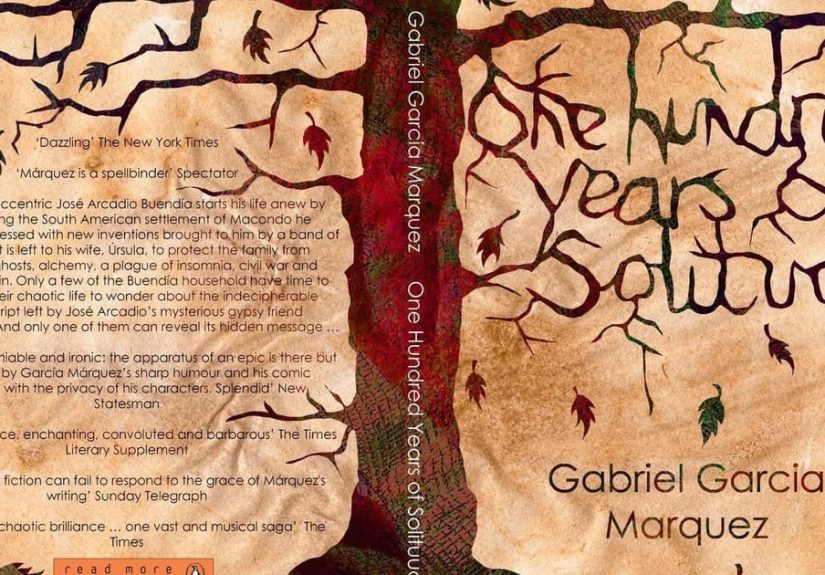
One Hundred Years of Solitude (Gabriel García Márquez)
You don’t have to be a “magic realism person” to be stunned by this novel. The Buendía family’s multi-generational
story in the town of Macondo feels mythic and intimate at the same timelike a family album that also happens to be
an origin story for an entire region. It’s dense, yes, but it’s also funny, sensual, tragic, and wildly imaginative.
If you want to understand why Spanish-language literature became a global obsession in the 20th century, start here.
Read slowly. Let it wash over you. And don’t worry: getting a little lost is part of the experience.
The House of the Spirits (Isabel Allende)
A family saga with political tremors and supernatural undercurrents, The House of the Spirits blends personal
drama with national history. It’s lush and narrative-driven, and it introduces a style of storytelling where emotion,
memory, and the uncanny coexist comfortably. It’s also one of the most accessible entry points into modern Latin
American literature for English-language readers.
If you like sweeping stories that still have sharp teethespecially when it comes to power and classthis belongs
on your short list.
Hopscotch (Rayuela) (Julio Cortázar)
This is the novel you read when you want literature to play with you. Cortázar wrote an “open” novel that invites
readers to follow different reading sequences, rearranging the experience as they go. It tracks a bohemian Argentine
in Paris and then his return to Buenos Aires, but the plot is less the point than the experiment: voices, ideas,
jazz-like improvisation, and the feeling of living inside a restless mind.
Some readers fall in love with its audacity; others want to throw it across the room (affectionately). Either way,
it’s a major Spanish-language milestoneand a reminder that the novel can be a game, not just a container.
The Savage Detectives (Roberto Bolaño)
A literary road trip, a quest, a coming-of-age novel, and a sprawling chorus of voices: The Savage Detectives
follows poets, drifters, and dreamers across continents and decades. The book is famous for feeling alivemessy,
funny, ambitiousand for capturing the hunger of young writers who believe art might save them (or at least give
them a reason to stay up all night arguing in smoky rooms).
It’s one of the best Spanish-language novels for readers who want energy on the page: the sense that literature is
a lived experience, not just a school subject.
2666 (Roberto Bolaño)
If The Savage Detectives is Bolaño’s wild youth, 2666 is his dark cathedralmassive in scale, global
in reach, and built from interlocking parts. It moves through critics, violence, mystery, and obsession with an
almost gravitational pull. This is the kind of novel people describe as “taking over your life,” partly because it’s
long, and partly because it’s haunting.
Consider it a capstone read: not your first Spanish-language novel, but one of the most talked-about once you’ve
built some stamina.
A Practical Reading Roadmap (Because “Start Anywhere” Is Not Helpful)
If you want an irresistible story first
- The Shadow of the Wind mystery + literary romance + Barcelona atmosphere.
- The Time in Between historical intrigue with a fast, novelistic pulse.
- The House of the Spirits epic family saga with a clear narrative drive.
If you want modern Spanish history and moral complexity
- Homeland (Patria) community, conflict, and the long tail of violence.
- Soldiers of Salamis memory, truth, and the story behind the story.
- Nada postwar atmosphere in one intimate household.
If you want bold, experimental literature
- Hopscotch the “anti-novel” that dares you to collaborate.
- The Savage Detectives a chorus novel that feels like a life lived loud.
- 2666 a monumental work for when you want the deep end.
Translation Tips (How to Get the Most Out of Spanish Novels in English)
A great translation is not just “accurate”it recreates tone, rhythm, humor, and voice. That matters a lot in Spanish
literature, where irony and lyricism often sit in the same sentence. If you’re reading in English, consider:
- Edition hunting: newer translations sometimes prioritize clarity and contemporary flow.
- Audiobooks: Spanish names and place references can feel smoother when you hear them.
- A light touch with notes: look up historical context as needed, but don’t turn reading into homework.
And if you’re learning Spanish, these novels can be surprisingly useful companionsespecially when you pair a Spanish
edition with an English translation or use a chapter-by-chapter approach.
Reader Experiences: How These Novels Feel in Real Life (Extended)
Reading the best Spanish novels often feels less like consuming a story and more like entering a placeone with its
own weather, street noise, and background music. That’s true whether you’re in 17th-century La Mancha with an
overconfident knight, postwar Barcelona with a student trying to breathe in a crowded house, or a mythic town where
the past refuses to stay buried. Many readers notice that Spanish-language storytelling has a particular gift for
texture: food and heat, public squares and private grudges, family nicknames and political feardetails that
make the world feel inhabited rather than described.
For a lot of people, the “best” experience starts with choosing a book that matches your current mood, not your
idealized reading-self. If you want pure momentum, a novel like The Shadow of the Wind has the energy of a
mystery and the warmth of a love letter to books. It’s the kind of story that can restart a reading habit because it
rewards you quicklyevery chapter brings a secret, a revelation, or a character you’re weirdly protective of after
thirty pages. Meanwhile, if you’re craving something quieter but sharper, Nada offers a different pleasure:
the feeling of watching someone slowly understand the emotional rules of a damaged household. It can be strangely
cathartic to read a novel that names an atmosphere you didn’t realize you’ve been carrying.
Then there are the big, identity-shaping reads. One Hundred Years of Solitude is famous for creating a
“spell,” and readers often talk about it the way they talk about dreams: vivid, slightly confusing, impossible to
explain without sounding dramatic. If you’ve ever finished a book and felt like the world outside looks flatter for
a day, that’s the effect. On the other end of the emotional spectrum, Homeland (Patria) tends to land with a
slow, heavy weight. It’s not heavy because it’s preachy; it’s heavy because it’s humanebecause it insists that
political conflict is also about kitchens, friendships, weddings, awkward encounters, and the long consequences of
what people say (and refuse to say) in small towns.
If you read with friends or in a book club, Spanish novels are especially good conversation starters because they
naturally raise questions that don’t have tidy answers. Was Don Quixote ridiculous, or brave, or both? Who “owns”
a community’s historywitnesses, victims, survivors, or the people who write it down later? Is the point of a novel
like Hopscotch to follow the plot, or to feel the mind of someone searching for meaning? These aren’t test
questions. They’re the kind of questions that turn a casual “How was it?” into an hour-long debate you’ll remember.
Finally, there’s the experience of reading these books as travel without airfare. Even if you never set foot in
Barcelona, you can still pick up a mental map from Zafón’s gothic streets or Laforet’s tense interiors. Even if you
never visit Madrid, you can still walk through its 19th-century social layers with Pérez Galdós. And if you do travel,
Spanish novels can make a city feel doubledone version in front of you, one version behind your eyes, stitched
together by stories. That’s the quiet magic of the best Spanish novels: they don’t just entertain you; they expand
the amount of world you can carry.
Conclusion: Your “Best” Spanish Novel Is the One That Pulls You In
The best Spanish novels aren’t one narrow canonthey’re a living library. Start with what you’ll actually read:
a page-turning mystery in Barcelona, a postwar coming-of-age classic, a sweeping family saga, or an ambitious
experiment that rewires your sense of what a novel can do. Once you find your entry point, the rest of Spanish
literature tends to open like a series of doors you didn’t know were connected.