Table of Contents >> Show >> Hide
- The best way to store onions in one sentence
- First: know what kind of onion you have
- The onion storage “Goldilocks” conditions
- The right containers: what to use (and what to avoid)
- Where in the house should onions live?
- Big mistakes that shorten onion life (and how to fix them)
- How to store cut, peeled, or half-used onions
- How to store green onions (scallions) the right way
- How long do onions last?
- Signs an onion is done (and should leave the building)
- A simple step-by-step onion storage plan (takes 7 minutes)
- Real-world experiences and lessons from everyday onion life (about )
- Conclusion
Onions are the quiet overachievers of the kitchen. They show up in soups, sauces, stir-fries, tacos, and that “I’m
too tired to cook” omelet. And yettreat them wrong and they’ll repay you by sprouting, turning squishy, or
perfuming your pantry like an onion-scented candle you absolutely did not buy.
The good news: the best way to store onions is simple, low-cost, and doesn’t require any trendy gadgets. The even
better news: once you set up a proper “onion zone,” you’ll waste fewer onions, your food will taste better, and you
won’t discover a mysterious onion puddle hiding in the back of a cabinet (we’ve all heard stories).
The best way to store onions in one sentence
Store whole, unpeeled onions in a cool, dry, dark, well-ventilated spotnot in sealed plastic and
not next to moisture-loving producethen refrigerate any onions you cut.
First: know what kind of onion you have
“Onion” is a broad category, like “dog” or “streaming service.” Different onions behave differently, and your
storage strategy should match the personality of the bulb.
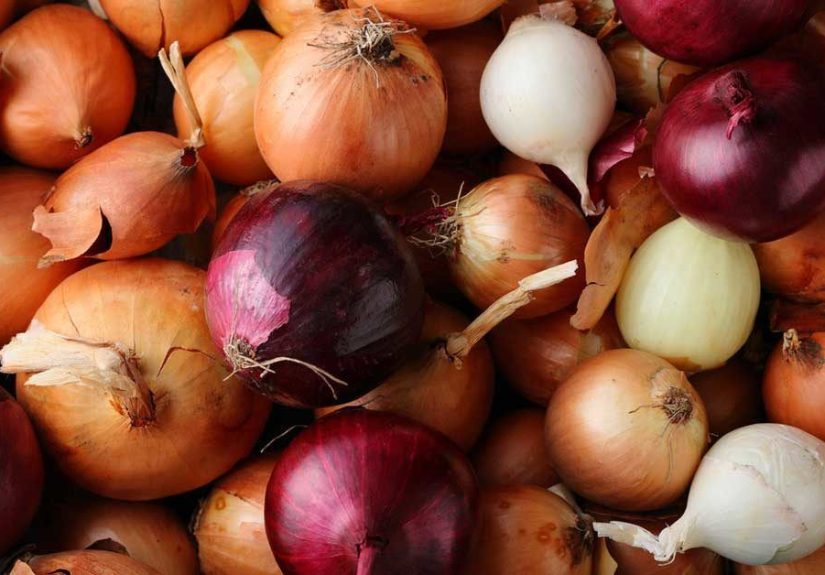
Storage onions (yellow, white, many red onions)
These are the sturdy workhorses designed to last. They have a lower water content and a papery skin that’s basically
nature’s packaging. If you store them correctly, they can keep for weeks (often longer), which is why they’re the
MVPs of bulk bags.
Sweet onions (Vidalia, Walla Walla, Maui, and other “sweet” varieties)
Sweet onions are deliciousand also kind of delicate. They tend to contain more moisture and sugars, which makes
them more prone to bruising and spoilage. Many cooks treat sweet onions as “use sooner” onions, and some sources
recommend refrigerating them if you won’t use them quickly (more on that nuance below).
Green onions (scallions)
Green onions are not “tiny regular onions.” They’re leafy, hydrated, and basically a bouquet of freshness. They
belong in the refrigerator, not the pantry.
The onion storage “Goldilocks” conditions
The goal is to slow down the things onions want to do naturally: sprout, rot, and absorb moisture. To do that,
your storage environment should hit four targets: temperature, humidity, light, and airflow.
1) Cool (but not damp-cold)
A cool area is your best friend because warmth nudges onions toward sprouting and faster quality loss. Many
consumer guides point to a cool room-temperature range (think: away from the stove), while postharvest guidance
shows onions last longest in colder conditions when humidity is controlled. At home, aim for a cool zone that
stays relatively steady rather than swinging hot/cold daily.
2) Dry, low humidity
Moisture is the onion’s enemy. Too much humidity encourages mold, root growth, and rot. This is one big reason
whole onions often do worse in a typical refrigerator crisper: refrigerators are humid, and humidity plus an
enclosed space is basically a spa day for spoilage microbes.
3) Dark
Light signals “it’s growing season!” and can encourage sprouting. Keep onions out of direct sunlight and away from
bright windows. If your onions are sunbathing, they’re not relaxingthey’re plotting.
4) Well-ventilated
Airflow is the difference between onions that last and onions that liquefy in the corner like a science experiment.
Onions release moisture over time. Ventilation lets that moisture escape instead of getting trapped around the bulbs.
Good airflow also helps prevent one bad onion from turning its neighbors into an entire spoiled-onion neighborhood.
The right containers: what to use (and what to avoid)
Best options for whole onions
- Mesh bags (the classic): breathable and easy to hang or stash in a bin.
- Wire baskets: airflow from all sides; great for countertops if kept away from heat and light.
- Open paper bags: breathable, block some light, and keep onions from rolling around.
- Shallow boxes or crates: good airflow if not overpacked; avoid piling too deep.
- The “pantyhose method”: quirky, effective, and oddly satisfyingeach onion gets its own little
breathable hammock, reducing bruising and boosting airflow.
What to avoid
- Sealed plastic bags: they trap moisture. Moisture + onion = regret.
- Deep, lidded bins with no ventilation: same problem, just in a fancier outfit.
- Storing onions loose in a damp basement corner: cool is good; damp is not.
Where in the house should onions live?
The best location is a spot that stays cool, dry, dark, and ventilatedlike a pantry shelf that isn’t right next to
the oven, or a cabinet away from the dishwasher’s steam zone. Some people use a cool garage or basement, but only
if it’s dry and doesn’t swing wildly in temperature.
Easy “onion zone” ideas
- Pantry shelf + wire basket: add a small label so onions don’t get “lost” behind cereal boxes.
- Hanging mesh bag: frees up shelf space and improves airflow.
- Ventilated drawer insert: works if the drawer isn’t humid and isn’t near heat sources.
Big mistakes that shorten onion life (and how to fix them)
Mistake 1: storing onions next to potatoes
Onions and potatoes are a classic pantry duobut they’re also a classic pantry breakup. Potatoes release moisture
and gases that can speed up onion spoilage, and onions can contribute to potato sprouting/quality loss too. They’re
better stored separately in their own ideal conditions.
Mistake 2: refrigerating whole onions “just because”
Whole onions generally do best outside the fridge because fridges are humid. If your home is very warm or you live
in a climate where a cool, dry spot is hard to find, refrigeration can be a backup planbut try to avoid sealing
whole onions in plastic. A breathable wrap (like paper) and a spot with airflow helps reduce moisture buildup.
Mistake 3: washing onions before storage
Don’t wash whole onions before storing them. Extra water is not helpful here. If an onion is dirty, gently brush it
off. If it’s truly muddy, use it sooner rather than trying to store it long-term.
Mistake 4: storing damaged onions with healthy ones
A bruised onion is the “one bad apple” of the onion world. If an onion has soft spots, a cracked skin, or looks like
it’s already negotiating with mold, use it immediatelyor compost it. Separating questionable onions prevents a
domino effect in the bag.
How to store cut, peeled, or half-used onions
Once you cut an onion, you’ve removed its natural protective barrier and exposed moist layers. That onion is now a
refrigerator resident.
Best practice for cut onions
- Wrap or seal it: use an airtight container or a well-sealed bag so it doesn’t dry out or perfume
your entire fridge. - Keep it cold: store at refrigerator temperature (40°F / 4°C or below).
- Use within about a week: many food-safety and industry guides suggest a window around 7–10 days
for chopped/sliced onions when properly refrigerated, but quality is usually best earlier.
What about storing a cut onion at room temperature?
Real talk: you’ll see conflicting opinions online. The safest, most widely recommended approach is to refrigerate
cut onions promptly and discard leftovers that have been sitting out too long. If you want fewer rules in your life,
this is the one rule that earns its keep: cut onion goes in the fridge.
Freezing onions (yes, it workssort of)
You can freeze chopped onions for cooking. They won’t be crisp afterward, so they’re not great for fresh salsa, but
they’re excellent for soups, stews, sautés, and sauces. Freeze in a thin layer first (so you can pour out what
you need), then transfer to a sealed freezer bag. Label it, unless you enjoy playing “mystery frozen bits” later.
How to store green onions (scallions) the right way
Green onions are happiest in the refrigerator. You have two strong options:
- The paper towel method: wrap them lightly to manage moisture, then place in a bag/container.
- The jar method: stand them upright with a little water for the roots, loosely cover the tops, and
refrigerate (great if you use them often).
Either way, keep them cold, and check for slimy leavesthose are the “use me now” warning flags.
How long do onions last?
Shelf life depends on onion type, storage conditions, and whether the onion was already stressed (bruised, damp, or
sprouting) when you bought it. In general:
- Whole storage onions: can last weeks and sometimes longer in ideal conditions.
- Sweet onions: shorter-lived; plan to use sooner and handle gently.
- Cut onions: about 7–10 days in the refrigerator when sealed properly.
- Frozen chopped onions: best quality within a few months, though they remain safe longer if kept frozen.
Signs an onion is done (and should leave the building)
- Soft or mushy spots: texture breakdown often means decay inside.
- Visible mold: especially around the root end or under the skin layers.
- Strong off smell: not “onion-y,” but sour, rotten, or chemical.
- Excess moisture/slime: onions should be dry to the touch externally.
Sprouting alone doesn’t always mean an onion is unsafemany people simply remove the sprout and use the onion if it
smells and feels normal. But heavy sprouting often means the onion is losing quality fast, so use it soon.
A simple step-by-step onion storage plan (takes 7 minutes)
- Sort your onions: set aside any with bruises or soft spots to use first.
- Pick a cool, dark spot: pantry shelf, cabinet away from heat, or a dry basement area.
- Choose a breathable container: mesh bag, wire basket, open paper bag, or shallow crate.
- Give them space: don’t cram 12 onions into a tiny sealed bin. Onions like boundaries.
- Store away from potatoes: separate zones, separate happiness.
- Check weekly: a quick look prevents a single spoiled onion from taking out the whole squad.
- Refrigerate cut onions immediately: sealed container, labeled if you’re feeling fancy.
Real-world experiences and lessons from everyday onion life (about )
Most onion-storage problems don’t happen because people “don’t know the rules.” They happen because life is busy,
groceries get shoved wherever they fit, and onions quietly do onion things while nobody is looking. The most common
real-world scenario is the bulk-bag trap: you buy a big bag because it’s a great deal, you use two onions the first
week, and then you forget the rest exist until you discover one has turned into a soft, damp villain. The fix isn’t
willpowerit’s visibility and airflow. Putting onions in a wire basket or hanging mesh bag makes them easy to see
and harder to ignore. If you can see them, you use them. If they’re hidden behind a stack of snacks, they’ll stage a
slow-motion spoilage coup.
Another common experience: the “fridge onion paradox.” People refrigerate whole onions because refrigeration sounds
like it should preserve everything (it’s basically the default setting for modern food anxiety). But then the onions
get soft or develop mold sooner than expected. What’s usually happening is moisture buildupespecially if onions
are in plastic bags, packed tightly, or stored near high-humidity areas like the crisper drawer. When home cooks
switch to a cooler pantry spot with ventilation, they often notice onions stay firmer longer and the outer skins
remain dry and papery (which is exactly what you want).
Then there’s the “my pantry smells like onions” complaint. This usually isn’t because onions are inherently
offensive; it’s because a cut onion is being stored improperly (or a whole onion is secretly decaying). Sealing cut
onion in a proper airtight container in the refrigerator is a game changer: it protects flavor, prevents odor
transfer, and keeps your butter from tasting like it has opinions about fajitas. For whole onions, a quick weekly
check helps: if you find the one that’s starting to soften, pull it out and use it immediately in cooked dishes.
That single habit saves the rest.
Sweet onions create their own special set of stories. People fall in love with their mild flavor, buy a bunch, then
treat them like regular onionsand get disappointed when they bruise or spoil faster. The practical lesson: sweet
onions are “front-of-the-line” onions. Plan meals around them sooner, store them where they won’t get knocked
around, and consider cooler storage if your kitchen runs warm. Many home cooks also find that separating onions by
type helps: keep storage onions in one basket for long haul use, and keep sweet onions in a different spot with a
mental label that says “use these first.”
Finally, there’s the most relatable experience of all: the half onion. You cut one for a recipe, wrap it in a flimsy
piece of foil, and then it dries into a sad, leathery moon by tomorrow. The fix is simple: tighter seal, colder
storage, and (if you want to level up) cut-side-down in a container to reduce drying. If you consistently cook with
onions, storing pre-chopped onions for a few days can be a huge time saverjust keep them sealed, cold, and dated.
That way, Tuesday’s taco night doesn’t become Tuesday’s “why are my onions slimy?” thriller.
Conclusion
The best way to store onions comes down to four words: cool, dry, dark, ventilated. Give whole onions
airflow in a breathable container, keep them away from potatoes and moisture, and you’ll dramatically extend their
shelf life. Once an onion is cut, move it to the refrigerator in a sealed container and use it within about a week
for the best balance of quality and safety. Set up a simple onion zone, check your stash weekly, and you’ll spend
less time tossing spoiled onionsand more time enjoying the part where they make everything taste better.