Table of Contents >> Show >> Hide
- What Was Actually Found in Tibet?
- Why Scientists Got So Excited
- How the Bone Was Identified Without DNA
- What the Discovery Reveals About Denisovans
- Why This Matters for Human History
- What Later Discoveries Added to the Story
- Experience and Takeaways From the Tibetan Bone Discovery
- Conclusion: A Bone, a Cave, and a Bigger Human Story
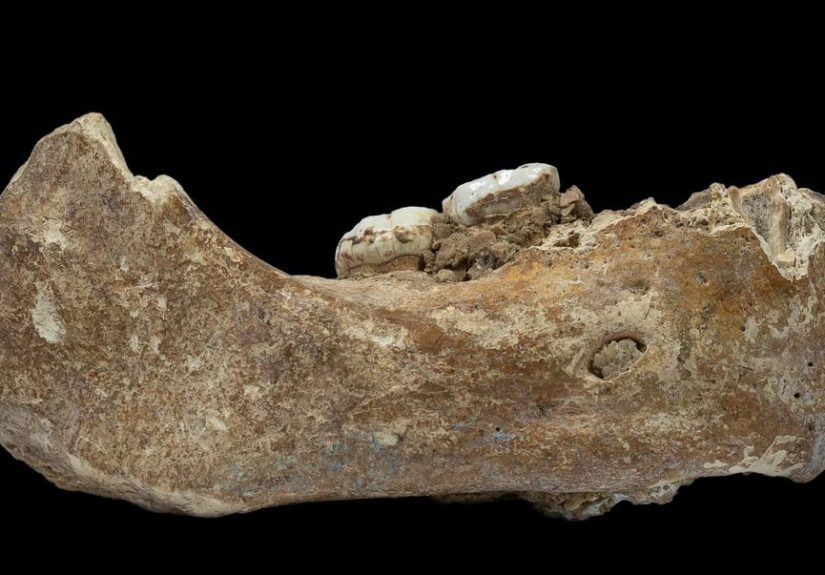
For decades, the Tibetan Plateau looked like the kind of place early humans were supposed to avoid: thin air, brutal weather, and no obvious reason to hang around unless you were a very stubborn mammal with a strong sense of adventure. Then a jawbone found in Baishiya Karst Cave on the edge of Tibet changed the whole story. First discovered by a monk in 1980 and later studied with modern methods, the fossil turned out to belong to a Denisovan, an extinct human relative known mostly from DNA and tiny bone fragments. The jaw was dated to at least 160,000 years ago, making it the first physical Denisovan fossil identified outside Siberia and one of the clearest signs yet that ancient humans were thriving high above sea level far earlier than scientists once believed.
That matters because history is often rewritten by the smallest things: a tooth, a pebble, a sliver of bone, or in this case, a jaw that looked human but not quite human enough. The Tibetan find did more than add a name to the fossil record. It pushed Denisovans from the category of “mysterious genetic ghost” into the category of “real people who lived, adapted, hunted, and survived in one of the harshest environments on Earth.” And once that happened, the map of ancient human life in Asia got a lot bigger, a lot stranger, and a lot more interesting.
What Was Actually Found in Tibet?
The fossil at the center of the story is the Xiahe mandible, a lower jaw from Baishiya Karst Cave in Xiahe County, Gansu, China, on the northeastern edge of the Tibetan Plateau. Researchers identified it through ancient protein analysis after DNA could not be recovered. That detail matters more than it sounds, because proteins can survive much longer than DNA in old fossils, giving scientists a second route to identification when genetic material has long since broken down. The jaw’s large molars, receding chin, and protein signature all pointed to Denisovans.
The fossil also came from a truly extreme setting. Baishiya Karst Cave sits at about 3,280 meters, or 10,760 feet, above sea level. That altitude is not a gentle introduction to prehistoric living. It is a test of endurance. The jawbone showed that Denisovans were not merely passing through the region; they were living there early enough to be adapted to the low-oxygen conditions that define the high plateau. In other words, this was not a sightseeing stop. It was a home.
Why Scientists Got So Excited
It expanded the Denisovan map
Before this discovery, Denisovans were known mostly from the Denisova Cave in Siberia and from genetic traces in living people. The Tibetan jawbone proved that their world was not a tiny dot on the map. It showed that they were present in eastern Eurasia and able to live far from their original fossil homeland. That is a major shift, because it suggests Denisovans were not an obscure one-cave population but a widespread and adaptable human group.
It changed the altitude story
The Tibetan Plateau has long been a place where human survival looks almost improbable. Yet the jawbone showed Denisovans were already there around 160,000 years ago, long before modern humans are known to have occupied the plateau. That means high-altitude adaptation was not a last-minute evolutionary trick by Homo sapiens. Denisovans had already figured out the problem first, and modern Tibetans may have inherited at least one of those helpful adaptations later through interbreeding. Science loves a neat origin story, but evolution rarely offers one. This one is more like a family reunion with useful genetic gifts.
How the Bone Was Identified Without DNA
The jawbone became famous partly because the identification method was so clever. Instead of relying on ancient DNA, which is often too damaged to read in hot or humid environments, researchers used ancient protein analysis, especially collagen and tooth proteins. Nature and Reuters both described this as a breakthrough because proteins often outlast DNA by a wide margin. In practical terms, that means the fossil was able to “speak” even after its genetic material had gone quiet. For archaeology, that is a big deal. It opens the door to identifying many more ancient bones that would otherwise sit in storage looking important but undecided.
That same method has since helped push Denisovan research further. In 2025, scientists used paleoproteomics to identify a Denisovan jawbone from Taiwan, showing that this lineage spread across a much broader part of Asia than once thought. That later discovery did not replace the Tibetan jawbone’s importance; it amplified it. Tibet was no longer a fringe stop on an ancient route. It became one of the key places where the Denisovan story came into focus.
What the Discovery Reveals About Denisovans
Denisovans remain one of the most mysterious human relatives ever identified. They were first recognized in 2010 from a few bones and a tooth in Siberia, and for years scientists knew them mostly through genetics rather than fossils. The Tibetan jawbone changed that by giving them a real, physical presence in a place no one expected. It also suggested that Denisovans had a broad range, appearing in high-altitude Tibet, Siberia, and later evidence from Laos, with even newer findings in Taiwan broadening the picture further. That pattern points to flexibility, resilience, and a population that could handle very different climates.
By 2024, a major study of more than 2,500 bone fragments from Baishiya Karst Cave added another layer of detail. Researchers found evidence that Denisovans hunted or processed blue sheep, woolly rhinoceros, yaks, marmots, birds, and even hyenas, and they identified a Denisovan rib fragment dating to roughly 48,000 to 32,000 years ago, the youngest Denisovan fossil yet known at the time. That is not the behavior of a creature barely hanging on. It is the behavior of a group that knew how to make a difficult landscape work for them.
Why This Matters for Human History
The Tibetan bone discovery does more than name an ancient species. It changes the way we think about human evolution itself. For a long time, the story of human progress was told as though one line of humanity marched steadily forward, each generation replacing the last like a neat row of dominoes. Denisovans break that tidy picture apart. They show that several human groups lived at the same time, crossed paths, and sometimes interbred. PBS has described those ancient encounters as part of the genetic traces many of us still carry today. National Geographic made the same point years ago when it explained how Denisovan DNA helped Tibetans adapt to high altitude. The past is not a museum shelf of sealed boxes. It is a messy, overlapping network of shared ancestry.
That is the real rewrite. The Tibetan jawbone did not just reveal who lived on a mountain plateau. It showed that ancient humans were more adventurous, more adaptable, and more interconnected than old textbook diagrams suggested. It also reminded researchers that major answers can come from minor scraps. A single mandible, studied with the right tools, can redraw the boundaries of prehistory. Archaeology rarely gets a cinematic trumpet blast when it happens, but this was one of those moments when the evidence quietly walked into the room and changed the furniture.
What Later Discoveries Added to the Story
The Tibetan jawbone did not end the Denisovan mystery; it opened a better chapter. Later finds, including the 2025 Taiwan jawbone and the 2024 Tibetan cave study, suggested that Denisovans were spread across a wider part of Asia than anyone could have guessed from the original Siberian remains alone. Smithsonian, AP, Science, Live Science, Discover, and Popular Mechanics all reported on these newer discoveries, each one adding a little more shape to a species that was once almost invisible. The pattern is now clearer: Denisovans were not a niche curiosity. They were a major branch of the human family tree with a real geographic footprint.
Even the earliest Tibetan find looks different in hindsight. At the time, scientists were mostly asking whether the jaw was human, Neanderthal, or something else entirely. Now it sits inside a much larger network of clues: protein evidence, altitude adaptation, faunal studies, later fossils, and genetic traces in living populations. That is what makes the discovery feel historic rather than merely interesting. It is not just a fossil. It is a hinge in the story of our species.
Experience and Takeaways From the Tibetan Bone Discovery
One reason this discovery sticks in the mind is that it feels both ancient and oddly modern. Ancient, because the bone itself is from a world that existed more than 160,000 years ago. Modern, because the way we solved the puzzle depended on cutting-edge techniques that could not even have been imagined when the jaw was first found. That contrast is part of the charm of archaeology today. The field is no longer just about brushing dirt off objects and hoping for the best. It is about combining fieldwork, protein science, geology, comparative anatomy, and a lot of patience. The result is a kind of detective story where the evidence is old, but the methods are new enough to feel futuristic.
For anyone who has ever stood in front of a museum case or read about human origins and felt the usual reaction of “So that is where we came from,” this Tibetan bone discovery adds a much richer answer: we came from many places, through many encounters, across many environments. The story of Denisovans is not only about a lost species. It is about how survival often depends on borrowing, adapting, and blending ideas or genes from others who came before us or lived beside us. That makes the discovery feel surprisingly relatable. People today still survive by learning from neighbors, communities, and inherited wisdom. The difference is that ancient humans were doing something similar on an evolutionary scale.
There is also a practical lesson hidden inside the science: the smallest evidence can carry the biggest meaning. The jawbone was not a grand skeleton on display in a dramatic pose. It was a partial mandible with a few teeth, found in a cave, studied years later, and decoded through methods built for fragments rather than complete bodies. That should be encouraging to anyone who works with imperfect information. In science, as in life, you rarely get the whole answer at once. Often you get a fragment, and the fragment only becomes meaningful when you place it beside other fragments. The Tibetan discovery is a reminder that history is often assembled, not handed over whole.
It also changes how we think about harsh places. The Tibetan Plateau is still a landscape that demands respect, and in the deep past it was even more unforgiving. Yet Denisovans lived there anyway. They hunted, processed animals, and adapted to altitude long before modern humans moved in. That fact turns the old assumption upside down: the plateau was not a place humans could only conquer recently with clever clothing and modern technology. It had already been mastered, at least in part, by an older branch of the human family. When you think about that, the idea of human progress becomes less of a straight climb and more of a relay race across species and generations.
And perhaps that is why people keep returning to this story. It is not merely about a jawbone from Tibet. It is about the thrill of finding out that the past was more complicated, more creative, and more interconnected than we imagined. The discovery carries a kind of humility with it. Every time scientists think they have mapped the ancient world, another bone shows up and redraws the borders. That is frustrating for tidy minds and delightful for curious ones. If history is a book, this Tibetan bone did not just add a footnote. It tore out a chapter and replaced it with something far more interesting.
Conclusion: A Bone, a Cave, and a Bigger Human Story
The Tibetan jawbone from Baishiya Karst Cave is one of those rare fossils that does more than confirm an old theory. It creates a new one. By showing that Denisovans lived high on the Tibetan Plateau at least 160,000 years ago, it proved that ancient humans were adapting to extreme environments far earlier than expected. By connecting that fossil to later studies on diet, altitude adaptation, and wider Asian Denisovan remains, it helped transform a mystery species into a more complete part of human history. The history of our species is not a simple ladder. It is a crowded, branching landscape, and this bone made the map much clearer.