Table of Contents >> Show >> Hide
- Quick Snapshot: What You’re Getting
- What Makes the Tailgater Different From a “Regular” Portable Grill?
- Build Quality and Setup: Sturdy, Not Delicate
- Temperature Control and Performance: The Whole Point of Buying a Traeger
- Smoke Flavor: Great for a Tailgate, Not a Smokehouse Punch
- Grilling and Searing: Strong, With One Big Limit
- Hopper Size and Pellet Use: Plan Like a Pro
- Ease of Use and Cleanup: The Unsexy Stuff That Matters
- Tailgater vs. Other Portable Options: Is This the Right Size?
- Who Should Buy the Traeger Tailgater?
- Best Practices: How to Get the Most Out of the Tailgater
- Verdict: A Legit Portable Smoker That Feels Like a “Real” Grill
- Real-World Tailgate Experiences (What It’s Like in the Wild)
- Conclusion
Tailgating is a beautiful tradition: questionable face paint, heroic cooler organization, and a group consensus that “one more snack” is basically a food group. The only problem? Most tailgate grills fall into two categories: tiny and underpowered, or powerful and “portable” in the same way a refrigerator is portable (if you have six friends and no stairs).
The Traeger Tailgater tries to land in the sweet spota portable pellet grill with real smoke flavor, steady temperature control, and enough cooking space to feed a hungry crew without turning you into an unpaid short-order cook. It’s not the smallest pellet smoker on the planet. It’s not the cheapest, either. But it’s designed to deliver the Traeger “set it and forget it” vibe in a size that can actually go places.
Quick Snapshot: What You’re Getting
- Cooking area: 300 sq. in. (enough for a small crowd when you cook smart)
- Pellet hopper: 8 lb capacity (plan your cooks accordingly)
- Max temp: up to 450°F (good for grilling, limited for steakhouse searing)
- Weight: about 62 lb (portable… with a buddy)
- Power: requires 120V electricity to run the controller/auger
- Controller highlights: precise temp adjustments, Keep Warm mode, meat probe support
What Makes the Tailgater Different From a “Regular” Portable Grill?
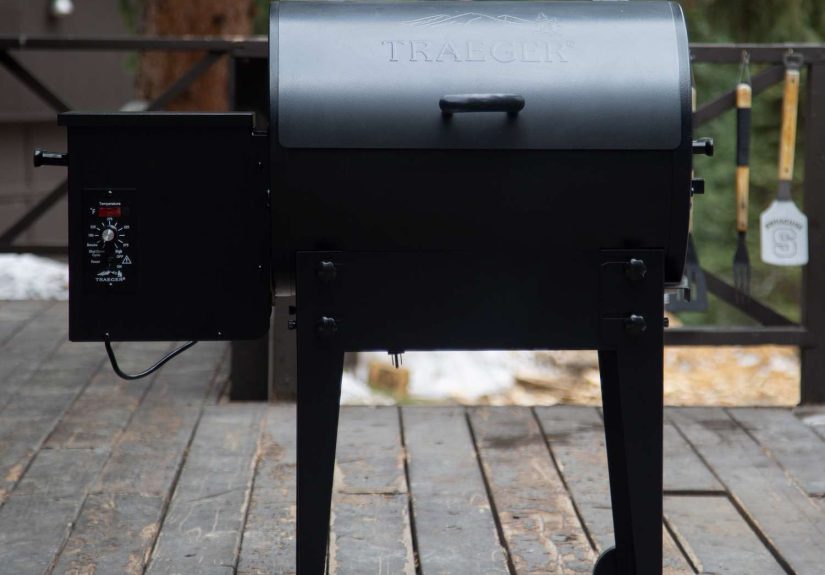
The Tailgater is a wood pellet smoker and grill. Instead of a propane flame or a charcoal bed, it burns compressed hardwood pellets in a fire pot. An auger feeds pellets automatically, and a digital controller regulates how hard the grill works to maintain your set temperature.
In plain English: it’s designed to give you real smoke flavor with the convenience of a dial. You’re not babysitting vents. You’re not playing “is it hot enough yet?” with a lighter and a prayer. You set a temp, let it preheat, and cook.
Portable design that’s actually meant to travel
The Tailgater’s signature move is its folding leg design, which makes it easier to load into a truck bed or stash for weekend trips. Still, “easier” does not mean “weightless.” At roughly 62 pounds, it’s best treated like a cooler full of icelift with your legs and consider recruiting a friend who owes you a favor.
Build Quality and Setup: Sturdy, Not Delicate
Pellet grills are part oven, part smoker, part grill, which means they need to be solid enough to hold heat and survive repeated heat cycles. The Tailgater’s body feels more “serious cooker” than “camp toy,” and that sturdiness is a big part of why it performs like a full-size unit.
Setup is refreshingly straightforward for a pellet grill in this class. The big learning curve isn’t assemblyit’s getting comfortable with pellet-grill habits: preheating, managing pellet supply, and cleaning out ash and grease so the grill runs consistently.
One practical note: you need power
This is the Tailgater’s biggest “tailgate reality check.” The controller and auger require 120V electricity. At a stadium lot, that usually means a generator, an inverter setup, or a power source at your campsite/RV spot. If you regularly tailgate without access to electricity, a pellet grill will feel less like a convenience and more like a relationship with an extension cord.
Temperature Control and Performance: The Whole Point of Buying a Traeger
The Tailgater is built around the promise pellet grills are known for: steady temperatures with minimal fuss. Set a low temp for ribs, and it should chug along for hours. Dial it up for burgers and sausages, and it should behave like a grill that also happens to speak fluent smoke.
Fine-tuning and Keep Warm mode
A nice quality-of-life feature on this model is the ability to make small temperature adjustments and use a Keep Warm setting. Keep Warm is exactly what it sounds like: it holds food at a ready-to-serve temp when you’re waiting on the second batch of wings, the late-arriving friends, or the person who “just had to run back to the car.”
Real-world behavior: pellet grills aren’t instant responders
Pellet grills tend to respond to major temp changes more slowly than a gas grill. That’s not a flawit’s part of how they work. You’ll get the best results if you treat it more like an outdoor convection oven: preheat fully, cook with the lid closed, and avoid big temperature swings caused by frequent lid-opening (a.k.a. “checking the vibes”).
Some owners also note that pellet grills can run a little warmer or cooler than the setpoint depending on weather, pellet type, and how often the lid is opened. The fix is simple: learn your grill’s personality, and consider using a reliable external thermometer if you want extra certainty for long cooks.
Smoke Flavor: Great for a Tailgate, Not a Smokehouse Punch
Let’s set expectations honestly: pellet grills typically produce a cleaner, lighter smoke than a dedicated stick burner. That’s often a win at a tailgate, because your food tastes smoky without tasting like it got into a bar fight with a campfire.
How to get more smoke when you want it
- Start low: Smoke early in the cook when the meat is coolest and takes on smoke more readily.
- Use bold pellets: Hickory and mesquite punch harder than fruit woods.
- Don’t rush: Low-and-slow cooks are where the Tailgater feels most “smoker.”
For tailgate classicschicken thighs, brats, ribs, pulled pork slidersthe Tailgater can deliver that “you cooked this outside” flavor without demanding you camp next to the grill all day like a sentry.
Grilling and Searing: Strong, With One Big Limit
The Tailgater tops out around 450°F. That’s plenty for burgers, hot dogs, chicken, and roasting. It’s also solid for crisping skin and getting nice browning when you give it time.
The main limitation is high-heat searing. If your dream is steakhouse-level crust in under two minutes per side, a pellet grill (especially one capped at 450°F) is not the straightest path.
Workarounds that actually work
- Use cast iron: Preheat a cast-iron skillet or griddle on the grates for a better crust.
- Reverse sear: Smoke/roast the steak to temp, then finish hot on cast iron or another heat source.
- Cook smarter foods: Wings, thighs, sausages, and burgers shine here.
Hopper Size and Pellet Use: Plan Like a Pro
The Tailgater’s 8-pound hopper is one of the few compromises you’re making for portability. For quick cooks, it’s a non-issue. For longer smokes, you’ll want to think ahead.
Pellet consumption varies wildly with temperature, outside conditions, and how often the lid opens. As a rough planning idea, you can expect significantly longer run time at smoking temps than at high heat. The practical takeaway for tailgating: bring extra pellets and store them somewhere dry. Wet pellets don’t “kind of work.” They turn into a science experiment.
Tailgate tip: pre-cook the long stuff
If you want brisket or pork shoulder at a tailgate, the easiest move is to cook most of it at home, then use the Tailgater to reheat, hold, and add a final hit of smoke flavor onsite. Your friends will still be impressedand you’ll still be awake for the game.
Ease of Use and Cleanup: The Unsexy Stuff That Matters
Pellet grills earn their popularity by being approachable, and the Tailgater follows that script. Start-up is simple: plug in, set temp, preheat. Once you get used to cooking with the lid closed and letting the grill do its job, it feels more like cooking with an appliance than running a fire.
Cleaning routine (keep it simple)
- Brush grates after cooks while warm (and oil lightly before cooking for easier release).
- Empty the grease regularlygrease management is safety management.
- Vacuum ash occasionally so airflow stays consistent.
If you keep up with basic maintenance, the Tailgater tends to reward you with steadier temps and fewer “why is it acting weird today?” moments.
Tailgater vs. Other Portable Options: Is This the Right Size?
“Portable pellet grill” is a surprisingly crowded category. Here’s how the Tailgater’s personality compares to common alternatives:
If you want maximum portability
Tabletop pellet grills can be easier to lift and store, but you’ll usually give up cooking space. The Tailgater’s advantage is that 300 square inches feels like a real grill surface, not a “cook in shifts” situation.
If you want smart app control
Many modern pellet grills lean hard into Wi-Fi/app features. The Tailgater keeps things simpler. If remote monitoring is a must-have, you may prefer a connected model. If you’d rather not depend on an app while you’re balancing a plate of ribs and a foam finger, the Tailgater’s straightforward approach can be refreshing.
If you want a “do everything” backyard grill
A larger pellet grill will typically offer more cooking area, a bigger hopper, and sometimes higher max temps. But if you genuinely plan to take your grill on the road, size becomes a featurenot just a spec.
Who Should Buy the Traeger Tailgater?
You’ll love it if…
- You want real wood-fired flavor at the tailgate without babysitting a fire.
- You cook for a small-to-medium group and value consistency.
- You want a grill that can also smoke ribs, roast chicken, and bake sides like mac and cheese.
- You have reliable access to electricity (or you’re already a generator person).
You might skip it if…
- You tailgate in places where power is a constant struggle.
- You want ultra-light portability (62 lb is “carryable,” not “effortless”).
- You demand steakhouse searing temps as your default cooking style.
- You need Wi-Fi/app control for peace of mind.
Best Practices: How to Get the Most Out of the Tailgater
- Preheat like you mean it: Give it time to stabilize before food goes on.
- Cook with the lid closed: Pellet grills are happiest when you’re not constantly peeking.
- Bring a good extension cord: Thick gauge, outdoor-rated, and long enough for real tailgate layouts.
- Pack pellets in a sealed bin: Moisture ruins pellets and causes feed issues.
- Use the meat probe wisely: It’s helpful, but confirm critical cooks with a second thermometer if you’re cooking for a crowd.
Verdict: A Legit Portable Smoker That Feels Like a “Real” Grill
The Traeger Tailgater is one of the most convincing arguments for pellet grilling on the go. It’s not a toy and it doesn’t feel like a compromise machine. You get genuine smoke flavor, steady temperature control, and enough cooking room to make it the centerpiece of a tailgate spread.
The trade-offs are clear: it needs electricity, it’s not featherweight, and it’s capped at 450°F. If those limits fit your lifestyle, the Tailgater can be a seriously fun way to cook outdoorsespecially if your definition of “portable” includes a truck, a cooler, and at least one friend willing to grab a handle and lift on three.
Real-World Tailgate Experiences (What It’s Like in the Wild)
Here’s the most realistic Tailgater story: you don’t become a tailgate legend by doing everything the hard way. You become a legend by feeding people on time while making it look effortless. And that’s where the Tailgater’s personality really shines.
A typical game-day plan starts the night before. Pellets go into a sealed container (because humidity has no mercy), an outdoor-rated extension cord gets coiled up, and you decide what kind of cook you want. If you’re doing something quicksausages, wings, chicken thighsthe Tailgater behaves like an easy outdoor oven that just happens to add wood flavor. Preheat while you set up chairs, then cook with the lid closed and let the grill do its thing. You’ll notice the biggest difference compared with gas: fewer flare-ups, more consistency, and a calmer cooking experience that doesn’t require constant knob-tweaking.
If you’re doing “impress the parking lot” foodribs or pulled porkthe smartest move is a two-step strategy. Cook most of the meat at home, wrap it, and bring it along. At the tailgate, the Tailgater becomes your finishing and holding machine. You can warm everything back up, add a little fresh smoke aroma, and serve on your schedule. This approach also takes pressure off the hopper size. Nobody wants to be the person frantically pouring pellets while friends chant “FOOD! FOOD! FOOD!” like it’s a stadium wave.
The grill’s weight is the other part of the real-world equation. In practice, people treat it like a premium cooler: it travels well, but you plan the lift. Two people carrying it feels normal. One person carrying it feels like a personal growth exercise you didn’t sign up for. Once it’s set up, the folding legs are convenient, but you’ll want a stable spottailgate lots are not famous for perfectly level terrain.
During the cook, the “hands-off” vibe is what wins people over. Instead of hovering, you can actually hang out. When food comes off early, Keep Warm mode is a quiet heroespecially when your crew’s timing is unpredictable (which is a polite way of saying someone is always late). And when you’re ready to clean up, the routine is manageable as long as you don’t ignore it for weeks: brush grates, keep grease under control, and occasionally vacuum ash so the grill keeps running like it should.
The overall experience is less “grill master sweating over flames” and more “host with a plan.” If your tailgate style is organized chaosmusic, snacks, and a steady stream of people asking what’s cookingthe Tailgater fits right in. It’s the kind of cooker that lets you focus on the event while still turning out food that tastes like you worked harder than you did. And honestly, that’s the best kind of performance.
Conclusion
The Traeger Tailgater is a strong pick for anyone who wants portable pellet grill convenience without giving up the core reasons people buy Traegers in the first place: consistent temps, legit wood-fired flavor, and enough versatility to cook way beyond hot dogs. It’s not the lightest option, it needs 120V power, and it won’t replace a dedicated high-heat sear stationbut as a travel-ready smoker/grill combo, it delivers where it counts.