Table of Contents >> Show >> Hide
- Meet the Tulip Tree (Spoiler: It’s Not a Tulip)
- Quick Facts (So You Don’t Plant a “Cute Sapling” That Becomes a Landmark)
- Choosing the Right Spot: Light, Soil, and Space
- Best Time to Plant a Tulip Tree
- Step-by-Step: How to Plant a Tulip Tree (The “Do This, Not That” Edition)
- Watering, Mulching, and Feeding: What Makes Tulip Trees Thrive
- Pruning and Training: Build a Strong Tree (Not a Breakable One)
- Common Problems (and What to Do About Them)
- Design Ideas: Where Tulip Trees Shine
- Small Yard? Consider a Narrow or Compact Cultivar (Still Not a Houseplant, Though)
- FAQ: Quick Answers for New Tulip Tree Owners
- Real-World Experiences: What People Commonly Notice After Planting a Tulip Tree (and How to Win Anyway)
If you’ve ever seen a tulip tree in full bloom and thought, “Wow, I want that in my yard,”
you’re not alone. The tulip tree (also called tulip poplar or yellow poplar) is one of those
show-stopping shade trees that looks like it belongs on a postcard… or in a park the size of a small country.
This guide will help you grow one successfullywithout accidentally planting a future skyscraper
three feet from your driveway. (Your future self and your concrete will thank you.)
Meet the Tulip Tree (Spoiler: It’s Not a Tulip)
The tulip tree’s real name is Liriodendron tulipifera, and it’s in the magnolia family.
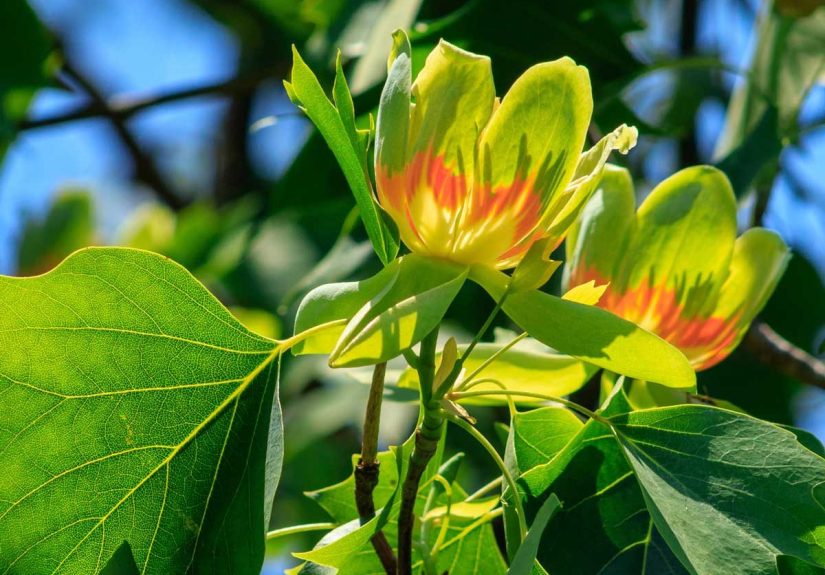
It earns the “tulip” nickname two ways: its distinctive tulip-shaped leaves and its spring flowers,
which look like greenish-yellow tulips with an orange blush tucked inside the cup.
In the eastern U.S., it’s a beloved native known for tall, straight growth and fast establishment
when conditions are right.
Quick Facts (So You Don’t Plant a “Cute Sapling” That Becomes a Landmark)
- Botanical name: Liriodendron tulipifera
- Common names: tulip tree, tulip poplar, yellow poplar
- USDA hardiness: generally Zones 4–9 (local performance varies by heat/drought and exposure)
- Sun: full sun is best; part shade is tolerated
- Soil: deep, fertile, moist (not soggy), well-drainedloamy is the dream
- Mature size: often 70+ feet in landscapes; can be much taller on ideal sitesplan for big
- Growth rate: fast once established (great for shade, not always great for tight spaces)
- Wildlife value: nectar-rich flowers and good habitat value; often used by birds
Choosing the Right Spot: Light, Soil, and Space
1) Light: Give it sun (and don’t negotiate too hard)
Tulip trees perform best with full sunthink six or more hours of direct light.
They’ll tolerate part shade, but too much shade can slow growth and thin the canopy. If you’re planting
in a hot-summer region, the bigger issue isn’t sunlightit’s drought and heat stress.
Tulip trees prefer consistent moisture and can get cranky when summers turn into a long, dry audition for a desert documentary.
2) Soil: Deep, rich, and evenly moist wins
The ideal soil is organically rich, well-drained loam that stays moderately moist.
Tulip trees can adapt to a range of soil textures, but they struggle in compacted urban soils and
sites that swing between “bone-dry” and “bathtub.” If your soil is heavy clay, your goal is not to
replace the entire yardjust improve the planting zone with good structure, drainage awareness, and consistent watering.
3) Space: Think “future canopy,” not “current nursery pot”
A tulip tree can become a massive shade tree. That’s the selling pointand the warning label.
Plant it where the mature crown won’t conflict with roofs, overhead lines, sidewalks, or your neighbor’s
opinion about “leaves.” For many home landscapes, a good rule is to plant 35–40+ feet
away from buildings and give it room to spread.
Best Time to Plant a Tulip Tree
For most of the U.S., spring is the safest planting window, especially because tulip trees can be
somewhat picky about transplanting once they get bigger. Fall planting can work in regions with mild autumns
and reliable moisture, but spring gives the tree a full growing season to build roots before winter.
If you’re choosing between “spring with steady watering” and “late summer during a heatwave,” pick spring.
Step-by-Step: How to Plant a Tulip Tree (The “Do This, Not That” Edition)
-
Call before you dig. In the U.S., dial 811 to mark underground utilities.
It’s boring, responsible, and wildly cheaper than “surprise sprinkler line repair.” -
Measure the root ball. Dig a hole as deep as the root ball and about
2–3 times as wide. Wide helps roots expand; too deep can cause settling and stress. -
Find the root flare. The point where the trunk widens into roots should sit
at or slightly above the surrounding soil line. (Buried flares are a common cause of long-term decline.) -
Remove barriers. If container-grown, gently loosen circling roots. If balled-and-burlapped,
remove twine and as much burlap/wire from the top as practical once positioned. -
Backfill with native soil. Don’t create a “pot in the ground” with super-rich amended soil only in the hole.
Use the excavated soil, breaking clods and removing rocks/trash. You can top-dress with compost after planting. - Water deeply. Soak the root zone thoroughly to settle soil and eliminate major air pockets.
-
Mulch like a donut, not a volcano. Apply 2–3 inches of mulch in a wide ring,
keeping it a few inches away from the trunk. -
Stake only if necessary. If the site is windy or the root ball is unstable, stake loosely for one season.
Most trees develop stronger trunks when they can move a bit. -
Protect the trunk. In areas with deer or string trimmer damage risk, use a guard.
One bad “weed-whacker incident” can ruin a young tree’s day (and sometimes its life).
Watering, Mulching, and Feeding: What Makes Tulip Trees Thrive
Watering: the first year is the make-or-break season
Tulip trees like consistent moisture, especially while establishing. Aim for deep watering
that moistens the root zone (not quick daily sprinkles). A common target is the equivalent of about
1 inch of water per week from rain or irrigationmore during heat and drought, less in cool, wet spells.
Signs of underwatering can include yellowing, leaf scorch, or early leaf drop in hot weather.
Mulch: your tree’s favorite accessory
Mulch helps stabilize soil moisture and temperatureboth big wins for tulip trees. Keep mulch off the trunk,
refresh it annually, and widen the mulch ring as the tree grows. Think: “forest floor,” not “mulch mountain.”
Fertilizer: optional, and sometimes a bad idea
If your tree is planted in reasonably fertile soil and is growing well, you may not need fertilizer.
Too much nitrogen can push soft growth that’s more vulnerable to stress. If growth is weak, start with a
soil test and correct what’s missing. A light spring top-dressing of compost can be helpful without overdoing it.
Pruning and Training: Build a Strong Tree (Not a Breakable One)
Tulip trees grow fastand fast growth can mean wood that’s more prone to breakage if structure is poor.
The goal is to develop a strong central leader and well-spaced scaffold branches.
- When to prune: late winter while dormant is commonly recommended for structural pruning.
- What to remove: dead, damaged, rubbing/crossing branches, and competing leaders.
- What to avoid: topping (it creates weak sprouts and long-term problems) and removing too much at once.
- Pro tip: start early. Small training cuts on a young tree prevent big saw cuts later.
Common Problems (and What to Do About Them)
1) Drought and heat stress
Tulip trees can struggle when summers are hot and dry, especially in compacted soils. You may see leaf yellowing,
browning at the edges, or premature leaf drop. The fix is boring but effective:
deep watering, a wider mulch ring, and reducing turf competition under the canopy.
2) Tuliptree aphids and the “sticky car” mystery
One of the most common complaints is honeydew: a sugary, sticky substance produced by sap-sucking insects
like aphids (and sometimes soft scales). Honeydew can coat leaves, patios, cars, and anything parked beneath the tree.
Then sooty mold may grow on that honeydew, creating a black film (mostly cosmetic but annoying).
What helps: rinse leaves and surfaces with water, encourage beneficial insects, avoid excess nitrogen fertilizer,
and manage severe infestations with appropriate, labeled treatments (or a local arborist if the tree is large).
If you’re planting a tulip tree near a driveway, just know: you’re also planting a future “free caramel drizzle” machine.
3) Cankers, leaf spots, and general “tree meh”
Like many large trees, tulip trees can develop minor foliar diseases or cankers, especially under stress.
The best prevention is overall vigor: correct planting depth, good watering practices, and avoiding trunk wounds.
Remove dead branches when noticed and keep mowing/string-trimmer damage far away from the bark.
4) Verticillium wilt (serious, but not the most common)
Verticillium wilt can cause wilting and dieback on infected branches and can be severe in some trees.
Because symptoms can mimic drought or other issues, diagnosis may require expert help.
If verticillium is suspected, contact your local Extension office for confirmation and management options.
Keeping the tree vigorous can help, but severely affected trees may decline over time.
Design Ideas: Where Tulip Trees Shine
Tulip trees are best used as specimen shade trees in large yards, parks, or open landscapes.
They look especially good when given room to develop their tall trunk and broad crown. Consider placing
a bench or seating area under the future canopy (just not directly under branches you haven’t structurally pruned).
Underplanting tip: young tulip trees allow plenty of sun, so perennials and shrubs can thrive early on.
As the canopy fills in over the years, shift toward plants that tolerate part shade.
Small Yard? Consider a Narrow or Compact Cultivar (Still Not a Houseplant, Though)
If you love tulip trees but don’t have “estate grounds,” you may have options:
-
Upright/columnar forms (often sold as ‘Arnold’ or ‘Fastigiatum’) grow narrower than the species,
making them more workable in limited spacesthough they can still be tall. -
More compact selections like ‘Little Volunteer’ or ‘Emerald City’ are often marketed for smaller landscapes,
but “smaller” is relative. Always check the mature size from a reputable nursery tag or arboretum listing.
Even with compact cultivars, place the tree where roots and canopy won’t battle pavement and buildings.
Your goal is a long-lived shade tree, not a lifelong argument with your foundation.
FAQ: Quick Answers for New Tulip Tree Owners
How long until a tulip tree blooms?
Tulip trees can take years to reach flowering maturity, and blooms often appear high in the canopy.
Don’t panic if you don’t see flowers earlyfocus on establishment and structure first.
Do tulip trees have invasive roots?
They’re not typically known for aggressively lifting sidewalks the way some species do,
but any large tree can cause conflicts when planted too close to hardscape. Distance is your friend.
Is it messy?
Expect seasonal leaf drop (normal) and seed structures. The bigger “mess factor” for many homeowners is honeydew
from aphidsmainly because sticky stuff lands on everything under the canopy.
Real-World Experiences: What People Commonly Notice After Planting a Tulip Tree (and How to Win Anyway)
The internet is full of tulip tree love stories that start with “It grew so fast!” and occasionally end with
“Now my yard is permanently in the shade and my car is sticky.” Both can be true. Here are common, practical
experiences gardeners and homeowners reportplus how to steer the story toward “majestic shade tree”
instead of “fast-growing regret.”
The “It’s growing like a rocket… should I be scared?” phase
Many people are thrilled in years 1–5 because the tree visibly grows each season. The key is to pair that
fast growth with early training. Homeowners who do light structural pruning (or hire an arborist once)
often end up with a sturdier tree and fewer storm-related branch problems later. The best time to guide form is when
branches are small enough to prune with hand prunersyour future self will appreciate the “tiny cuts now, fewer chainsaws later” approach.
The “Why are the leaves yellowing in summer?” moment
A common surprise is mid-summer leaf stress during hot spellsespecially the first year or two. People often assume
“disease,” but the more frequent culprit is inconsistent watering (big soak, then nothing for two weeks).
Tulip trees tend to respond best to a steady rhythm: deep watering during drought, wide mulch, and less turf competition.
One homeowner trick that actually works: set a reminder to water deeply once a week in dry periods until the tree is established,
then adjust based on rainfall.
The “What is this sticky stuff on my patio?” discovery
Honeydew is the #1 complaint you’ll hear from people who planted tulip trees near driveways, decks, or outdoor furniture.
When aphid populations build, surfaces under the tree can become tacky, and sooty mold can make leaves look dirty.
People who stay happiest long-term usually do two things:
(1) they accept that nature isn’t a clean-room lab, and
(2) they plant the tree where “sticky fallout” won’t ruin daily lifelike away from parking spots and patios.
If the tree is already planted, a simple hose rinse and keeping the tree healthy can reduce the impact, and severe outbreaks can be managed with professional help.
The “I planted it too close… and now it’s personal” realization
Tulip trees often look polite and well-behaved at the nursery. Then, a decade later, they’ve turned into a towering shade tree
with a serious canopy. People who end up happiest typically chose a spot with long-term space in mindopen lawn, away from structures,
and with enough clearance to let the tree be what it naturally is. If you’re on the fence, here’s a practical test:
stand where you want to plant, look up, and imagine a crown that’s as wide as a small house. If that makes you nervous,
consider a different location or a narrower cultivar.
The “This tree is actually a wildlife magnet” payoff
Many homeowners report that once the tree matures, it becomes part of the neighborhood ecosystempollinators around the blooms,
birds using the canopy, and that “big-tree energy” that makes a yard feel established. The best part is that you don’t have to
micromanage it forever. The first couple of years are hands-on (watering, mulch, training), but later the tree can be relatively
low-maintenanceassuming it was planted correctly, given enough room, and not forced to survive in a tiny pocket of compacted soil.
Bottom line: tulip trees reward planning. If you give them sun, moisture, and room, they’ll give you height, shade, and spring flowers
that make people slow down and stare (in a good way). If you squeeze them into the wrong spot, they’ll still growjust with more drama.
Choose wisely, water well early, and let the tree become the legacy piece it’s meant to be.