Table of Contents >> Show >> Hide
- Why This DIY Candle Cozy Project Works So Well
- What You Need to Turn an Old Sweater into Candle Cozies
- Choose the Right Sweater Before You Cut Anything
- How to Turn an Old Sweater into Candle Cozies: Step by Step
- Best Design Ideas for Sweater Candle Cozies
- Mistakes to Avoid When Making DIY Candle Cozies
- How to Clean and Store Sweater Candle Cozies
- Are Sweater Candle Cozies Safe?
- Conclusion
- Real-Life Experiences and Cozy Lessons from This DIY
If you have an old sweater hiding in the back of your closetone with a stretched cuff, a mystery stain, or the emotional energy of “I might wear this someday”this is its comeback tour. Turning an old sweater into candle cozies is one of those crafty little projects that feels wildly charming compared to the amount of effort involved. It is cozy, budget-friendly, giftable, and just the right level of “Look what I made!” without requiring a sewing machine, a design degree, or a spiritual bond with a glue gun.
Even better, this DIY checks all the boxes for modern home decor. It helps you repurpose old sweaters, adds warm texture to shelves and tabletops, and gives plain candle jars a soft, custom look. Whether your style leans farmhouse, Scandinavian, cottagecore, or “I just want my apartment to look like October all year,” sweater candle cozies can fit right in.
There is one important note before we start: fabric and open flame are not best friends. So the smart version of this project is to make decorative cozies for candle jars, use them with flameless candles, or remove the cozy before lighting a real candle. That way, you get all the charm and none of the “why is the fire alarm singing?” drama.
Why This DIY Candle Cozy Project Works So Well
Some crafts look adorable online and then fall apart in real life after ten minutes and one sneeze. This is not one of them. A sweater candle cozy works because knit fabric naturally stretches, hugs a glass jar beautifully, and instantly adds softness and texture. Old sleeves are basically pre-made tubes, which means much of the work is already done for you. The sweater did the heavy lifting years ago. You are just giving it a glamorous second act.
It is also one of the easiest upcycled sweater crafts to personalize. You can keep the look simple with a neutral cable-knit sleeve, or you can go playful with stripes, buttons, lace, twine, ribbon, or tiny wood tags. A chunky cream knit feels rustic and wintery. A red plaid sweater feels festive. A heather gray sleeve gives minimalist candle decor a cozy edge without looking too fussy.
And unlike some home decor projects that require an entire Saturday and a motivational playlist, this one can be finished in under an hour. If you are making several candle cozies at once, it becomes the kind of afternoon project that pairs nicely with tea, a good movie, and the smug satisfaction of not throwing something useful away.
What You Need to Turn an Old Sweater into Candle Cozies
- An old sweater, preferably clean and dry
- Glass candle jars or empty jars to cover
- Sharp fabric scissors
- Measuring tape or ruler
- Pins or clips, optional
- Fabric glue or a hot glue gun, optional
- Needle and thread, optional
- Ribbon, twine, buttons, or tags for embellishment
The easiest sweaters to use are medium- to chunky-knit cotton, acrylic, wool blends, and felted wool. If the knit is very loose, open, or delicate, it can snag or stretch too much. If it is very bulky, it may overwhelm smaller jars. Sweater sleeves usually work best because they are already tube-shaped, but the body of the sweater can be cut into panels if you want larger covers.
Choose the Right Sweater Before You Cut Anything
Before you start chopping like an eager craft goblin, take a minute to evaluate the sweater. The best candidates are clean sweaters with good texture and enough stretch to fit snugly around a jar. Pills are not necessarily a dealbreaker. In fact, a slightly lived-in sweater can add character. But if it smells musty, feels sticky, or looks like it survived a dramatic battle with a housecat, wash it first.
Natural fibers like wool and cashmere can look especially beautiful, but they may need gentler handling. Cotton sweaters tend to be easy to work with and less fussy. Acrylic sweaters hold color well and are widely available in thrift stores. A ribbed cuff can create a polished finished edge with almost no extra effort, which is why sleeves are the MVP of this project.
If you are using a thrifted sweater, wash and dry it according to the care instructions before crafting. That prevents future shrinkage, removes dust and odors, and keeps your finished candle jar cozy from smelling like somebody else’s attic. Charming vintage energy is great. Vintage dust, less so.
How to Turn an Old Sweater into Candle Cozies: Step by Step
1. Pick the Right Jar
Start with a glass jar, vase, or candle container that has straight or slightly tapered sides. Smooth cylindrical jars are the easiest to cover because the sweater fabric can stretch evenly around them. Very curvy containers are still possible, but they take more patience and often more trimming.
If you plan to use the cozy while the candle is on display, any empty jar works. If you plan to light a real candle later, make the cozy removable and take it off before burning. For an always-safe cozy look, use flameless LED candles inside the jar instead.
2. Measure the Jar Height and Width
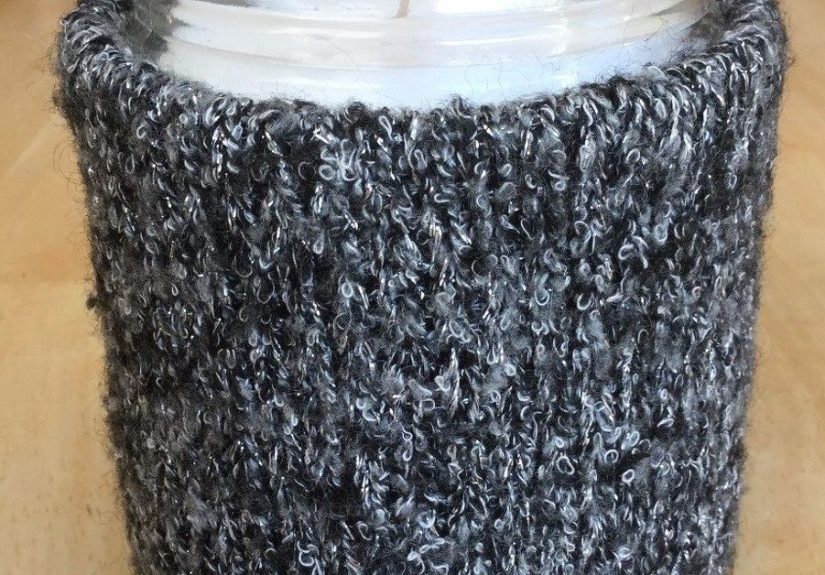
Measure the part of the jar you want to cover. Most sweater candle cozies look best when they cover the lower two-thirds of the container and stop well below the rim. That creates a nice balanced shape and keeps the top clean and visible.
For width, remember that knit fabric stretches. Your cut piece should be slightly smaller than the jar’s circumference so it fits snugly. Too loose, and it will sag like a tired sock. Too tight, and it will distort the pattern or make you question your life choices.
3. Cut the Sweater Sleeve or Panel
Lay the sweater flat and choose the section you want. Sleeves are ideal because the cuff can become the finished top or bottom edge of your candle cozy. Cut a piece that is about 1 to 2 inches longer than the height of the area you want to cover. That extra length gives you room to fold, hem, or adjust.
If you are using the sweater body, cut a rectangle and wrap it around the jar to test the fit. Add a little overlap for gluing or stitching the seam. Pattern placement matters here. A cable running down the center can look intentional and boutique-worthy. A random seam across the front can look like the candle got dressed in the dark.
4. Test Fit Before Securing Anything
Slip the cut sleeve over the jar or wrap the panel around it. Adjust the fabric so the prettiest part of the knit faces front. Fold the edge under if needed to create a cleaner finish. At this point, you may realize your jar is either too short, too wide, or in a deeply uncooperative mood. That is normal. Just trim a little at a time.
The cozy should fit neatly without bunching too much around the base. A little texture is great. Looking like the jar borrowed grandpa’s turtleneck and got lost inside it? Less great.
5. Finish the Edges
If you used a sweater cuff, congratulations: the sweater has already done your edging for you. If not, you have a few easy options. You can fold the cut edge inward and secure it with fabric glue. You can use a line of hot glue for a quick no-sew finish. Or you can stitch a simple hem by hand if you want the cozy to feel more polished and durable.
Loose knits may fray or curl slightly at the edges, so a folded hem helps. Felted wool tends to behave well and holds its shape beautifully, making it a favorite for more refined projects.
6. Secure the Seam, If Needed
If you used a panel from the body of the sweater, wrap it around the jar and secure the back seam with hot glue, fabric glue, or a few hand stitches. For a cleaner finish, keep the seam at the back and line up the knit pattern as neatly as possible.
Do not glue the fabric permanently to a candle jar you might want to wash later unless you are absolutely sure. A removable candle jar cozy is more practical, easier to clean, and safer if you need to take it off before use.
7. Add Decorative Details
This is the fun part. Tie twine around the middle for a rustic look. Add a wooden bead or kraft-paper gift tag for a handmade gift vibe. Stitch on a button. Glue on a strip of lace. Tuck in a sprig of faux greenery during the holidays. Keep it simple or fancy it up, depending on whether your style says “clean Scandinavian cabin” or “craft store blackout.”
For gifts, add a handwritten tag with a scent note like “vanilla cedar” or “pumpkin chai.” It turns a small DIY into something that feels thoughtful, warm, and wonderfully non-generic.
8. Style It the Smart Way
Now place your finished candle cozy on a tray, shelf, mantel, coffee table, or bedside display. Group two or three together in different heights for visual interest. Mix sweater textures with wood, ceramic, brass, or dried greenery for a warm layered look.
If you are using real candles, remove the cozy before lighting. Yes, that is less dramatic than a fully dressed burning candle, but it is also less likely to end your DIY career in spectacular fashion. If you want the cozy look while the candle glows, flameless candles are the easy answer.
Best Design Ideas for Sweater Candle Cozies
Rustic Farmhouse
Use cream, oatmeal, or taupe cable-knit sweaters with jute twine and unfinished wood tags. Pair them with wood trays, pinecones, and amber glass for a cozy cabin look.
Modern Minimalist
Choose gray, black, ivory, or camel sweaters with clean ribbing and no embellishments. Use simple glass jars and let the texture do the talking.
Holiday Cozy
Repurpose red, green, plaid, or Fair Isle sweaters and add small bells, velvet ribbon, or faux cedar sprigs. These make charming table accents and easy hostess gifts.
Vintage Thrifted Charm
Mix mismatched textures, old buttons, crocheted trims, and soft faded colors. This look works especially well if you love decor that feels collected instead of store-bought.
Mistakes to Avoid When Making DIY Candle Cozies
Using a sweater that is too fragile: Very delicate knits can tear or stretch out quickly. If the fabric looks like it might give up halfway through the project, believe it.
Cutting too much too fast: Always trim gradually. Knit fabric can be surprisingly forgiving, but it can also go from “perfect fit” to “tiny wool bracelet” in one overconfident snip.
Covering the top of the jar: Keep the upper edge low and tidy. A cozy creeping toward the flame area is not stylish; it is a safety issue.
Making it permanent when removable is better: A removable candle jar cozy is easier to clean, swap seasonally, and take off before burning.
Ignoring the jar shape: Straight-sided jars are easiest. If your container has a dramatic waist or flared top, the sweater may bunch awkwardly.
How to Clean and Store Sweater Candle Cozies
If your cozy gets dusty, gently shake it out or use a lint roller. If it needs a deeper clean, spot clean first. For washable fibers, hand washing in cool water with a gentle detergent usually works best. Lay the cozy flat to dry so it keeps its shape. Avoid wringing it out, and do not toss it in a hot dryer unless your goal is to make a cozy for a very small candle. A birthday candle, perhaps.
Store sweater cozies flat in a drawer or a small box between seasons. If they have embellishments like tags or bells, wrap them lightly in tissue to keep them from snagging. This is a tiny project, but a little care goes a long way if you want to reuse them year after year.
Are Sweater Candle Cozies Safe?
They are safe as decorative accessories when used thoughtfully. The key is remembering that the sweater is decor, not the actual candle holder. Real candles should always be burned in proper heat-safe, nonflammable containers on stable surfaces, away from fabrics and anything that can catch fire. So if your cozy is on the jar, treat it as display-only and remove it before lighting. If you want the cozy look while something glows inside, flameless candles are the better move.
That may sound cautious, but it is actually liberating. Once you stop trying to make the fabric do jobs it should not do, the project becomes easier, prettier, and more practical. Decorative cozies, gift cozies, seasonal jar wraps, LED lantern sleevesthese are all fair game and all adorable.
Conclusion
Turning an old sweater into candle cozies is the kind of DIY that makes you feel clever, resourceful, and suspiciously good at home decor. It is affordable, beginner-friendly, and perfect for anyone who loves upcycled crafts, cozy interiors, and giving old textiles a second life. With a pair of scissors, a glass jar, and a sweater that has seen better days, you can create something warm, stylish, and genuinely useful.
Best of all, this project proves that repurposing old sweaters does not need to be complicated. A simple sleeve can become beautiful decor in less time than it takes to scroll through fifty expensive “artisan” candle holders online. Not bad for something that used to live on a closet shelf, wondering where it all went wrong.
Real-Life Experiences and Cozy Lessons from This DIY
The first time I made sweater candle cozies, I learned a humbling truth: not every sweater wants to become a home decor icon. Some are stretchy and cooperative, slipping neatly over a jar like they were born for the role. Others fight back, twist sideways, or sag at the bottom like they are protesting the whole concept. That trial-and-error stage is part of the charm. It is also how you figure out that ribbed sleeves are little miracles and super-loose knits are tiny chaos factories.
One of the best experiences with this project is how quickly it changes the mood of a room. A plain candle jar on a shelf looks fine. Add a soft knit wrap, and suddenly the space looks intentional, warm, and a little more lived in. It is the decor equivalent of adding socks on a cold floor. Small change, huge emotional payoff.
I have also found that sweater candle cozies make excellent last-minute gifts. If you have an old but attractive sweater and a clean glass jar, you are halfway to a thoughtful handmade present. Add a candle, a tag, and maybe a ribbon, and people assume you are the sort of organized person who plans charming homemade gifts weeks in advance. You do not need to correct them.
There is also something satisfying about using materials that already have a history. A sweater that was once worn on a winter trip, inherited from a relative, or rescued from a thrift store carries a little personality into the finished project. That makes the cozy feel less generic than something bought new. Even when the final result is simple, it feels personal in a way mass-produced decor rarely does.
Another lesson: color matters more than you think. Neutral sweaters are the easiest to style, but bold colors can be surprisingly fun. A deep forest green cozy looks rich and classic in winter. A mustard yellow sleeve feels warm in fall. A faded red knit can make even the plainest glass jar look festive. Sometimes the sweater you almost donated ends up being exactly the texture or shade your decor needed.
The project is also oddly relaxing. There is no complicated pattern to follow, no advanced technique to master, and no pressure to make everything identical. In fact, a little variation often looks better. When I make a set, I prefer them to feel related, not perfectly matched. One can have twine, one can have a cuff edge, one can stay plain. Together, they look collected and layered rather than overly coordinated.
And perhaps the most useful real-world takeaway is this: the smartest DIYs are the ones you will actually use. Sweater candle cozies are easy to swap with the seasons, easy to store, and easy to remake if one gets stretched out. They are not precious. They are practical, attractive, and forgivingthree qualities that deserve more respect in the crafting world.
So if you have a worn sweater and a free hour, this project is worth trying. Even if your first attempt is a little crooked or slightly too snug, the result will still have that handmade warmth people love. And if nothing else, you will finally be able to look at an old sweater and say, “Your fashion career may be over, but your decor career is just beginning.”