Table of Contents >> Show >> Hide
- The Real Magic of Under-Horse Photography
- Why Horses Look So Different From Below
- The Horse’s Point of View Matters, Too
- What It Takes to Photograph Horses From Underneath Safely
- Why the Internet Fell in Love With These Photos
- Under-Horse as a Lesson in Creative Perspective
- Extra Experiences and Reflections on the Under-Horse Idea
- Conclusion
Say the sentence “I photograph horses from underneath” out loud and you will get one of two reactions. The first is stunned silence. The second is a face that says, very clearly, “That sounds like a terrible life decision.” And yet that oddball idea is exactly what makes Under-Horse such a fascinating visual project. It takes one of the most photographed animals on earth and flips the angle so completely that the familiar suddenly looks surreal, sculptural, and a little hilarious.
Horses are usually photographed from the side, in motion, in pasture light, or with enough wind in the mane to make an entire shampoo commercial jealous. From underneath, though, all the usual visual cues disappear. You are no longer looking at a noble profile or a graceful gallop. You are looking at muscle, symmetry, hooves, feathering, belly lines, stance, tension, and geometry. In other words, you are looking at a horse like a startled patch of clouds might.
That is why the Under-Horse photography concept works so well online and in editorial storytelling. It is strange, clever, instantly scroll-stopping, and rooted in a real truth about visual culture: people think they already know what a horse looks like. Then someone changes the camera position, and the animal becomes new again.
The Real Magic of Under-Horse Photography
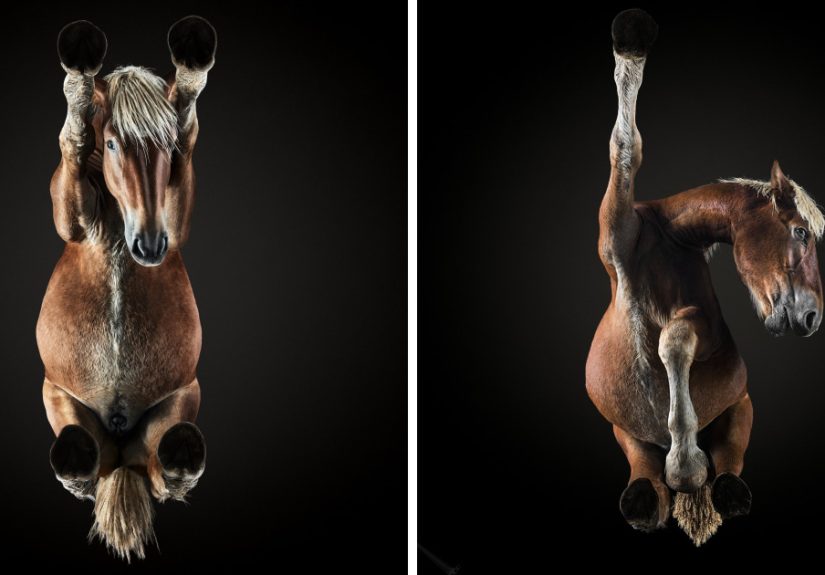
At first glance, Under-Horse feels like a novelty stunt. Look again and it becomes something more interesting. The images are not random weirdness. They are a study in perspective. By placing the camera below a translucent surface and having the horse stand above it, the photographer turns the animal into a living monument. The chest becomes architectural. The legs read like columns. The mane turns into a fringe at the edge of a frame. Even the hooves look unexpectedly elegant, which is not a sentence most people expected to read today.
This angle also strips away the sentimental clichés that often dominate horse imagery. There are no golden-hour fields begging for applause. No dramatic rider leaning forward like destiny has a saddle. No forced romance. Just the horse itself, viewed from a perspective so unusual that the body becomes abstract before it becomes recognizable. That tension between abstraction and recognition is what gives the photos their staying power.
It also helps that horses are naturally built for visual drama. Their bodies carry powerful contrasts: light and dark coats, long and short hair, lean limbs and broad torsos, delicate facial features and thunderously practical hooves. Underneath, those contrasts become even sharper. The result is photography that feels half zoology, half modern art, and half “wait, that makes three halves.” Which, frankly, suits the internet just fine.
Why Horses Look So Different From Below
The underside view feels uncanny because it is a view humans almost never use. We meet horses at eye level, from the shoulder, from the saddle, or from a distance. We are trained, quite sensibly, not to hang out beneath them. So when a photograph gives us that angle safely, our brains treat it as both familiar and forbidden. That visual contradiction is powerful.
From below, the horse’s design suddenly becomes obvious in a new way. You notice how much of the animal’s grace depends on balance. You see how the legs are spaced to support a large, athletic body with surprising economy. You notice how each hoof anchors the entire composition like a punctuation mark. You realize that what looks soft and flowing from the side becomes almost engineered from underneath.
Coat texture matters, too. A sleek-coated horse can look polished and almost aerodynamic in underside photography. A draft horse with feathered legs can look extravagant, like it wandered into the frame wearing historical curtains and refused to apologize. Ponies often appear compact and comic, while taller breeds can look imposing enough to make your screen feel small. That variety gives horse photography from below a built-in sense of surprise.
Hooves, Hair, and Shape Do the Heavy Lifting
The best Under-Horse images remind viewers that horses are both graceful and practical animals. Hooves are not decorative. Muscles are not accidental. The barrel, chest, and limbs all exist for movement, stability, and power. A below-the-horse angle puts that engineering front and center.
That is also why the photos can feel almost sculptural. Remove the landscape, fence line, rider, and horizon, and the horse becomes a study in form. You stop reading the image as “horse in a place” and start reading it as “horse as structure.” It is one reason the project speaks to both animal lovers and people who simply enjoy inventive photography.
The Horse’s Point of View Matters, Too
Here is where the project becomes more than a gimmick. Photographing horses from below is not just about what humans see. It also raises a useful question: how does the horse experience the scene? Horses are highly sensitive animals. They notice movement, sounds, touch, and changes in their environment with impressive efficiency. That sensitivity is one reason they are so compelling. It is also one reason photographers cannot treat them like decorative furniture with tails.
Equine vision and behavior matter enormously in any unusual shoot. Horses have blind spots directly in front and directly behind, and they often adjust their head position to better understand what is around them. That means a setup involving glass, crew members, lights, a pit, unusual footing, and a camera placed in a place no horse expects a camera to be requires patience, clarity, and careful handling. The horse does not know it is making internet history. It just knows the floor feels weird and the humans are suddenly very interested in it.
That is why successful equine photography depends on reading body language. Ears flicking rapidly, a raised head, tension in the muzzle, a swishing tail, or shifting weight can all suggest uncertainty. Calm horses still need thoughtful handling. Nervous horses need even more respect. The best animal photographers understand that getting the shot starts long before the shutter clicks. It starts with making the animal feel safe enough to stand, breathe, and exist normally in an unusual environment.
Good Horse Photography Is Really Good Observation
People often assume great animal photography is all timing. Timing matters, of course, but observation is the real superpower. Watch a horse for a few minutes and you learn quickly that the body speaks constantly. Ears rotate. Nostrils tighten. Weight shifts. The neck rises. The eye sharpens. Every tiny movement offers information.
In a project like Under-Horse, observation becomes everything. The photographer and handlers need to know when a horse is curious, when it is bored, when it is alert, and when it is one second away from deciding that today is an excellent day to exit stage left. That tension between art and horsemanship is part of what makes the project impressive. The photograph may look effortless, but the process absolutely is not.
What It Takes to Photograph Horses From Underneath Safely
Unusual animal photography only works when the logistics are smarter than the idea is wild. And this idea is pretty wild. A horse standing on a transparent surface above a camera sounds simple in theory and deeply complicated in practice. The floor has to feel secure. The environment has to be calm. The crew has to be coordinated. The equipment has to be introduced in a way that does not frighten the horse. And every person involved has to remember one important fact: the horse is much larger than your creative vision board.
That is why the most responsible version of Under-Horse photography is not reckless at all. It is patient. It is controlled. It is handler-led. It respects the horse’s comfort level. It avoids forcing the animal through confusion just because the final image might be cool. In animal-centered work, “worth it” only counts if the horse agrees by staying relaxed and manageable.
Good filmed-media guidance also supports this mindset. Unfamiliar moving gear, repeated takes, weather stress, crowding, and noisy resets can all affect animals. A smart set limits unnecessary pressure. It gives the horse room, routine, and expert handling. In that sense, Under-Horse is most interesting not because it breaks the rules of horse safety, but because it depends on taking those rules seriously enough to make an unusual angle possible.
Why the Internet Fell in Love With These Photos
The internet loves three things: animals, novelty, and images that make people send messages reading, “Okay, you need to see this.” Under-Horse delivers all three. But it also works because it does something many viral animal photos fail to do: it rewards a second look.
At first, people laugh or stare because the viewpoint is so unexpected. Then they start comparing breeds, leg shapes, coat patterns, and expressions. Then they begin to appreciate the craft involved. The photo moves from joke to artwork in about ten seconds. That is not easy to pull off.
There is also something charmingly democratic about the project. Whether you are a lifelong horse person, an art director, a casual animal fan, or someone who mostly encounters horses in movies and emoji form, you can appreciate the surprise. The images do not require technical knowledge to land. They are visually immediate. That makes them ideal for web publishing, social sharing, and editorial features built around creative photography and horse art.
Under-Horse as a Lesson in Creative Perspective
One of the best things about this project is that it reminds writers, photographers, and editors of a simple truth: fresh perspective beats louder content. You do not always need a stranger subject. Sometimes you need a smarter angle. Horses have been painted, filmed, photographed, idolized, ridden, raced, and mythologized for centuries. Yet one shift in viewpoint made people look again.
That is a useful lesson for any creative field. A familiar topic does not become boring because it is old. It becomes boring because people keep approaching it the same way. Under-Horse proves that originality can come from perspective rather than invention. The horse did not change. The camera did. Suddenly the audience did, too.
And yes, there is humor in that. A lot of it. Some underside horse portraits look regal. Some look dreamy. Some look like the horse has just discovered taxes. That range is part of the appeal. Art does not lose value when it makes people smile. Often, that is when it becomes memorable.
Extra Experiences and Reflections on the Under-Horse Idea
Spend enough time thinking about Under-Horse: I Photograph Horses From Underneath, and the project starts to feel like more than a visual stunt. It feels like a tiny philosophy lesson disguised as a horse photo. Humans are very good at assuming we have already seen something fully. We glance, label, move on, and congratulate ourselves on being observant. Then an image like this arrives and exposes how shallow our first glance really was.
That is especially true with horses. They are so culturally familiar that many people stop really looking at them. We know the silhouette. We know the symbol. We know what a horse is supposed to represent: freedom, strength, beauty, speed, maybe one deeply inconvenient barn bill. But photographs from underneath interrupt all those neat categories. They make the horse less symbolic and more physical. More present. More specific.
There is also something unexpectedly intimate about the angle. Not intimate in a sentimental way, but in a physical, observational way. You notice details you would never register from the side: the spacing of the legs, the exact curve of the belly, the way hair changes direction, the slight irregularity that makes one horse look distinct from another. Instead of “a horse,” you start seeing this horse. That shift matters. Attention is one of the purest forms of respect.
For photographers, the project is a reminder that novelty alone is not enough. The reason these images work is that the viewpoint reveals something true. The angle is surprising, yes, but it also exposes design, balance, and animal presence in a way standard framing does not. A weird camera position without insight is just a party trick. A weird camera position that reveals structure becomes art.
For horse lovers, the project can be oddly affirming. It shows that horses can still astonish us, even now, even after centuries of paintings, portraits, racing posters, and ranch calendars. There are still undiscovered versions of familiar animals waiting inside perspective changes. That idea feels generous. It suggests the world is not finished with its surprises yet.
And for writers, editors, and anyone producing content for the web, Under-Horse offers a near-perfect case study in why unusual stories travel. It has a clear hook, strong imagery, emotional range, and a built-in tension between absurdity and elegance. It is funny until it becomes beautiful, and beautiful until it becomes funny again. That pendulum swing is catnip for readers.
In the end, the success of Under-Horse is not really about being under a horse. It is about the power of seeing a familiar subject in a way that feels impossible, then realizing it was there all along. The horse did not become extraordinary because the camera went underneath. The camera simply gave us permission to notice how extraordinary the horse already was. Not bad for an idea that probably began with someone essentially saying, “Hear me out.”
Conclusion
Under-Horse succeeds because it combines creative risk, visual intelligence, and real respect for the animal at the center of the frame. It transforms horse photography by making the familiar feel brand-new. It also reminds viewers that perspective is not a gimmick when it reveals something honest. Horses from below look strange, elegant, powerful, and occasionally like they are judging us for our life choices. That is exactly why we keep looking.