Table of Contents >> Show >> Hide
- The “Sound Barrier” Wasn’t a WallIt Was a Problem Set
- Meet Chuck Yeager: The Test Pilot Who Didn’t Need a Myth to Be Legendary
- The Bell X-1: A Bullet with Wings, Built for One Job
- October 14, 1947: The Flight That Made “Supersonic” Real
- Why Yeager’s Breakthrough Mattered More Than Bragging Rights
- How to “Watch” Yeager Break the Sound Barrier Today (Without Time Travel)
- The Engineering Behind the Moment: What Made Supersonic Control Possible
- Legacy: From Yeager’s X-1 to Today’s Supersonic Comeback
- Conclusion: The Best Way to Watch a Milestone Is to Understand It
- Experiences You Can Have That Bring Yeager’s Moment to Life (Extra)
There are “iconic moments” in history, and then there are moments that literally changed how we measure “fast.”
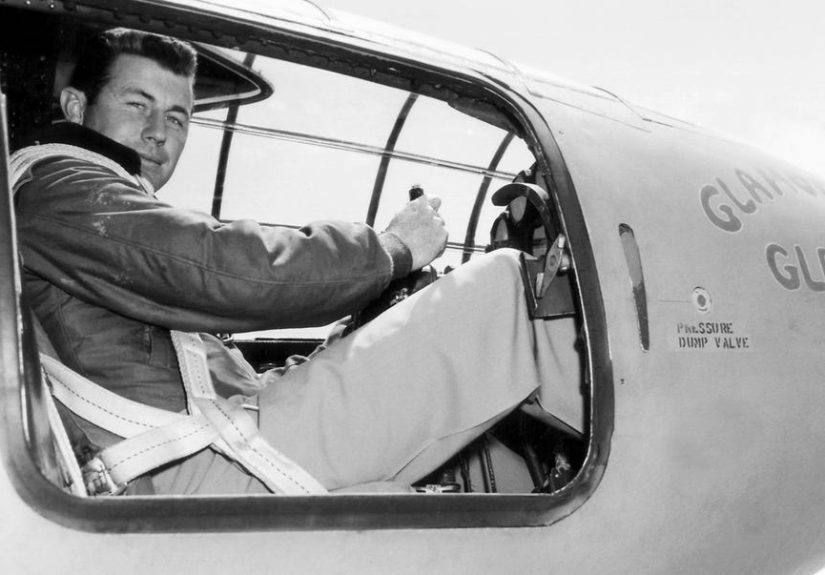
On October 14, 1947, U.S. Air Force Captain Charles “Chuck” Yeager took a rocket-powered research plane named
Glamorous Glennis and pushed it past Mach 1making the once-mythic “sound barrier” look less like a wall and more
like a speed bump with a dramatic PR team.
If you’ve ever wondered what it means to watch someone break the sound barrier, here’s the honest truth:
1947 wasn’t exactly the golden age of 4K cockpit cameras. What you can watch today is a rich mix of archival program footage,
official explainers, museum storytelling, and reenactments that let you “see” the milestone from multiple anglestechnical,
historical, and cultural. And the deeper you go, the cooler it gets.
The “Sound Barrier” Wasn’t a WallIt Was a Problem Set
The phrase “sound barrier” makes it sound like pilots used to bounce off an invisible force field like a video game character
hitting the edge of the map. In reality, engineers were wrestling with a messy cocktail of physics and aircraft control:
compressibility effects, shock waves, drag rise, and surfaces that stopped behaving politely as air started piling up and
“thickening” around the plane.
As an airplane approaches Mach 1, parts of the airflow around it can go supersonic even while the aircraft itself is still
technically subsonic. That mismatch can create shock waves that jack up drag and buffet the airframe. Early high-speed aircraft
sometimes ran into terrifying control issuesnose pitching unpredictably, elevators losing authority, and pilots running out of
options at the exact moment the physics started getting spicy.
Mach Numbers: The Speed Limit That Changes by Altitude
“Mach 1” isn’t a fixed miles-per-hour number. It’s tied to the speed of sound, which depends mostly on temperature.
Colder air (often higher altitude) means a lower speed of sound, so the mph required to hit Mach 1 changes with conditions.
That’s why you’ll see different mph figures attached to Yeager’s milestone, but the headline remains: he crossed Mach 1
cleanly and intentionally.
Meet Chuck Yeager: The Test Pilot Who Didn’t Need a Myth to Be Legendary
Yeager wasn’t selected because he had the best publicity agent or the most cinematic jawline (though Hollywood later did its best).
He was chosen because he was exceptionally skilled, disciplined, and calm under pressurethe exact traits you want in someone
you’re about to lock inside a rocket plane and yeet out of a bomber over the Mojave Desert.
He also had the kind of grit that sounds fictional until you read the details: just before the historic flight, Yeager broke ribs
in a horseback accident. Rather than postpone the mission, he kept it quiet and flew anywaybecause, apparently, pain is optional
when history is on the calendar.
The Broom Handle Hack (Yes, Really)
The X-1’s hatch required force to close. With cracked ribs, Yeager couldn’t manage it normally. The workaroundimprovised with help
from his teamwas a piece of broom handle used as leverage. It’s one of those details that feels like a metaphor:
supersonic flight, achieved with rocket science and… a household cleaning accessory.
The Bell X-1: A Bullet with Wings, Built for One Job
The Bell X-1 wasn’t a “plane” in the everyday sense. It was a research instrument with a pilot attached.
It was rocket-powered, compact, and shaped to behave better at high speedsmore like a projectile than a traditional aircraft.
Its nickname, Glamorous Glennis, honored Yeager’s wife and added a touch of humanity to a machine that looked like it meant business.
The X-1 program blended efforts from the U.S. Air Force, the National Advisory Committee for Aeronautics (NACANASA’s predecessor),
and industry partners who were learning, in real time, what “supersonic” demanded from aerodynamics and control systems.
Why It Was Air-Launched
Rockets guzzle fuel fast, and the X-1 didn’t have the luxury of long runways and gentle acceleration. So it was carried aloft by a
modified B-29 bomber and released at altitude. Think of it like getting a head start in a raceexcept the “race” is against physics,
and the “head start” involves being dropped from the belly of a giant aircraft.
October 14, 1947: The Flight That Made “Supersonic” Real
On the morning of October 14, Yeager flew the X-1 over the Mojave Desert near Muroc (now Edwards Air Force Base).
After release from the B-29, he ignited the XLR-11 rocket engine in controlled stages, accelerating into the transonic region
the zone where airplanes and engineers used to have a very bad time.
And then: Mach 1. The X-1 reached about Mach 1.06roughly 700 mpharound 43,000 feet.
The “barrier” didn’t explode the plane. The sky didn’t rip open. The aircraft didn’t dissolve into a fine mist of heroic confetti.
By many accounts, the passage into supersonic flight was surprisingly smooth. That calmness is part of the genius:
the aircraft design and flight plan finally matched the physics.
What Happened on the Ground?
If you picture a massive, dramatic sonic boom shattering every window from California to Nevada, dial it back a notch.
Sonic booms are real, but they’re highly dependent on altitude, atmospheric conditions, and where you’re standing.
In 1947, the bigger “boom” was conceptual: the moment proved that controlled, piloted supersonic flight was achievable.
Why Yeager’s Breakthrough Mattered More Than Bragging Rights
Yeager’s flight didn’t just set a record; it validated a direction for aviation. It showed that airplanes could be designed
to survive and function through the transonic region and beyondmeaning pilots could maintain control, engineers could predict behavior,
and progress could shift from “maybe” to “let’s iterate.”
From Myth to Measurement
Before the X-1, “the sound barrier” carried the aura of inevitability: if you tried to cross it, bad things happened.
After the X-1, it became a measurable engineering challengesomething you could test, refine, and build upon.
That mindset powered decades of X-plane research, military aircraft advances, and eventually the supersonic ambitions that shaped the Cold War era.
A Masterclass in Flight Test Method
Another hidden lesson is how the team approached risk: incremental flights, data-driven decisions, and a willingness to pause and redesign
rather than simply “push harder.” It’s easy to glorify the moment of Mach 1, but the real story includes the methodical steps that made
that moment survivable.
How to “Watch” Yeager Break the Sound Barrier Today (Without Time Travel)
Let’s address the headline honestly: you can’t stream a perfect, continuous 1947 cockpit POV of Yeager crossing Mach 1.
But you can absolutely watch your way into understanding the momentand that’s arguably better than a single grainy clip.
1) Archival Program Footage and Official Storytelling
Museums and aerospace institutions have assembled films, photos, and narration around the X-1 program.
You’ll see the aircraft, the mothership B-29 setup, the test environment at Muroc/Edwards, and the people who turned a hypothesis into a flight plan.
These sources tend to be careful with numbers, context, and what the footage can (and can’t) prove.
2) Documentaries and Explainers that Translate the Physics
If the words “compressibility effects” make your eyes glaze over, don’t worrygood modern explainers turn those concepts into visuals:
shock wave formation, drag divergence, and why control surfaces can lose effectiveness right when you need them most.
3) Dramatizations (Because Humans Love a Story)
Pop culture did what it always does: it took a real event and gave it a cinematic glow-up.
Films and series inspired by the era can help you feel the stakes, even if they occasionally sand down technical nuance for drama.
Watch them like you’d watch a “based on true events” movie: enjoyable, inspiring, and best paired with a reality check.
4) Museum Displays: The Most Underrated “Watch” Experience
Seeing Glamorous Glennis in person (or in detailed museum coverage) makes the achievement hit differently.
The aircraft is smaller than many people expect. The cockpit looks tight. The machine doesn’t scream “comfort.”
And that contrastbetween the humble size and the enormous impactis part of the magic.
The Engineering Behind the Moment: What Made Supersonic Control Possible
Breaking Mach 1 isn’t just about raw speed; it’s about staying in charge of the airplane while the air itself changes behavior.
One of the key breakthroughs associated with the era was improving pitch control at high speeds, including tail designs that could cope
with shock-induced changes in airflow and effectiveness.
In plain English: earlier aircraft could get near Mach 1 and then become stubborn or unstable. The X-1 was designed to avoid
the “I’d like to steer now, please” problem by using control strategies and aerodynamic choices that behaved more predictably.
The supersonic age didn’t arrive because pilots became braver overnight. It arrived because the engineering finally gave bravery
a safe-ish place to stand.
Legacy: From Yeager’s X-1 to Today’s Supersonic Comeback
Yeager’s Mach 1 flight was a beginning, not an endpoint. Supersonic military flight became routine. Experimental programs pushed
higher and faster. Commercial supersonic travel arrived with the Concordethen disappeared, largely due to economics, noise constraints,
and operational complexity.
Today, the conversation is back, with modern efforts focused on efficiency and quieter sonic signatures. Whether or not we enter
a new era of widespread supersonic passenger travel, Yeager’s 1947 flight remains the proof-of-concept moment that made all later debates possible.
Experiences You Can Have That Bring Yeager’s Moment to Life (Extra)
You don’t need a rocket planeor a broom handleto feel closer to the sound-barrier story. What you need is the right kind of experience:
the kind that makes the numbers, the desert setting, and the sheer audacity of “let’s fly faster than sound” feel tangible.
Here are ways to build that connection in real life, whether you’re an aviation nerd, a casual history fan, or someone who just likes
watching humans argue with physics and (occasionally) win.
Stand Face-to-Face with the X-1 Story
If you can visit a major aviation museum (or even a well-curated exhibit online), do it. The biggest surprise is scale.
Many people expect the aircraft that launched the supersonic age to look like a futuristic spaceship. Instead, it looks compact,
purposeful, and slightly intimidatinglike a tool designed for one job and zero small talk.
The cockpit is especially sobering: it’s not roomy, not cozy, and not designed for “vibes.” It’s designed for surviving an experiment.
Seeing that helps you appreciate that Yeager wasn’t merely “going fast”he was committing to a controlled research leap in a very tight space.
Try a Flight Simulator with a Supersonic Aircraft
Modern flight sims can’t perfectly recreate 1940s rocket-plane handling, but they can teach an important emotional lesson:
speed changes everything. Even in a sim, the world starts arriving faster than your brain expects.
Small control inputs matter. Navigation feels compressed. You begin to understand why “stable control” was the real prizenot just a headline number.
If you can, pick a scenario that includes high-altitude flight and a transonic-to-supersonic transition. Watch what happens to your workload.
Then imagine doing that in 1947, with less instrumentation, fewer safety nets, and ribs that hurt every time you breathe.
Listen for the Sonic Boom (Safely, and Legally)
Many people have never heard a sonic boom in person. When it happens, it’s not a “pew pew” sci-fi soundit’s more like the sky
briefly slams a heavy door. If you ever attend an airshow where supersonic demonstrations are allowed (which depends heavily on location
and regulations), you’ll notice something funny: the boom doesn’t feel “attached” to the aircraft the way you’d expect.
Because of how shock waves propagate, the sound can arrive after the aircraft has already moved on, like thunder that forgot to keep up.
That delay is a great reminder that “breaking the sound barrier” isn’t a single cinematic instant; it’s a physical process unfolding in air.
Build the Story with a Book, Then Watch the Reenactments
A surprisingly effective experience is to read a grounded historical account first (the kind that includes test program context and engineering),
and then watch dramatizations afterward. When you do it in that order, the movie moments land differently. You catch the real constraints:
the incremental test flights, the careful data review, the risk management, and the teamwork behind the “lone hero” image.
You’ll also notice what Hollywood adds: longer pauses, bigger speeches, and more dramatic music cuesbecause the truth is inspiring,
but it doesn’t always come with a soundtrack.
Do the “Mojave Imagination Exercise”
Even if you never set foot in the desert, you can still place yourself there mentally. Picture the vast flatness of a dry lakebed used as a runway.
Imagine a B-29 carrying a small rocket plane. The release. The ignition. The climb. And then the moment the numbers finally say:
“Yes, we’re past Mach 1.”
Now do the opposite: imagine being an engineer on the ground, waiting for data and hoping the aircraft doesn’t enter a control regime
nobody can predict. That perspective shiftpilot to engineer to program managerturns the story from a stunt into a full-scale human system
doing difficult work under uncertainty.
The best part of these experiences is that they don’t just make Yeager’s achievement feel “cool.” They make it feel earned.
And that’s the real takeaway: supersonic flight wasn’t a lucky punch through an invisible wall. It was a disciplined, data-backed leap
that permanently expanded what aircraft could doand what humans could dare to attempt.