Table of Contents >> Show >> Hide
- What “Waterfall” + “Live Edge” Actually Means (No, It’s Not a Nature Documentary)
- Why Mesquite Is the Perfect Wood for a Desk With Personality
- Design Choices That Make or Break a Waterfall Live Edge Mesquite Desk
- Joinery: How to Make the Waterfall Look Effortless (While It Secretly Isn’t)
- Finishing a Mesquite Desk: Feel, Protection, and Repairability
- Hardwax oils: natural feel, easy touch-ups
- Film finishes (polyurethane/lacquer): higher barrier, more “sealed” feel
- Important: don’t mix care products with the wrong finish
- Filling checks and voids: epoxy can be subtle or loud
- Edge treatment: keep the live edge, lose the pests
- Safety note: oil-soaked rags are not casual trash
- Care and Maintenance: Keeping Your Desk Gorgeous in Year Two (Not Just Week Two)
- Buying vs. Building: What You’re Actually Paying For
- Style and Function Upgrades That Look Intentional (Not Like Afterthoughts)
- Conclusion: The Desk That Works as Hard as It Looks
- Experiences That Come With Owning a Waterfall Live Edge Mesquite Desk (The Fun, the Quirks, the “Oh Right, It’s Wood”)
If a normal desk is a sensible sedan, a waterfall live edge mesquite desk is a lifted 4×4 with a sound system you didn’t ask forbut you’re secretly thrilled it came standard. It’s dramatic (in the best way), built from a slab that looks like it survived a desert adventure, and finished like a piece of functional art that just so happens to hold your laptop, coffee, and the emotional weight of your inbox.
In this guide, we’ll break down what makes mesquite special, why the waterfall design is such a showstopper, and how to get the details rightdimensions, joinery, finishing, and long-term careso your desk looks incredible and behaves itself through seasons, daily wear, and the occasional keyboard rage-tap.
What “Waterfall” + “Live Edge” Actually Means (No, It’s Not a Nature Documentary)
Waterfall: the grain that keeps going
A waterfall desk is built so the wood grain flows over the edge and continues down the sides (like a visual “drop” of the slab). Usually that means the top and legs are mitered at 45 degrees and joined so the pattern reads like one continuous board wrapping around the corners. The effect is clean, modern, and slightly smugin the “yes, I do have taste” way.
Live edge: nature drew the outline
Live edge simply means the natural outside edge of the tree is preserved rather than sawn straight. It’s typically de-barked and cleaned up, but it keeps that organic, wavy contour. Every slab is unique, which is another way of saying your desk is one-of-one… and also that measuring it may involve squinting and mild cursing.
Why Mesquite Is the Perfect Wood for a Desk With Personality
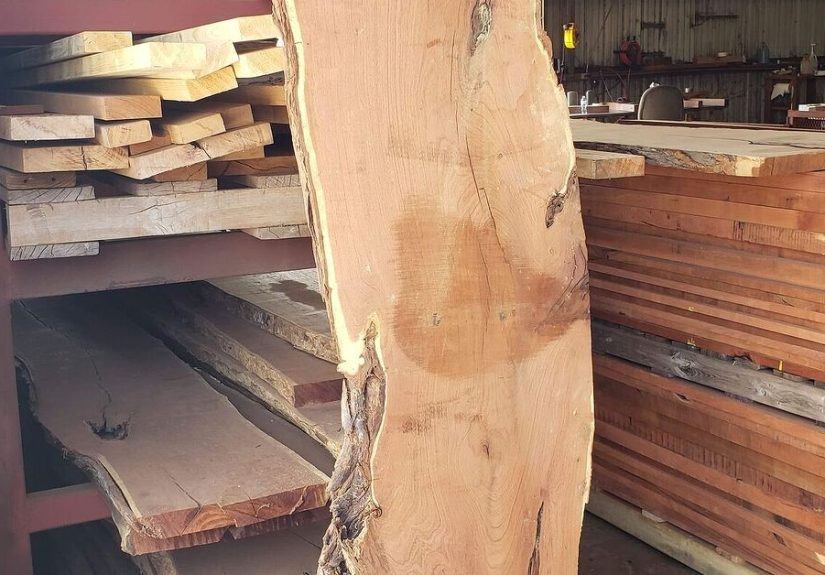
Mesquite isn’t a shy wood. It tends to show bold color variation, dark streaking, character marks, and the kind of natural checking that makes people say, “Is that a crack?” and you say, “It’s called dramaand it’s intentional.”
Durability: built for real life (and real elbows)
Mesquite is widely cited as a hard, dense hardwoodmeaning it’s well-suited to a surface that sees daily use: keyboard movement, wrist pressure, coffee mugs, and the occasional “why is this meeting still happening?” lean. On hardness charts commonly used in woodworking, mesquite is often listed around the mid-2000s on the Janka scale, putting it in the “tough enough for floors, calm enough for furniture” zone.
Dimensional stability: less seasonal tantrum
Wood moves. That’s not a flaw; that’s biology. But some woods move less, and mesquite has a reputation for being notably stablemeaning it tends to shrink and swell less than many other domestic hardwoods when humidity changes. For a desk, that’s a big deal: flatter top, fewer surprises, and less risk that your perfectly aligned waterfall corners drift into “modern art” territory.
Color and grain: desert luxury without the cactus needles
Mesquite often ranges from light tan sapwood to rich reddish-brown heartwood, sometimes with dramatic figuring and mineral streaks. It tends to deepen and mellow over time. If you want a desk that looks warm and premium but still has a little wildness to it, mesquite deliverslike walnut’s rugged cousin who owns a motorcycle and also makes excellent brisket.
Workability: gorgeous, but don’t rush it
Mesquite can have interlocked grain, and that can translate to tearout if you get aggressive with a planer or jointer. The practical takeaway: take lighter passes, keep cutters sharp, and don’t treat it like soft maple. Mesquite rewards patience. It punishes “close enough.”
Design Choices That Make or Break a Waterfall Live Edge Mesquite Desk
Pick the right slab: flatter is cheaper than fixing
Start with a slab that’s properly dried and reasonably flat. “Looks dry” is not a measurement. If you’re buying a slab, look for sellers who provide moisture content info or kiln-dry targets appropriate for indoor furniture. If you’re building, let the slab acclimate to your workspace before final flattening and joinery. A waterfall desk is basically a beauty contest for joinerymovement and twist show up fast at the miters.
One slab vs. bookmatch (and why mesquite sometimes prefers teamwork)
Mesquite trees often grow with twists and turns, so long, wide, perfectly clear single-piece slabs can be rarer and pricier. A common solution is using a bookmatched pair (two slabs opened like a book) or a panel glue-up with careful grain selection. You can still do a waterfall look with bookmatchsometimes it’s even more striking because the grain mirrors itself across the surface.
Thickness and proportions: the “don’t skip leg room” rule
Visually, waterfall designs look best when the top thickness feels intentionaloften around 1.5″ to 3″ depending on the slab and the overall footprint. Thicker slabs feel bold and sculptural; thinner slabs feel sleek. Just remember: a desk is furniture you actually live at, so make sure the “wow” doesn’t steal knee space or smash your chair arms.
Desk dimensions for real humans (not just showroom mannequins)
Most standard desks land around 29–30 inches tall, but the best height depends on your seated elbow height and how you type. Ergonomic guidance generally aims for relaxed shoulders and elbows roughly at (or slightly more open than) 90 degrees when hands are on the keyboard. Depth matters too: if you use larger monitors or dual screens, a deeper desk helps keep your monitor at a comfortable viewing distance without pushing your keyboard into your lap.
- Width: 48″ for a simple setup, 60–72″ for dual monitors or spread-out work.
- Depth: 24″ works, but 27–32″ feels luxurious for monitors + keyboard + breathing room.
- Height: roughly 29–30″ fixed, or build to your seated elbow height if you want a perfect fit.
Bonus points if you plan cable routing early. A waterfall desk is a sculpturetry not to hang a spaghetti chandelier behind it.
Joinery: How to Make the Waterfall Look Effortless (While It Secretly Isn’t)
Miters: beautiful corners with commitment issues
The waterfall effect usually relies on long miter joints. For strength and alignment, woodworkers often reinforce those miters with splines, loose tenons (floating tenons), or decorative keys. Some reinforcements are mainly alignment helpers; others add real strength. Either way, reinforcement makes glue-ups less stressfuland a waterfall desk has enough stress already, thanks.
Clamping strategy: plan it like a heist
Waterfall glue-ups go smoother when you dry-fit everything and rehearse your clamp placement. Long miters like even pressure, and the parts love to skate around on wet glue. Cauls, tape tricks, and smart clamping angles keep the joint tight without turning your slab into a pretzel.
Wood movement + bases: don’t lock it down like a ship anchor
Even stable woods still move some. If you attach the top to a metal base or internal frame, use hardware that allows seasonal movementfigure-8 fasteners, Z-clips, slotted holes, or similar methods. The goal is secure attachment without forcing the slab to fight physics. Physics always wins, and it never even breaks a sweat.
Keeping it flat: your future self will thank you
For wide slabs, many builders use underside stiffeners (like steel C-channel) or thoughtfully designed sub-frames to help maintain flatness over time. Also: let the wood acclimate, then flatten, then build. Skipping acclimation is how you get a desk that slowly becomes a very expensive skateboard ramp.
Finishing a Mesquite Desk: Feel, Protection, and Repairability
A mesquite wood desk deserves a finish that matches how you work. Are you a coaster person? Be honest. A finish choice isn’t a moral decisionit’s a lifestyle quiz with sawdust.
Hardwax oils: natural feel, easy touch-ups
Hardwax oils (often used on live edge furniture) soak in and cure, leaving a low-sheen, “touchable” surface that looks like woodnot plastic. They’re popular because spot repairs are usually easier than film finishes: scuff, reapply, blend. Great for desks that get used, not worshipped.
Film finishes (polyurethane/lacquer): higher barrier, more “sealed” feel
Film finishes create a tougher surface layer that can be more resistant to water and stains. The tradeoff is that repairs can be more obvious; a deep scratch may require sanding and refinishing a broader area to blend. Cleaning also matterssome cleaners can slowly degrade certain film finishes over time. If you choose this route, use gentle cleaners and avoid harsh chemicals.
Important: don’t mix care products with the wrong finish
If your desk has a polyurethane or lacquer-type finish, you generally don’t “oil it” the way you would a hardwax-oil surface. If it’s a hardwax oil finish, periodic maintenance may be part of ownership. The simplest rule: match your maintenance product to your finish type.
Filling checks and voids: epoxy can be subtle or loud
Mesquite slabs frequently feature checks, small voids, or natural cracks. Many makers fill them with epoxysometimes clear for a “stabilized but natural” look, sometimes tinted black for contrast, and sometimes with metallic pigments for a bolder statement. If you want the desk to feel timeless, keep fills restrained. If you want it to look like the galaxy fell into a crack, go wild. Just commit.
Edge treatment: keep the live edge, lose the pests
Live edge usually means the bark is removed and the cambium layer is cleaned back to solid wood. Bark left on can detach over time anddepending on drying and storagecan bring unwanted surprises. The clean live edge look stays beautiful and is easier to finish evenly.
Safety note: oil-soaked rags are not casual trash
Some finishing products (especially oils) can pose a combustion risk with oily rags if handled improperly. Follow the finish manufacturer’s disposal guidance. A common safe practice is laying rags flat to dry fully or storing them in a water-filled metal container until disposal. Safety is cool. House fires are not.
Care and Maintenance: Keeping Your Desk Gorgeous in Year Two (Not Just Week Two)
Humidity: steady wins
Wood likes consistency. Try to keep indoor humidity reasonably stablemany furniture care guides suggest a middle range (roughly 40–55% or so) to reduce movement-related issues. Avoid parking the desk right next to heating vents, radiators, or aggressive sunlight that bakes one side like a cookie sheet.
Daily cleaning: simple is better
Dust with a soft cloth. For grime, a slightly damp microfiber cloth is usually enough. Skip abrasive pads and harsh sprays. If you’re using a film finish, be cautious with ammonia/alcohol-heavy cleaners that can slowly dull or damage some finishes over time.
Quick scratch strategy (depends on your finish)
- Hardwax oil: light scuff, spot-apply maintenance product, buff, and move on with your life.
- Poly/lacquer: minor marks may buff; deeper scratches often need sanding + refinishing to blend.
Buying vs. Building: What You’re Actually Paying For
If you buy a custom desk
You’re paying for slab selection, drying, flattening, joinery, and finishing expertiseplus the ability to say, “It’s custom” with a straight face. A reputable maker will talk through moisture content, how they reinforce miters, what finish they use, and how to care for it. If a seller can’t explain those basics, that’s a red flag the size of a live edge.
If you build it yourself
You’ll spend less in labor money and more in “learning moments.” The biggest DIY pitfalls are: picking a slab that isn’t fully dried, underestimating how hard it is to cut perfect long miters, and rushing the finish. Mesquite is forgiving in some ways, but waterfall joinery is not.
Budget reality check
Mesquite can command premium pricing, especially for larger, clearer stock and wide slabs. Some woodworking retailers and hardwood suppliers note that big slabs can cost multiples of smaller boards, and exceptional figure pushes the price higher. Translation: the desk might be “one slab,” but your budget is “two opinions.”
Style and Function Upgrades That Look Intentional (Not Like Afterthoughts)
Legs and bases that play well with live edge
Waterfall desks often look best with either matching wood waterfall legs (for a monolithic look) or a minimalist metal base that lets the slab shine. Matte black steel is popular because it visually disappears, but warm-toned brass or stainless can be stunning if the rest of your room supports it.
Cable management that doesn’t ruin the vibe
Consider a rear cable trough, a discreet grommet, or a routed channel under the desk. A monitor arm can also free up depth so the live edge doesn’t become a shelf for clutter. If you’re building, plan wiring paths before finishing drilling after finishing is how you invent new curse words.
Protect the live edge from chair dings
Live edges on the front can be wonderfully tactile, but they’re also the closest point of contact for belt buckles, chair arms, and restless knees. A slightly eased edge (still natural, just softened) can preserve the look while improving comfort and durability.
Conclusion: The Desk That Works as Hard as It Looks
A waterfall live edge mesquite desk is part workstation, part sculpture, and part daily reminder that good materials make ordinary routines feel a little more special. Mesquite brings strength, warmth, and standout character. The waterfall design brings that sleek “continuous grain” magic that makes people stop mid-sentence and ask, “Where did you get that?”
Whether you’re buying a custom build or tackling it yourself, the winning formula is the same: start with a properly dried slab, respect wood movement, reinforce your miters, choose a finish that matches your lifestyle, and maintain it like you actually want it to look good for a decade (because you do).
Experiences That Come With Owning a Waterfall Live Edge Mesquite Desk (The Fun, the Quirks, the “Oh Right, It’s Wood”)
People who move from a generic laminate desk to a mesquite slab desk usually notice the same thing first: texture. Not the “splinters and regret” kindmore like a subtle landscape under your fingertips. A live edge invites you to trace the contour while thinking, which is either soothing or a gateway to procrastination. (“I wasn’t zoning out. I was appreciating grain direction.”)
The second experience is the sound. Solid wood has a different acoustic vibe than hollow, mass-produced furniture. Typing feels slightly deeper. Tapping a pencil makes a more satisfying note. It’s not magic; it’s mass and densitybut it can make your workspace feel grounded, like you upgraded your whole room without touching the walls.
Then there’s the “first week panic” moment: you spot a tiny line in the slab and wonder if the desk is cracking in half. With mesquite, natural checks and character marks are common, and many are stableespecially if they’ve been properly filled or sealed. Owners often learn the difference between a moving crack (problem) and a character check (story). If you’re the kind of person who likes perfectly uniform surfaces, a live edge slab may test your inner control freak. If you can enjoy “perfectly imperfect,” it becomes part of the charm.
A very practical experience: your relationship with coasters changes. With a hardwax oil finish, many people love the natural feeland also learn to wipe up standing water quickly. With film finishes, you get more spill forgiveness but less of that raw wood touch. Either way, the desk tends to train you into better habits. You don’t casually park an iced coffee on a piece of furniture that looks like it belongs in a gallery.
Seasonal changes are another “welcome to real wood” experience. Even stable woods respond a bit to humidity shifts. Most owners don’t see dramatic movement if the slab was dried and built correctly, but they might notice subtle cues: the feel of the grain changing slightly, or a filled crack line becoming a touch more visible in winter. That’s not failureit’s wood being wood. Keeping indoor humidity reasonably steady is the closest thing to a cheat code.
The waterfall design brings its own lived experience: corners become a conversation. People notice the grain wrapping around and instinctively run a hand along the joint to see if it’s really seamless. That’s your cue to casually say, “Yeah, it’s mitered and reinforced,” as if you didn’t spend three days thinking about clamp pressure. Also: those waterfall legs can be toe magnets if your desk is in a tight space. Owners often learn to position the desk so the legs don’t become shin-level ambushes during late-night snack runs.
Finally, there’s the long-term satisfaction factor. A mesquite desk tends to age with you. The color deepens, the surface picks up tiny stories, and maintenance becomes a quick ritual instead of a choreespecially with repair-friendly finishes. Over time, many owners stop thinking of it as “a desk” and start thinking of it as “my desk,” the same way people talk about a favorite leather chair. It becomes part of the rhythm of your workday. And honestly? If you’re going to answer emails for the rest of your life, you might as well do it on something beautiful.