Table of Contents >> Show >> Hide
- The quick, honest answer
- Why people think nose rings have a sexual meaning (and why the idea sticks)
- What a nose ring can actually communicate (without trying)
- Does the type of nose ring matter? Septum vs. nostril (and what people assume)
- Cultural meanings that aren’t about sex (but people love to misread)
- The “kink” question: Does a nose ring mean someone is kinky?
- How to ask about a nose ring without being weird (or accidentally insulting)
- The not-so-sexy side: healing, hygiene, and intimacy
- FAQ: The questions people whisper to their phones at 1 a.m.
- Experience-Based Insights: What People Often Run Into (and what it teaches us)
- Conclusion: The real “ultimate guide” truth
Let’s address the question that’s been haunting group chats, comment sections, and at least one person’s “Is this a sign?” spiral:
Does a nose ring mean something sexual?
Sometimes people act like a nose ring is the adult version of a secret handshakeone tiny hoop and suddenly it’s a coded message about your bedroom résumé.
In real life, it’s usually much simpler: it’s jewelry. But because humans are talented at turning accessories into whole personality theories,
nose rings have picked up plenty of myths, assumptions, and occasional cultural meanings along the way.
The quick, honest answer
A nose ring does not have a universal sexual meaning. There is no agreed-upon “nose ring code” that reliably signals someone’s sexual
preferences, relationship status, or willingness to do anything besides look cool and maybe bump their glasses once in a while.
That said, a nose ring can influence how someone is perceivedsometimes in ways that people interpret as “sexual.” Those perceptions come from
stereotypes, pop culture shortcuts, and personal taste, not a standardized rulebook.
Why people think nose rings have a sexual meaning (and why the idea sticks)
1) People love “visual shortcuts” (even when they’re wrong)
Our brains are pattern-making machines. We see a style choice and try to guess the story behind it: confident, artsy, rebellious, flirty, edgy,
alternative, “has strong opinions about oat milk,” etc. A nose ring can get lumped into that snap-judgment pileespecially if someone already associates
piercings with certain scenes or communities.
2) Pop culture turns jewelry into character development
Movies and TV often use piercings as instant storytelling: the “rule-breaker,” the “cool girl,” the “punk,” the “mysterious bartender who definitely
knows a guy.” When that’s repeated long enough, people start believing the accessory itself causes the personalityor the sexuality.
3) The “bull ring” stereotype is lazy symbolism
Septum rings, in particular, get compared to bull rings. Some folks use that comparison to make jokes about dominance, submission, or being “led around.”
That’s not a meaning built into the jewelryit’s a metaphor people slap onto it. Like calling black turtlenecks “suspiciously French.”
4) People confuse nose rings with other “signals” they’ve heard about
You’ve probably heard old myths like “which ear a guy pierces means something.” Nose rings don’t work that way. If someone tells you,
“A left nostril ring means X and right means Y,” you’re allowed to respond with, “Show me the international committee that voted on that.”
(Spoiler: it doesn’t exist.)
What a nose ring can actually communicate (without trying)
Here’s where things get real: while there’s no universal sexual meaning, nose rings can communicate vibesand some people translate
those vibes into sexual assumptions.
Confidence and agency
Getting a piercing is a choice that literally puts your style on your face. Many wearers describe it as a confidence boost or a “this is me” move.
Confidence is often read as attractive, and “attractive” sometimes gets mislabeled as “sexual.”
Alternative or creative identity
Nose rings show up a lot in creative spacesmusic scenes, art communities, fashion-forward circles. If someone associates those spaces with being
more open-minded (socially or sexually), they may incorrectly assume the jewelry is “proof.”
Queer visibility and gender expression (sometimes, not always)
Nose rings are popular across many identities, including LGBTQ+ communities, because they can feel expressive and affirming. But popularity is not a
secret code. A nose ring might reflect someone’s style communitynot their sexual orientation, and definitely not their bedroom preferences.
Body confidence and “I like how I look” energy
Research on body modification often points to motivations like self-expression and feeling better in your body. When someone feels more attractive,
they may present with more confidenceand again, other people can misinterpret that as a direct sexual signal.
Does the type of nose ring matter? Septum vs. nostril (and what people assume)
Different placements can produce different assumptions. Not meaningsassumptions. Big difference.
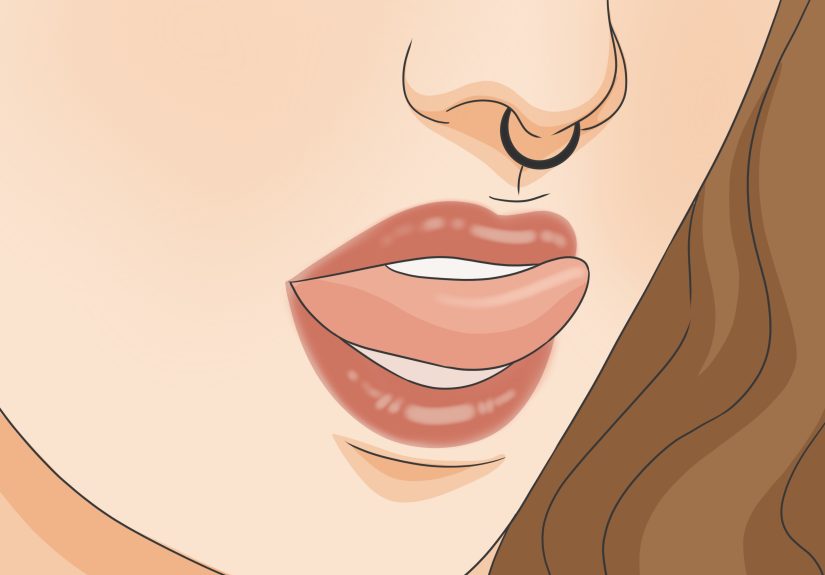
Septum rings
- Common perception: bold, edgy, alternative, fashion-forward.
- Common sexual assumption: “They’re kinky” or “They’re adventurous.”
- Reality check: It might simply mean they like symmetry and hate the idea of losing tiny studs in the sink.
Nostril studs
- Common perception: classic, cute, subtle, stylish.
- Common sexual assumption: usually fewerpeople read it as mainstream.
- Reality check: It can still be deeply personal (or purely aesthetic). A tiny stud can have big meaningor none.
Nostril hoops
- Common perception: trendy, confident, put-together.
- Common sexual assumption: “flirty,” “cool,” “knows what they want.”
- Reality check: It might just match their earrings. Fashion math is still math.
Double nostril, high nostril, bridge piercings
These can read as more intentional or fashion-driven, which may increase “bold personality” assumptions. And yes, some people equate “bold” with “sexual.”
That’s on the observernot the piercing.
Cultural meanings that aren’t about sex (but people love to misread)
In the U.S., nose rings are mostly fashion and self-expression. But globally, nose jewelry has a long history and can carry meanings like
social rank, identity, tradition, coming-of-age, or marital symbolism in some communities.
This matters because someone might see a nose ring and assume it’s a “spicy” modern statement, when it could be cultural heritage, family tradition,
or simply admiration for a style with deep roots.
If you’re discussing nose rings “meaning sexually,” it’s worth remembering: not everything is about sex. Sometimes it’s about history,
identity, or aestheticsaka the three things humans also like to turn into debates at brunch.
The “kink” question: Does a nose ring mean someone is kinky?
No. Not inherently. There’s no reliable connection between “has a nose ring” and “likes specific sexual activities.”
Why does the stereotype exist then? A few reasons:
-
Aesthetic overlap: Some alternative or nightlife scenes embrace piercings and also tend to be more open about sexuality.
People confuse “overlap” with “proof.” - Confidence bias: Confident presentation is often read as sexual openness. Piercings can amplify confidence.
-
Confirmation hunting: If someone already wants to believe a nose ring is a sign, they’ll notice “examples” and ignore everyone who
proves them wrong (which is most people).
A better rule: Don’t treat someone’s jewelry as consent, interest, or a personality diagnosis. If you want to know what someone likes,
use the ancient and terrifying method called “a respectful conversation.”
How to ask about a nose ring without being weird (or accidentally insulting)
If you’re curiousand you’re asking because you’re interested in someonehere are ways to keep it normal:
Good options
- “Your nose ring suits you. Did you get it for style, or does it have a story?”
- “I’ve been thinking about a piercinghow was the healing process for you?”
- “I like your jewelry choices. How do you decide what to wear?”
Options to retire immediately
- “So… what does that mean sexually?”
- “Does that mean you’re freaky?”
- “Is that a signal?”
Why? Because it turns their body into a rumor you want them to confirm. It also assumes they owe you personal information. They don’t.
The not-so-sexy side: healing, hygiene, and intimacy
If you or your partner has a new nose piercing, the “meaning” you should care about most is:
it’s healing tissue. Treat it like the small wound it is.
Smart aftercare basics (the unglamorous heroes)
- Clean gently with sterile saline or as instructed by a professional.
- Hands off unless you’re cleaning itfidgeting slows healing.
- Avoid harsh products like alcohol or hydrogen peroxide that can irritate healing skin.
- Don’t share jewelry (yes, even if you “really trust them”).
Intimacy tips during healing
- Skip rough contact around the piercing area while it’s fresh.
- Avoid mouth-to-piercing contact during early healing (it’s not about being a buzzkill; it’s about bacteria).
- If it hurts, stop. Pain is not a “push through” situation with fresh piercings.
If you notice worsening redness, heat, swelling, severe pain, fever, or thick discharge, seek medical advice.
A piercing is cute; an untreated infection is not.
FAQ: The questions people whisper to their phones at 1 a.m.
Does the side (left vs. right nostril) mean anything sexually?
In modern U.S. dating culture, no consistent sexual meaning. In some traditions, placement can be influenced by cultural practices or
regional norms. If you want to know what it means to the wearer, ask thempolitely.
Does a nose ring mean someone is single?
Not in any reliable way. Some people wear nose rings as fashion. Some wear them as cultural tradition. Some wear them because they look good with winged
eyeliner. None of those automatically equal “available.”
Is a septum ring more “sexual” than a nostril stud?
It may be perceived as bolder, and some people mistakenly translate “bold” into “sexual.” But the jewelry itself doesn’t tell you anything factual about
someone’s sex life.
Can a nose ring affect kissing?
Once healed, most people kiss normally without thinking about it. While healing, be gentle and avoid bumping or tuggingyour future self will thank you.
Why do some people judge piercings as “less attractive” and others as “more attractive”?
Studies on perceptions of facial piercings suggest people make snap judgments that can vary by observer personality, culture, and context.
In other words: attraction is subjective, and your nose ring is not a democratic election.
Experience-Based Insights: What People Often Run Into (and what it teaches us)
The most useful “sexual meaning” intel isn’t a mythical codeit’s the real-life moments people commonly experience around nose rings.
Below are patterns wearers frequently describe (shared here as composite scenarios, not as anyone’s private diary).
1) The compliment that went right
Someone says, “That jewelry looks great on you,” and leaves it there. No invasive follow-up. No weird wink. The wearer feels seen, not studied.
Ironically, this is the kind of respectful vibe that actually can lead to flirtingbecause it feels safe and human.
2) The assumption that went wrong
A date jokes, “So you must be wild,” as if a tiny hoop is a legally binding contract. The wearer’s interest drops faster than a phone at 2% battery.
Lesson: if you want to know someone’s style, ask. If you want to know someone’s boundaries, ask. If you want to know someone’s fantasies,
definitely askbut only after you’ve earned that level of trust.
3) The “my family has opinions” dinner
A relative treats the nose ring like an emergency alert system: “What does that mean?” The wearer explains it means “I like it,” and suddenly
everyone is surprised that personal style can be… personal. This is where a lot of people learn to separate identity from other people’s projections.
4) The confidence shift
Many wearers report a subtle change after getting pierced: they take more selfies, experiment with makeup, feel more like themselves, or stop playing
“invisible.” That confidence can change how they flirtnot because the ring is sexual, but because they feel good in their body.
5) The first intimate moment with a fresh piercing
New piercings can be tender. Partners who do best treat it like a healing spot: gentle kisses, no grabbing the face like they’re trying to steer a ship.
The experience becomes a small trust exercise“I care about your comfort”which is honestly one of the sexiest signals a person can send.
6) The workplace reality check
Some workplaces are totally fine with facial jewelry. Others act like a nostril stud is a security risk. Wearers often learn to choose jewelry that can be
subtle, removable, or easily switched depending on the setting. The “meaning” here is practical: the ring isn’t changing who they are; it’s navigating
someone else’s rules.
7) The cultural context moment
Occasionally someone wears a nose ring with cultural significancefamily tradition, heritage, ceremonyand gets met with a random sexual assumption.
That mismatch can be frustrating, but it’s also a reminder: if you don’t know someone’s story, don’t write one for them.
Put all those experiences together and you get the real takeaway: a nose ring doesn’t “mean sexually” what the internet says it means.
It means what it means to the wearerand what you choose to project onto it says more about you than them.
Conclusion: The real “ultimate guide” truth
If you came here hoping for a simple decoder ring: sorry. (Also, please don’t decode people.)
Nose rings don’t have a universal sexual meaning.
They can signal style, confidence, culture, or communityyet none of that equals a guaranteed sexual identity or preference.
The best move is also the simplest: appreciate the aesthetic, drop the assumptions, and communicate like an adult.
Jewelry is decoration. Consent is communication. And the hottest thing you can bring to any conversation about sexuality is respect.