Table of Contents >> Show >> Hide
- Table of Contents
- What a Core Update Really Means
- How Core Updates Work (Without the Robot Voice)
- Core Updates vs. Spam Updates vs. Manual Actions
- How to Spot a Core Update Hit
- The Core-Update Triage Plan
- What to Improve (That Actually Matters)
- What Not to Do (A.K.A. “Stop Punching Your Own Site”)
- What Moz’s Whiteboard Friday Gets Right
- Fast FAQs
- Experience Notes: What Core Updates Feel Like in Real Life
- Conclusion
A “core update” is the SEO equivalent of waking up, checking your rankings, and realizing Google has rearranged the furniture overnight.
Your couch is still a couch. Your content is still your content. But somehow, the lamp is in the kitchen and your traffic graph is doing
interpretive dance.
This guide explains what a core update is, how it differs from other updates, how to diagnose impact like a calm professional (or at least
a convincing one), and what to improve so you’re building the kind of site that tends to win when the algorithm changes its mind.
What a Core Update Really Means
A Google core update is a broad change to Google’s ranking systems designed to improve search results overall.
It’s not a tiny tweak, and it’s not “Google deciding it hates your website personally.” It’s Google adjusting how it evaluates content
at scaleacross topics, industries, and formats.
The key word is broad. Core updates aren’t aimed at one niche (like recipes, local, or product reviews only) and they
typically don’t target a specific site. They can reshuffle results because Google’s systems are re-weighting signals about relevance,
helpfulness, and satisfaction.
Why “core” updates get so much attention
Core updates get attention because they can create noticeable SERP volatilityrankings change across many queries.
Some pages rise, others drop, and many stay put. If you’re watching charts all day, it can look like the internet is being re-scored in
real time. (Which is… not totally wrong.)
How Core Updates Work (Without the Robot Voice)
Think of Google Search like a giant recommendation engine that’s constantly deciding which pages deserve the front row. Core updates are
like changing the rules of the talent show. Nobody gets “punished” because the judges are mad; the judging criteria evolve.
One helpful analogy Google itself has used: imagine you made a list of the top movies in 2021. In 2025, you make a new list. Some movies
dropnot because they suddenly became terrible, but because more deserving movies exist now, and your perspective (criteria) changed.
Re-ranking is the point
If your page drops after a core update, it doesn’t automatically mean you violated rules. It may mean other pages now align better with:
the query intent, the level of depth expected, stronger first-hand experience, better trust signals, or a more satisfying page experience.
Why volatility happens
Search is dynamic: new content is published, old content changes, user expectations shift, and Google’s systems get updated to keep up.
When a core update rolls out, many pages are effectively re-evaluated under refreshed scoring logic. That creates the “ranking weather”
SEOs obsess over.
Core Updates vs. Spam Updates vs. Manual Actions
Core updates
Core updates are broad improvements to ranking systems. They can impact any type of site because they’re about overall result quality.
Spam updates
Spam updates are improvements to systems that detect and reduce spam. If a site is violating spam policies, it may rank lower or disappear
until systems determine compliance over time. Spam updates are about fighting manipulation, not re-scoring the world’s content for “best
overall answer.”
Manual actions
A manual action is when Google’s human reviewers apply a penalty-like action to a site or pages due to policy violations. Manual actions
appear in Search Console’s Manual Actions report. They’re different from core updates because the cause is usually explicit policy issues
(or attempts to manipulate rankings), not broad scoring changes.
Practical takeaway: if you see big ranking drops, check Search Console for manual actions and security issues. If those are clean, you’re
likely dealing with algorithmic changes (core update, spam update, or other ranking changes), not a manual penalty.
How to Spot a Core Update Hit
The most reliable way to confirm timing is to look at Google’s public communications (like the Search Status Dashboard for ranking updates),
then match that to your Search Console data.
Wait until the rollout settles
During rollout, rankings can bounce. That doesn’t mean your site is “recovering” or “dying” every 12 hoursit means the rollout is still
moving through data centers and systems. Start analysis after the update finishes and your data window is stable.
Use Search Console like a detective, not a fortune teller
Look for patterns:
- Is the drop site-wide or limited to a content section?
- Is it tied to certain query types (informational vs. transactional)?
- Did impressions hold steady while clicks dropped (hint: ranking position shift)?
- Did a specific country/device/search appearance change (web vs. Discover vs. rich results)?
The Core-Update Triage Plan
Step 1: Rule out “not a core update” causes
Before you rewrite your entire site in a caffeine-fueled spiral, rule out the usual suspects:
- Seasonality (people search differently at different times)
- Technical issues (indexing, robots.txt mistakes, canonical chaos, server outages)
- Tracking/reporting anomalies (yes, even Google acknowledges glitches)
- Security/spam problems (hacks, injected pages, or spam signals)
Step 2: Segment impact (winners, losers, and “meh”)
Compare a stable post-update period to a comparable pre-update period. Then break it down by:
- Top pages (URLs) with the biggest click/impression change
- Top queries tied to those pages
- Search intent clusters (how-to, definitions, comparisons, “best,” local, etc.)
- Content freshness (recently updated vs. stale)
This is how you avoid the classic SEO tragedy: “We updated our homepage and nothing improved,” when the problem was actually a content
hub that got outclassed by better resources.
Step 3: Look for the “why,” not just the “what”
Ask: what changed in the results page itself? Did new SERP features appear? Are different content formats winning (forums, videos,
guides, category pages, tools)? Sometimes the update shifts how Google interprets intentso the “right” page type changes.
What to Improve (That Actually Matters)
1) Build genuinely helpful, people-first content
If your strategy is “write what ranks,” you’re always at the mercy of what ranks this month. If your strategy is “write the best
answer for real humans,” you still have workbut it’s work that tends to age well.
Here are the kinds of improvements that align with Google’s own guidance about helpful, reliable, people-first content:
- Originality: Add original reporting, analysis, examples, or first-hand insightsdon’t just rewrite what’s already ranking.
- Depth: Cover the topic comprehensively for the intent (not by adding fluff, but by answering the questions people actually have).
- Clarity: Use descriptive headings, scannable sections, and clean formatting so users can find answers fast.
- Accuracy: Fix factual errors and keep key pages updated when information changes.
2) Demonstrate E-E-A-T (especially Trust)
E-E-A-T stands for Experience, Expertise, Authoritativeness, and Trustworthiness. It’s not a single “score,” but it’s a
useful lens for building content that looks (and is) credible.
In Google’s quality rater framework, Trust sits at the centerbecause a page can sound experienced and authoritative
yet still be untrustworthy. Trust includes accuracy, honesty, safety, and reliability.
What this means for your site in practical terms:
- Use clear author bylines and bios when it makes sense.
- Show why the author is qualified (experience, credentials, or relevant background).
- Support key claims with reputable sources (especially on YMYL topics).
- Make it easy to find who runs the site, how to contact you, and what your editorial standards are.
- For reviews, prioritize honesty and evidence (photos, testing notes, pros/cons, comparisons).
3) Improve the whole site, not just one page
Core updates can behave like a “site-wide quality mirror.” You might have great pages, but if the site has lots of thin, repetitive, or
low-value content, it can dilute overall perceived quality. That’s why content pruning and consolidation can helpwhen done carefully.
The goal is not “delete half your site and hope Google is impressed.” The goal is to make your site feel like a place that consistently
produces satisfying results for searchers.
4) Don’t ignore page experience and UX
Great content delivered through a miserable user experience is like serving a five-star meal on a trash can lid. Yes, it’s still food,
but you’re making it weird.
Focus on:
- Fast loading and stable layout
- Readable typography and mobile-friendly spacing
- Ads that don’t overwhelm the content
- Helpful internal linking that guides users to the next step
5) If it’s a spam issue, fix policy violationsthen be patient
If your drop aligns with spam systems rather than core evaluation, the approach changes. Review Google’s spam policies, remove abusive
patterns, and understand that improvements may take time for automated systems to reassess your site.
What Not to Do (A.K.A. “Stop Punching Your Own Site”)
- Don’t make radical changes because of small position shifts. Minor movement happens constantly.
- Don’t rewrite everything into bland sameness. If your content loses its unique value, you’re “optimizing” yourself into irrelevance.
- Don’t chase rumors like they’re official documentation. Use credible sources and your own data.
- Don’t assume a single magic fix. Core updates are broad; sustainable improvements usually are, too.
- Don’t forget that other content might simply be more deserving. Sometimes the right answer is “raise your game,” not “find the cheat code.”
What Moz’s Whiteboard Friday Gets Right
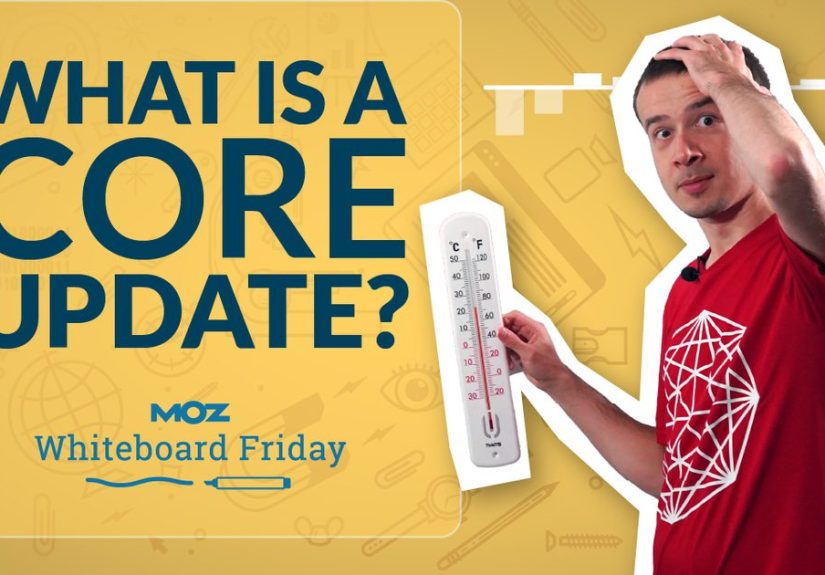
Moz’s “What Is a Core Update?” Whiteboard Friday (presented by Tom Capper) frames core updates in a way that’s refreshingly sane: they’re
broad changes, they can cause widespread ranking shifts, and the smartest response is to understand how Google is trying to improve
resultsnot to treat every fluctuation like a personal insult.
The episode was recorded at an SEO conference (SearchLove London) in the wake of multiple Google updates, which is basically the perfect
setting for explaining why “the sky is falling” is not a strategy.
The biggest mindset win: core updates reward sites that build long-term value. If your “strategy” is to be barely good enough to rank,
a core update eventually catches up with you. If your strategy is to be the result users hope to find, you’ll still feel bumpsbut you’re
building something with momentum.
Fast FAQs
How often do core updates happen?
There’s no fixed schedule, but they tend to roll out multiple times per year. Some years are spicier than others. Tracking resources and
Google’s ranking updates communications can help you understand timing and rollout windows.
How long does it take to recover from a core update?
It depends on what needs improving. Google’s guidance implies that meaningful improvement can take time to be recognized, and changes may
not be fully reflected until systems re-evaluate your site over time (sometimes across future updates). Translation: focus on durable
improvements, not “quick recoveries.”
Is a core update a penalty?
Generally, no. A drop often means your page is now seen as less relevant or less satisfying than competing pages for that query. If you
suspect an explicit action, check Search Console for manual actions and security issues.
What should I look at first if traffic drops?
Start with Search Console performance data and segment it: pages, queries, intent clusters, and timing. Then rule out technical/indexing
issues. If the timing aligns with a confirmed update, evaluate content quality and site-wide trust/helpfulness.
Experience Notes: What Core Updates Feel Like in Real Life
You asked for “experiences,” so here are the patterns that show up again and again across SEO teams, publishers, and site owners when a
core update rolls out. These aren’t fairy tales about instant recoveries; they’re the messy, real-world rhythms most people see.
The “Week 1: Doom-Scrolling” phase
The first few days are emotional. Rankings jump around, Slack channels fill with screenshots, and someone inevitably says,
“Is anyone else seeing this?!” (Yes. Everyone. Even the sites that pretend they don’t check rankings.)
The best operators treat early movement as signals, not conclusionsbecause rollout turbulence is normal.
The “Week 2: Data, not vibes” phase
After the rollout settles, the smart work begins. Teams compare pre/post periods, then isolate patterns:
“Our long-form guides dropped, but only for ‘best’ queries,” or “Our medical pages fell while our lifestyle pages stayed stable.”
This is where you start seeing whether the update nudged intent interpretation (what type of result Google prefers) or quality evaluation
(what level of trust and depth Google expects).
The “Content got outclassed” discovery
One of the most common findings is humbling: a page didn’t drop because it was “bad,” it dropped because competitors built something more
useful. Maybe they added first-hand testing, better visuals, clearer structure, or more direct answers. Sometimes the difference is
boring-but-decisive: cleaner UX, fewer intrusive ads, and fewer “SEO paragraphs” that say a lot while meaning nothing.
The “We fixed the wrong thing” trap
Another frequent experience: teams respond with frantic edits that don’t match the problem. If the real issue is that the page doesn’t
satisfy intent, adding more keywords doesn’t help. If the real issue is thin site sections dragging quality perception down, polishing one
hero article won’t move the needle. This is why segmentation matters. Core update work is less like “spray and pray” and more like
“identify the broken part of the machine, then repair it.”
The “Trust is the multiplier” lesson
Sites that ride core updates well often share a trait: they make trust obvious. Clear authorship, transparent “About” information, strong
editorial standards, honest review practices, and content that reads like it was created by someone who actually knows (or did) the thing.
That doesn’t guarantee you’ll win every updatebut it tends to reduce how violently you swing when the criteria evolve.
The “Slow wins” reality
The most realistic recovery stories are not overnight miracles. They’re months of focused improvement: consolidating overlapping content,
updating outdated pages, removing low-value sections, improving internal linking, tightening UX, and writing more original, experience-rich
content. Then, over time (and sometimes around the next broad reassessment), visibility stabilizes. That’s not as exciting as a magic trick,
but it’s how sustainable SEO usually works.
If core updates teach one repeatable lesson, it’s this: build a site you’d trust if you’d never heard of it before. Google is trying to
reward that user experience. Your job is to make it undeniable.
Conclusion
A core update isn’t the end of your SEO storyit’s feedback at scale. Confirm timing, segment impact, rule out technical issues, and then
improve what actually makes a page win: satisfying intent, original value, trustworthy signals, and a site experience that doesn’t make
users want to throw their phone into the sea.
If you do that consistently, core updates stop feeling like random lightning strikes and start feeling like what they really are: Google
trying (imperfectly, loudly, and sometimes inconveniently) to surface the most helpful content on the web.