Table of Contents >> Show >> Hide
- What Does Kawaii Mean?
- A Brief History of Kawaii Culture
- Key Features of the Kawaii Aesthetic
- Kawaii Fashion: From Harajuku to Everyday Style
- Kawaii Beauty and Makeup
- Kawaii Room Decor and Lifestyle
- Why Is Kawaii So Popular?
- Is Kawaii Only for Girls?
- Kawaii vs. Cute: What Is the Difference?
- How to Try the Kawaii Aesthetic
- Common Misconceptions About Kawaii
- The Deeper Meaning of Kawaii
- Personal Experiences With the Kawaii Aesthetic
- Conclusion
The kawaii aesthetic is the art of making life look softer, sweeter, and just a little more emotionally supportive than your average Monday morning. At first glance, it seems simple: pastel colors, plush toys, tiny hearts, glossy stickers, round-eyed characters, frilly outfits, and accessories that look like they escaped from a candy shop with excellent branding. But kawaii is more than “cute stuff.” It is a Japanese cultural style, a fashion language, a design philosophy, and a global subculture built around charm, innocence, playfulness, and self-expression.
The word kawaii is usually translated as “cute” or “adorable,” but the full meaning is richer. In Japanese popular culture, kawaii can describe a character, a hairstyle, a notebook, a dessert, a phone case, a room, a fashion outfit, or even a behavior. It can be gentle, funny, nostalgic, rebellious, polished, chaotic, pastel, gothic, or wonderfully overdecorated. In other words, kawaii is not one tiny pink box. It is a whole storage unit full of glitter, ribbons, plush animals, and emotional nuance.
Today, the kawaii aesthetic appears everywhere: anime and manga fandoms, Harajuku street fashion, beauty trends, stationery design, gaming culture, social media, interior decor, plush collecting, character merchandise, and even brand mascots. Its appeal is easy to understand. In a loud, stressful world, kawaii offers a visual comfort zone. It says, “Yes, life is complicated, but have you considered a frog-shaped mug?”
What Does Kawaii Mean?
Kawaii is a Japanese word associated with cuteness, lovability, tenderness, and charm. While English speakers often use it to mean “cute,” the Japanese concept carries emotional layers. Something kawaii may feel small, sweet, harmless, delicate, funny, innocent, or worthy of care. That is why kawaii characters often have rounded shapes, large eyes, tiny mouths, soft colors, and simple expressions. They are designed to feel approachable.
Unlike some Western ideas of cuteness, kawaii is not limited to babies, pets, or children’s products. A lunch box can be kawaii. A city mascot can be kawaii. A makeup look can be kawaii. A pastel gaming setup with a cat-ear headset can absolutely be kawaii, especially if the keyboard sounds like marshmallows having a polite conversation.
The kawaii aesthetic also has a social side. For many fans, it is a way to reject harshness, seriousness, and pressure to look “grown-up” in only one acceptable way. It can be sweet, but it is not weak. It can be playful, but it is not shallow. Kawaii allows people to build an identity around joy, softness, imagination, and visible delight.
A Brief History of Kawaii Culture
Kawaii culture began to take shape strongly in Japan during the 1970s. Youth culture, character goods, manga, anime, and playful handwriting styles helped create a new visual language of cuteness. Teen girls popularized rounded, decorative writing with hearts, stars, and tiny illustrations. Teachers may not have loved it, but stationery companies certainly understood the assignment.
Commercial character design also played a major role. Sanrio, the company behind Hello Kitty, helped bring kawaii into everyday consumer life through small gifts, stationery, accessories, and character merchandise. Hello Kitty was created in 1974, and her first product, a small purse, appeared in 1975. Her simple face, red bow, and nearly blank expression made her easy for people to project feelings onto. She became not just a character, but a global symbol of kawaii culture.
By the 1980s and 1990s, kawaii had expanded into fashion, advertising, toys, music, packaging, and entertainment. Japan’s Harajuku district became especially important as a home for youth fashion subcultures. Instead of dressing to disappear, Harajuku fashion encouraged people to dress like their inner world had opened a boutique.
As Japanese pop culture spread globally through anime, manga, video games, J-pop, conventions, and online communities, the kawaii aesthetic traveled with it. In the United States, kawaii became familiar through characters like Hello Kitty, Pokémon, Sailor Moon, My Melody, Kuromi, Pusheen-style internet cats, pastel stationery, plush toys, anime-inspired fashion, and TikTok aesthetics.
Key Features of the Kawaii Aesthetic
1. Soft Colors and Candy-Like Palettes
The kawaii aesthetic often uses pastel pink, baby blue, lavender, mint green, butter yellow, cream, and white. These colors create a soft, comforting mood. However, kawaii is not always pastel. Some versions use bright rainbow colors, neon accents, black-and-pink contrast, or gothic palettes. Think of kawaii as a dessert table: cupcakes are common, but someone may still bring a dramatic black cherry cake.
2. Rounded Shapes and Simple Faces
Kawaii design favors circles, soft edges, chubby proportions, and minimal facial features. Characters may have oversized heads, tiny hands, button noses, and eyes that look like they have never paid rent. These shapes make objects feel gentle and friendly.
3. Childlike Wonder Without Being Childish
Kawaii often borrows from childhood: toys, stickers, stuffed animals, bows, school bags, cartoon motifs, and playful accessories. But wearing or decorating with kawaii items does not mean someone is immature. For many people, it is a conscious style choice. It celebrates nostalgia, comfort, creativity, and emotional openness.
4. Character Culture
Characters are central to kawaii. Hello Kitty, My Melody, Cinnamoroll, Kuromi, Rilakkuma, Kirby, Pikachu, Totoro, and countless original mascots all fit into the kawaii universe in different ways. These characters often feel like tiny emotional companions. They make ordinary objects feel personal, whether they appear on a pencil case, hoodie, phone wallpaper, lunch box, or plush keychain.
5. Decorative Abundance
Some kawaii styles are minimal and soft; others are joyfully excessive. Decora fashion, for example, is famous for layers of colorful accessories, hair clips, beads, bracelets, stickers, charms, and patterned clothing. It is not “too much.” It is “exactly enough, plus seventeen star clips.”
Kawaii Fashion: From Harajuku to Everyday Style
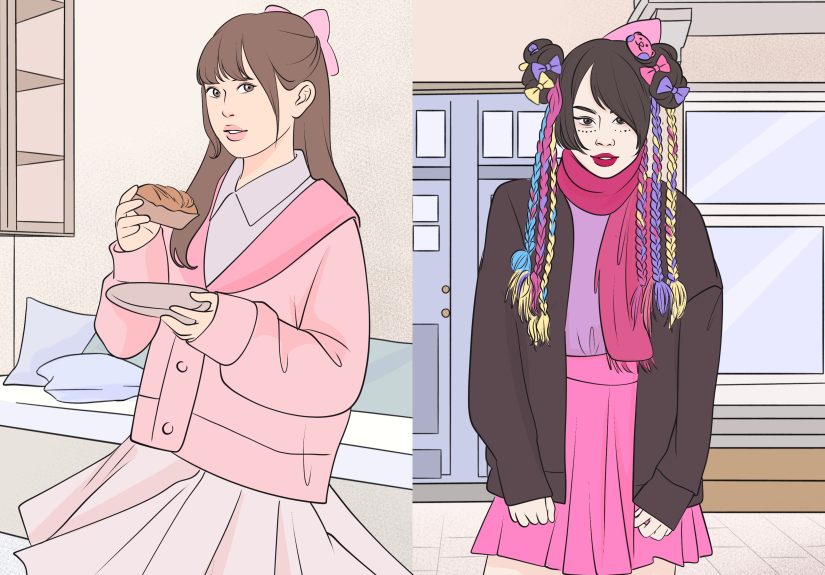
Kawaii fashion includes many substyles, and not all of them look alike. The common thread is cuteness as intentional expression. Some people wear kawaii outfits daily, while others save them for conventions, photoshoots, meetups, concerts, or weekends when regular jeans simply lack emotional sparkle.
Decora
Decora is one of the most recognizable Harajuku-inspired kawaii styles. It is colorful, layered, and accessory-heavy. A decora outfit may include bright shirts, patterned skirts, cartoon socks, plastic jewelry, candy-colored hair clips, plush bags, and enough bracelets to make a small percussion section. The goal is playful self-decoration.
Fairy Kei
Fairy kei leans into soft pastel nostalgia, often inspired by 1980s toys, cartoons, and dreamy childhood imagery. Typical pieces include pastel sweaters, tulle skirts, cute sneakers, vintage character prints, and accessories shaped like stars, ponies, hearts, or clouds. It feels like a sleepover inside a music box.
Lolita Fashion
Lolita fashion is a Japanese street style influenced by Victorian and Rococo clothing. It often features structured dresses, petticoats, lace, bows, blouses, knee socks, and elegant accessories. Sweet Lolita is especially connected to kawaii because it uses dessert motifs, pastel colors, and doll-like styling. Gothic Lolita, classic Lolita, and other branches show that kawaii can also be dark, refined, or historical.
Yume Kawaii and Yami Kawaii
Yume kawaii, or “dream cute,” focuses on fantasy, clouds, moons, unicorns, pastel gradients, and dreamy softness. Yami kawaii, often translated as “sick cute,” mixes cuteness with darker themes related to sadness, medical imagery, or emotional struggle. It shows how kawaii can express complicated feelings instead of pretending everything is glitter-perfect.
Casual Kawaii
You do not need a full Harajuku wardrobe to enjoy kawaii fashion. Casual kawaii can be as simple as a pastel cardigan, a cute tote bag, heart-shaped earrings, a Sanrio phone case, soft makeup, a bow hair clip, or sneakers with colorful socks. The aesthetic can be bold or subtle. Your outfit does not need to scream “walking cupcake parade” unless that is your personal truth.
Kawaii Beauty and Makeup
Kawaii beauty often emphasizes fresh skin, soft blush, glossy lips, rounded eyes, and playful details. Popular elements include pink or peach blush placed high on the cheeks, subtle shimmer, winged eyeliner, doll-like lashes, gradient lips, pastel eyeshadow, and cute nail art. Nails may feature bows, pearls, tiny characters, hearts, cherries, clouds, or 3D charms.
Hair is another important part of the look. Kawaii hairstyles may include twin tails, soft curls, blunt bangs, pastel dye, ribbons, claw clips, pigtails, or fluffy volume. But kawaii beauty is flexible. It can be natural and barely-there, or it can be dramatic enough to require its own entrance music.
Kawaii Room Decor and Lifestyle
The kawaii aesthetic is not limited to fashion. Many fans bring kawaii into their rooms, desks, journals, kitchens, and digital spaces. A kawaii room might include plushies, pastel bedding, cloud lamps, character pillows, cute storage boxes, heart mirrors, star garlands, soft rugs, and a desk setup filled with stickers, figures, and coordinated stationery.
Kawaii lifestyle also includes small rituals of joy. This could mean packing a cute lunch, decorating a planner, collecting blind-box figures, using animal-shaped kitchen tools, choosing a cheerful phone theme, or making your workspace feel less like a productivity dungeon. The philosophy is simple: everyday objects do not have to be boring to be useful.
Why Is Kawaii So Popular?
Kawaii is popular because it creates an instant emotional response. Cute visuals can feel comforting, safe, cheerful, and approachable. Research on cuteness has even suggested that viewing cute images may improve careful attention in certain tasks. That does not mean a plush bunny will do your taxes, sadly, but it does explain why cute design can make people feel more focused, gentle, and engaged.
There is also a cultural reason. Many people are tired of aesthetics that demand perfection, wealth, seriousness, or intimidation. Kawaii offers a different kind of beauty: soft, expressive, and accessible. You can participate with a full wardrobe, a sticker sheet, a pastel wallpaper, a plush keychain, or one tiny frog figurine guarding your desk like a squishy emotional bouncer.
Social media has amplified kawaii because the aesthetic is highly visual. TikTok, Instagram, Pinterest, YouTube, and online shops have helped spread kawaii room tours, makeup tutorials, outfit checks, journaling videos, unboxings, and character collections. The internet gave kawaii a global stage, and kawaii arrived carrying a heart-shaped handbag.
Is Kawaii Only for Girls?
No. Kawaii is often associated with femininity, but it is not limited to girls or women. People of all genders enjoy kawaii fashion, art, design, gaming setups, plush collecting, and character culture. In fact, one of the strengths of kawaii is that it can challenge rigid expectations about how adults, men, women, and nonbinary people are “supposed” to look or behave.
Kawaii can be feminine, masculine, androgynous, queer, nostalgic, elegant, chaotic, minimalist, or maximalist. It belongs to anyone who approaches it with appreciation, creativity, and respect for its Japanese cultural roots.
Kawaii vs. Cute: What Is the Difference?
“Cute” is a broad English word. It can describe a puppy, a baby outfit, a romantic text, or a tiny spoon. Kawaii includes cuteness, but it also functions as a recognizable cultural aesthetic. It has visual codes, fashion communities, character traditions, consumer products, emotional meanings, and roots in Japanese popular culture.
In simple terms, all kawaii is cute in some way, but not all cute things are kawaii. A rustic baby goat on a farm is cute. A pastel baby goat sticker with sparkly eyes, a strawberry hat, and a tiny speech bubble saying “you got this” is kawaii. The distinction is partly style, partly context, and partly whether your heart makes a small squeaking noise.
How to Try the Kawaii Aesthetic
Start With a Color Palette
Pick two or three colors that feel soft and joyful to you. Pastel pink and white are classic, but lavender and mint, blue and cream, or black and pastel purple can also work beautifully. A consistent palette helps your outfit, room, or digital setup look intentional rather than accidentally attacked by a craft drawer.
Add One Signature Motif
Choose a motif such as hearts, bows, strawberries, cats, clouds, stars, rabbits, bears, cherries, or favorite characters. Repeating one motif creates a recognizable kawaii mood without needing to buy everything in sight.
Use Accessories Strategically
Accessories are the easiest entry point. Try a cute phone charm, pastel bag, ribbon hair clip, character socks, charm bracelet, enamel pin, or decorated water bottle. Small details can transform an everyday look.
Make Your Space Softer
For kawaii room decor, start with bedding, lighting, desk accessories, and wall art. Plushies, pastel organizers, cute lamps, and sticker-decorated storage can make a room feel cozy without requiring a full renovation or a dramatic conversation with your landlord.
Respect the Culture
Because kawaii comes from Japanese culture, it is important to enjoy it respectfully. Learn about its history, support Japanese creators when possible, avoid stereotypes, and remember that Harajuku fashion and kawaii culture are diverse. Kawaii is not a costume of “being Japanese.” It is a style and cultural movement people can appreciate thoughtfully.
Common Misconceptions About Kawaii
“Kawaii Is Only for Kids”
Many adults love kawaii because it offers comfort, creativity, and self-expression. Adults are allowed to like cute things. There is no official law that says your personality must become beige after age 25.
“Kawaii Is Always Pink”
Pink is common, but kawaii can be blue, purple, yellow, black, rainbow, neutral, or gothic. Kuromi fans, for example, know that cute can arrive wearing a mischievous skull.
“Kawaii Means Looking Innocent All the Time”
Kawaii can include innocence, but it can also be ironic, rebellious, emotional, spooky, punk, or strange. Substyles like guro-kawaii and yami kawaii prove that cuteness can hold darker or more complex ideas.
“Kawaii Is Just Consumerism”
Kawaii is closely tied to merchandise and design, but it is not only shopping. It can involve DIY fashion, handmade accessories, journaling, drawing, thrifting, styling, collecting, community building, and personal storytelling.
The Deeper Meaning of Kawaii
The kawaii aesthetic matters because it makes softness visible. In many cultures, seriousness is treated as more mature than playfulness. Kawaii pushes back. It says that joy can be stylish, tenderness can be powerful, and decoration can be a form of identity.
For some people, kawaii is a safe way to explore femininity. For others, it is a break from gender rules. Some use it to reconnect with childhood joy; others use it to build community at conventions, meetups, online groups, and fashion events. Many simply like the look because it is cheerful and fun. Not every bow needs a dissertation. Sometimes the bow is just cute, and that is enough.
Still, the best kawaii style has intention. It is not about copying a checklist. It is about choosing objects, colors, characters, and outfits that create a feeling. The feeling might be dreamy, playful, cozy, magical, funny, rebellious, or healing. Kawaii gives people permission to design a world that feels kinder than the default setting.
Personal Experiences With the Kawaii Aesthetic
One of the most interesting experiences related to the kawaii aesthetic is how quickly it changes the mood of a space. A plain desk can feel cold and transactional, like it only exists for deadlines and coffee rings. Add a pastel mouse pad, a tiny character figure, a soft lamp, a sticker-covered notebook, and a plush keychain, and suddenly the same desk feels more personal. The work may still be work, but the environment becomes less severe. It is amazing what a smiling cinnamon-roll-looking creature can do for morale.
Trying kawaii fashion can also feel surprisingly brave. People sometimes assume soft fashion is easy because it looks sweet, but wearing visible cuteness in public can require confidence. A bow, a pastel sweater, or a character bag may invite compliments, but it may also attract confused looks from people whose entire wardrobe is “weatherproof rectangle.” The experience teaches you that personal style is not only about being admired. It is about being honest. If a strawberry cardigan makes you happy, that happiness is valid even if someone else does not understand the cardigan’s emotional importance.
Another memorable part of kawaii culture is collecting. Whether it is plush toys, stationery, enamel pins, blind-box figures, stickers, or character mugs, collecting kawaii items often becomes a form of storytelling. Each piece carries a memory: a convention trip, a gift from a friend, a late-night online order made with questionable judgment, or a lucky find at a thrift store. A shelf of plushies may look like decoration, but to the owner it can feel like a soft archive of tiny joys.
Kawaii also makes creativity feel approachable. You do not need to be a professional designer to decorate a journal page with washi tape and stickers. You do not need a fashion degree to coordinate pastel socks with a cute bag. You do not need an art studio to draw a small bear with a pancake on its head. The aesthetic encourages experimentation. Mistakes do not ruin the look; sometimes they make it more charming. A slightly crooked sticker can have personality. A handmade bracelet can look more meaningful than a perfect factory-made accessory.
For many people, the kawaii aesthetic becomes a gentle form of self-care. It does not solve every problem, and it should not be treated as a substitute for real support when life gets difficult. But small moments of cuteness can create emotional pauses. Drinking tea from a cat mug, opening a planner filled with cheerful stickers, wearing a soft hoodie with a favorite character, or turning on a pastel desk lamp can make daily routines feel less gray. Kawaii reminds people to notice delight on purpose.
The best experience of kawaii culture, however, is community. Online groups, anime conventions, fashion meetups, artist alleys, and social media spaces allow fans to share outfits, room decor, artwork, collections, and styling tips. These communities are not perfect, but at their best, they celebrate creativity instead of conformity. Someone may arrive in full decora, someone else in subtle pastel streetwear, and another person with only a tiny keychain clipped to a backpack. All of them can belong. That is the quiet magic of kawaii: it turns cuteness into connection.
Conclusion
The kawaii aesthetic is much more than a cute trend. It is a Japanese-born cultural style that blends visual sweetness, emotional comfort, playful design, fashion experimentation, and global community. From Hello Kitty and Harajuku street fashion to pastel room decor and character-filled desk setups, kawaii has become a worldwide language of softness and joy.
Its power comes from flexibility. Kawaii can be minimal or maximalist, pastel or gothic, nostalgic or futuristic, innocent or ironic. It can live in a full outfit, a phone charm, a bedroom makeover, a makeup look, a sketchbook, or a single plush sitting proudly on a shelf. Most importantly, kawaii gives people permission to enjoy cuteness without apology. In a world that often rewards hardness, the kawaii subculture makes a strong case for staying soft, expressive, and just a little bit sparkly.
Note: This article is written in original American English for web publication and synthesizes real cultural, fashion, design, and research-based information about the kawaii aesthetic without source-link insertion.