Table of Contents >> Show >> Hide
- What Was the “Where’s Waldo” Coronavirus Edition?
- Why the Joke Worked Instantly
- How Waldo Became the Perfect Character for Social Distancing Humor
- The Real-World Context Behind the Empty Pages
- Why Pandemic Memes and Parodies Mattered
- The Viral Spread: Familiarity Plus Perfect Timing
- Experiences Inspired by the “Where’s Waldo” Coronavirus Edition
- Conclusion: Waldo Was Easy to Find, but the Moment Was Hard to Forget
For decades, Waldo has survived crowded beaches, packed stadiums, bustling cities, chaotic museums, and scenes containing enough red-and-white stripes to make an optometrist request hazard pay. Then 2020 arrived, public spaces emptied, and the world’s most famous hiding expert suddenly faced an unexpected career crisis: there was nobody left to hide behind.
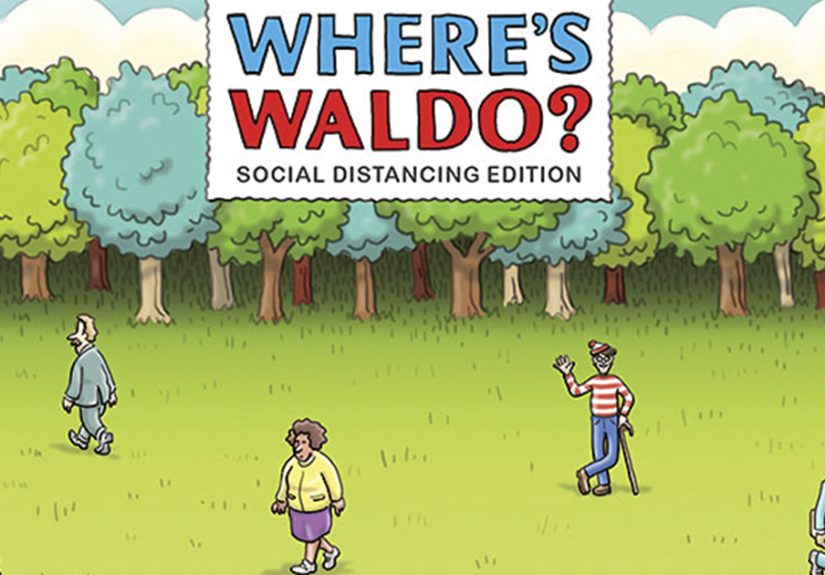
The viral “Where’s Waldo” coronavirus edition captured that strange moment with one wonderfully simple visual joke. Instead of squeezing Waldo into a sea of tourists, shoppers, athletes, and suspiciously striped umbrellas, the parody placed him in an almost deserted landscape. There he stood, obvious as a lighthouse at midnight. Finding him took less time than remembering whether it was Tuesday, Thursday, or the fifteenth consecutive day of wearing sweatpants.
Yet the image was more than an easy puzzle. It turned a familiar childhood game into a snapshot of social distancing, isolation, online creativity, and the peculiar role humor played during the early COVID-19 pandemic.
What Was the “Where’s Waldo” Coronavirus Edition?
The so-called coronavirus edition was not an official new book from the original publisher. It was a collection of unofficial parody artwork that circulated widely online in March and April 2020, when lockdowns and stay-at-home measures were reshaping daily life around the world.
One prominent version came from Argentine creative art director Pedro Mezzini. His mock “Wally Corona Virus Edition” included a redesigned cover and familiar-looking scenes such as a beach, a field, and a city street. The crucial difference was that the usual crowds had vanished. Waldoknown as Wally in the United Kingdom and many other marketsappeared largely alone and, in some images, wore a face mask.
American editorial cartoonist Clay Bennett created a separate “social distancing edition” for the Chattanooga Times Free Press. His cartoon reduced the classic visual chaos to a handful of widely spaced figures, with Waldo standing in plain sight. The concept was instantly understandable: social distancing had transformed the hardest person to find into the easiest person on the page.
An Important Detail: It Was a Parody, Not a Retail Release
Despite headlines describing a new “edition,” the viral images were not pages from an official Where’s Waldo book available in stores. They were creative reinterpretations inspired by Martin Handford’s famous character and visual style. That distinction matters because many social media users genuinely asked where they could buy the book.
The answer, unfortunately, was nowhere. Waldo had been found, but the checkout button remained missing.
Why the Joke Worked Instantly
Great visual humor often depends on taking a familiar rule and breaking it in the cleanest possible way. The original Where’s Waldo concept asks readers to locate one distinct character inside an overwhelmingly busy illustration. The coronavirus parody removed the crowd while leaving the goal unchanged.
That reversal created the punchline. Waldo’s recognizable red-and-white shirt, pom-pom hat, round glasses, and blue pants normally provide only a modest advantage because the surrounding illustrations are packed with distractions and deliberate look-alikes. In an empty park or abandoned street, those same features become a flashing billboard that practically shouts, “Hello, I am the entire puzzle.”
The Humor Needed Almost No Explanation
By spring 2020, empty public spaces had become a universal visual language. News footage showed vacant plazas, quiet highways, closed playgrounds, and airports that looked as though everyone had simultaneously missed the same flight. People understood the setup before reading a caption.
The image also avoided complicated political arguments or scientific jargon. It simply showed a crowded-book hero in a crowdless world. That made it highly shareable across countries, languages, and age groups. Even people who had not opened a Waldo book in years could recognize the joke in seconds.
How Waldo Became the Perfect Character for Social Distancing Humor
Martin Handford’s Where’s Waldo books are built around dense, oversized scenes filled with hundreds of tiny characters, visual gags, miniature stories, and misleading striped objects. The pleasure comes from searching slowly, scanning the page, and discovering jokes that have nothing to do with Waldo at all.
That structure made the character uniquely suited to pandemic parody. A nearly empty Where’s Waldo scene is not merely different; it is the exact opposite of what the audience expects. Remove the crowd and the central game collapses. Waldo loses his camouflage, the reader loses the challenge, and the artist gains a perfect metaphor for a world temporarily reorganized around distance.
Other fictional characters could have been placed in an empty city, but few would have carried the same comic logic. An isolated superhero might look dramatic. An isolated detective might look mysterious. An isolated Waldo looks unemployed.
“Easy Mode” Was the Entire Message
Online viewers quickly described the parody as “easy mode,” and that phrase captured both the comedy and the uneasiness behind it. The puzzle was easier because public life had become harder. The image offered a quick laugh, but the emptiness also reminded viewers why streets and beaches were deserted in the first place.
That emotional double effect helped the artwork last longer than a disposable meme. It was funny on first glance and oddly haunting on the second.
The Real-World Context Behind the Empty Pages
The artwork appeared during the first months of the COVID-19 pandemic, when governments, health agencies, businesses, schools, and families were rapidly adjusting to a new infectious disease. Physical distancing, limits on gatherings, remote work, mask use, isolation, and stay-at-home orders became part of everyday vocabulary.
In the United States, many state and local stay-at-home orders took effect during March and April 2020. Population movement dropped, workplaces shifted online where possible, schools closed buildings, and public spaces became dramatically less crowded. Health guidance evolved as researchers learned more about how the virus spread, but reducing close contact and avoiding crowds were central early strategies.
The Waldo parody compressed all of that disruption into a single scene. No chart was necessary. No press conference was required. The missing crowd told the story.
Why Pandemic Memes and Parodies Mattered
Humor during a crisis can look frivolous from a distance, but it often serves practical emotional and social functions. In the early pandemic, people faced uncertainty, isolation, disrupted routines, financial pressure, frightening headlines, and concern for vulnerable family members. Sharing a familiar joke created a brief moment of relief and connection.
Pandemic humor also helped people describe experiences that felt surreal. Suddenly, grocery shopping required planning, video calls became social events, sourdough starters acquired personalities, and a trip to the mailbox counted as outdoor recreation. Memes translated those strange routines into a shared cultural diary.
The Waldo coronavirus edition belonged to that larger wave of creative responses. It did not deny the seriousness of COVID-19. Instead, it used an instantly recognizable character to reflect how dramatically public behavior had changed.
Humor Can Carry a Message Without Becoming a Lecture
Public-health communication often struggles with attention. A long explanation may be accurate but ignored; a memorable image may travel worldwide in hours. The empty Waldo scene quietly reinforced the idea of avoiding crowds and keeping physical distance. It did so without a scolding tone, a wall of text, or a stern narrator pointing at a diagram.
Of course, a meme cannot replace medical guidance. It can, however, make a basic idea more visible. In this case, the joke worked because the safety behavior and the comic premise were identical: fewer people in the same space made Waldo easier to see.
The Viral Spread: Familiarity Plus Perfect Timing
The images spread rapidly through Instagram, Reddit, Facebook, blogs, humor sites, design publications, and news-adjacent culture pages. Their success followed a reliable viral formula: recognizable character, simple visual twist, current event, and a punchline that survived reposting without context.
Timing mattered. The first versions appeared when many people were still adapting to restrictions and searching for ways to process an unprecedented situation. The parody arrived before audiences had become exhausted by years of pandemic references. It felt immediate rather than nostalgic, and its simplicity allowed countless captions and reactions.
It also invited participation. Viewers could tag friends, pretend they still could not find Waldo, complain that he should be indoors, or imagine sequels featuring an empty airport, silent music festival, abandoned theme park, or video-conference grid where Waldo had forgotten to unmute himself.
Experiences Inspired by the “Where’s Waldo” Coronavirus Edition
Looking back at the parody now can trigger a surprisingly specific set of memories. Many people remember seeing it while sitting at home, scrolling through a feed that alternated between serious health updates, photos of empty supermarket shelves, homemade bread, improvised desks, and jokes about forgetting the day of the week. The Waldo image stood out because it turned that entire confusing period into one instantly readable scene.
My first reaction to the concept is the obvious one: the puzzle has become hilariously unfair to Waldo. His whole professional identity depends on crowds. He needs festivals, beaches, train stations, and medieval battlefields packed with people wearing suspiciously similar shirts. Put him alone on a lawn and he is no longer a master of concealment. He is simply a man dressed like a candy cane who has made several questionable travel decisions.
The second reaction is quieter. The blank space resembles how familiar places felt during lockdown. A neighborhood street could look normal in architecture but completely different in atmosphere. The buildings remained, the traffic lights changed, and the trees continued doing tree business, yet the human rhythm was missing. The parody captures that sensation without trying to reproduce it realistically.
It also recalls the strange intimacy of online humor at the time. People separated physically were often sharing the same jokes within minutes. A person in New York, California, Texas, or another country could see the empty Waldo page and understand it immediately. The image became a tiny meeting place: everyone arrived separately, laughed at the same visual twist, and moved on feeling slightly less alone.
There is also a useful creative lesson in the experience. When trying to communicate a large event, creators often reach for complexity. They add statistics, symbols, captions, dramatic lighting, and emotional instructions. The Waldo parody does the opposite. It asks one question: what happens to a search puzzle when the crowd disappears? The answer explains the moment more efficiently than a long speech.
Revisiting the image years later produces mixed feelings. The joke remains funny, but the context carries memories of uncertainty, illness, loss, isolation, and enormous disruption. That does not make the humor inappropriate. It shows why humor was valuable. People were not laughing because the pandemic was harmless; they were laughing because the situation was heavy, and a few seconds of recognition made it easier to carry.
The most relatable experience may be the urge to imagine additional pages. Waldo alone in an airport. Waldo standing in a silent sports arena. Waldo appearing in one square of a crowded video call while everyone asks, “Can you hear me?” Waldo attempting curbside pickup and hiding behind exactly one traffic cone. These imaginary scenes keep the original idea alive because the concept is flexible, visual, and rooted in daily life.
Ultimately, the coronavirus edition demonstrates how a childhood icon can become a cultural mirror. We once searched for Waldo because the world around him was delightfully crowded. In the parody, we found him immediately because the world had become unnervingly empty. The challenge disappeared, but the image gave us something else to look for: a shared sense of perspective, resilience, and humor during a period when all three were badly needed.