Table of Contents >> Show >> Hide
- First, No, These Were Not Just Random Scribbles
- Why Rabbits, of All Creatures?
- The Medieval World Loved Turning Reality Upside Down
- The Killer Bunny Was a Joke With Teeth
- Real Manuscripts, Real Rabbits, Real Mayhem
- Did the Margins Mean Anything, or Were They Just Funny?
- Why the Margin Was the Perfect Home for Mischief
- The “Bored Monk” Story Misses the Real History
- Why We Still Can’t Get Enough of Medieval Killer Bunnies
- The Experience of Meeting a Killer Bunny Across Seven Centuries
- SEO Tags
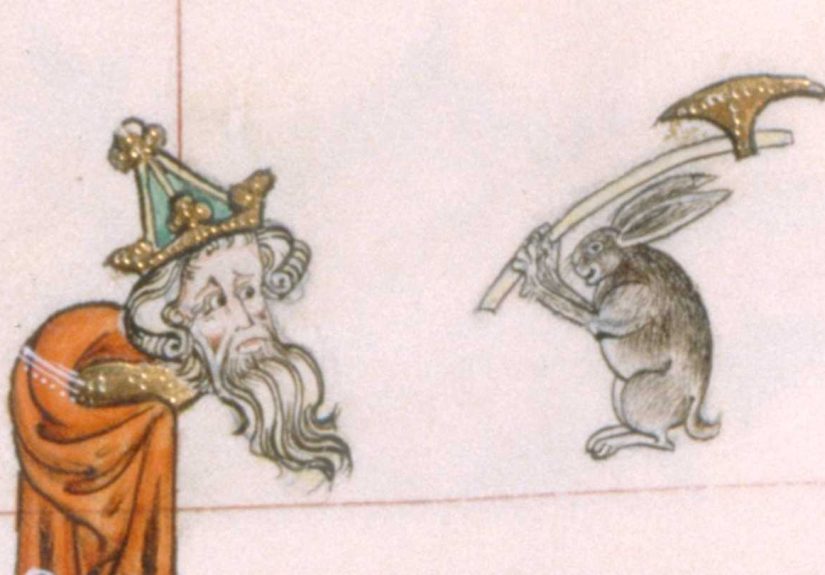
Few things prepare a modern reader for opening a solemn medieval prayer book and finding a rabbit about to club a man, march a prisoner to judgment, or swagger around like a tiny furry warlord. Yet that is exactly what turns up in the margins of many medieval manuscripts. These are the same kinds of books we associate with saints, psalms, gold leaf, and serious faces that look like they have never once laughed at a joke. Then, just beyond the holy text, a rabbit appears with a weapon and the whole mood changes.
That strange clash is part of the fun. It is also part of the point. Medieval “killer bunnies” were not random acts of artistic chaos, and they were not simply the result of bored monks losing the plot somewhere between matins and lunch. They belonged to a larger visual tradition of marginal imagery, often called marginalia or drolleries, where artists filled borders and lower page margins with hybrids, musicians, monsters, animals, jokes, reversals, and miniature dramas. The killer rabbit is just one of the most unforgettable stars in that cast.
So why did medieval artists put violent rabbits in manuscript margins? The short answer is that rabbits were perfect creatures for a visual joke. They were familiar, symbolic, easy to recognize, normally timid, and often hunted. Turn that prey animal into a sword-swinging aggressor, and you instantly get surprise, comedy, and a topsy-turvy little shock. But the longer answer is much richer. These rabbits could be funny, satirical, moralizing, playful, and even oddly subversive all at once.
First, No, These Were Not Just Random Scribbles
The word “doodled” makes the images sound casual, like somebody idly drew a bunny while waiting for the ink to dry. In reality, many of these figures were planned, painted, and integrated into expensive handmade books. Medieval manuscripts were luxury objects. They took time, money, parchment, pigments, and skilled labor. In many cases, several people worked on them: a scribe copied the text, an illuminator painted initials and miniatures, and other specialists helped finish the decoration and binding.
That matters because it changes the whole story. The killer rabbit was not usually a mistake, a prank in the modern sense, or evidence that everyone in the Middle Ages had a very weird group chat. It was part of a visual language that lived in the margins. These spaces were less constrained than the central images. The big picture in the middle might show the Virgin Mary, Christ, a saint, or a formal courtly scene. The edges of the page, meanwhile, could get gloriously unruly.
That freedom is one reason marginal art still feels so fresh. Medieval artists often used the borders to comment on, echo, tease, or complicate the main image. Sometimes the margins deepened the page’s meaning. Sometimes they undercut it. Sometimes they simply delighted the viewer with visual wit. In other words, the border was not dead space. It was where the page could whisper, wink, or mutter, “Yes, yes, devotion is important, but look at this rabbit absolutely ruining a hunter’s day.”
Why Rabbits, of All Creatures?
Rabbits Already Came With Symbolic Baggage
Rabbits and hares were not blank slates in medieval culture. They carried a jumble of meanings, which made them ideal for playful reinvention. On one hand, they could suggest innocence, vulnerability, and harmlessness. That makes sense. Rabbits are small, quick, nervous, and frequently hunted by people, dogs, foxes, and just about anything with sharp teeth and ambition.
On the other hand, rabbits also had associations with fertility and lust. Classical and medieval writers repeated ideas about their supposedly extraordinary reproductive powers, and those ideas lingered for centuries. So the rabbit already lived in a symbolic sweet spot: innocent but fertile, timid but prolific, gentle but not exactly morally simple. That contradiction made it useful. Medieval artists loved creatures that could mean more than one thing at once.
Rabbits Were Also Perfectly Cast as Prey
In medieval Europe, rabbits were widely understood as hunted animals. That gave artists a built-in story to reverse. If a rabbit appears carrying a club, dragging a man to court, or riding into battle, the joke lands instantly because everybody knows that is not how the natural order is supposed to work. The hunted has become the hunter. The weak has become the enforcer. The fluffy side character has somehow seized the script and rewritten the whole scene.
That reversal is the heart of the killer-bunny image. It only works because rabbits were seen as the opposite of threatening. Nobody needed an explanation. The joke was visible at a glance.
The Medieval World Loved Turning Reality Upside Down
One of the strongest explanations for violent rabbit marginalia is the medieval delight in inversion: the “world turned upside down.” This was a recurring habit in medieval art and literature. Animals behaved like people. Servants outsmarted masters. Prey defeated predators. The proper order of things was scrambled for comic effect, social commentary, or both.
That is why killer rabbits often show up in scenes of role reversal. In one manuscript, rabbits hang a hunter. In another, they put a man on trial. Elsewhere, they duel with swords and shields, confront kings, or march in processions. These are not naturalistic images. They are deliberately impossible. That impossibility is the joke. But it is also more than a joke. Once the world flips, even briefly, the image opens a space for satire. It can mock hunters, expose human folly, or poke at the idea that social power is stable and unquestionable.
Think of it as medieval visual comedy with a mischievous conscience. The rabbit is funny because it is absurd. It is memorable because it is absurd with purpose.
The Killer Bunny Was a Joke With Teeth
Some scholars and curators interpret these rabbits as a kind of revenge fantasy. Humans hunted rabbits. Dogs chased them. Ferrets were sent into their warrens. So what happens when rabbit-kind finally gets organized, grabs weapons, and starts settling scores? You get a visual punchline built on poetic justice. Suddenly the hunter is the one being dragged away. The mighty look ridiculous. The victim becomes terrifying. It is basically medieval cartoon logic, except painted on parchment for wealthy readers.
That revenge angle also helps explain why the images often feel more gleeful than sinister. The rabbit is rarely a subtle villain. It is hilariously overcommitted. It swings too hard, stares too intensely, marches too confidently, and behaves with the kind of military seriousness that only makes the scene funnier. The humor depends on excess. A mildly annoyed rabbit would not do the job. The image needs a rabbit that behaves like it just took a semester abroad in chaos studies.
And sometimes the joke turns back on humans in a more specific way. A cowardly knight looks even more ridiculous when he trembles before a rabbit. A hunter seems less heroic when a bunny outmaneuvers him. By giving rabbits the upper hand, artists could puncture masculine swagger, mock violent status games, or simply remind viewers that human dignity is more fragile than it likes to pretend.
Real Manuscripts, Real Rabbits, Real Mayhem
These images were not isolated oddities. They appear across multiple manuscripts and regions, especially in the thirteenth and fourteenth centuries, when Gothic marginalia reached a kind of golden age of glorious weirdness.
One early and striking example shows rabbits hanging a hunter in the Arnstein Passional from the twelfth century. That image already contains the full killer-bunny logic: role reversal, comic violence, and revenge. By the fourteenth century, the theme becomes even more elaborate. The Smithfield Decretals, for example, includes an extended sequence in which muscular rabbits get revenge on a hunter, complete with arrest, trial, and execution. It is basically a legal thriller starring herbivores.
The Gorleston Psalter is another treasure chest of bizarre marginal imagination. It includes rabbits confronting humans, funeral scenes with rabbits, and other examples of the upside-down world. Meanwhile, manuscripts such as the Maastricht Hours and various Books of Hours and psalters feature rabbits dueling men or dogs with swords and shields. The Morgan Library’s holdings preserve scenes of rabbits pursuing dogs and fighting in the margins, proving the motif was not a one-off gag but part of a larger visual tradition.
Even secular romance manuscripts joined in. A manuscript of the Roman de la Rose includes a rabbit pursuing a dog in the lower margin, showing that these reversals were not confined to purely devotional books. The point is not that every manuscript had a homicidal bunny problem. The point is that once you know where to look, the rabbit keeps hopping back into view like a tiny recurring punchline shared across centuries.
Did the Margins Mean Anything, or Were They Just Funny?
The honest answer is: both. That is part of what makes marginalia so fascinating. Some images seem closely tied to the page’s main content. Others feel loosely connected, or even deliberately disruptive. A border scene might echo a theme from the central miniature, mock human vice, provide a visual proverb, flatter the patron’s taste, or simply create a lively rhythm that keeps the eye moving.
Scholars once tended to dismiss marginalia as nonsense, but that view has weakened over time. Today, many historians argue that the margins could participate in meaning rather than just decorate it. They could gloss the text, parody it, complicate it, or offer a comic counterpoint. That does not mean every rabbit with a weapon has one fixed interpretation. Medieval art is not a code book where every bunny equals exactly one message. Quite the opposite. These images often work because they remain a little slippery.
That slipperiness is important. A killer rabbit can be funny and moralizing, silly and pointed, decorative and critical, all at the same time. It may have made one reader laugh, another think about the instability of power, and a third simply enjoy the painter’s imagination. Medieval viewers were not robots waiting for one approved interpretation. They were readers with eyes, memories, beliefs, and a sense of humor.
Why the Margin Was the Perfect Home for Mischief
The page margin was a threshold space. It was close to the text, but not fully inside it. That gave artists room to experiment. In the center of the page, the imagery often had to serve liturgical, devotional, or narrative clarity. In the margins, the rules loosened. Hybrids sprouted. Monkeys played instruments. Snails fought knights. Rabbits staged coups.
This does not mean the margins were meaningless leftovers. It means they were unusually flexible. They could host parody without destroying piety, humor without canceling devotion, and visual chaos without breaking the book’s larger purpose. Medieval culture was more comfortable with these mixed tones than modern stereotypes suggest. Sacred space did not always have to be humorless space. In fact, the tension between solemn text and playful edge may have sharpened the experience of both.
There is also a practical side to this. Marginal imagery helped make books memorable. It rewarded slow looking. It turned reading into a richer visual experience. For wealthy owners of manuscripts, especially personal devotional books like Books of Hours, these images added pleasure and personality. A page was not just to be read. It was to be handled, admired, revisited, and discovered.
The “Bored Monk” Story Misses the Real History
Let us gently retire one of the internet’s favorite medieval myths: the idea that killer rabbits were the result of exhausted monks going rogue with a paintbrush. It is catchy, but it oversimplifies how manuscripts were made. Yes, monasteries played a major role in manuscript culture, especially earlier on. But by the later Middle Ages, many books were also produced in urban workshops by professional artisans working for churches, nobles, and lay patrons.
That matters because these images were part of an artistic economy, not just a spontaneous office prank from 1317. The people making books were skilled professionals serving readers who expected decoration, sophistication, and often a touch of delight. The margins were a site where professional visual wit could flourish. In other words, the killer rabbit was not evidence that medieval people had lost their minds. It was evidence that they had taste for layered, playful, intelligent images.
Why We Still Can’t Get Enough of Medieval Killer Bunnies
The modern fascination with killer rabbits makes perfect sense. They feel strangely contemporary. They have meme energy. They collapse the distance between “serious historical artifact” and “what on earth am I looking at?” in one glance. They remind us that medieval people were not flat, humorless figures trapped in stained glass. They laughed, experimented, exaggerated, and enjoyed visual absurdity.
They also satisfy a deeper craving. The killer rabbit is the underdog story in miniature. It is the prey animal fighting back. It is social order briefly exposed as a costume. It is cute weaponized into chaos. And, frankly, it is hard not to admire the confidence of a creature that looks like it should be nibbling clover but instead appears ready to prosecute a war crime.
That is why these images keep resurfacing in museum exhibitions, blogs, classrooms, and social media. They are not just curiosities. They are reminders that medieval art could be playful, sharp, and delightfully unstable. Once you see that, the margins stop looking like decoration and start looking like one of the liveliest spaces in the whole manuscript.
The Experience of Meeting a Killer Bunny Across Seven Centuries
There is a special kind of surprise in encountering one of these images for the first time. You begin with reverence. The page is parchment. The script is careful. Gold catches the light. Everything signals importance, devotion, and discipline. Then, in the lower margin, a rabbit appears with the energy of a tiny medieval action villain, and your brain has to do a complete cartwheel.
That experience is part of the rabbit’s enduring power. It collapses the false distance we often place between ourselves and the Middle Ages. We expect the period to be solemn, rigid, and relentlessly symbolic. Then the rabbit barges in and reminds us that medieval readers also enjoyed visual jokes, impossible reversals, and scenes that rewarded double takes. The first reaction is usually laughter. The second is curiosity. The third is often respect, because the image turns out to be smarter than it looked at first glance.
Imagine being the original owner of a Book of Hours, turning the page during prayer and catching sight of a rabbit hauling away a human prisoner. Maybe the image became familiar over time, like a private joke hidden in a beloved object. Maybe it kept startling the eye no matter how often the book was opened. Maybe it offered a moment of delight in a devotional routine, or a moral reminder dressed in absurd costume. We cannot know each reader’s response, but the manuscripts strongly suggest that surprise itself was part of the design.
The modern viewer feels a similar jolt. In museums and digital collections, these rabbits puncture the polished image of “medieval art” as something distant and untouchable. They make the past feel handmade, eccentric, and startlingly alive. A killer bunny in a margin does what good art often does: it interrupts your assumptions before you have time to defend them. Suddenly the Middle Ages are not a monochrome wall of seriousness. They are textured, unruly, and full of side comments.
There is also something moving about the intimacy of it. Marginal images are small. You lean in to see them. They invite close looking. A rabbit with a club is funny from across the room, but up close it becomes something else too: evidence of a human hand making a joke for another human eye hundreds of years ago. The pigments, the line, the placement, the timing of the reveal in the page layout, all of that speaks to artistic intention. Someone wanted this tiny border scene to land. And it still does.
That may be the real reason killer rabbits endure. They are not merely odd. They are interactive. They ask viewers to notice the edge instead of only the center, the aside instead of only the message, the grin hidden inside the gravitas. They reward curiosity. They teach us how to read medieval books more generously. And perhaps, in their own fluffy, weaponized way, they also teach a lasting truth: culture is often most honest at the margins.
Note: This web-ready version removes source links and placeholder artifacts, and keeps the focus on clean publication copy.