Table of Contents >> Show >> Hide
- The Myth of the Magic Fizz
- The Science: Why Baking Soda and Vinegar Don’t Really Unclog Drains
- The Hidden Risks of the Baking Soda and Vinegar Hack
- What to Use Instead of Baking Soda and Vinegar
- When Baking Soda and Vinegar Are Actually Useful
- Real-Life Experiences: Why This Hack Lets People Down
- Conclusion: Save the Volcano for Science Class, Not Your Sink
If you’ve ever searched “how to unclog a drain naturally,” you’ve probably seen the same advice over and over: pour baking soda down the drain, add vinegar, enjoy the fizz, and poof clear pipes. It sounds like magic, it looks like a middle school volcano experiment, and it uses ingredients you already have in your kitchen. What could go wrong?
Quite a lot, actually. While baking soda and vinegar each have their place in home cleaning, using them together as a DIY drain cleaner is one of the most overrated hacks on the internet. At best, it’s mildly helpful for light grime. At worst, it wastes your time, can be rough on older plumbing components, and delays the real fix your drain actually needs.
Let’s break down why you should never rely on baking soda and vinegar to unclog a drain, what’s really going on inside your pipes, and which methods actually work (without turning your kitchen into a chemistry lab).
The Myth of the Magic Fizz
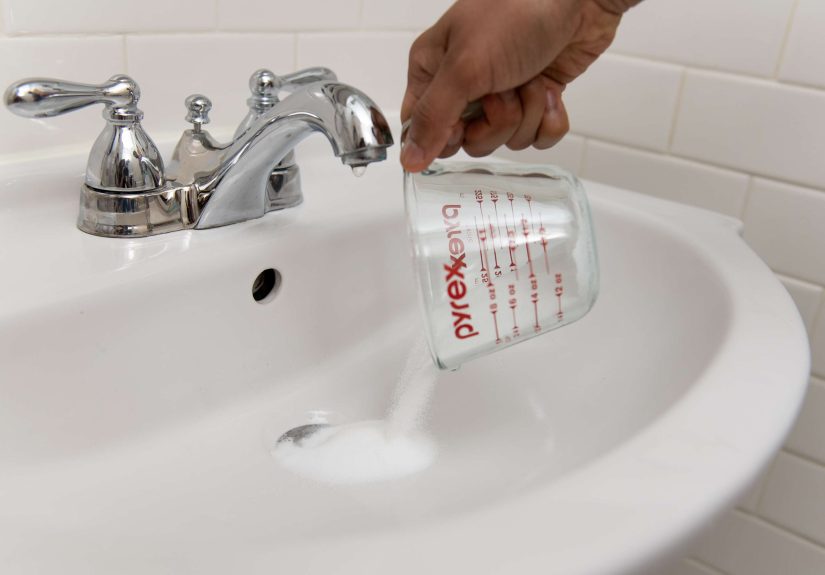
The appeal is obvious. You pour in some baking soda (a base), follow with vinegar (an acid), and the drain starts to fizz like a tiny volcano. It looks powerful, so your brain says, “Nice, it’s attacking the clog!” But visually impressive does not equal effective.
Most clogs aren’t just a little dust and dirt. They’re dense tangles of hair, soap scum, congealed grease, food scraps, or a delightful combo of all of the above. Those foamy bubbles look busy, but they don’t create the kind of physical force or chemical action needed to punch through a serious blockage.
In other words, you’re getting a show, not a solution.
The Science: Why Baking Soda and Vinegar Don’t Really Unclog Drains
1. They Neutralize Each Other
Baking soda is alkaline (basic). Vinegar is acidic. When you combine the two, they don’t become stronger they cancel each other out. The reaction produces carbon dioxide gas (the fizz) and water with a bit of dissolved salt. That means the powerful properties each ingredient has on its own are mostly gone when you mix them together.
So while vinegar alone can help dissolve some mineral deposits or soap scum, and baking soda alone can act as a mild abrasive and deodorizer, the combo is basically salt water with bubbles. Salt water with bubbles is not a plumber-approved drain opener.
2. Your Plumbing Is an Open System, Not a Sealed Volcano
People often imagine the reaction building pressure behind the clog and blasting it loose. That works in a sealed science-fair volcano or a closed bottle, but your home plumbing is an open system. The gas escapes up the drain or through vents instead of building up behind the clog.
Without that pressure, the reaction only happens right where the two liquids touch, and only for a short time. It’s more like pouring a fizzy drink down the drain than deploying a mini jackhammer in your pipes.
3. The Reaction Is Short-Lived and Weak Against Real-World Clogs
The fizzing usually lasts less than a minute. Meanwhile, the gunk in your pipes has been settling, hardening, and layering up over weeks or months. That quick reaction isn’t powerful enough to dissolve thick grease, tangled hair, or years of buildup.
You might notice a small improvement with a very mild clog or some odor reduction, which is where the myth gets reinforced. But for a slow or fully blocked drain, this method mostly gives you false hope and a delay before you try something that works.
4. Grease and Hair Don’t Respond Well to This Combo
Kitchen clogs are often mostly grease. Bathroom clogs are often mostly hair and soap scum. Baking soda and vinegar don’t melt fat or magically dissolve hair. The bubbly reaction may loosen a little slime on the surface, but the bulk of the clog stays right where it is.
That’s why you’ll often see people say, “I tried baking soda and vinegar, and it didn’t do anything.” It’s not because they used it wrong. It’s because the chemistry is wrong for the job.
The Hidden Risks of the Baking Soda and Vinegar Hack
On the surface, baking soda and vinegar seem harmless compared to harsh chemical drain cleaners. And in many ways, they are safer. But that doesn’t mean there are zero downsides to constantly dumping them into your pipes when you have a clog.
1. Potential Wear on Older Pipes and Rubber Seals
Vinegar is a mild acid. Used occasionally, it’s usually fine in most modern plumbing. But repeated or heavy use, especially in older systems with aging metal pipes or delicate rubber seals, can contribute to corrosion or deterioration over time.
Baking soda itself is not very corrosive, but the constant cycle of hot water, acid, and base isn’t exactly a spa treatment for tired plumbing. It’s not the fastest way to ruin your system, but it’s also not as “risk-free” as social media makes it sound.
2. Masking a Serious Plumbing Problem
One of the biggest issues isn’t what baking soda and vinegar do it’s what they don’t do. When you keep trying this method and telling yourself, “It’s natural, so I’ll just repeat it every few days,” you might be ignoring a bigger problem.
- A partially collapsed pipe
- A tree root intrusion in your sewer line
- A major grease plug farther down the line
- A recurring hair clog that needs mechanical removal
By relying on a weak DIY method, you delay calling a plumber or using effective tools. That can mean a simple clog that could have been snaked in 10 minutes turns into sewage backing up into your tub at 10 p.m. on a Sunday. No one wants that episode.
3. Dangerous Combinations with Chemical Cleaners
Here’s another risk: when the baking soda and vinegar trick doesn’t work, people often get frustrated and immediately reach for a heavy-duty chemical drain cleaner. If the homemade mixture hasn’t fully flushed away, you’re now mixing unknown chemicals in your pipes.
Chemical drain openers can contain strong bases (like lye), oxidizers, or acids. Combining them with other substances can create heat, fumes, or reactions that are dangerous to you and your plumbing. That’s why many pros advise never to mix products and to be extremely cautious with store-bought drain cleaners in general.
What to Use Instead of Baking Soda and Vinegar
The good news: you have plenty of better options that are still homeowner-friendly. You don’t need a chemistry degree just a little strategy and the right tool for the job.
1. Start with a Plunger (Yes, Really)
The humble plunger is still one of the most effective ways to unclog a drain. It works by creating suction and pressure that physically moves the clog. For sinks, make sure you:
- Block any overflow openings with a wet cloth to improve suction.
- Run enough water to cover the plunger cup.
- Plunge with firm, steady motions for 20–30 seconds at a time.
It’s not glamorous, but it’s far more effective than watching bubbles fizzle in your drain.
2. Clean the Trap Under the Sink
If you’re dealing with a sink clog, a lot of blockages are right in the U- or S-shaped “trap” under the sink. With a bucket, some gloves, and a wrench (or even hand-loosened slip nuts on some setups), you can:
- Turn off the water.
- Place a bucket under the trap.
- Unscrew the fittings and remove the trap.
- Clear out the gunk manually.
- Reassemble and test for leaks.
Is it messy? Absolutely. Is it effective? Very. Unlike baking soda and vinegar, this method actually removes the clog from your plumbing instead of hoping it dissolves.
3. Use a Drain Snake or Auger
For deeper or more stubborn clogs, a drain snake (also called an auger) is a fantastic tool. You feed the flexible cable into the drain, twist to grab or break up the clog, and then pull it back out.
Handheld models are inexpensive and widely available for sinks and tubs. For serious blockages in main lines, plumbers use more powerful motorized versions one of the big reasons they can clear “impossible” clogs in a single visit.
4. Try Enzyme-Based Drain Cleaners for Maintenance
If you’re drawn to baking soda and vinegar because you like gentle, eco-friendly solutions, enzyme-based drain cleaners are a smarter alternative for ongoing maintenance. These products use bacteria and enzymes to digest organic matter like hair, grease, and food particles over time.
They’re not instant uncloggers, but they shine at preventing future buildup and keeping drains flowing smoothly, especially when used regularly according to the label. They’re also much gentler on pipes and septic systems than harsh chemical cleaners.
5. Know When to Call a Plumber
If you’ve tried plunging, checked the trap, maybe used an enzyme cleaner for a while, and the drain is still slow or backing up, it’s time to call a professional. Signs you need a pro include:
- Multiple drains backing up at once
- Gurgling sounds from drains or toilets
- Sewage smells or visible sewage backing up
- Recurring clogs in the same location
At that point, dumping more baking soda and vinegar down the drain is like putting a sticker over your car’s “check engine” light and hoping for the best.
When Baking Soda and Vinegar Are Actually Useful
All of this doesn’t mean baking soda and vinegar are useless. They can be helpful just not as a primary way to unclog a drain.
- Deodorizing drains: Baking soda can help absorb odors, and a small amount of vinegar can help rinse away light buildup.
- General cleaning: Used separately, they’re great for cleaning sinks, countertops, and some fixtures.
- Very mild buildup: On a mostly clear drain, the combo might help loosen a thin film of grime.
Think of them as part of your cleaning routine, not your emergency unclogging toolkit.
Real-Life Experiences: Why This Hack Lets People Down
Still tempted to try it “just once more”? Let’s talk about what actually happens in the real world when people turn to baking soda and vinegar to fix a badly clogged drain.
One common story: a kitchen sink starts draining slowly. Instead of grabbing a plunger, the homeowner pours in a generous scoop of baking soda and a cup of vinegar. The fizz looks promising, but the water level in the sink doesn’t drop much. They try again the next day. Still clogged. Next step: a heavy-duty chemical cleaner. Now they’ve got standing water, unknown chemicals in the pipes, and a mess that’s suddenly too scary to plunge.
By the time a plumber arrives, the clog is still there, but now the technician needs to snake the drain while dealing with caustic water. The customer pays more because it’s an emergency call and the whole saga could have been avoided with a plunger and a trap cleaning before the DIY science experiments.
Another frequent scenario happens in older homes. The bathroom sink has slow drainage, so the homeowner adopts a “weekly baking soda and vinegar day” ritual, thinking they’re doing preventive maintenance. What they’re really doing is hiding a deeper issue. Months later, multiple fixtures start draining slowly, and a sewer line inspection reveals tree roots or heavy buildup in the main. The routine fizzing never addressed the real problem it just made it feel like something was being done.
Then there’s the surprise “splashback.” Because the reaction produces gas and movement, if the drain is very blocked and the opening isn’t covered, the fizz can push liquid back up into the sink or tub. It’s not dangerous, but it’s definitely messy, especially when there’s already dirty water and grime in the line. People expect a satisfying whoosh, and instead they get a fizzy burp.
There are also stories from folks with older galvanized or copper pipes who went heavy on vinegar-based DIY tricks for years. While the occasional vinegar rinse isn’t catastrophic, long-term overuse of acids can contribute to corrosion and pinhole leaks in vulnerable plumbing. When those leaks show up behind walls or under floors, they’re far more expensive to fix than a simple clog.
Finally, many people who switch from baking soda and vinegar to basic mechanical tools are honestly shocked by the difference. The first time you pull a golf-ball-sized wad of hair and soap scum out of a tub drain with a plastic drain stick, you immediately understand why foam alone was never going to cut it. Once you’ve seen the clog, it’s hard to believe bubbles were ever going to magically dissolve it.
The takeaway from these real-life experiences is simple: baking soda and vinegar feel like you’re taking action, but they rarely solve the underlying issue. The methods that actually work plungers, trap cleaning, drain snakes, or enzyme maintenance may seem less “clever,” but they deliver real results instead of just a fizzy light show.
Conclusion: Save the Volcano for Science Class, Not Your Sink
Baking soda and vinegar are great for a lot of things. Making a dramatic school volcano? Absolutely. Deodorizing a trash can? Sure. Unclogging a sink, shower, or tub drain? Not so much.
The chemistry just isn’t on your side. The reaction is short-lived, the mixture neutralizes itself, and most real-world clogs are too tough for a bubbly salt-water solution. On top of that, relying on this hack can delay proper repairs, contribute to wear on older plumbing, and lead to risky combinations with stronger chemical cleaners.
If your goal is to unclog a drain effectively and safely, skip the internet folklore and go with proven methods: plungers, trap cleaning, drain snakes, and enzyme-based cleaners for ongoing maintenance. And when those aren’t enough, a professional plumber is worth every penny compared to a flooded bathroom or a backed-up kitchen sink.
Bottom line: enjoy baking soda and vinegar for cleaning projects where they truly shine but when it comes to clearing clogs, it’s time to retire the volcano and reach for real tools.