Table of Contents >> Show >> Hide
- Why Top-Load Washers Get Funky (Even When You’re “Clean People”)
- What “Natural Ingredients” Can (and Can’t) Do
- What You’ll Need
- Deep Clean Method #1: Vinegar + Baking Soda (The Classic Two-Step)
- Deep Clean Method #2: Citric Acid Descale (Best for Hard Water)
- Deep Clean Method #3: Hydrogen Peroxide for Stubborn Odors
- Don’t Forget These Sneaky Parts
- How to Keep a Top-Load Washer Cleaner Between Deep Cleans
- Common Mistakes (AKA How Washer Odors Win)
- Quick Troubleshooting: What Your Washer Is Trying to Tell You
- FAQ
- Conclusion: A Cleaner Washer Makes Cleaner Laundry (Shocking, I Know)
- Experiences From Real Laundry Rooms (500+ Words of “Yep, Been There” Energy)
Your top-loading washing machine has one job: make things clean. And yet, if you’ve ever opened the lid and been greeted by a whiff of “wet gym bag meets
forgotten beach towel,” you’ve discovered an inconvenient truthwashers can get gross.
The good news: you don’t necessarily need a cart full of specialty products to freshen things up. With a few common natural ingredients (plus some smart
technique), you can break down residue, tackle funky odors, and keep your machine running like it actually enjoys its career.
Why Top-Load Washers Get Funky (Even When You’re “Clean People”)
A top-loader is basically a warm, damp environment that regularly hosts a party for detergent residue, fabric softener buildup, body oils, lint, and minerals
from hard water. Over time, that mix can form a film on the tub, hide under the rim, and even linger in dispensers and nooks. Add moisture, and you’ve created
a luxury condo for mildew.
Many appliance and home-care experts recommend running a cleaning routine about once a month (or every ~30–40 loads), with more frequent attention if you use
cold water a lot, live in a hard-water area, or notice odor creeping in. Waiting until the washer smells “alive” is… a strategy. Not a good one, but a strategy.
What “Natural Ingredients” Can (and Can’t) Do
Natural doesn’t mean “magical,” but it can be very effective when you match the ingredient to the problem.
Distilled White Vinegar: Great for Mineral Buildup (Use Thoughtfully)
Vinegar is mildly acidic, which helps loosen mineral deposits and some soap scum. It can also help with odors. However, several experts caution that frequent
vinegar use may degrade rubber parts (like hoses or seals) over time. Translation: vinegar can be useful occasionally, but don’t make it your washer’s daily beverage.
Baking Soda: Deodorizer + Gentle Scrub Booster
Baking soda is mildly alkaline and helps neutralize odors and lift grime. It’s also handy as a paste for spot-scrubbing (think: tub ring, underside of the rim,
and dispenser gunk).
Citric Acid: The Hard-Water Hero
If hard water leaves your kettle crusty and your showerhead looking like it’s growing coral, your washer is dealing with the same minerals. Citric acid is a
popular descaling option for dissolving limescale buildup.
Hydrogen Peroxide (3%): A “Mildew-Fighting” Option
Hydrogen peroxide can help tackle mildew and biofilm odors. The key is to use it alone (not mixed with vinegar) and rinse well.
Big Safety Note: Do Not Mix Cleaning Chemicals
- Never mix vinegar with bleach (toxic fumes risk).
- Don’t combine vinegar and hydrogen peroxide in the same container (it can create a stronger irritant solution).
- Avoid “science experiments” in your washer. Use one method at a time, rinse between steps, and keep it simple.
What You’ll Need
- Microfiber cloths or clean rags
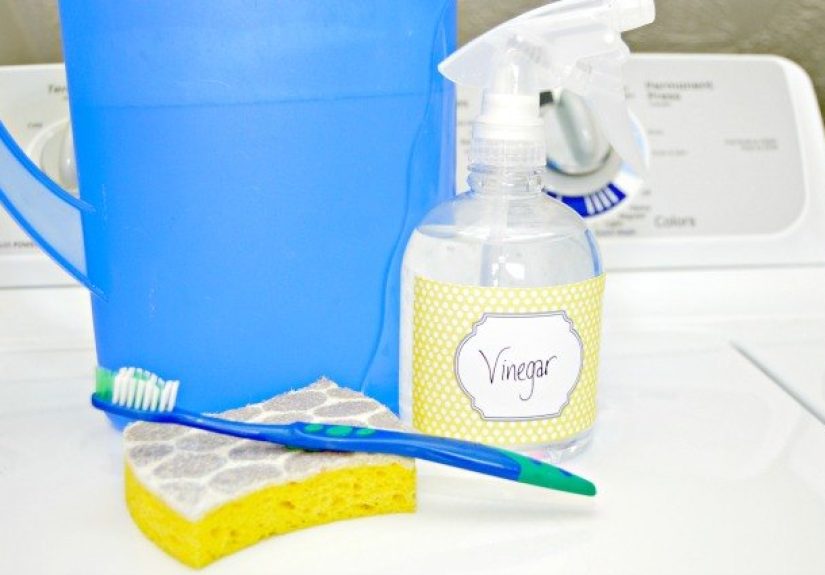
- An old toothbrush (the real MVP of household cleaning)
- Measuring cup
- Distilled white vinegar
- Baking soda
- Optional: citric acid powder (for hard water)
- Optional: 3% hydrogen peroxide (for stubborn odors/mildew)
- Optional: dish soap (for greasy residue on surfaces)
Deep Clean Method #1: Vinegar + Baking Soda (The Classic Two-Step)
This is the most commonly recommended DIY approach for top-load washers. The trick is not dumping vinegar and baking soda in together like a
fizzy volcano. Use them in separate cycles so each can actually do its job.
Step 1: Run a Hot Vinegar Cycle (Descale + Deodorize)
- Make sure the washer is empty.
- Select the largest load size and hottest water setting (or your washer’s “Tub Clean/Basket Clean” cycle if it has one).
- Add 2 cups of distilled white vinegar to the tub as it fills. If your washer is very large or you have heavy buildup, some guides use up to
4 cups. When in doubt, start with 2 cups and repeat later if needed. - Let it agitate for a few minutes, then pause (if your machine allows) and let it soak 30–60 minutes.
- Resume and let the cycle finish.
Step 2: Run a Baking Soda Cycle (Deodorize + Lift Residue)
- With the washer still empty, run another hot cycle.
- Add 1/2 cup to 1 cup baking soda directly into the tub.
- Let the cycle complete, then run an extra rinse if your washer offers it (helpful if you used a full cup).
Step 3: Wipe the “Gross Zone” Areas
While the tub runs, tackle the parts that love to collect mystery sludge:
- Under the rim: Wipe thoroughlythis is a common hiding spot for grime.
- Dispenser cups: Remove if possible; soak in warm water with a little dish soap, then scrub with a toothbrush.
- Agitator (if you have one): Wipe around the base and any seams where residue collects.
- Tub ring: Use a baking soda paste (baking soda + a splash of water) and a soft cloth to scrub gently.
Deep Clean Method #2: Citric Acid Descale (Best for Hard Water)
If you see white, chalky residue or feel a gritty film, hard water minerals may be the main villain. Citric acid is a strong contender for descaling.
- Start with an empty washer.
- Choose the hottest, longest cycle (or Tub Clean/Basket Clean).
- Add 1/4 to 1/2 cup citric acid powder to the tub as it fills.
- If possible, pause and soak for 30–60 minutes.
- Finish the cycle, then run an extra rinse.
Tip: If you used vinegar recently, run a plain rinse cycle before doing citric acid. The goal is “effective cleaning,” not “chemistry fair.”
Deep Clean Method #3: Hydrogen Peroxide for Stubborn Odors
If your washer smells musty even after a hot cycle, you may be dealing with mildew/biofilm. Hydrogen peroxide (3%) can help.
- Empty washer. Set to hot water, largest load.
- Add 1–2 cups of 3% hydrogen peroxide to the tub as it fills.
- Let it agitate briefly, then soak 30 minutes if possible.
- Finish the cycle and follow with an extra rinse.
Important: Do not use peroxide in the same session as vinegar. Rinse between methods.
Don’t Forget These Sneaky Parts
1) Lint Trap / Filter (If Your Top-Loader Has One)
Some top-load washers have a lint trap inside the drum or along the agitator, while many modern high-efficiency machines don’t have a user-serviceable filter.
Check your manual, then clean any trap you can access. A clogged lint trap can contribute to odors and redeposit lint on clothes.
2) The Drain + The “What Even Is That?” Debris
If you’ve ever found a bobby pin, a coin, or something that may have once been a sock, you already know the washer interior is basically a museum of tiny
life choices. Remove visible debris and wipe down crevices near the tub edge.
3) Hoses and Screens
Hard water can leave mineral deposits in inlet screens where hoses connect. If you’re comfortable and your manual supports it, you can periodically inspect
hose connections and screens (with the water supply off). If not, a pro can help during routine appliance service.
How to Keep a Top-Load Washer Cleaner Between Deep Cleans
- Leave the lid open after loads so moisture can evaporate (this alone prevents a lot of stink).
- Remove wet clothes promptlyyour washer isn’t a hamper and doesn’t want to be.
- Measure detergent (too much creates residue; more suds ≠ more clean).
- Skip excess fabric softener if you’re battling buildup; it can coat the tub over time.
- Run a hot wash occasionally if you typically wash coldheat helps dissolve oils and residue.
- Wipe under the rim every week or two if you’re sensitive to odors or have hard water.
Common Mistakes (AKA How Washer Odors Win)
Mistake #1: Mixing Vinegar and Baking Soda Together in One Go
Yes, it bubbles. No, it’s not automatically “more powerful.” The fizz mostly means the ingredients are neutralizing each other. Use them in separate steps.
Mistake #2: Treating Vinegar Like a Lifestyle
Vinegar can help occasionally, but experts warn that frequent exposure may contribute to wear on rubber components. Use it as an “as-needed” tool, not a constant
habitespecially if your washer has lots of rubber parts or you’re trying to protect a warranty.
Mistake #3: Ignoring the Rim and Dispensers
The tub can be sparkling while the underside of the rim is hosting a grime convention. If your washer still smells after cleaning cycles, focus here.
Quick Troubleshooting: What Your Washer Is Trying to Tell You
- Musty smell: Moisture + biofilm. Increase airflow (lid open), wipe under rim, try peroxide method.
- Gray film / slime: Detergent/softener buildup. Cut detergent, run a hot cleaning routine, scrub dispensers.
- White crusty residue: Hard water minerals. Use citric acid descale and consider a water-softening approach for laundry.
- Clothes feel stiff: Too much detergent or minerals redepositing. Measure detergent and clean the washer more regularly.
FAQ
Can I use apple cider vinegar instead of distilled white vinegar?
Distilled white vinegar is preferred because it’s clear, consistent, and less likely to leave behind colorants or residue.
Is it safe to use “natural” ingredients if my washer has a self-clean cycle?
Many manufacturers recommend using the built-in clean cycle regularly and following the owner’s manual. Natural methods can be used, but it’s smart to confirm
what your brand recommendsespecially if you’re concerned about warranties or rubber components.
How often should I deep clean?
A common guideline is monthly (or every 30–40 loads). If you have hard water, do lots of cold washes, or notice odors, increase frequency.
Conclusion: A Cleaner Washer Makes Cleaner Laundry (Shocking, I Know)
Cleaning a top-loading washer with natural ingredients isn’t complicatedit’s mostly about consistency and using the right tool for the job. A periodic hot
cleaning cycle, targeted scrubbing under the rim, and smart moisture control (hello, open lid) can keep your washer fresh without turning your laundry room
into a chemical supply closet.
Start simple: pick one deep-clean method, do it well, and then keep the momentum with small habits. Your future selfand your towelswill thank you.
Experiences From Real Laundry Rooms (500+ Words of “Yep, Been There” Energy)
Below are composite, real-world-style scenarios pulled from common washer complaints and what typically works. If any of these feel painfully familiar… welcome
to the club. Membership includes socks that vanish and at least one mysterious plastic clip.
1) “My washer smells fine… until I open it.”
This is the classic stealth-stink. Everything seems okayuntil the lid lifts and your nose gets a surprise plot twist. In many cases, the odor isn’t coming from
the middle of the tub. It’s hiding under the rim where splash-back and detergent residue collect. People often run a hot cleaning cycle and feel victorious,
but the smell returns because the under-rim biofilm never got touched.
The fix that usually changes the game: wipe under the rim with a damp cloth, then follow with a baking soda paste on stubborn spots. A toothbrush helps reach
seams and crevices. After that, leaving the lid open between loads often prevents the odor from rebuilding. It feels too easy, which is exactly why it works.
2) “I switched to cold washes and now everything feels… off.”
Cold water is great for energy savings and gentle fabric care, but it can be rough on greasy residue and detergent buildup. A common story: someone goes all-in
on cold cycles, then a few weeks later the washer smells musty and clothes start feeling stiff or less fresh.
The usual solution is not “go back to hot forever,” but to add a maintenance rhythm: run an empty hot cleaning cycle monthly, and do one hot load (like towels)
occasionally. Combined with measuring detergent more carefully, this often stops residue from accumulating. In other words: cold washing works best when you
still give the machine a periodic sauna.
3) “Hard water is ruining my vibe (and my washer).”
Hard water households tend to report a gritty feel, chalky deposits, and that stubborn dullness on the inside of the tub. People may try vinegar repeatedly,
but the results can be hit-or-miss if the mineral buildup is heavy. This is where citric acid becomes the hero of the story.
A descaling cycle with citric acid (followed by a rinse) often removes that mineral haze more effectively than a “random splash of vinegar” approach. Afterward,
many people notice fewer odors and less residue on the tub walls. The longer-term win comes from prevention: using the right detergent amount, considering a
laundry booster appropriate for hard water, and descaling on a schedule instead of waiting until the tub looks frosted.
4) “I used too much detergent because I wanted it extra clean.”
This is a heartbreakingly logical mistake. More soap should mean more clean, right? Unfortunately, too much detergent can leave a film that traps odors and grime
inside the machine. People often notice it as a slippery feel inside the tub or a “clean-ish but not really” smell.
When they cut detergent to the recommended amount (especially in HE machines) and run a hot cleaning routine, the improvement can be surprisingly fast. It’s one
of those humbling moments where you realize the washer has been quietly judging you for weeks.
5) “I cleaned the tub… why does it still smell?”
Sometimes odors linger because moisture is still hanging around in hidden spotslike dispensers, the underside of the rim, or even trapped lint/debris. In some
cases, people report that switching to the hydrogen peroxide method for one cycle (after rinsing out other cleaners) finally knocks out the mustiness. Then, the
real long-term fix is behavior: lid open, wipe down, don’t let wet clothes sit, and keep that under-rim area on your radar.
The takeaway from nearly every “my washer smells” story is boring but true: the best cleaning routine is the one you’ll repeat. Pick a method that fits your
washer and your comfort level, do it regularly, and your laundry room will stop trying to gaslight you.