Table of Contents >> Show >> Hide
- Why 3D Printed Tank Tracks Are So Appealing
- The Genius of the Plastic BB Hinge
- Design Considerations: Tolerances Make or Break the Track
- Choosing the Right Filament
- Track Geometry: More Than Just a Fancy Chain
- Why This Design Feels So Maker-Friendly
- Practical Applications for BB-Hinge Tank Tracks
- Common Problems and Smart Fixes
- Safety and Responsible Use
- My Experience Notes: What This Project Teaches in the Real World
- Conclusion
There are two kinds of 3D printing projects: the ones that look impressive on a shelf, and the ones that immediately make you say, “Wait, that actually moves?” A 3D printed tank track that pops together with a plastic BB for a hinge belongs proudly in the second category. It is clever, practical, slightly ridiculous in the best maker-culture way, and proof that sometimes the missing part in a mechanical design is not a custom bearing, a brass rod, or a tiny screw that disappears into the carpet forever. Sometimes it is a small plastic sphere doing a very serious engineering job.
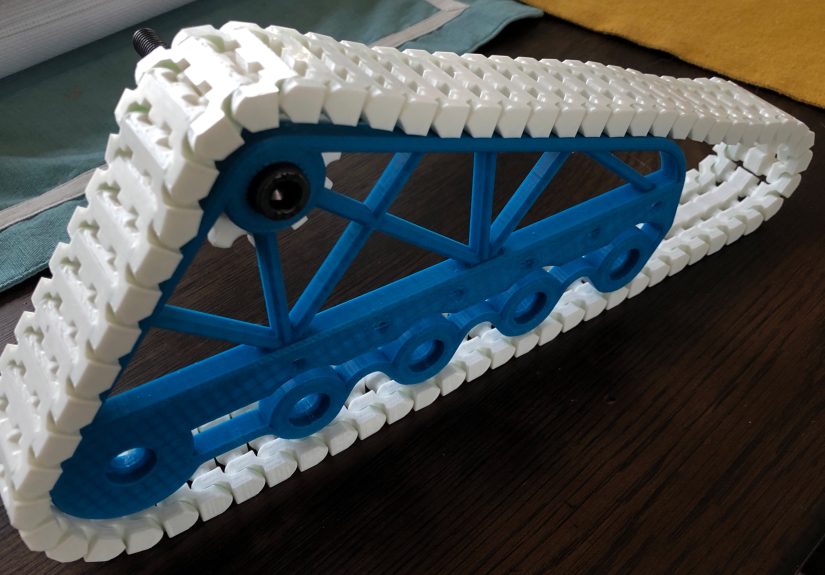
The idea is simple: instead of joining every tank tread segment with metal pins, wires, bolts, or printed rods, each link is designed with a pocket that captures a plastic BB. The BB becomes both a connector and a rotating bearing surface. The track segments snap together, articulate around sprockets and idlers, and create a continuous tread for a small robot, RC vehicle, or experimental tracked platform. In plain English, it is a miniature mechanical handshake repeated dozens of times around a loop.
This design is especially interesting because tank tracks are perfectly suited to 3D printing. A track is made from many repeated parts, and desktop printers love repetition. Print one link, prove it works, then print a small army of them. The challenge is not making the links; it is making them connect reliably without turning assembly into a tiny hardware nightmare. The BB-hinge approach solves that problem with a snap-fit mechanism that is cheap, lightweight, and surprisingly elegant.
Why 3D Printed Tank Tracks Are So Appealing
Wheels are easy. Tracks are dramatic. A wheeled robot says, “I am going to roll politely across the floor.” A tracked robot says, “I have opinions about traction.” Continuous tracks spread weight over a larger contact area, help vehicles crawl over uneven surfaces, and give small robotic platforms a rugged personality. For hobbyists, educators, and prototype builders, 3D printed tank tracks offer a way to experiment with traction, gearing, suspension, and mechanical design without ordering a pile of specialty parts.
The modular nature of tank treads is the key advantage. Each link can be printed flat, inspected, modified, and replaced. If one segment fails, the entire track does not have to be redesigned. That makes the system ideal for iteration. Want more grip? Add cleats. Need smoother motion? Round the hinge geometry. Want a wider track? Scale the link carefully or redesign the tread face. A 3D printer turns the workbench into a miniature track factory, minus the smoke, noise, and suspiciously expensive tooling.
The Genius of the Plastic BB Hinge
The plastic BB hinge works because it combines three jobs in one tiny part. First, it acts as a fastener by locking neighboring links together. Second, it acts as a pivot, allowing each tread segment to rotate relative to the next. Third, it provides a rounded bearing surface that reduces sharp-edge friction. That is a lot of responsibility for something that looks like it escaped from a toy drawer.
Traditional DIY tank tracks often use screws, wire, welding rod, filament pins, or printed axles. Those options can work, but they add cost, weight, assembly time, and sometimes frustration. Screws require holes, alignment, and usually nuts or threaded inserts. Wire pins may need cutting and bending. Filament pins can require heat-forming at the ends so they do not slide out. By contrast, a captured plastic sphere can snap into a printed socket and stay there through geometry rather than extra hardware.
The result is a clean, minimal assembly. Each link is designed with a hollow or socket sized around the ball. When two links are pressed together, the BB seats between them and becomes the hinge. The fit must be snug enough to hold the track together but loose enough to allow rotation. That balance is the entire magic trick. Too tight, and the links refuse to move. Too loose, and the track becomes a sad plastic noodle with commitment issues.
Design Considerations: Tolerances Make or Break the Track
For a 3D printed tank track, tolerance is not a boring engineering word; it is the difference between “smooth crawler” and “desk sculpture.” FDM printers create parts by laying down melted plastic in lines. That means holes may print slightly undersized, edges can bulge, and small features may behave differently depending on printer calibration, material, nozzle size, layer height, and cooling.
When designing a BB-hinge track, the socket diameter, wall thickness, and hinge clearance matter. A small test coupon is a smart first move: print two or three links, try the hinge fit, and adjust before committing to a full track. This saves material, time, and the emotional damage caused by printing 96 perfect-looking links that all bind like a rusty gate.
Clearance should be intentional. The hinge pocket needs enough room for the plastic sphere to rotate, but the opening must still retain it. A slight chamfer can help the ball snap into place. Rounded edges reduce stress concentration. Fillets near the socket help prevent cracking. The best designs avoid thin, brittle walls around the hinge because repeated flexing can split layers apart, especially if the print orientation puts layer lines in the wrong direction.
Choosing the Right Filament
PLA is often the first material people test because it is easy to print, dimensionally predictable, and stiff. For visual prototypes and light-duty indoor robots, PLA can work surprisingly well. It prints crisp details, holds socket shapes nicely, and makes troubleshooting easier. The downside is that PLA can be brittle under repeated stress, especially in small hinge features. A track that sees constant flexing may eventually show cracks or looseness.
PETG is a strong candidate for functional tracks because it offers more impact resistance and flexibility than standard PLA. It can absorb bumps and minor deformation without snapping as easily. PETG also has good layer adhesion when printed correctly, which is useful for parts that flex or rotate. The tradeoff is that PETG can be stringy, slightly less crisp in fine details, and more sensitive to tuning. In other words, PETG is tougher, but it may leave tiny plastic whiskers like your printer forgot to shave.
TPU is another possibility for tread surfaces because it is flexible and wear-resistant. However, fully flexible tracks can stretch or deform too much unless the design is carefully controlled. A hybrid approach can work well: rigid links for structure, flexible pads for grip, or separate rubber-like inserts where the track meets the ground. Multi-material printing can be powerful, but it adds complexity. For most hobbyists, a well-tuned PLA or PETG link is the most practical starting point.
Track Geometry: More Than Just a Fancy Chain
A tank track is not merely a chain wrapped around wheels. It is a system. The link pitch must match the sprocket teeth. The sprocket diameter affects how sharply the track bends. The idler spacing controls tension. The tread profile affects grip. Even the underside of each link matters, because it determines how smoothly the track rides over support rollers or slides along a frame.
The BB hinge changes the geometry in an interesting way. Because the hinge center is defined by the ball location, the designer can tune how the link rotates around the sprocket. If the pivot point is too high, the track may lift or chatter. If it is too low, the links may bind against each other. The best designs treat the hinge as the heart of the track, then build the tread, sprocket tooth profile, and clearance around it.
For small robots, track tension should be firm but not heroic. A track that is too loose can derail. A track that is too tight increases friction and motor load. Since 3D printed parts have more surface texture than molded parts, friction deserves respect. Smooth hinge motion, clean sockets, and a sensible sprocket shape will do more for performance than simply adding a bigger motor and hoping physics gets tired.
Why This Design Feels So Maker-Friendly
The beauty of the BB-hinge tank track is not just that it works. It is that it uses an ordinary shape in an unexpected way. Makers love this kind of solution because it reduces part count and assembly complexity. A plastic sphere is consistent, lightweight, smooth, and easy to design around. It turns the hinge into a captured rolling element without requiring a miniature bearing assembly.
This is also a great example of designing for the strengths of 3D printing rather than fighting its weaknesses. Instead of trying to print a perfect metal-like pin, the design prints the custom geometry and uses a simple off-the-shelf round element for the pivot. The printed part does what printing does well: creates custom sockets, shapes, and repeated links. The plastic ball does what spheres do well: rotate and distribute contact.
That division of labor is smart engineering. It is also refreshingly humble. Not every part needs to be 3D printed. Sometimes the best 3D printed design is the one that knows when to invite a non-printed component to the party.
Practical Applications for BB-Hinge Tank Tracks
A snap-together 3D printed track can be useful for small robotics projects, classroom STEM demonstrations, RC prototypes, terrain experiments, kinetic sculptures, and mechanical design education. Students can see how repeated links become a flexible chain. Hobbyists can test different sprockets and tread patterns. Designers can explore snap-fit joints, friction, load distribution, and material behavior in one compact project.
For a small tracked rover, this design can keep the bill of materials simple. Instead of dozens of screws and nuts, the hinge system relies on printed sockets and plastic spheres used only as passive mechanical elements. That makes assembly faster and reduces metal hardware weight. It also makes repairs easier: a broken link can be swapped without rebuilding the whole vehicle.
The concept can even inspire other mechanisms. Small plastic spheres can act as pivots in folding toys, articulated grippers, educational linkages, cable guides, or experimental kinetic art. The main lesson is not “make every hinge from a BB.” The lesson is better: look for simple shapes that solve mechanical problems elegantly.
Common Problems and Smart Fixes
Problem: The Track Is Too Stiff
If the links barely rotate, the hinge sockets are probably too tight, rough, or misaligned. Reducing socket interference, adding small chamfers, cleaning stringing, or slightly increasing clearance can help. Printing a two-link test before a full batch is the adult-in-the-room move, even if your inner goblin wants to print everything immediately.
Problem: The Track Falls Apart
If the hinge pops open too easily, the retaining geometry may be too shallow or flexible. Strengthen the socket walls, adjust the opening shape, or increase the amount of material that captures the sphere. The goal is a satisfying snap, not a terrifying crunch.
Problem: The Track Derails
Derailing usually points to sprocket mismatch, poor tension, side-to-side play, or track twist. Add guide features, check sprocket pitch, and ensure the frame keeps both sides aligned. A track is happiest when the sprocket, idler, and link pitch are all speaking the same mechanical language.
Problem: Links Crack Over Time
Cracking often comes from thin walls, sharp corners, brittle material, or unfavorable print orientation. Use fillets, increase wall thickness, test PETG, and orient the part so the highest stress does not peel layers apart. FDM prints are strong, but they are not equally strong in every direction.
Safety and Responsible Use
This project uses small plastic spheres as passive hinge components. They should be handled as small parts, kept away from young children and pets, and never used in any projectile context. Eye protection is sensible during snap assembly because small parts can slip under pressure. The safest maker is the one who finishes the project with the same number of eyes, fingers, and eyebrows they started with.
My Experience Notes: What This Project Teaches in the Real World
The most valuable lesson from a 3D printed tank track that pops together with a plastic BB for a hinge is that mechanical design is rarely about one perfect part. It is about relationships between parts. The hinge socket, the ball, the neighboring link, the sprocket tooth, the track tension, and the material all negotiate with each other. When one changes, the others respond. That is why this project is such a good teacher.
In practice, the first version of a track like this should be treated as a conversation starter, not a final product. Print a handful of links and abuse them gently. Bend them around the smallest sprocket you expect to use. Snap them together and pull them apart by hand. Roll them over a table edge. Listen for clicking, grinding, squeaking, or that suspicious silence that means something is binding but waiting until later to betray you.
One experience-based tip is to keep the first test track short. A six-link loop wrapped around two temporary pulleys can reveal most design problems quickly. If the hinge rotates well, scale up. If it binds, modify the socket. If the link cracks, thicken the wall or change orientation. If the sprocket skips, revisit pitch. The faster the feedback loop, the faster the design improves.
Another lesson is that “strong” does not always mean “best.” A very rigid link may hold shape beautifully but fail suddenly. A slightly tougher, more forgiving material may survive real use better. PETG may be a better choice for a working robot, while PLA may be better for early geometry tests. For tread pads, flexibility can help grip, but too much flexibility wastes motor power. The sweet spot depends on the vehicle weight, surface, speed, and sprocket design.
Assembly feel matters too. A good snap-fit has personality. It should press together with firm resistance and seat with confidence. If assembly requires heroic force, the design is too aggressive. If it falls together with no resistance, it may not survive motion. Good design feels intentional in the hand before it ever touches a motor.
Finally, this project reminds us that clever engineering often looks obvious after someone else has done it. A plastic sphere as a hinge? Of course. A printed socket as a retainer? Naturally. But reaching that simplicity takes imagination. The BB-hinge tank track is a tiny example of a big design principle: reduce complexity by choosing the right constraint. Instead of adding hardware, redesign the joint. Instead of fighting friction, use a round bearing surface. Instead of making one complicated track, make one reliable link and repeat it.
That is the fun of 3D printing. It gives builders permission to try strange little ideas, test them quickly, and discover that a humble plastic ball can become the star of a miniature tracked machine. Not bad for something smaller than a pea.
Conclusion
The 3D printed tank track that pops together with a plastic BB for a hinge is a small project with a big design lesson. It combines modular printing, snap-fit geometry, simple hardware reduction, and real mechanical motion into one satisfying system. For hobby robotics, RC experimentation, and design education, it shows how smart part geometry can replace extra fasteners and make assembly cleaner.
The best version of this project starts with testing. Tune the hinge clearance. Choose the right filament. Match the sprocket pitch. Respect print orientation. Keep the track tension reasonable. When all those details line up, the result is more than a novelty. It is a working example of practical, playful engineeringthe kind that makes a desktop 3D printer feel like a tiny invention machine.