Table of Contents >> Show >> Hide
- What Is a 48-Star Bull Dog American Flag?
- Why the 48-Star Flag Matters in American History
- The Bull Dog Bunting Connection
- How to Identify an Authentic 48-Star Bull Dog American Flag
- Dating a 48-Star Bull Dog Flag
- Common Sizes and Display Appeal
- Collector Value: What Affects the Price?
- How to Preserve a Vintage 48-Star Bull Dog American Flag
- Decorating with a 48-Star Bull Dog American Flag
- Why the 48-Star Design Feels So Balanced
- Buying Tips for a 48-Star Bull Dog American Flag
- Experiences Related to the 48-Star Bull Dog American Flag
- Conclusion
- Note
- SEO Tags
A 48-Star Bull Dog American Flag is not just an old flag with fewer stars than the one hanging outside the post office today. It is a stitched, cotton, history-soaked snapshot of the United States before Alaska and Hawaii joined the Union. It belongs to a period when radios were household magic, porch flags were serious civic furniture, and a good piece of bunting could survive more summer parades than a brass band tuba player.
The phrase “Bull Dog” usually points to the Bull-Dog Bunting line associated with the Dettra Flag Company of Oaks, Pennsylvania, a major American flag maker known for durable cotton flags, embroidered stars, sewn stripes, canvas headers, and metal grommets. Pair that with 48 stars, and you have an object that speaks to the years from 1912 to 1959, when the 48-star flag served as the official flag of the United States.
Collectors, decorators, historians, veterans’ families, and Americana lovers are drawn to this flag because it carries a rare combination of beauty and context. It is patriotic, yes, but not in a plastic lawn-chair way. It has texture, age, craftsmanship, and a long memory. A 48-Star Bull Dog American Flag can feel at home in a framed collection, a historic farmhouse, a military display, or a carefully styled living room where “vintage” means more than buying something new that was artificially scratched by a machine.
What Is a 48-Star Bull Dog American Flag?
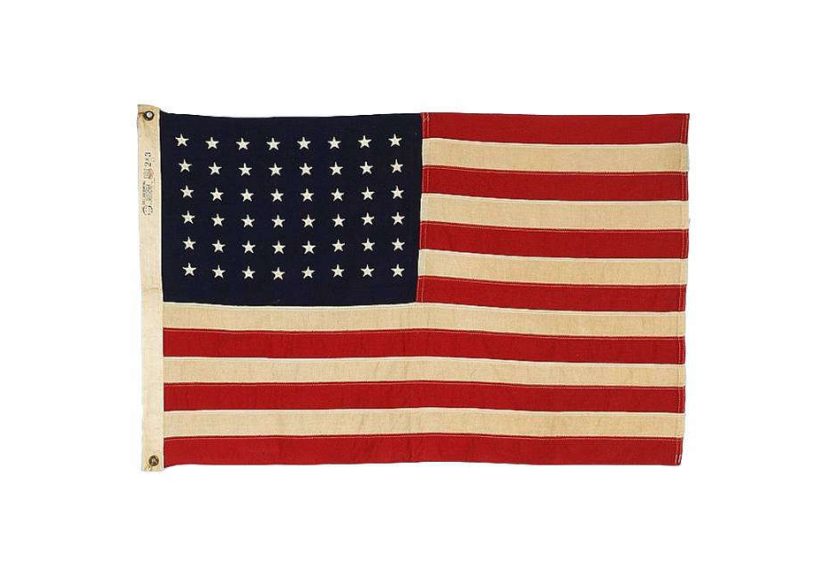
A 48-Star Bull Dog American Flag is a vintage United States flag featuring 48 stars arranged to represent the 48 states in the Union before Alaska became the 49th state in 1959 and Hawaii became the 50th in 1960. The “Bull Dog” name refers to Bull-Dog Bunting, a trade name connected with Dettra Flag Company products. These flags were commonly made from cotton bunting and often included sewn stripes, embroidered or appliqued stars, and a sturdy hoist edge designed for real outdoor use.
The 48-star design became official on July 4, 1912, after New Mexico and Arizona entered the Union earlier that year. President William Howard Taft’s 1912 executive order standardized the proportions of the national flag and specified that the stars should appear in six horizontal rows of eight. That neat grid gives the 48-star flag its unmistakable visual balance. It looks orderly, confident, and very early-20th-centurylike a flag that would show up to a town parade wearing polished shoes.
Why the 48-Star Flag Matters in American History
The 48-star flag flew during an extraordinary stretch of American history. It was the national flag during World War I, the Roaring Twenties, the Great Depression, World War II, the early Cold War, and the Korean War. Eight presidents served under it, from William Howard Taft through Dwight D. Eisenhower. In other words, this design was present for some of the most defining chapters in modern American life.
That long service makes the 48-star American flag especially meaningful. It was raised over schools, city halls, military posts, ships, factories, farms, and front porches. It appeared in wartime newsreels, patriotic posters, family photographs, Memorial Day ceremonies, and Fourth of July celebrations. When people today collect a 48-star Bull Dog flag, they are not simply collecting fabric. They are collecting a symbol that watched the country move from horse-drawn habits into the age of aircraft carriers, automobiles, television, and atomic anxiety.
The Bull Dog Bunting Connection
The Bull Dog name gives this flag an added layer of interest. Dettra Flag Company was founded in the early 1900s in Pennsylvania and became one of the important American flag manufacturers of the 20th century. The Bull-Dog Bunting label became associated with strong, dependable cotton flags. The name itself is a tiny branding masterpiece: a bulldog suggests toughness, loyalty, and a refusal to quit, which is exactly the personality you want in a flag expected to flap through wind, sun, rain, and neighborhood ceremonies involving unpredictable marching bands.
Many vintage Bull Dog flags were made with practical durability in mind. Common features include a heavy canvas header along the hoist, brass or metal grommets, stitched stripes, and stars that may be embroidered, sewn, or appliqued depending on the size and production period. Smaller flags may have printed details, while larger examples often show more handwork. Collectors tend to appreciate signs of original construction because they help separate authentic vintage flags from later reproductions.
How to Identify an Authentic 48-Star Bull Dog American Flag
1. Count the Stars Carefully
The first step is obvious but important: count the stars. A true 48-star flag should have 48 stars, commonly arranged in six straight rows of eight. Do not rely only on a seller’s title or a quick glance. Vintage flags have a funny way of making people confidently wrong at antique markets. Count twice, especially if the flag is folded, framed, or photographed at an angle.
2. Check the Header and Markings
Many Bull Dog Bunting flags have identifying marks along the hoist edge or on the canvas header. These marks may include the Bull-Dog Bunting name, Dettra branding, fabric information, size, or care language. Some labels are bold and easy to read; others are faded from use and age. A clear header mark can increase confidence and sometimes collector interest.
3. Study the Fabric
Many period Bull Dog flags were made from cotton bunting, a traditional flag fabric valued for its appearance and movement. Cotton ages differently from modern nylon or polyester. It may show soft fading, minor staining, small holes, or a gently uneven texture. These signs are not automatically defects; they are often part of the flag’s story. However, serious damage, brittle fabric, mold, or large tears can affect both display quality and value.
4. Look at the Stars and Stripes
Embroidered stars are especially appealing to collectors because they show craftsmanship and depth. Sewn stripes also matter because they suggest a higher-quality construction than a fully printed flag. On a 48-Star Bull Dog American Flag, the combination of stitched stripes and embroidered stars can create a wonderfully dimensional look, especially when framed under proper materials.
Dating a 48-Star Bull Dog Flag
The 48-star design gives you a broad official date range of 1912 to 1959. The specific Bull Dog example may be easier to place if you examine materials, size, label style, stitching, and hardware. Cotton flags with embroidered stars and brass grommets are often associated with mid-century production, though exact dating can be tricky without original packaging or documentation.
Some examples are described as post-World War II to 1950s pieces, especially when they feature two-ply moth-proof cotton, finely embroidered stars, and Dettra Bull Dog branding. Others may come from the 1930s or 1940s. Original boxes, printed labels, store tags, family provenance, or photographs showing the flag in use can all help narrow the story. When in doubt, treat exact dating with humility. Antique flag dating is part research, part textile study, and part detective work without the dramatic music.
Common Sizes and Display Appeal
Vintage Bull Dog 48-star flags appear in several sizes. Smaller examples, such as approximately 2 by 3 feet, are popular for framing because they fit more easily in homes and offices. Larger versions, such as 3 by 5 feet, 4 by 6 feet, or 5 by 8 feet, create a stronger visual impact but require more wall space, more careful mounting, and usually a more understanding spouse, roommate, or interior designer.
A smaller flag can be ideal above a mantel, in a study, or as part of a gallery wall. A larger flag can become the anchor piece in a room, especially in a rustic, farmhouse, military, industrial, or Americana-inspired setting. The 48-star grid gives the flag a clean symmetry that works surprisingly well with modern interiors. It has historical weight without visual chaos.
Collector Value: What Affects the Price?
The value of a 48-Star Bull Dog American Flag depends on condition, size, age, construction, rarity, markings, and provenance. A clean example with embroidered stars, sewn stripes, visible Bull Dog or Dettra branding, and original packaging will generally be more desirable than a heavily damaged or unmarked example. That said, honest age can be charming. A little fading can make a flag look dignified; too much damage can make it look like it lost a fight with a lawn mower.
Condition categories usually include fabric strength, color retention, staining, holes, fraying, repairs, and whether the header remains intact. Collectors also look for authenticity. A flag that still has its original box or a documented family history can stand out. Military association, historic use, or connection to a specific event may also increase interest, though claims should always be supported by evidence rather than enthusiastic storytelling.
How to Preserve a Vintage 48-Star Bull Dog American Flag
Avoid Direct Sunlight
Sunlight is one of the biggest enemies of vintage textiles. If you display a 48-star Bull Dog flag, keep it away from direct UV exposure. Even a beautiful sunny room can slowly fade cotton, weaken fibers, and turn rich color into a polite whisper of its former self.
Use Archival Materials
If framing the flag, use acid-free backing, UV-protective glazing, and reversible mounting methods. Avoid glue, tape, staples, or anything that sounds like it came from a craft drawer during a panic. A professional textile framer or conservator can help preserve the flag while still making it display-worthy.
Handle with Clean Hands
Natural oils, dirt, and moisture can damage old fabric. Handle the flag gently with clean, dry hands or cotton gloves. Support the textile fully when moving it, especially if it is large or fragile. Never yank it by one corner unless your goal is instant regret.
Store It Properly
If you are not displaying the flag, store it flat or rolled around an archival tube. Avoid tight folding, damp basements, hot attics, and plastic bags that trap moisture. Cotton needs a stable environment. Treat it like a historic textile, not like last year’s beach towel.
Decorating with a 48-Star Bull Dog American Flag
One reason this flag remains popular is its visual warmth. The aged cotton, embroidered stars, and slightly softened colors make it feel lived-in rather than loud. It can bring character to a room without shouting “I bought all my decor from one aisle.”
In a traditional home, a framed 48-star flag can pair beautifully with wood furniture, antique maps, leather chairs, and black-and-white family photographs. In a modern space, it can add contrast and human texture. In a military or veterans’ display, it can honor service across the first half of the 20th century. In a classroom or office, it can spark conversations about statehood, design, manufacturing, and national memory.
Why the 48-Star Design Feels So Balanced
The 48-star flag has a visual calm that many people notice even before they know the history. Six rows of eight stars create a precise rectangle inside the canton. Compared with earlier flags that often used varied star patterns, the 48-star version feels standardized and architectural. Compared with the 50-star flag, it feels slightly more spacious. The result is a design that looks familiar but different enough to make people pause.
That pause is valuable. Good historical objects invite questions. Why 48 stars? When was it used? What is Bull Dog Bunting? Who owned it? Was it flown outside a home, a store, a school, or a town hall? A 48-Star Bull Dog American Flag has a way of turning a wall into a conversation.
Buying Tips for a 48-Star Bull Dog American Flag
Before buying, ask for clear photos of the entire flag, the star field, the header, the grommets, the stitching, and any labels or markings. Confirm the exact size. Ask whether the stars are embroidered, sewn, appliqued, or printed. Check for stains, tears, repairs, fading, and odor. Yes, odor matters. A flag that smells like a damp basement may require conservation work, and “vintage aroma” is not always the charming selling point people hope it is.
Be cautious with claims such as “World War II flag” or “military used” unless there is evidence. A 48-star flag could have existed during World War II, but that does not prove it was used in the war. Authenticity improves when a seller provides original packaging, family records, photographs, or credible provenance. Buy the flag, not the fantasy.
Experiences Related to the 48-Star Bull Dog American Flag
Seeing a 48-Star Bull Dog American Flag in person is a different experience from viewing a modern printed flag online. The first thing you usually notice is the fabric. Cotton bunting has a soft, honest texture. It does not shine like synthetic fabric, and it does not look like it was born yesterday in a warehouse. It has weight, weave, and a kind of quiet dignity. When the stars are embroidered, they rise slightly from the blue field, catching light in a way that flat printing simply cannot copy.
One of the most memorable experiences with a vintage Bull Dog flag is unfolding it carefully for the first time. There is a small ceremony in that moment. You check the corners, follow the seams, count the stars, and look for the maker’s mark along the hoist. Every detail feels like a clue. A faded edge might suggest years of display. A clean header might hint that it spent more time stored than flown. A handwritten name on the hoist can suddenly transform the flag from an object into a family artifact.
Collectors often describe these flags as “honest” pieces of Americana. That is a useful word. A 48-star Bull Dog flag usually does not feel overly polished. It feels practical. It was made to be used. It may have hung from a porch on Independence Day, stood in a classroom corner, decorated a civic hall, or been carried out for Memorial Day. The flag may not come with a dramatic backstory, but the absence of drama can be part of its appeal. Ordinary use is history too.
Displaying one at home can also change how people respond to a room. Guests tend to recognize it instantly as an American flag, then notice something is different. The star count becomes a small puzzle. Someone says, “Wait, why are there only 48?” and suddenly the conversation moves to Arizona, New Mexico, Alaska, Hawaii, World War II, old manufacturing, and the way national symbols evolve. That is a lot of educational mileage from one textile.
For families, a 48-Star Bull Dog American Flag can become a bridge between generations. Grandparents may remember seeing 48-star flags before the 50-star version became standard. Parents may connect it with military service, school ceremonies, or small-town parades. Younger people may simply see a beautiful old flag and begin asking questions. That is how history survivesnot only through textbooks, but through objects that make curiosity feel natural.
There is also a special satisfaction in preserving something that was built to last. A Bull Dog Bunting flag was not designed as disposable decor. Its sturdy construction, stitched details, and durable materials reflect a period when flags were often repaired, stored, reused, and respected. Caring for one today feels like participating in that same tradition. You become less of an owner and more of a temporary steward.
Of course, vintage flag ownership also comes with practical lessons. Framing can be expensive. Large flags need serious wall space. Cotton dislikes sunlight. Old fabric can be more delicate than it appears. And yes, once you start noticing 48-star flags, you may begin counting stars in antique shops like a very patriotic accountant. But that is part of the fun. The 48-Star Bull Dog American Flag rewards attention. The closer you look, the more it gives back.
Conclusion
The 48-Star Bull Dog American Flag is a powerful blend of design, craftsmanship, and American history. Its 48-star arrangement marks the period from 1912 to 1959, while the Bull Dog Bunting connection ties it to a respected tradition of American flag manufacturing. Whether you are a collector, decorator, historian, or simply someone who appreciates objects with soul, this flag offers more than patriotic color. It offers a tangible link to the years when the United States changed dramatically while this balanced field of stars remained overhead.
A well-preserved example deserves careful handling, thoughtful display, and honest interpretation. Count the stars, study the fabric, inspect the header, and respect the age. A 48-Star Bull Dog American Flag may be made of cotton, thread, and metal grommets, but its real value lies in the stories it carriesand in the new conversations it continues to start.
Note
This article is written from synthesized historical and collector information from reputable U.S. museum, preservation, flag-history, and Americana references, including national museum collections, public history sources, and documented flag manufacturer history.