Table of Contents >> Show >> Hide
- What Is the Bragadiru Beer Factory?
- The Rise of a Bucharest Brewing Landmark
- Why the Factory Became Abandoned
- What Makes the Architecture So Striking?
- Why the Factory Matters to Bucharest
- Could the Bragadiru Beer Factory Be Saved?
- The Experience of Encountering the Abandoned Bragadiru Beer Factory
- Final Thoughts
Some abandoned places whisper. The Bragadiru Beer Factory practically clears its throat and starts telling stories. Tucked into Bucharest’s historic fabric, this former industrial giant is not just another crumbling shell with broken windows and a dramatic backstory. It is a reminder that cities are built twice: first with ambition, then with memory. The abandoned Bragadiru Beer Factory in Bucharest, Romania, carries both.
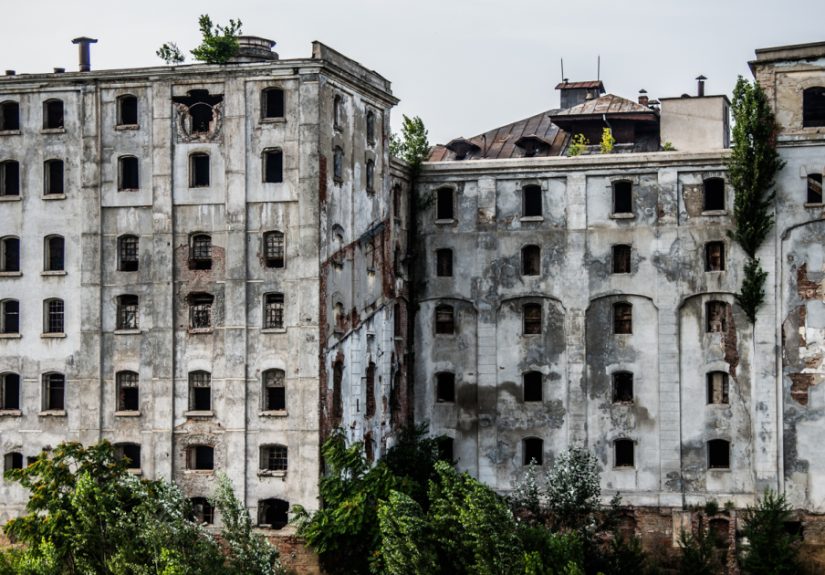
At first glance, the site looks like the sort of place that makes photographers reach for a wide-angle lens and historians reach for smelling salts. Its worn brickwork, huge volumes, and long-silenced brewing spaces feel cinematic. But this isn’t ruin for ruin’s sake. The factory belongs to a larger story about modern Bucharest, Romanian industry, Belle Époque optimism, communist-era takeover, and the stubborn afterlife of industrial heritage. In other words, this place is far more than an abandoned brewery. It is a time capsule with weather damage.
What Is the Bragadiru Beer Factory?
The Bragadiru Beer Factory was one of the most important brewing sites connected to the businessman and industrialist Dumitru Marinescu Bragadiru, a self-made entrepreneur who rose from modest beginnings to become a major figure in Bucharest’s economic life. The brewery took shape in the mid-1890s in what was then a developing edge of the city, near today’s Calea Rahovei and George Coșbuc Boulevard. Over time, the industrial area evolved into a broader architectural and social complex that included production spaces, storage buildings, worker housing, and the famous Bragadiru Palace, also known historically as the Colossus or Colosseum.
That wider complex matters because it reveals how ambitious the original vision really was. This was not just a factory where beer was brewed and shipped out the door. It was an integrated environment designed to support work, leisure, and community life. In the age before corporate campuses had beanbags and kombucha on tap, Bragadiru was already combining industry with culture, performance space, and social gathering areas. Turns out the idea of “work-life balance” existed before PowerPoint.
The Rise of a Bucharest Brewing Landmark
To understand the abandoned Bragadiru Beer Factory, you have to rewind to the late 19th century, when Bucharest was expanding fast and trying on the confidence of a modern European capital. The city was growing economically, architecturally, and culturally. Brewing was part of that transformation. Beer consumption was increasing, industrial production was becoming more sophisticated, and entrepreneurs saw an opportunity to build large-scale enterprises that could compete with established breweries.
Dumitru Marinescu Bragadiru seized that moment. He had already proven himself in the spirits business, and the brewery became one of his most visible achievements. The industrial site developed into an important piece of southern Bucharest’s economic geography. Scholars of Bucharest’s industrial heritage note that the complex was one of the early engines of modern industry in the area and helped anchor a broader industrial belt near what was then the city’s southern edge.
By the early 20th century, the brewery had earned a reputation for scale, equipment, and output. Heritage studies describe it as one of Bucharest’s oldest and most significant breweries, and one that surpassed older rivals in production capacity and technical strength. This was not a side hustle with a few barrels and a hopeful mustache. It was a serious industrial operation built to dominate.
The Palace Next Door Was Part of the Point
One of the most fascinating parts of the Bragadiru story is that the brewery was paired with a cultural and entertainment space. The Bragadiru Palace was designed as a recreation and gathering venue near the factory, following a tradition in which major breweries offered workers and guests a place for performances, social events, and public life. With its ornate details, ballroom, terraces, mirrors, stucco, and theatrical flair, the palace showed that industry and elegance were not mutually exclusive.
That contrast is part of what makes the abandoned factory so compelling today. On one side, you have the romance of a grand palace built for culture. On the other, you have the raw bones of production buildings designed for labor, machinery, heat, and logistics. Together, they form one of the most unusual industrial-architectural ensembles in Bucharest.
Why the Factory Became Abandoned
Like many Eastern European industrial sites, the Bragadiru brewery complex was reshaped by political upheaval. After World War II, Romania’s communist regime nationalized industry in 1948. The Bragadiru name was stripped from the brewery, which was renamed Rahova Brewery after the neighborhood. That change was more than cosmetic. It symbolized the severing of private ownership, entrepreneurial identity, and the original social vision behind the complex.
Under state control, the site continued in altered form, but the meaning of the place changed. What had once represented private initiative, urban ambition, and a certain Belle Époque confidence became another cog in a centrally controlled industrial system. Later, in the post-communist era, many Romanian industrial properties faced ownership complications, underinvestment, neglect, or fragmented redevelopment. The Bragadiru site became one of those haunting examples of what happens when a city knows a place is important but cannot quite decide how to save it.
Today, the abandoned factory survives as a partially ruined landmark. While parts of the wider Bragadiru ensemble have been restored or remain active, the industrial core has long been associated with decay, stalled rehabilitation, and unrealized adaptive reuse plans. That unfinished status is a huge part of the factory’s mystique. It is not gone, not fully saved, and not fully forgotten. It exists in a strange urban limbo, which is catnip for anyone interested in abandoned places, industrial archaeology, or architecture with a pulse you can still feel through the dust.
What Makes the Architecture So Striking?
The abandoned Bragadiru Beer Factory in Bucharest, Romania, is visually powerful because it combines industrial utility with decorative ambition. Heritage researchers describe the complex as a mix of brick and iron construction with columns, arches, pediments, and classicizing details. In plain English, this means the site was built to work hard and look good doing it.
That combination is especially important in the context of 19th-century industrial architecture. Factories from this period often carried civic pride in their design. They were functional, yes, but they also projected status. A major brewery was not just a place of production. It was a public statement about modernity, technology, scale, and urban confidence. The Bragadiru complex still communicates all of that, even in ruin.
The surviving structures suggest a carefully organized site: enclosed grounds, production halls, storage areas, administrative zones, and visual links to the palace and surrounding neighborhood. Even when weathered and overgrown, the buildings preserve a sense of internal logic. You can still read the site like a map of industrial life: where work happened, where goods moved, where workers gathered, where management projected order, and where culture softened the hard edges of production.
Decay Added a Second Layer of Beauty
Ruin is not design, but it does create its own atmosphere. Peeling plaster, fractured glass, rusting metal, and vegetation threading through old masonry have transformed the Bragadiru factory into a place that feels suspended between collapse and resurrection. For photographers and architecture lovers, that tension is magnetic. The site offers the drama of abandonment without losing the dignity of its original design.
That said, beauty should not distract from reality. Abandoned industrial sites can be dangerous, with unstable structures, hidden openings, and deteriorating materials. The Bragadiru factory is compelling as heritage, not as an invitation to act like the lead character in a low-budget urban exploration documentary.
Why the Factory Matters to Bucharest
Bucharest is often described through its contrasts: elegant historic buildings, communist boulevards, neglected lots, booming redevelopment, and neighborhoods where several centuries seem to be arguing on the same block. The Bragadiru site fits that pattern perfectly. It stands at the intersection of old commercial Bucharest, industrial expansion, and later political disruption.
Researchers have argued that the Bragadiru complex has major tourism and cultural potential because of its near-central location and its importance to the history of brewing and industrialization in Bucharest. They have proposed ideas such as a cultural park, event spaces, green interventions, and even a beer museum that could reconnect the site to the city’s history while making it useful again. These ideas are not just romantic. They reflect a wider European understanding that industrial heritage can drive urban regeneration when handled with intelligence and respect.
In other words, the factory matters because it helps answer a bigger question: what should cities do with places that are too meaningful to demolish and too damaged to ignore? Tear them down, and you erase a chapter of urban memory. Freeze them in ruin, and they slowly disappear anyway. Reuse them well, and they become bridges between past and present.
Could the Bragadiru Beer Factory Be Saved?
The short answer is yes, in theory. The more honest answer is yes, but it takes vision, money, legal clarity, patient restoration, and a city willing to think long-term. Academic and architectural proposals focused on the Bragadiru site show that adaptive reuse is not a fantasy. Designers and heritage thinkers have repeatedly pointed to its scale, its location, and the strength of the remaining ensemble as reasons it could support a second life.
The best future for the abandoned Bragadiru Beer Factory would probably mix cultural programming, hospitality, public access, and historical interpretation. A beer museum would be the obvious crowd-pleaser, but the site could also support performance venues, markets, exhibitions, creative offices, workshops, restaurants, and landscaped public space. That kind of mixed-use revival would honor the complex’s original DNA. After all, Bragadiru never intended the site to be purely industrial. From the beginning, it blended production with sociability.
If restored sensitively, the complex could become one of Bucharest’s most memorable heritage destinations. Not because it would be polished into bland perfection, but because its scars are part of the story. The goal should not be to pretend nothing happened. The goal should be to preserve enough of what happened that people can still feel it.
The Experience of Encountering the Abandoned Bragadiru Beer Factory
There is a particular kind of experience that only places like the Bragadiru Beer Factory can offer. It is not quite tourism, not quite nostalgia, and definitely not ordinary sightseeing. It is the feeling of standing near a place that used to matter loudly and now matters quietly. The factory does not perform for visitors in the way a polished museum does. It asks for patience instead. You notice the scale first, then the silence, then the strange intimacy of decay.
Imagine approaching the complex and realizing that this was once a working piece of a confident city. Beer was brewed here. Workers showed up here. Deliveries moved through here. Decisions were made here. Somewhere nearby, the palace hosted social life, performance, and recreation. Then history happened, as it tends to do with all the subtlety of a falling piano. Political change, neglect, fragmented redevelopment, and time transformed a productive industrial landscape into an urban relic.
What makes that experience powerful is the contrast. Bucharest is a city of motion, traffic, apartment blocks, storefronts, noise, and constant reinvention. Yet the abandoned Bragadiru factory feels like a pause button embedded in the neighborhood. The surrounding city kept going. The factory, in many ways, did not. That mismatch creates emotional weight. You are looking at a place that has been left behind but not erased.
For architecture lovers, the experience is about reading layers. You see industrial logic in the layout, decorative ambition in the details, and vulnerability in every sign of deterioration. For photographers, it is all texture and mood: weathered walls, broken symmetry, shafts of light, the geometry of absence. For urban historians, it is evidence that cities do not grow in straight lines. They expand, abandon, rename, repurpose, forget, and occasionally remember. The Bragadiru site captures all of that in one uneasy frame.
There is also something deeply human in the place. Abandoned factories are easy to discuss in abstract terms, but they were built for people: owners, managers, brewers, porters, clerks, musicians, theatergoers, and workers heading home after a long day. A site like this pulls your imagination toward those missing routines. You start wondering what the air smelled like when brewing was active, what the yard sounded like, how the palace looked lit up in its prime, and whether anyone at the time imagined the whole ensemble would one day become an object of fascination rather than commerce.
That is why the Bragadiru Beer Factory leaves such a strong impression. It offers the eerie beauty people expect from abandoned places, but it also offers context. It is not just rubble with vibes. It is a place where ambition, architecture, labor, politics, and memory all collided. Even in decline, it still has presence. And perhaps that is the most unforgettable experience of all: realizing that some buildings continue to speak long after their original purpose has gone quiet.
Final Thoughts
The abandoned Bragadiru Beer Factory in Bucharest, Romania, is one of those rare places that manages to be historically important, visually arresting, and emotionally complex all at once. It tells a story about brewing, but also about power, urban growth, labor, architecture, and what happens when a city’s industrial past no longer fits neatly into its present.
It deserves attention not because ruin is trendy, but because the site represents a substantial chapter of Bucharest’s identity. The factory complex helped shape the area, reflected the ambitions of its founder, survived nationalization under communism, and now stands as a lesson in both neglect and possibility. If Bucharest ever gives the Bragadiru brewery a full second act, the city will not just be restoring old walls. It will be recovering a missing piece of its own story.
Until then, the factory remains one of the most fascinating abandoned industrial sites in Romania: part ghost, part landmark, part warning, and part promise.