Table of Contents >> Show >> Hide
- Why Hospital Cafeterias Matter More Than We Admit
- The Unsung Heroes Behind the Serving Line
- The Evolution of Hospital Food: From Punchline to Purpose
- Nutrition, Wellness, and the New Cafeteria Mission
- Hospital Cafeterias as Community Spaces
- Local Food, Sustainability, and the Bigger Plate
- The 24-Hour Challenge: Feeding People When the Clock Gives Up
- What Makes a Great Hospital Cafeteria?
- The Strange Beauty of Cafeteria Rituals
- Experiences: Why Hospital Cafeterias Stay With Us
- Conclusion: A Toast, in Cafeteria Coffee
Hospital cafeterias do not usually get poetry. They get trays, coffee stains, plastic forks, and the occasional tired joke about mystery meat. Yet anyone who has spent serious time in a hospital knows the truth: the cafeteria is not just a place to eat. It is a tiny republic of soup, silence, comfort, caffeine, and emotional recalibration. It is where nurses refuel between call lights, families breathe between test results, doctors negotiate with vending-machine granola bars, and visitors discover that a warm bowl of chili can feel suspiciously like a hug.
So here is an ode to hospital cafeterias: the fluorescent-lit sanctuaries where the coffee is stronger than the Wi-Fi, the scrambled eggs are surprisingly dependable, and the salad bar has witnessed more whispered prayers than most chapels. In a building devoted to healing, the hospital cafeteria plays a quiet but essential role. It feeds the people who care, the people who wait, and the people who are trying to hold themselves together with a cup of soup and a napkin.
Why Hospital Cafeterias Matter More Than We Admit
The phrase “hospital cafeteria” may not sound glamorous, but its job is enormous. A hospital never really sleeps. Emergency departments run at 2 a.m. Babies arrive before breakfast. Families stay through lunch, dinner, and the strange hour when no meal has a name. Staff members may work 8-, 10-, 12-, or even longer shifts, often with little time to leave campus. In that world, food is not a luxury. It is infrastructure.
A good hospital cafeteria supports three groups at once: healthcare workers, patients’ families, and hospital visitors. It must be fast enough for a nurse with seven minutes to spare, calm enough for a worried spouse, nutritious enough to match a health-centered environment, and affordable enough for people who may already be facing stress, travel costs, parking fees, and medical bills. That is not food service. That is logistical ballet with soup ladles.
A Place Between Crisis and Normal Life
Hospitals are emotionally intense. Upstairs, someone may be receiving chemotherapy, recovering from surgery, or waiting for a diagnosis. Downstairs, someone is deciding between turkey meatloaf and a burrito bowl. The contrast is strange, but it is also necessary. The cafeteria gives people a temporary return to normal life: a checkout line, a beverage fridge, a cashier who says “Have a good one,” even when everyone knows the day may be complicated.
That ordinary rhythm matters. In a hospital, normal things become anchors. Holding a tray, stirring coffee, choosing a muffin, hearing the soft clatter of silverwarethese small rituals remind people that life continues beyond the beep of monitors and the hush of waiting rooms.
The Unsung Heroes Behind the Serving Line
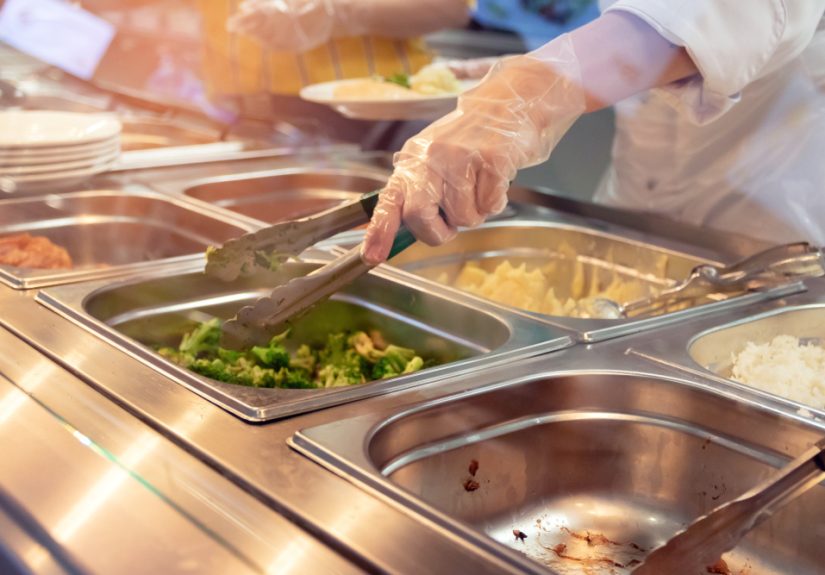
Hospital food service workers deserve their own applause track. They prepare meals, stock stations, sanitize surfaces, manage rushes, answer questions, and often serve people at their most exhausted. Some are helping with patient trays. Some are running retail stations for staff and guests. Some are making sure there is hot coffee before sunrise, which in hospital culture is practically a sacred duty.
Their work requires more than knowing how to scoop mashed potatoes without creating a geological event. Healthcare food service involves food safety, timing, dietary awareness, customer service, and teamwork. In many hospitals, food and nutrition teams also coordinate with registered dietitians, clinical staff, and patient-care systems to ensure meals fit medical needs. The cafeteria side may serve visitors and staff, while patient meal service must often account for allergies, physician-prescribed diets, texture modifications, sodium restrictions, diabetic meal planning, and other clinical considerations.
Kindness Served in Disposable Cups
The best cafeteria workers know something that is not printed in the employee handbook: people in hospitals are not just hungry. They are tired, scared, rushed, relieved, grieving, hopeful, or all of the above before the soup cools. A smile from the cashier or a patient explanation of where to find the napkins can become a small act of mercy. It is not dramatic. It will not trend online. But it matters.
The Evolution of Hospital Food: From Punchline to Purpose
For decades, “hospital food” was shorthand for blandness. The stereotype included gray vegetables, rubbery chicken, and gelatin that seemed to have unresolved emotional issues. But modern hospital cafeterias have changed dramatically. Many now offer grab-and-go salads, grain bowls, soups, sandwiches, plant-forward meals, fresh fruit, smoothies, specialty coffee, mobile ordering, 24-hour markets, and healthier snacks. Some large medical campuses function almost like small cities, with multiple cafés, kiosks, markets, and dining rooms spread across buildings.
This shift is not accidental. Hospitals increasingly recognize that food is part of the patient and employee experience. If a healthcare organization promotes wellness, its food environment should not feel like a loophole. That does not mean every cafeteria must become a luxury bistro with edible flowers and a violinist near the soup station. It means hospitals are working to make healthier, fresher, more convenient options available without forgetting comfort food entirely.
Yes, Comfort Food Still Has a Job
Let us be honest: sometimes the thing a person needs is not a perfectly composed kale salad. Sometimes it is macaroni and cheese. Sometimes it is a grilled cheese sandwich, tomato soup, or a cookie large enough to have its own zip code. In the hospital cafeteria, comfort food has emotional utility. The challenge is balance. The best cafeterias can offer roasted vegetables and chicken noodle soup, fresh fruit and French toast, whole grains and a brownie that looks like it understands your week.
Nutrition, Wellness, and the New Cafeteria Mission
Because hospitals are health-centered institutions, their cafeterias are increasingly expected to model better food choices. Food service guidelines used in healthcare and workplace settings often emphasize access to fruits and vegetables, whole grain-rich products, plant-based proteins, lean proteins, lower-sodium meals, safe food handling, water availability, and behavioral design that makes healthier choices easier. In plain English: put the good stuff where people can see it, price it fairly, prepare it well, and do not hide the fruit behind a fortress of chips.
Behavioral design sounds fancy, but it can be wonderfully practical. Place water at eye level. Put fruit near checkout. Make the vegetable side look like a choice, not a punishment. Use appealing names for plant-forward dishes. Offer smaller portions. Provide nutrition information clearly. These details help visitors and staff make better choices without turning lunch into a lecture from a very stern broccoli.
Healthy Food Must Also Be Food People Want to Eat
A hospital cafeteria cannot succeed by offering “healthy” meals that taste like wet cardboard wearing herbs. Food has to be appealing. Food service directors know the tightrope: healthier options must be financially sustainable, operationally realistic, and attractive to real people who may be tired, stressed, or short on time. That is why modern hospital dining often borrows ideas from restaurants: scratch cooking, seasonal menus, mobile ordering, local ingredients, chef-developed recipes, and better presentation.
Done well, this approach makes the healthy choice feel less like self-discipline and more like lunch. A roasted vegetable grain bowl with a bright sauce, a lentil soup with real depth, or a turkey sandwich on good bread can do more for wellness than a sad salad abandoned under plastic wrap.
Hospital Cafeterias as Community Spaces
The hospital cafeteria is one of the few places where the entire hospital ecosystem overlaps. You may see a surgeon in scrubs, a grandparent holding balloons, a security officer on break, a medical student reviewing notes, a chaplain sipping tea, and a family quietly dividing fries at a corner table. Everyone is there for a different reason, but everyone is temporarily equal before the beverage cooler.
This shared space creates a rare kind of community. It is not loud or festive. It is more like a waiting-room campfire. People gather, recover, update relatives, charge phones, and decide what comes next. A cafeteria table can become a family command center. A booth can become a private office. A quiet corner can become the only place someone cries that day without being interrupted.
The Architecture of a Deep Breath
Design matters. Natural light, comfortable seating, clear signage, accessible layouts, and calmer acoustics can make a cafeteria feel less institutional. Even small details help: a visible coffee station, clean tables, outlets for phone chargers, a microwave, a water dispenser, and enough seating that people do not have to hover like anxious pigeons. In a hospital, convenience is compassion.
Local Food, Sustainability, and the Bigger Plate
Hospital cafeterias also have influence beyond the serving line. Large healthcare systems purchase significant amounts of food, and that buying power can support local farms, sustainable sourcing, waste reduction, and plant-forward menus. Some hospitals participate in programs designed to reduce food-related greenhouse gas emissions, increase local purchasing, or promote resilient regional food systems.
This is where the humble cafeteria becomes part of a bigger conversation. A bean chili, a seasonal apple, a locally sourced salad green, or a plant-forward entrée may look like lunch, but it can also represent institutional values. Hospitals can help normalize food that is both nourishing and environmentally responsible. They can demonstrate that sustainability is not an abstract poster in a hallway; it can be ladled into a bowl.
Food Waste Is a Healthcare Issue Too
Hospital food service must manage unpredictable demand. Cafeterias do not always know how many visitors will arrive, how many staff will be pulled into emergencies, or how many people will want the special. Better forecasting, reusable serviceware, composting, donation partnerships where allowed, and smarter portioning can reduce waste. When a hospital improves food operations, it can save money, reduce environmental impact, and still keep the mashed potatoes from disappearing at noon. That is the kind of miracle administrators appreciate.
The 24-Hour Challenge: Feeding People When the Clock Gives Up
One of the hardest parts of hospital dining is time. Not everyone eats between 11:30 a.m. and 1:30 p.m. Night-shift nurses, residents, respiratory therapists, security staff, emergency physicians, and families in crisis often need real food outside traditional hours. Vending machines help, but there are only so many peanut butter crackers a human can call dinner before morale files a complaint.
That is why some campuses offer 24-hour markets, self-service kiosks, grab-and-go refrigerators, late-night cafés, or newer automated dining concepts. The goal is simple: people caring for patients at night deserve more than leftovers and caffeine. Around-the-clock access to decent food supports staff well-being and helps visitors who cannot simply step away from a bedside.
Technology Enters the Cafeteria
Mobile ordering, digital menus, self-checkout, nutrition labeling, and even robotic kitchen concepts are changing healthcare dining. These tools can reduce lines, speed up service, and help staff get back to patients faster. But technology should serve the human purpose, not replace it entirely. A hospital cafeteria still needs warmth. Nobody wants a robot to be the only entity available when you are emotionally defeated and trying to locate a spoon.
What Makes a Great Hospital Cafeteria?
A great hospital cafeteria does not have to be fancy. It has to be thoughtful. The best ones tend to share a few qualities:
1. Clear Choices
People should be able to understand what is available quickly. Hot entrées, soups, salads, sandwiches, snacks, beverages, vegetarian options, allergy information, and prices should be easy to find. Confusion is not a seasoning.
2. Real Convenience
Hospitals are time-sensitive environments. Grab-and-go meals, mobile ordering, fast checkout, extended hours, and clearly marked seating can make a big difference for staff and families.
3. Food That Respects Stress
Hospital visitors may not be in the mood for culinary adventure. A good cafeteria offers both familiar comfort and nourishing options. It says, “Here is soup,” not “Please solve a lifestyle puzzle before lunch.”
4. Affordability
Medical visits can be expensive and emotionally draining. Cafeterias that provide reasonably priced meals serve a real community need. A $4 cup of fruit and an $8 hot meal can feel like kindness when someone has been at the hospital all day.
5. Dignity
Above all, a hospital cafeteria should make people feel cared for. Clean tables, respectful service, accessible design, culturally inclusive options, and nutritious meals all communicate dignity. Food is never just food in a hospital. It is part of how the building speaks.
The Strange Beauty of Cafeteria Rituals
Every hospital cafeteria has rituals. The morning coffee line, where staff members stand in badges and silence, united by the sacred need for caffeine. The lunch rush, when trays move like traffic and someone inevitably debates soup versus fries as though choosing a college major. The afternoon lull, when a family sits with untouched sandwiches, waiting for a surgeon to come downstairs. The night-shift snack run, when the lights feel softer and the world outside seems far away.
These rituals create memory. People remember where they ate after a loved one’s surgery. They remember the cafeteria cookie they bought because they had not eaten all day. They remember the nurse who recommended the chili. They remember the cashier who recognized them after a long week and asked, gently, “How’s your mom doing?”
Experiences: Why Hospital Cafeterias Stay With Us
My favorite thing about hospital cafeterias is that they are emotionally honest places. Nobody is there to impress anyone. The doctor eating scrambled eggs from a paper plate is not performing glamour. The father staring into a cup of coffee is not curating a lifestyle brand. The medical student with a backpack, a banana, and the facial expression of a person who has seen too many acronyms is not pretending life is easy. Everyone is simply trying to keep going.
There is a particular kind of humility in eating at a hospital cafeteria. You learn that appetite is connected to hope. On hard days, even choosing lunch can feel like a decision made by a committee of exhausted brain cells. Soup becomes useful because it requires no strategy. Toast is comforting because it does not ask follow-up questions. Coffee becomes less a beverage and more a tiny, legal form of courage.
I have seen families transform cafeteria tables into planning stations. One person watches the phone. One person updates relatives. Someone opens a plastic container of fruit and insists everyone eat “just a little.” A teenager picks at fries while pretending not to be worried. A grandmother wraps half a muffin in a napkin for later because grandmothers are the original meal-prep influencers. These scenes are ordinary, but they are also profound. The cafeteria becomes the place where people organize love into practical tasks.
Healthcare workers have their own cafeteria choreography. They scan the room quickly, choose efficiently, and sit with the posture of people borrowing time. Their conversations can move from lab results to weekend plans to whether the lentil soup is trustworthy. They laugh when they can. They eat fast when they must. Sometimes they sit alone, not because they are lonely, but because silence is the only available dessert. The cafeteria gives them a pause, however brief, and that pause matters.
Then there are the small sensory memories. The smell of coffee at 6 a.m. The metallic slide of a tray rail. The soft hiss of the soda fountain. The rotating soup labels. The refrigerated glow of bottled drinks. The reliable absurdity of a banana priced like it has completed graduate school. The way a warm meal can make a terrible day feel slightly more survivable. These details linger because hospitals heighten attention. When life feels fragile, even a decent grilled cheese becomes memorable.
Hospital cafeterias are not perfect. Some close too early. Some overcook vegetables. Some still believe a wrap should be 80 percent tortilla. But at their best, they offer something rare: public nourishment in a private crisis. They feed people who are waiting, working, healing, grieving, hoping, and enduring. They are not the main story of the hospital, but they are part of the story’s support system. And for that, they deserve more than jokes. They deserve gratitude, better signage, and maybe a standing ovation near the soup station.
Conclusion: A Toast, in Cafeteria Coffee
So let us raise a paper cup to hospital cafeterias. To the workers who brew coffee before dawn. To the cooks who keep the soup hot. To the cashiers who offer kindness in thirty-second increments. To the dietitians, directors, dishwashers, stockers, and servers who make nourishment possible inside buildings where time, health, and hope are constantly being negotiated.
An ode to hospital cafeterias is really an ode to care in its most practical form. Not every act of healing happens in an operating room. Some happen over oatmeal, chicken noodle soup, a salad bowl, a late-night sandwich, or a cookie eaten quietly after a long day. The hospital cafeteria reminds us that people cannot face hard things on empty stomachs. Sometimes, the first step toward feeling human again is simply finding a tray, choosing something warm, and sitting down.