Table of Contents >> Show >> Hide
Some kitchen tools are appliances. Some are accessories. And some swagger into the room like they know they are the main character. Benjamin Edmonds’s Blok Knives belong firmly in that third category. They are not the sort of blades you buy because yours mysteriously vanished into the utensil drawer under six rubber bands, a corkscrew, and a packet of soy sauce. They are knives made with intention, built around craft, and designed to feel like objects worth keeping for the long haul.
At the center of the story is Benjamin Edmonds, the founder of Blok, a maker whose path into knives did not begin in some ancient forge with sparks flying in cinematic slow motion. Instead, it began in a far more modern way: curiosity, a screen, and the kind of creative rabbit hole that turns a casual hobby into a full-blown obsession. That unlikely origin story matters, because it helps explain why Blok Knives feel different. They do not read like inherited tradition performed for the camera. They read like a designer’s answer to a practical problem: what if a kitchen knife could be both seriously useful and undeniably beautiful without becoming fussy, precious, or fake-deep?
From Side Project to Signature Brand
Benjamin Edmonds has often been associated with a self-taught, build-it-better mentality. Early coverage of Blok emphasized that he came to knife-making after discovering videos about the craft, and that what started as experimentation quickly became a business with real demand. That detail is more than charming backstory. It gives the brand its DNA. Blok was never just about selling steel with a cool logo stamped on it. It was about making knives that felt personal, functional, and quietly distinctive.
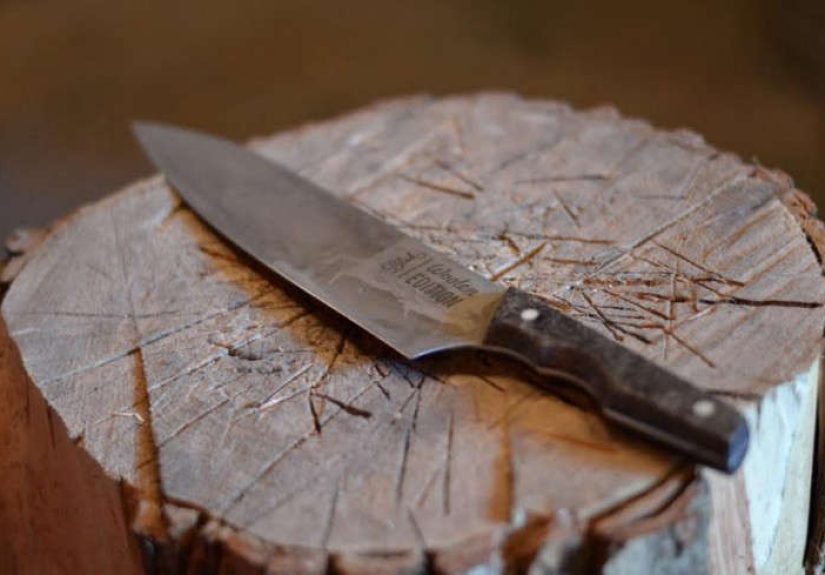
In the brand’s earlier years, Blok’s range was lean and focused: a chef’s knife, a paring knife, and later a limited-edition variation that showed Edmonds was willing to experiment with materials and aesthetics. That early edit made sense. A young maker does not need a bloated catalog; he needs a point of view. Edmonds’s point of view was clear from the start: stripped-back forms, practical geometry, honest materials, and a workshop identity that felt grounded rather than glossy.
As the business matured, Blok grew beyond a tiny bench-made operation into a broader creative company that now includes handmade knives, custom fabrication, outdoor cooking products, and event experiences. But the knives remain the emotional center of the brand. They are the product that tells the story best. They are where Edmonds’s design instincts, maker discipline, and culinary ambition all meet in one sharp piece of steel.
What Makes Blok Knives Stand Out?
A Shape That Feels Deliberate
One of the most striking things about Blok Knives is the silhouette. These knives do not hide in the visual language of anonymous Western chef’s knives, nor do they cosplay as delicate Japanese museum pieces. They occupy an interesting middle ground. The profiles feel bold, clean, and slightly architectural. There is a sturdy confidence to them. They look like knives designed by someone who appreciates negative space, proportion, and the emotional power of a simple line.
That matters more than it sounds. A chef’s knife lives out in the open. It gets picked up multiple times a day. It becomes part of the rhythm of cooking. A good-looking knife is not automatically a good knife, of course. A gold-plated disaster is still a disaster. But when form and function align, the result is compelling. Blok’s visual identity suggests toughness without brutishness, refinement without fragility, and craftsmanship without theatrical flourishes.
Carbon Steel’s Charm and Its Little Bit of Drama
Much of Blok’s appeal comes from its use of carbon steel in many handmade models. In the knife world, carbon steel has a bit of rock-star energy. Food writers, gear editors, and serious cooks keep coming back to it because it can take a razor-sharp edge, hold that edge well, and develop character over time. It is beloved for performance, but it is not maintenance-free. Carbon steel will react. It will patina. If neglected, it can rust. In other words, it behaves less like a disposable product and more like a tool that expects a relationship.
That relationship is a feature for some people and an annoyance for others. Blok seems to understand both sides of that equation. The brand has leaned into the performance and personality of carbon steel while also offering stainless and high-carbon stainless options for cooks who want the shape and spirit of a Blok knife with less upkeep. That is smart. It expands the audience without flattening the brand’s identity.
In practical terms, the steel choice changes the ownership experience. A carbon steel Blok knife rewards good habits. Wash it. Dry it. Store it properly. Do not treat it like a diner fork and then act shocked when it complains. The payoff is a blade that feels alive in the hand and gradually records its history through use. For cooks who love tools with a story, that is catnip.
Handles With Personality
Blok has also used handle materials and finishes in a way that keeps the knives from feeling generic. Wood remains central to the brand’s visual language, and limited or special versions have pushed farther into hybrid materials and unusual textures. One memorable direction involved wool composite handles, a move that instantly separated Blok from the endless sea of “artisan” knives that all start to look like cousins at a family reunion.
The handle matters because it is where the knife stops being an object you admire and becomes an object you either love or avoid. Comfort, balance, grip, contour, and visual warmth all show up here. In a market flooded with blades that promise “precision” as if they are all training for the Olympics, the handle is where honesty lives. A knife can be sharp and still feel wrong. Blok’s design reputation rests in part on the effort to make the knife feel considered from tip to tang.
Why Cooks and Design People Keep Noticing Them
Benjamin Edmonds’s Blok Knives occupy an appealing intersection between culinary utility and design culture. That is a rare lane, but a valuable one. American design outlets have noticed the brand because the knives photograph beautifully and have a clear maker story. Food media has noticed them because sharpness, balance, edge retention, and material quality still rule the kitchen more than marketing ever will. And cooks notice them because even people who claim not to care about aesthetics somehow become poets when they find a knife that feels right.
There is also the increasingly important idea of “buy less, buy better.” Premium knives are not impulse purchases for most people, and they should not be. But when a blade becomes a daily tool for years, maybe decades, the conversation changes. Suddenly, value is not just about price. It is about longevity, sharpenability, repairability, and the weirdly satisfying feeling that your kitchen contains at least one object that was not born in a giant warehouse under fluorescent lights.
That is where Blok has managed to stay interesting. The brand does not merely sell sharp objects. It sells a slower way of thinking about ownership. A Blok knife is meant to be used, cared for, and kept. It has enough personality to feel special, but not so much that you are afraid to chop an onion with it. That balance is harder to achieve than it looks.
Not Just Knives: The Evolution of Blok
Another reason Benjamin Edmonds’s Blok Knives remain relevant is that the company did not freeze itself in amber as a tiny romantic workshop. Blok expanded into custom builds, broader metal fabrication, table grills, and culinary events. On paper, that might sound like brand sprawl. In practice, it feels coherent. The connecting thread is craftsmanship around cooking, gathering, and fire.
This broader ecosystem actually strengthens the knife story. It tells you Blok is not pretending to understand food culture from a distance. The brand has increasingly positioned itself inside that world, collaborating with chefs, building products for cooking spaces, and creating experiences that revolve around food and making. A knife brand can talk all day about “community,” but when it builds a real place for people to cook, eat, and connect, the word starts sounding less like brochure copy and more like evidence.
There is also a practical evolution visible in the product lineup. Handmade flagship knives carry the artisanal identity, while more accessible lines broaden appeal. That sort of tiering can go terribly wrong when a brand cheapens its soul. But when it is handled carefully, it gives more users access to the signature design language while keeping the higher-end handmade work aspirational.
So, Are Blok Knives Actually Good?
The fair answer is that “good” depends on what you expect from a knife. If you want a zero-maintenance, dishwasher-tolerant, emotionally unavailable blade that asks nothing of you and reveals nothing over time, there are easier choices. Plenty of them. They are waiting patiently in big-box stores, probably next to the air fryers.
If, however, you care about balance, material character, visual restraint, and the pleasure of using a tool that feels intentional, Blok makes a much stronger case. The brand’s appeal lies in the combination of performance and presence. A Blok knife is not trying to be all things to all people. It is trying to be the knife for someone who sees cooking as both craft and daily ritual.
That is why the brand has earned attention from chefs, home cooks, and design-minded shoppers alike. Benjamin Edmonds did not build a knife company by chasing the cheapest route to scale. He built one by turning a fascination with making into a brand language that feels specific and lived-in. In a crowded knife market, that counts for a lot.
Conclusion
Benjamin Edmonds’s Blok Knives are compelling not because they reinvent the idea of a kitchen knife, but because they refine it with unusual clarity. They bring together strong blade geometry, material honesty, and a visual identity that feels grounded rather than flashy. They are tools, yes, but they also carry the kind of emotional charge that only well-made objects tend to earn over time.
For some buyers, the appeal will be the performance of carbon steel. For others, it will be the handmade character, the custom options, or the sense that the knife was made by a real workshop with a recognizable point of view. And for a surprising number of people, it will be all of the above plus one extra, slightly irrational reason: these knives simply have presence. They make a countertop look better, prep work feel better, and the whole business of cooking seem a little less routine.
In a world where many products are designed to be replaced before you have even learned their quirks, that is no small thing. Benjamin Edmonds’s Blok Knives remind us that the best kitchen tools do not just cut well. They give you a reason to care.
Extended Experience: Living With the Idea of a Blok Knife
To understand the appeal of Benjamin Edmonds’s Blok Knives, it helps to think beyond specifications and into the everyday experience of ownership. Not fantasy ownership, where a knife sits untouched in perfect natural light beside a linen apron and a bowl of lemons. Real ownership. Tuesday-night ownership. Onion-and-garlic ownership. “I have ten minutes before dinner turns into cereal” ownership.
That is where a knife like this either proves itself or gets exposed as expensive countertop jewelry. The experience a Blok knife seems built for is one where the tool becomes part of your rhythm. You reach for it without thinking. You learn the weight. You know where the edge lands on a tomato, how the heel behaves on a carrot, how the blade sounds against a wooden board. Those tiny repetitions build familiarity, and familiarity is what turns a nice object into a trusted one.
There is also a tactile pleasure to a knife that feels handmade or at least hand-finished in spirit. The handle has warmth. The blade has visual depth. The whole thing resists the sterile feeling of mass-produced sameness. That does not mean every mark is charming and every maintenance chore becomes a candlelit ritual. Sometimes caring for carbon steel means exactly what it sounds like: wiping it down before you wander off to answer a text. Glamorous? No. Worth it for the right user? Absolutely.
A Blok knife also seems to fit the emotional category of objects that improve a room just by being there. Put one on a magnetic rack and it reads less like clutter and more like a quiet declaration that someone in this kitchen actually cooks. Not in a competitive, knife-guy, “behold my edge geometry” way. In a calmer way. In a “this is a tool chosen with thought” way.
Then there is the gifting angle, which should not be underestimated. A knife from a maker-led brand carries a different emotional weight than an anonymous box-store set. It feels chosen. It suggests taste, but also usefulness. It says, “I did not get you a novelty cutting board shaped like a guitar. I respect you.” That alone gives it power.
Of course, not every cook wants this kind of relationship with a blade. Some people want stainless steel, easy care, and zero drama. Fair enough. Kitchen personalities vary. But for the person who likes objects with character, who enjoys a little ritual, and who believes the best tools should age with them instead of against them, the Blok proposition becomes much more interesting.
That may be the best way to describe the experience surrounding Benjamin Edmonds’s Blok Knives: they make cooking feel slightly more intentional. Not slower in a precious way. Not more complicated. Just more connected. The prep feels better. The tool feels earned. And somewhere between slicing herbs, breaking down produce, and wiping the blade dry at the end, you realize the knife has done something most products never manage. It has become part of how you live, not just part of what you own.