Table of Contents >> Show >> Hide
- Why the Kidsonroof Playhouse Still Feels Modern
- Open-Ended Play: The Real Luxury Feature
- Sustainability: Cardboard With a Conscience
- How to Style a Kidsonroof Playhouse in a Children's Room
- Smart Storage Around the Playhouse
- Safety and Practical Considerations
- Why Parents Love It: Design Without Overcommitment
- Experience Notes: Living With a Kidsonroof-Style Cardboard Playhouse
- Conclusion
Some children’s-room ideas arrive wearing a cape. Others arrive as a cardboard house and quietly win the entire afternoon. The Playhouse by Kidsonroof NL belongs to the second group: simple, recyclable, imaginative, and somehow more exciting than half the battery-powered toys that require an engineering degree and six tiny screwdrivers.
Created by Kidsonroof, the Dutch family design brand that later became closely associated with Studio ROOF, this cardboard playhouse is a beautiful reminder that children do not always need more features. They need room. Room to invent a grocery store, a spaceship, a reading den, a bear cave, a lemonade stand, or a suspiciously exclusive clubhouse where parents are allowed entry only if they bring snacks.
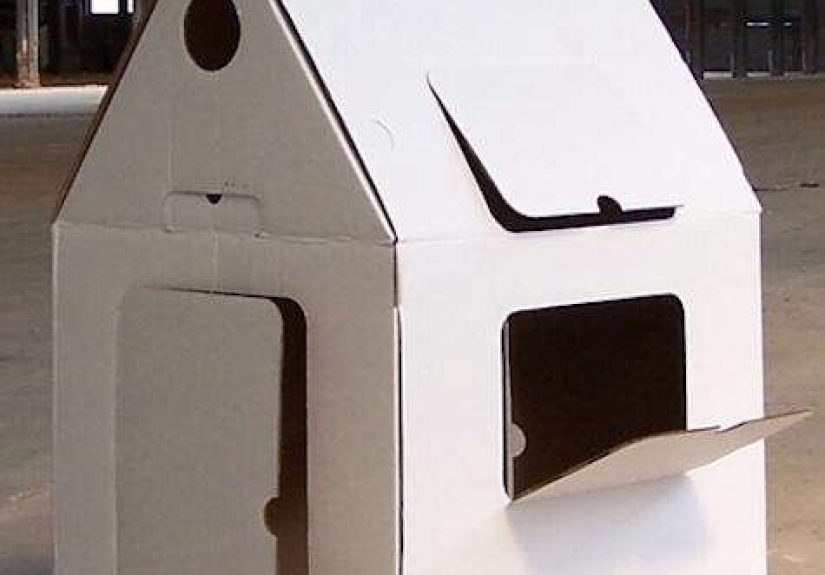
The original Kidsonroof HOUSE playhouse was known for its recycled cardboard construction, clean architectural shape, and blank surface ready for markers, crayons, stickers, paint, and big creative opinions from very small people. A historical Remodelista listing described it as measuring approximately 27.5 by 34 by 47 inches, with a publication-time price of $65. Availability and pricing may vary today, but the idea behind it still feels fresh: a children’s room can be playful, sustainable, stylish, and wonderfully low-tech.
Why the Kidsonroof Playhouse Still Feels Modern
The design world loves to rediscover things parents already know. A cardboard box is not “just” a cardboard box. It is a castle, rocket, restaurant, tunnel, puppet theater, and emergency hiding spot from bath time. Kidsonroof’s genius was turning that universal childhood truth into a refined object for modern children’s rooms.
Unlike bulky plastic play structures, the Kidsonroof playhouse leans into lightness. It is easy to imagine it in a small apartment, a shared bedroom, a nursery corner, or a playroom where every square foot is already doing unpaid overtime. Its neutral cardboard surface works with Scandinavian interiors, colorful family homes, Montessori-inspired spaces, and even those carefully styled rooms where the stuffed animals appear to have better posture than adults.
A Toy That Becomes Part of the Room
One of the strongest design arguments for a cardboard playhouse is that it does not fight the room. It can sit beside a low bookshelf, near a reading rug, or under string lights without making the space feel like an indoor amusement park. The Kidsonroof playhouse functions as both a toy and a soft architectural feature. It creates a child-sized zone inside an adult-sized world.
That matters because children love defined spaces. A little house gives them a boundary. Inside, they can whisper, negotiate, arrange dolls, line up toy dinosaurs, or hold serious meetings about whether the teddy bear is allowed to drive. From a design perspective, it adds vertical interest. From a child’s perspective, it adds magic.
Open-Ended Play: The Real Luxury Feature
The best children’s toys do not tell kids exactly what to do. They offer a starting point and then politely get out of the way. The Kidsonroof Playhouse is a classic example of an open-ended toy. It has no single correct use, no fixed storyline, and no applause button that sings the same tune until a parent begins questioning all life choices.
Child-development experts consistently emphasize that play supports language, problem-solving, social skills, physical confidence, and emotional growth. A cardboard playhouse supports all of that in a beautifully ordinary way. One child might decorate it quietly for an hour. Two siblings might turn it into a bakery and argue over who gets to be the cashier. A preschooler might use it as a cozy retreat after a busy day. None of those uses is “wrong,” which is exactly the point.
Imagination Loves a Blank Surface
The plain cardboard exterior is not a limitation; it is the main event. A plastic castle is always a castle. A cardboard house can become anything by lunchtime. Children can draw windows, add flowers, tape paper curtains, write a pretend address, or create a mailbox for notes from stuffed-animal neighbors.
Parents who want a polished look can keep the design minimal: white chalk marker outlines, simple stars, black roof shingles, or name lettering above the door. Families who prefer joyful chaos can hand over washable markers and accept that the house may soon feature purple rainbows, potato-shaped cats, and one mysterious creature named “Bloop.” That is not a design failure. That is childhood signing its name.
Sustainability: Cardboard With a Conscience
Eco-friendly children’s products have become more important to many families, and Kidsonroof was early to that conversation. The brand’s design philosophy connected creativity, play, and sustainability. Studio ROOF, its later design evolution, continues to highlight recycled cardboard, vegetable-based inks, and recyclable materials in its product approach.
A recycled cardboard playhouse is not perfect simply because it is cardboard, of course. Parents still need to think about durability, responsible disposal, and whether the product fits their household. But compared with oversized plastic toys that may be difficult to repair, store, or recycle, a cardboard playhouse offers a lighter environmental footprint and a shorter path back into the recycling stream when its heroic service is complete.
Teaching Sustainability Without a Lecture
Children learn from what surrounds them. A playhouse made from recycled cardboard quietly teaches that materials can have a second life. It also invites repair and reuse. A bent flap can be taped. A scribbled wall can become a mural. A worn doorway can become “vintage.” Adults call this patina. Children call it Tuesday.
The experience can become a simple family lesson: “We use it, care for it, repair it, and recycle it when we are finished.” That message is easier to absorb when it is attached to something fun rather than delivered as a long speech while a child is trying to locate a missing red marker.
How to Style a Kidsonroof Playhouse in a Children’s Room
The easiest way to style the Playhouse by Kidsonroof NL is to treat it like a small room within the room. Give it a purpose, a soft landing zone, and enough breathing space that children can move around it comfortably.
Create a Cozy Reading Nook
Place the playhouse on a washable rug with a small basket of board books, picture books, or early readers nearby. Add a cushion or child-sized floor pillow if the interior allows. Suddenly, the playhouse becomes a reading hut. This setup works especially well for kids who enjoy privacy but still want to be close to the family action.
Turn It Into an Art Studio
Because the surface is designed for decoration, the playhouse naturally invites art. Keep washable markers, stickers, paper shapes, and removable tape in a small caddy. Set a few rules before creativity begins: markers stay on the house and paper, not on the dog, the wall, or a younger sibling’s forehead. Then let children personalize their space.
Use It as a Pretend-Play Station
Add a toy phone, play food, a small cash register, fabric scraps, or a basket of costumes. With almost no effort, the cardboard house can become a shop, vet clinic, school, restaurant, post office, or weather station. Children love places where they can practice adult roles in low-stakes ways. Nobody complains if the pretend restaurant serves wooden carrots with a side of socks.
Smart Storage Around the Playhouse
A children’s playhouse should not become a cardboard island surrounded by toy lava. The secret is to place storage close enough that cleanup feels possible. Low shelves, labeled bins, rolling baskets, and fabric cubes all work well around a playhouse zone.
Try storing only a small number of toys near the structure. Too many choices can overwhelm children and make cleanup feel impossible. A rotating selection works better: books this week, play kitchen items next week, animal figures after that. The playhouse stays interesting without swallowing the entire room.
The “Play Pocket” Approach
Modern parenting and organizing experts often talk about small, intentional play areas instead of one giant toy explosion. A cardboard playhouse is perfect for this idea. It can become a focused play pocket in a bedroom, living room corner, or multipurpose family space. The goal is not to create a showroom. The goal is to make independent play easier and tidying less dramatic.
Safety and Practical Considerations
Even the most charming children’s room idea needs common sense. A cardboard playhouse should be assembled securely according to its instructions, placed away from heaters or open flames, and used under age-appropriate supervision. If younger children are involved, parents should check for loose pieces, damaged edges, or small accessories that could become choking hazards.
Cardboard is sturdy for pretend play, but it is not a climbing structure. Children may disagree with this statement. Children also believe couch cushions are mountains and laundry baskets are boats. Adults must be the boring but useful safety department.
Where Not to Put It
Avoid damp basements, high-traffic doorways, crowded hallways, or spots where the playhouse blocks ventilation or emergency access. Keep it away from food messes unless you enjoy ants with strong opinions. If the room is small, position the doorway so children can enter and exit easily without bumping into furniture.
Why Parents Love It: Design Without Overcommitment
Children’s interests change at comic speed. One month it is dinosaurs. The next month it is ballet. Then dinosaurs doing ballet. A cardboard playhouse gives parents a flexible centerpiece that can change with the child without requiring a full room makeover.
Compared with themed furniture, permanent murals, or expensive built-ins, the Kidsonroof playhouse is low commitment. It can be decorated, moved, repaired, retired, or recycled. That flexibility is one reason it continues to appeal to design-conscious parents who want children’s rooms to feel playful but not chaotic.
Small-Space Friendly
For apartments and compact homes, the appeal is even stronger. A cardboard playhouse offers the emotional impact of a dedicated playroom without requiring a dedicated playroom. It creates a destination inside a bedroom or living space, which can help children settle into independent play while adults do glamorous adult things like answer email, fold towels, or reheat coffee for the fourth time.
Experience Notes: Living With a Kidsonroof-Style Cardboard Playhouse
The first thing parents usually notice about a cardboard playhouse is not the design. It is the silence. Not suspicious silence, necessarily, although parents should always investigate silence lasting longer than three minutes. It is the good kind: the quiet focus of a child who has discovered a space that belongs to them.
In daily use, a Kidsonroof-style playhouse tends to evolve. On day one, it may be a clean architectural object. By day two, it has a name. By day three, there may be a sign on the door reading “No grown-ups,” which is adorable until you remember you pay the rent. The roof might gain stripes. The walls might fill with drawings. A window might become a ticket booth. A cardboard flap might become a mailbox for notes, drawings, and the occasional cracker.
The best experience comes when adults resist the urge to over-style it. Yes, a perfectly neutral cardboard house looks beautiful in photos. But the real value appears when children take ownership. Let them decide whether it is a cottage, spaceship, hotel, library, or dragon hospital. Ask open questions: “Who lives here?” “What happens inside?” “Does this house need a garden?” Then step back. Children often build more complex stories when adults stop directing and start listening.
Another practical experience: it works well as a transition tool. A child who struggles to move from screen time to quiet time may accept “go check on your house” more easily than “please go play independently.” The structure gives them somewhere to begin. It also works as a decompression corner after preschool, daycare, or a noisy family outing. A few books, a soft toy, and a small flashlight can transform it into a calm retreat.
For siblings, the playhouse becomes a social laboratory. There will be negotiations. There may be zoning disputes. Someone will claim to be the mayor. This is not a problem; it is part of cooperative play. Parents can support the process by adding simple rules: no pushing, no blocking the doorway, and everyone gets a turn choosing what the house becomes.
Maintenance is refreshingly simple. Keep it dry, patch small tears with paper tape, and rotate the supplies around it. If the artwork becomes too intense for the room, reframe it as a gallery wall in progress. If the playhouse eventually collapses from honest use, that is not failure. That is a toy that did its job. Recycle what can be recycled, save a decorated panel if it feels sentimental, and let the child help say goodbye. In a world full of toys that beep, flash, and demand batteries, a cardboard playhouse offers a rare experience: slow play, creative control, and a little house with a very big imagination.
Conclusion
The Children’s Rooms: Playhouse by Kidsonroof NL idea remains appealing because it understands children better than many complicated toys do. It gives them a structure, not a script. It offers a house, not a homework assignment. Made from recycled cardboard and designed for decoration, the Kidsonroof playhouse fits beautifully into modern children’s rooms, especially those built around sustainable materials, imaginative play, flexible design, and low-clutter living.
For parents, it is stylish without being precious. For children, it is a doorway into endless pretend worlds. That combination is rare. The best part? When a child crawls inside and announces that the cardboard house is now a bakery for unicorns, the design has officially succeeded.