Table of Contents >> Show >> Hide
- Why Build a Greenhouse Out of Vintage Windows?
- Before You Build: Safety, Rules, and Reality Checks
- Choosing the Best Location for a Vintage Window Greenhouse
- Planning the Design: Start With the Windows, Not the Lumber
- Tools and Materials You May Need
- Step-by-Step: How to Build a Greenhouse From Old Windows
- Ventilation: The Secret to Keeping Plants Alive
- Temperature, Water, and Plant Care Inside a Window Greenhouse
- Smart Interior Layout Ideas
- Common Mistakes to Avoid
- Budgeting for a Vintage Window Greenhouse
- Design Ideas for Extra Charm
- Extra Experience: Lessons From Building and Using a Vintage Window Greenhouse
- Conclusion
There are two kinds of gardeners: the ones who buy a shiny greenhouse kit in a box, and the ones who look at a pile of old windows and say, “That’s not junk. That’s a tomato mansion.” If you belong to the second group, congratulations. You are about to enter the charming, slightly dusty, highly rewarding world of building a greenhouse made out of vintage windows.
A vintage window greenhouse is part garden structure, part recycling project, and part backyard sculpture. It can help extend the growing season, protect seedlings from spring mood swings, and give your garden the kind of cottage charm that makes neighbors slow down during walks. The best part? No two old-window greenhouses look exactly alike. Your greenhouse may be neat and symmetrical, or it may have the lovable personality of a storybook shed that had one too many cups of coffee.
Still, this is not a project where you simply nail windows together and hope basil forgives you. A successful DIY greenhouse needs a solid foundation, smart ventilation, safe materials, good drainage, and a layout that makes sense for real gardening. Vintage windows bring beauty, but they also bring quirks: odd sizes, peeling paint, fragile glass, and frames that may have survived three kitchen remodels and one very dramatic garage sale.
This guide walks through how to build a greenhouse from old windows, what to check before you start, how to plan the structure, and how to avoid the classic mistakes that turn a dream greenhouse into a sauna with a door.
Why Build a Greenhouse Out of Vintage Windows?
A greenhouse made from old windows offers more than good looks. It gives discarded materials a second life, reduces the need for new glazing, and creates a protected space for seed starting, potting, overwintering tender plants, and experimenting with vegetables that prefer a little pampering.
Unlike a plastic-covered hoop house, a vintage window greenhouse has architectural character. Wavy glass, divided panes, chippy frames, and mismatched sash windows create a handmade feel that a store-bought kit rarely delivers. It can look like it has always belonged in the garden, even if yesterday it was leaning behind someone’s shed next to a suspicious lawn flamingo.
Functionally, the glass lets sunlight enter and helps trap warmth. That warmth is useful in early spring and fall, when seedlings and cool-season crops need protection from cold nights. But the same solar gain can become intense on sunny days, which is why ventilation is not optional. A greenhouse without airflow can overheat quickly, even when outdoor temperatures feel mild.
Before You Build: Safety, Rules, and Reality Checks
Check for lead paint
Many vintage windows came from older homes, and older painted wood may contain lead-based paint. In the United States, lead paint is especially associated with homes built before 1978. If the paint is peeling, chalking, cracking, or flaking, treat it as a potential hazard. Do not sand or scrape old painted windows casually in your driveway while telling yourself, “It’s probably fine.” That is how DIY confidence becomes a dust problem.
Use a lead test kit, contact a certified professional for questionable materials, and follow lead-safe practices if the windows need repair. If you cannot safely stabilize the paint, skip those windows. A greenhouse should grow herbs, not anxiety.
Inspect the glass and frames
Look for cracked panes, loose glazing putty, rot, insect damage, and warped frames. A little cosmetic wear is charming. A window that wiggles like a loose tooth is not charming; it is a future cleanup session. Replace broken glass before installation, reglaze loose panes, and reject frames that cannot hold screws securely.
Check local building rules
Depending on your city, county, homeowners association, or property size, a greenhouse may require setbacks, permits, anchoring, or height limits. Small detached garden structures often have simpler rules, but “small” means different things in different places. Before buying lumber, check local requirements. It is much easier to move a sketch on paper than a half-built glass cottage.
Choosing the Best Location for a Vintage Window Greenhouse
Sunlight is the main event. A greenhouse should receive strong light, especially in the morning and during the cooler months. Choose a spot that is not heavily shaded by buildings, fences, evergreen trees, or large shrubs. Morning sun is particularly helpful because it warms the structure early and helps dry condensation from leaves and surfaces.
The site should also be level or easy to level. A sloped site can work, but it complicates framing, drainage, and door alignment. If your door swings like a haunted movie prop because the frame is crooked, the tomatoes will not be impressed.
Also think about convenience. A greenhouse that sits close to water, electricity, compost, tools, and the main garden will get used more often. If it is placed at the far corner of the yard like a forgotten lighthouse, you may visit it enthusiastically for two weeks and then only during guilt season.
Planning the Design: Start With the Windows, Not the Lumber
The smartest way to build a greenhouse from vintage windows is to design around the windows you already have. Old windows rarely come in perfect matching sets. Some are tall, some are squat, some are dramatic, and one will almost certainly be a weird size that makes you question geometry.
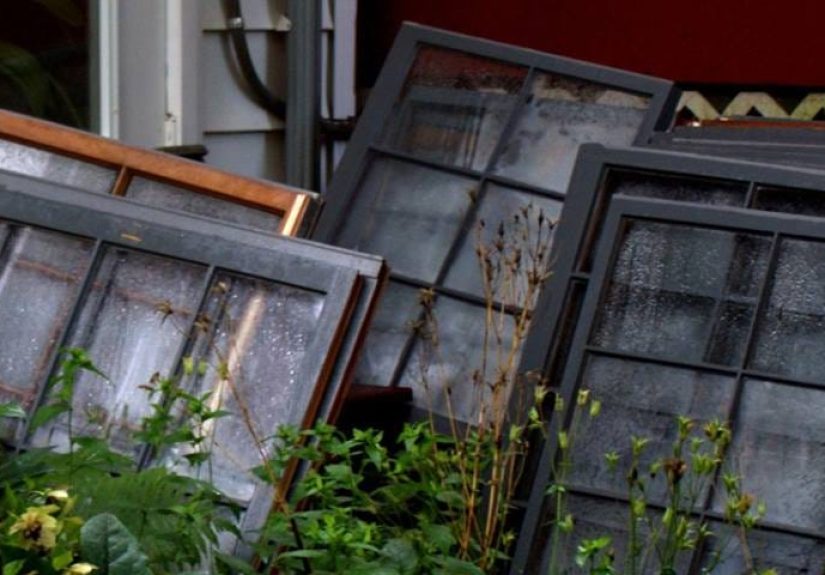
Lay the windows on the ground and group them by size. Matching windows make construction easier because you can build repeated wall sections. If your windows are mismatched, arrange them like a puzzle before framing. Take measurements of each window, including width, height, and frame thickness. Number the windows with painter’s tape and create a simple wall plan.
Common greenhouse shapes
A simple rectangular greenhouse is easiest for most DIY builders. A 6-by-8-foot or 8-by-10-foot structure is large enough for shelves, a potting bench, and containers, while still manageable for a backyard project. A lean-to greenhouse built against a garage, shed, or sturdy wall can reduce the number of walls you need to build, but it requires careful flashing and moisture control where the greenhouse meets the existing structure.
A freestanding greenhouse gives you more flexibility with location and sunlight. It also allows airflow around all sides. For a vintage window greenhouse, a freestanding rectangular frame with a shed roof or gable roof is often the best balance of beauty and buildability.
Tools and Materials You May Need
Your exact supply list depends on size and design, but most old-window greenhouse projects use pressure-treated lumber or rot-resistant wood for ground-contact areas, standard framing lumber for walls and roof supports, exterior screws, brackets, hinges, roofing material, caulk, exterior paint or stain, hardware cloth, gravel, pavers, and the reclaimed windows themselves.
You may also need safety glasses, gloves, a drill, circular saw, level, tape measure, clamps, speed square, pry bar, ladder, and glazing tools. If you are working with glass, wear gloves and eye protection. Vintage windows have personality, but they are still glass panels in wooden frames. Treat them with respect.
Step-by-Step: How to Build a Greenhouse From Old Windows
Step 1: Create a solid base
The foundation keeps your greenhouse square, dry, and stable. For a small greenhouse, common DIY options include a pressure-treated wood base on compacted gravel, concrete blocks, patio pavers, or a poured concrete perimeter. Gravel is popular because it drains well and helps reduce puddles inside the structure.
Clear the area, remove weeds, level the soil, and add landscape fabric if desired. Then add compacted gravel. A level base makes every later step easier. If the base is crooked, the walls will argue with the roof, and the door will join the argument.
Step 2: Build the floor or walking surface
You do not necessarily need a solid floor. Many gardeners prefer gravel, brick, or pavers because they drain well and can be swept or rinsed. Pavers create a stable walking path and make the greenhouse feel finished. Gravel between pavers helps water move away from the structure.
If you use wood decking, choose materials that can handle moisture and allow airflow underneath. Avoid creating a floor that traps water, because greenhouses are humid by nature. Damp wood plus poor ventilation is an invitation to rot, mold, and that mysterious smell nobody wants to identify.
Step 3: Frame the walls
Build a strong wooden frame first, then attach the windows to it. Do not rely on old windows to carry structural loads. They are glazing, not framing. Use studs, headers, bottom plates, and top plates just as you would for a small shed wall.
Frame each wall section based on your window layout. Leave small gaps for expansion, shimming, and caulking. Use exterior screws rather than indoor fasteners, and add blocking where hinges, shelves, vents, or heavy windows need support.
Step 4: Install the windows
Set each window into its framed opening, shim it level, and screw it through the frame into the structure. Do not overtighten screws near glass. Add exterior-grade caulk around gaps to reduce drafts and water intrusion, but avoid sealing the greenhouse so tightly that it cannot breathe.
If some windows are designed to open, use them strategically as vents. Place operable windows high on the walls or near the roofline so hot air can escape. Lower vents or small openings help bring cooler air in. This high-low airflow pattern is one of the simplest ways to manage heat naturally.
Step 5: Build the roof
The roof deserves extra thought. Old windows can be used overhead, but glass roof panels are heavy, breakable, and may not be tempered safety glass. For many DIY builders, a safer and more practical roof is corrugated polycarbonate, clear greenhouse panels, or another lightweight transparent roofing material.
A sloped roof sheds rain and snow better than a flat roof. In snowy climates, design for local snow loads and consider getting help from someone with structural experience. A charming roof is lovely. A roof that stays up during February is lovelier.
Step 6: Add a door
A salvaged glass door can look beautiful, but it must fit well and latch securely. Many builders use an old storm door, French door, or custom-built wooden door with a window insert. Make the door wide enough to carry trays, bags of potting mix, and possibly a small wheelbarrow.
An outward-swinging door saves interior space. Add a sturdy latch, weather-resistant hinges, and a way to hold the door open on warm days. A greenhouse door that slams shut in the wind has a flair for drama, but your seedlings do not need theater.
Step 7: Seal, paint, and protect the wood
After assembly, paint or stain exposed wood with an exterior-grade product. This helps protect the frame from moisture and sun. Use caulk where water could enter, but remember that a greenhouse needs ventilation. The goal is to keep out rain, not create an airtight glass thermos.
Choose lighter paint if you want a bright cottage look, or dark paint if you want the mismatched windows to feel unified. Black, charcoal, forest green, and white are popular choices because they make the old glass and plants stand out.
Ventilation: The Secret to Keeping Plants Alive
Ventilation is where many beginners underestimate the greenhouse. On a sunny day, a glass greenhouse can heat up fast. Even if the outside air feels cool, interior temperatures can climb high enough to stress seedlings, wilt plants, and make you wonder whether you accidentally built a lasagna oven.
Plan for roof vents, operable side windows, a vented door, or small intake openings near the floor. Hot air rises, so upper vents allow it to escape. Lower openings let cooler air enter. For extra airflow, add a small fan if electricity is available. Air movement also helps reduce humidity-related disease problems.
In summer, shade cloth can make a major difference. It reduces intense sunlight and helps keep the structure usable during hot periods. You can attach shade cloth over the roof, hang it inside, or use removable panels depending on your climate.
Temperature, Water, and Plant Care Inside a Window Greenhouse
A vintage window greenhouse extends the season, but it does not magically create perfect weather. You still need to monitor temperature. Place a thermometer inside and check it at different times of day. In spring, vent on sunny days and close vents before cold nights. In summer, you may need doors and windows open most of the day.
Watering also changes inside a greenhouse. Plants may dry out faster because of warmth, but high humidity can also keep foliage damp. Water the soil rather than the leaves when possible, and avoid overcrowding plants. Good spacing improves airflow and reduces disease pressure.
For seed starting, use shelves or benches along the walls. Put taller plants where they will not shade smaller trays. Keep a potting bench near the door for convenience. Add hooks for tools, a bin for soil mix, and a small area for labels, gloves, and the one pencil that always disappears.
Smart Interior Layout Ideas
A good greenhouse layout should make gardening easier, not simply look cute on the internet. Start with a central walkway at least wide enough for comfortable movement. Add shelves on the sunniest wall for seedlings and herbs. Use lower benches for heavy pots and upper shelves for trays that need light.
Vertical storage is your friend. Hang hand tools, twine, watering cans, and baskets on wall hooks. A narrow potting bench with storage below can handle seed trays, soil scoops, and small containers. If space allows, add a fold-down work surface so you can pot plants without permanently sacrificing floor space.
Keep the heaviest items low. Bags of potting mix, ceramic pots, and water containers should not sit on flimsy shelves. A vintage greenhouse should feel magical, not like a slow-motion shelf collapse waiting for its dramatic soundtrack.
Common Mistakes to Avoid
Using windows as structure
Old windows should fill framed openings; they should not be the main support system. Build a real frame first. The windows are the jewelry, not the skeleton.
Ignoring airflow
If you do not plan vents, you will fight heat and humidity constantly. Include more ventilation than you think you need, especially in warm climates.
Skipping drainage
Water will spill. Pots will leak. Condensation will happen. Use a floor system that drains and dries.
Choosing unsafe windows
Avoid badly cracked glass, unstable frames, and peeling painted windows that may contain lead. Beauty is not worth unsafe materials.
Building too small
A tiny greenhouse can be useful, but make sure you can stand, turn, water, and work comfortably. Plants grow. Gardeners accumulate pots. This is not a theory; it is a law of nature.
Budgeting for a Vintage Window Greenhouse
The cost of a DIY old-window greenhouse depends on what you can salvage and what must be purchased new. Reclaimed windows may be free, cheap, or surprisingly expensive if they are trendy architectural salvage. Lumber, roofing, screws, paint, gravel, pavers, and hardware often become the real budget drivers.
A small greenhouse can sometimes be built for a few hundred dollars if you already have windows and use simple materials. A larger, more polished structure may cost much more. Before you begin, price the essentials: foundation materials, framing lumber, roofing, fasteners, door hardware, sealant, paint, and ventilation supplies. Add a cushion for broken panes, wrong screws, and the inevitable extra trip to the hardware store.
Design Ideas for Extra Charm
Once the structure is safe and functional, the fun begins. Vintage windows pair beautifully with cottage garden paths, raised beds, climbing roses, herbs, and weathered wood. Add a gravel path leading to the door, plant lavender or thyme nearby, and use solar lights to make the greenhouse glow in the evening.
Inside, consider a reclaimed potting bench, terracotta pots, enamel buckets, wooden crates, and labeled seed trays. Keep decor practical. A greenhouse can hold personality, but it still needs room for actual plants. The line between “charming garden workspace” and “antique store with humidity” is thinner than you think.
Extra Experience: Lessons From Building and Using a Vintage Window Greenhouse
The first big lesson is that collecting windows takes longer than expected. People imagine finding twenty matching antique windows in one magical afternoon. In reality, you may find three perfect windows, two questionable ones, one door with heroic potential, and a window so oddly shaped it seems designed for a house owned by a wizard. Be patient. Check local salvage shops, Habitat for Humanity ReStores, neighborhood groups, remodeling leftovers, estate sales, and online marketplaces. Keep a list of measurements so you do not bring home windows that are beautiful but impossible to use.
The second lesson is to build the greenhouse on paper before building it in the yard. Sketch every wall. Label every window. Decide where the door goes, where vents open, and where shelves will sit. When you lay the windows out on the ground, you can see problems early. Maybe two windows look great together but leave a gap too narrow to frame easily. Maybe your tallest window would work better as a side feature than a front wall. This planning stage feels slow, but it saves lumber, frustration, and colorful language.
The third lesson is that ventilation matters more than romance. A vintage window greenhouse can look like a fairy-tale garden cottage, but plants care less about fairy tales and more about air temperature. Put at least one vent high and one intake lower. If you can make several windows operable, do it. During warm weather, opening the door may not be enough. A small fan can help keep air moving, especially when seedlings are crowded on shelves.
The fourth lesson is to think carefully about the roof. Many people love the idea of old glass overhead because it looks dreamy in photos. But roof glass is heavy, breakable, and potentially risky if it is not designed for overhead use. Clear polycarbonate panels are often easier to install, lighter, and more forgiving. They may not have the exact vintage charm of antique glass, but they can help the greenhouse survive weather with fewer dramatic surprises.
The fifth lesson is to build for how you actually garden. If you start seeds, prioritize shelves and a potting bench. If you grow container citrus, leave floor space and headroom. If you only want to overwinter tender plants, think about insulation, cold drafts, and how low winter temperatures get in your area. A greenhouse is not just a pretty object; it is a working tool. Design it around your habits, not only around a photo you saved at midnight.
The sixth lesson is to expect maintenance. Old windows may need reglazing, repainting, caulking, and occasional pane replacement. Wood expands, contracts, and weathers. Hinges loosen. Caulk ages. A yearly inspection before winter and another before spring planting will keep the structure in good shape. Tighten hardware, check for leaks, clean glass, clear debris from the roof, and make sure vents still open smoothly.
The final lesson is that imperfections are part of the appeal. A greenhouse made from vintage windows will not look like a factory-perfect kit. That is the point. The slight mismatch, the old glass, the rescued door, the handmade shelf, and the little design decisions all tell a story. When the first tray of seedlings sprouts inside, you will forget the awkward cuts and extra hardware runs. Mostly. You may still remember the one screw you dropped into the gravel and never found.
Conclusion
Building a greenhouse made out of vintage windows is a project for gardeners who love plants, character, and the thrill of turning “old stuff” into something genuinely useful. With careful planning, safe materials, a sturdy frame, good drainage, and plenty of ventilation, reclaimed windows can become a beautiful backyard greenhouse for seed starting, potting, overwintering, and stretching your growing season.
The key is balance. Let the old windows bring charm, but let good construction carry the structure. Let the glass bring sunlight, but let vents control heat. Let the project be creative, but do not skip safety checks for lead paint, cracked panes, weak frames, or local building rules. A vintage window greenhouse should feel whimsical, but it should not be held together by optimism and leftover deck screws.
In the end, the best DIY greenhouse is the one you will actually use. Make it sturdy, make it practical, and then make it beautiful. Your seedlings will get a warmer start, your garden will gain a focal point, and your pile of rescued windows will finally stop looking like clutter and start looking like genius.