Table of Contents >> Show >> Hide
- Why You Should Backup Android Text Messages
- Before You Start: Check These Things First
- Method 1: Backup Text Messages with Google Backup
- Method 2: Use Samsung Smart Switch for Galaxy Phones
- Method 3: Use SMS Backup & Restore
- Method 4: Export Text Messages for Printing or Legal Records
- Method 5: Backup Messages to a Computer
- What About RCS Messages?
- Best Backup Strategy: Use the 3-2-1 Rule
- Common Mistakes to Avoid
- How Often Should You Backup Android Messages?
- Quick Recommendation: Which Method Should You Choose?
- Experience Notes: What Actually Works in Real Life
- Conclusion
Text messages are tiny, but they carry a surprising amount of life. Appointment reminders, family photos, delivery codes, business details, addresses, sentimental “made my day” messages, and that one group chat where everyone pretends they are organizedyour Android messages can be more valuable than they look. That is why learning how to backup text messages on Android is not just a tech chore. It is digital common sense with a safety helmet.
The good news: Android gives you several ways to save your SMS and MMS conversations. The slightly less magical news: not every method works the same way on every phone, and message backups can behave differently depending on your device brand, Android version, carrier, messaging app, and whether your conversations include multimedia or RCS chats. In plain English, backing up texts is easyuntil it is not. This guide keeps things practical, calm, and free of tech goblin energy.
Below, you will learn the best ways to back up Android text messages using Google Backup, Samsung Smart Switch, third-party SMS backup apps, local storage, and computer-based exports. You will also learn how to restore messages, avoid common mistakes, and build a backup routine that does not rely on wishful thinking and a cracked phone screen.
Why You Should Backup Android Text Messages
Most people think about message backups only after something bad happens. The phone falls into a pool. The screen turns into modern art. A factory reset removes everything with the emotional warmth of a paper shredder. Or you buy a new phone and realize your old conversations did not follow you like loyal little digital puppies.
Backing up text messages helps protect your conversations before trouble shows up wearing sunglasses. It is especially useful if you use SMS for work, medical appointments, school communication, two-factor authentication records, customer conversations, travel details, or family memories. Even if you mostly use messaging apps like WhatsApp, Telegram, or Messenger, traditional SMS and MMS can still contain important information that does not live anywhere else.
There is also a difference between “syncing” and “backing up.” Syncing keeps data updated across services or devices. Backup creates a recoverable copy. A synced mistake can disappear everywhere. A backup gives you a second chance. In the world of phones, second chances are excellent.
Before You Start: Check These Things First
Before you backup SMS on Android, take two minutes to prepare. This reduces failed backups, missing media, and that special kind of frustration where you start bargaining with your phone like it is a tiny vending machine.
- Charge your phone: Keep your battery above 50% or plug it in.
- Use Wi-Fi: MMS attachments and message media can be large.
- Confirm your Google account: Make sure you know which account is used for backup.
- Update your messaging app: Google Messages, Samsung Messages, and carrier apps may behave differently.
- Check storage space: Cloud backups need enough available storage.
- Do a small test restore if possible: A backup you never test is basically a parachute you bought on vibes.
Method 1: Backup Text Messages with Google Backup
For most Android users, Google Backup is the simplest built-in option. It can save device data such as settings, app data, call history, and SMS/MMS messages, depending on your phone and configuration. The exact menu names can vary by Android version and manufacturer, but the path is usually close to this:
- Open Settings on your Android phone.
- Tap Google.
- Tap Backup or All services > Backup.
- Make sure Backup by Google One is turned on.
- Confirm the correct Google account is selected.
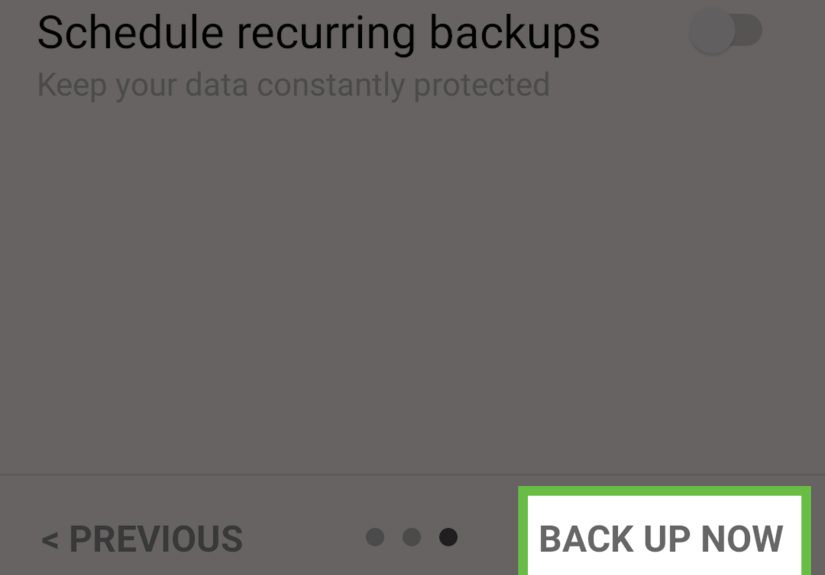
- Tap Back up now.
On some phones, you may also find this under Settings > System > Backup. Samsung, Motorola, OnePlus, Pixel, and other Android brands may label things slightly differently, because apparently one universal menu name would be too peaceful.
What Google Backup Is Best For
Google Backup is best when you want a simple, automatic safety net. It is especially useful before switching to a new Android phone or performing a factory reset. When setting up a new device, Android usually offers the option to restore from a previous backup after you sign in to your Google account.
However, Google Backup is not always the best option if you want to browse messages as files, export conversations to PDF, save selected threads, or restore SMS after the phone has already been fully set up. Restoration often works best during the initial setup process. If you skipped restore during setup, your options may be limited unless your phone offers a separate restore function.
Important Google Backup Limitations
Google Backup is convenient, but it is not a perfect archive tool. You usually cannot open your SMS backup in Google Drive and read each message like a document. It is designed for restoring to a device, not casual browsing. Also, app data and message restore behavior can vary. Some MMS media or RCS-related content may not restore exactly as expected, especially across different devices, carriers, or messaging apps.
Bottom line: use Google Backup as your first layer, not your only layer, if your messages are truly important.
Method 2: Use Samsung Smart Switch for Galaxy Phones
If you own a Samsung Galaxy phone, Samsung Smart Switch is one of the most useful tools for moving messages between devices. Smart Switch can transfer many types of data, including contacts, photos, videos, settings, and text messages. It is particularly helpful when moving from an old phone to a new Galaxy device.
You can use Smart Switch in several ways:
- Wireless transfer: Move data from one phone to another over Wi-Fi.
- Cable transfer: Connect both phones with a USB cable and adapter.
- External storage: Restore from a USB drive, SSD, or microSD card if supported.
- Computer backup: Use Smart Switch on a PC or Mac to create a local device backup.
How to Transfer Messages with Smart Switch
- Install or open Samsung Smart Switch on both devices.
- Choose whether the old phone will send data and the new phone will receive data.
- Select your connection method: cable or wireless.
- Choose the data you want to transfer.
- Make sure Messages is selected.
- Start the transfer and keep both phones nearby until it finishes.
Smart Switch is a great option when you are upgrading within the Samsung ecosystem. It feels less like a traditional backup and more like moving your digital apartment from one phone to another. The couch may be heavy, but at least Samsung brought a truck.
When Smart Switch Is Better Than Google Backup
Smart Switch is often better when you have both phones physically available and want a direct transfer. It can also be useful when cloud backup is slow, incomplete, or limited by storage. If you prefer keeping a copy on your computer, Smart Switch for PC or Mac gives you another layer of protection.
The downside is that Smart Switch is strongest for Samsung Galaxy devices. If you are moving from Samsung to another Android brand, Google Backup or a dedicated SMS backup app may be more flexible.
Method 3: Use SMS Backup & Restore
For users who want more control, SMS Backup & Restore is one of the most popular Android tools for saving SMS, MMS, and call logs. It creates backup files that can be stored locally or uploaded to services such as Google Drive, Dropbox, OneDrive, or email. This is useful because you can create a file-based backup instead of relying only on Android’s device restore system.
How to Backup Messages with SMS Backup & Restore
- Install SMS Backup & Restore from the Google Play Store.
- Open the app and tap Set up a backup.
- Select Messages. Add call logs if you want them too.
- Choose whether to include MMS messages and media attachments.
- Select a storage location, such as Google Drive, Dropbox, OneDrive, local storage, or email.
- Set a backup schedule: daily, weekly, or monthly.
- Tap Back up now.
This method is excellent if you switch phones often, want a recurring SMS backup, or need a backup that can be moved manually. It is also helpful if you want to keep message archives outside the built-in Android backup system.
How to Restore Messages with SMS Backup & Restore
- Install the app on the new or reset Android phone.
- Open the app and choose Restore.
- Select the backup file from cloud storage or local storage.
- Temporarily set SMS Backup & Restore as the default SMS app if prompted.
- Restore the messages.
- Switch your default SMS app back to Google Messages, Samsung Messages, or your preferred app.
One important warning: SMS Backup & Restore cannot recover messages that were never backed up. It is a backup app, not a time machine with a cape. If the phone was wiped before a backup existed, the app cannot magically rescue those missing conversations.
Method 4: Export Text Messages for Printing or Legal Records
Sometimes you do not just want to restore messages to another phone. You want to save them as readable files. Maybe you need a conversation for business records, customer support, a school issue, or personal documentation. In that case, look for an app that supports exporting messages as PDF, CSV, HTML, TXT, or XML.
Some SMS backup tools focus on full restore, while others focus on readable exports. The best option depends on your goal:
- XML backup: Good for restoring messages to Android later.
- PDF export: Good for printing or sharing a readable conversation.
- CSV export: Good for spreadsheets and recordkeeping.
- HTML export: Good for viewing conversations in a browser.
- TXT export: Simple, lightweight, and easy to search.
If your messages contain sensitive personal information, be careful where you store exported files. A PDF of private texts sitting in a random downloads folder is not exactly Fort Knox. Use password-protected storage, encrypted cloud folders, or a secure external drive when privacy matters.
Method 5: Backup Messages to a Computer
Backing up Android text messages to a computer is a smart move if you prefer local control. Cloud storage is convenient, but a computer backup gives you an offline copy. This is especially useful before factory resets, phone repairs, or major Android updates.
Samsung users can use Smart Switch for PC or Mac. Other Android users can use third-party desktop tools or export message files from an SMS backup app and copy them to a computer manually. A simple approach looks like this:
- Create a backup using an SMS backup app.
- Save the backup file to internal storage or cloud storage.
- Connect your Android phone to your computer with a USB cable.
- Set the phone to File Transfer mode.
- Copy the backup file to a clearly labeled folder on your computer.
- Optionally copy that same folder to an external drive.
Use clear folder names such as Android_SMS_Backup_June_2026. Future you will appreciate this. Future you has enough problems and should not have to open seven mystery folders named “New Folder 3.”
What About RCS Messages?
RCS, or Rich Communication Services, is the modern messaging system used by Google Messages and many Android phones. It supports features like read receipts, typing indicators, higher-quality media, and better group chats. It is wonderful when it works. It is also the part of Android messaging that makes backup conversations a little more complicated.
Traditional SMS and MMS are usually easier to back up because Android stores them in a standard messaging database. RCS handling can vary by app, carrier, device, and version. Some RCS messages may appear in backup tools as MMS-style messages, while some media or advanced features may not transfer perfectly. For important conversations, do not assume everything is safe just because one backup toggle is turned on.
The practical advice is simple: use Google Backup, create a separate SMS backup with a trusted app, and test the result on another device if the messages are critical. Also, keep Google Messages updated, because Android messaging backup features continue to improve over time.
Best Backup Strategy: Use the 3-2-1 Rule
If your text messages matter, use the classic 3-2-1 backup rule: keep three copies, on two different types of storage, with one copy off the device. For Android messages, that might look like this:
- Copy 1: Google Backup enabled on your phone.
- Copy 2: SMS Backup & Restore file saved to Google Drive or OneDrive.
- Copy 3: A copy of that backup file stored on your computer or external drive.
This may sound excessive until your phone refuses to turn on the night before you need an address, receipt, or important conversation. Then it sounds like genius. Slightly nerdy genius, but genius nonetheless.
Common Mistakes to Avoid
Assuming Texts Are Automatically Safe
Many Android phones turn on some backup features during setup, but that does not mean every message, image, or conversation is perfectly protected. Always check the backup settings yourself.
Using the Wrong Google Account
If your backup is saved under one Google account and your new phone is set up with another, your messages may not appear. Check the account before you reset or switch phones.
Forgetting MMS Attachments
Some apps let you choose whether to include MMS media. If you want pictures, videos, or group message attachments, make sure media backup is enabled.
Skipping Backup Schedules
A one-time backup is better than nothing, but scheduled backups are better. Weekly backups work well for most people. Daily backups are useful if you rely on SMS for work.
Deleting the Backup File
Do not clean up your Drive, Dropbox, OneDrive, or downloads folder without checking what those XML or backup files are. That “weird file” may be your message history wearing an ugly hat.
How Often Should You Backup Android Messages?
The right backup schedule depends on how often you receive important texts. If you only use SMS for delivery codes and casual messages, monthly may be enough. If you use text messages for work, clients, appointments, or family coordination, weekly is safer. If your messages are mission-critical, use daily automatic backups.
Here is a simple recommendation:
- Casual users: Monthly backup.
- Frequent texters: Weekly backup.
- Business users: Daily backup plus computer copy.
- Before phone repair: Manual backup immediately.
- Before factory reset: Manual backup and verify it exists.
- Before switching phones: Use both Google Backup and a separate SMS backup app.
Quick Recommendation: Which Method Should You Choose?
If you want the easiest option, turn on Google Backup. If you have a Samsung phone and are moving to another Galaxy device, use Smart Switch. If you want the most control, use SMS Backup & Restore with scheduled backups to cloud storage. If you need readable records, export messages as PDF, CSV, or HTML. If the messages are very important, use more than one method.
In other words, do not make your entire backup plan depend on a single checkbox buried in Settings. Android is powerful, but even powerful things occasionally trip over their own shoelaces.
Experience Notes: What Actually Works in Real Life
After dealing with Android message backups across different phones, one lesson becomes clear very quickly: the best backup method is the one you set up before you are panicking. People often search for how to backup text messages on Android after a phone is already damaged, lost, wiped, or stuck on a boot screen. At that point, the options shrink fast. A backup routine is boring in the same way seat belts are boring. You only appreciate it when physics or technology decides to be rude.
In real-world use, Google Backup is the most convenient starting point because it requires the least effort. Once it is turned on, it can quietly protect your SMS and MMS as part of your broader Android device backup. But it should not be treated as a complete message archive. Many users expect to log in to Google Drive and open a neat folder full of readable text conversations. That is not how Android device backup usually works. It is mainly built for restoring data to a phone, especially during setup.
For people who switch phones often, a dedicated SMS backup app is usually more satisfying. The reason is control. You can choose when to run the backup, where to store it, whether to include MMS attachments, and how often the backup repeats. A weekly scheduled backup to Google Drive or OneDrive is a good balance for most users. It does not require constant attention, but it keeps your message history reasonably fresh. If you receive important texts every day, choose daily backups and stop pretending you will remember to do it manually. You will not. Nobody does. We are all busy trying to remember passwords and where we left the charger.
Samsung users often have the smoothest experience when upgrading to another Galaxy device because Smart Switch is designed for that exact situation. The direct phone-to-phone transfer is especially helpful when you want messages, photos, settings, and apps to move together. However, even with Smart Switch, it is wise to create a separate backup before starting. Transfers can fail because of low battery, weak Wi-Fi, damaged cables, storage limits, or random gremlins that live inside software progress bars.
Another practical tip: always label your backup files clearly. A file named sms-2026-06-03.xml is far more helpful than a mystery file buried in a downloads folder. Store one copy in the cloud and one copy on a computer or external drive. If you are exporting messages for records, PDF is easier to read and share, while XML is better for restoring to Android. Choose the format based on what you actually need.
Finally, test your backup plan before trusting it. You do not need to restore your entire phone every week, but you should confirm that the backup file exists, has a reasonable file size, and is stored in the correct account. If an app offers a restore preview or backup viewer, use it. A backup is not truly comforting until you know it is real. Otherwise, it is just digital optimism in a trench coat.
Conclusion
Backing up Android text messages is one of those tasks that takes a few minutes now and can save hours of regret later. Start with Google Backup because it is built into Android and easy to enable. Use Samsung Smart Switch if you are moving between Galaxy phones. Add a dedicated SMS backup app if you want scheduled backups, cloud storage options, and file-based control. For important conversations, export readable copies and store them somewhere secure.
The smartest strategy is simple: do not rely on one method. Combine automatic cloud backup with a separate SMS backup file and an offline computer copy. That way, if your phone gets lost, reset, upgraded, repaired, or accidentally introduced to a swimming pool, your message history does not have to vanish with it.