Table of Contents >> Show >> Hide
- Why Marble Countertops Need Special Care
- What You Need to Clean Marble Countertops
- How to Clean Marble Countertops Daily
- How to Clean Marble Countertops After Spills
- How to Remove Common Marble Countertop Stains
- The Biggest Mistakes People Make With Marble
- How to Protect Marble Countertops Long-Term
- A Simple Marble Cleaning Routine That Actually Works
- Real-World Experiences: What People Learn After Living With Marble
- Final Thoughts
Marble countertops are gorgeous. They make a kitchen look expensive, polished, and just a little bit smug. Unfortunately, marble is also the diva of the countertop world. It does not enjoy acidic spills, harsh cleaners, rough scrubbers, or your “I’ll wipe that up later” attitude. If you treat it like laminate, it will punish you with etching, dull spots, and stains that seem to appear out of nowhere like bad plot twists.
The good news is that cleaning marble the right way is not difficult. It is mostly about using the right products, moving quickly when spills happen, and resisting the powerful urge to attack every mess with vinegar like it is some kind of magical potion. In this guide, you will learn how to clean marble countertops safely, what products to avoid, how to deal with common stains, and how to keep that elegant natural stone looking fresh without accidentally wrecking the finish.
Why Marble Countertops Need Special Care
Before you grab a spray bottle and start cleaning like you are in a speed round of a home makeover show, it helps to understand what makes marble different. Marble is a natural stone, and it is more porous and softer than many other countertop materials. That means it can absorb liquids and react to acidic substances more easily.
Translation: lemon juice, wine, tomato sauce, coffee, vinegar, and certain all-purpose cleaners are not your marble’s friends. Even if a product smells “fresh mountain breeze” or promises a sparkling shine, that does not mean it belongs anywhere near natural stone. Marble can stain, etch, and lose its polish if it is cleaned too aggressively or with the wrong ingredients.
That is why the best marble care routine is gentle, consistent, and boring in the most beautiful way. No harsh chemicals. No gritty scrubbers. No kitchen chemistry experiments that start with, “I saw this hack online…”
What You Need to Clean Marble Countertops
You do not need a complicated arsenal of specialty products to clean marble countertops properly. In fact, the simpler the routine, the better. Here is what works well:
Basic supplies
A soft microfiber cloth, warm water, a pH-neutral stone cleaner or a few drops of mild dish soap, and a dry towel are usually enough for everyday cleaning. That is the marble-care version of a reliable, low-drama friend.
Optional helpers
For sticky residue or occasional deeper cleaning, you may want a second clean microfiber cloth, a spray bottle for diluted soap solution, and a stone-safe poultice product for stubborn stains. If your counters are sealed, a marble-safe cleaner designed for natural stone can be helpful too.
What not to use
Skip vinegar, lemon juice, bleach, ammonia-heavy cleaners, generic bathroom sprays, rough scrub pads, steel wool, and powdered abrasives. Marble does not want “power cleaning.” Marble wants respect.
How to Clean Marble Countertops Daily
If you want your marble countertops to stay shiny and elegant, daily cleaning matters more than occasional heroic scrubbing. A fast, gentle wipe-down prevents buildup and gives stains less time to settle in.
Step 1: Remove crumbs and loose debris
Start by wiping away crumbs, dust, and anything else hanging around on the surface. This matters because rubbing gritty debris across marble can create fine scratches. Tiny crumbs may look harmless, but under pressure they can behave like rude little sandpaper particles.
Step 2: Use warm water and a mild cleaner
Dampen a microfiber cloth with warm water and add a few drops of mild dish soap, or use a pH-neutral cleaner made for stone. The cloth should be damp, not dripping. You are cleaning marble, not preparing it for a swim meet.
Step 3: Wipe gently
Wipe the countertop using broad, smooth motions. Focus on areas near the sink, cooktop, coffee station, and wherever the household tends to create mystery stickiness. There is no prize for aggressive scrubbing here. Gentle pressure is enough.
Step 4: Rinse if needed
If you used soapy water, go over the surface with another clean cloth dampened with plain water. This helps remove any film or residue that could dull the finish over time.
Step 5: Dry the surface
Always dry marble with a clean, soft towel or dry microfiber cloth. This final step is easy to skip, but it helps prevent water spots and keeps the surface looking polished instead of cloudy.
How to Clean Marble Countertops After Spills
When it comes to marble countertop care, speed is your superpower. Spills should be blotted up quickly, especially if they are acidic, oily, or deeply colored. Think red wine, citrus juice, coffee, tea, olive oil, and tomato sauce.
Blot, do not rub
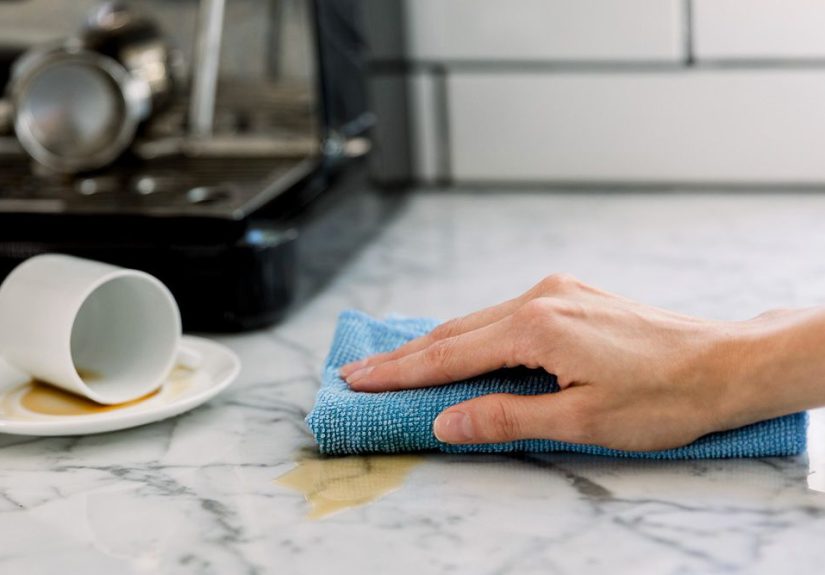
If something spills, blot it immediately with a soft cloth or paper towel. Rubbing can spread the liquid and push it deeper into the stone. Blotting keeps the mess contained and gives you a much better chance of avoiding a stain.
Clean the area gently
After blotting, wipe the spot with a damp microfiber cloth and a little mild dish soap or stone-safe cleaner. Then rinse lightly with clean water and dry the area thoroughly.
Pay attention to acidic foods
Lemon juice, vinegar, salad dressing, salsa, hot sauce, and wine can etch marble even if they do not leave a dark stain. Etching is different from staining. Instead of soaking into the stone, acid reacts with the calcium carbonate in marble and leaves behind a dull or cloudy mark. In other words, the surface gets chemically offended.
How to Remove Common Marble Countertop Stains
Even with careful cleaning, stains happen. Marble is beautiful, but it does not exactly shrug things off. The key is matching the cleaning method to the type of stain and keeping expectations realistic. Some stains can be improved at home. Deep etching or severe discoloration may need a professional.
Oil-based stains
Grease, cooking oil, butter, and lotion can leave dark marks. These stains often need a poultice or a marble-safe stain remover designed to draw oil out of the stone. For light issues, a paste of baking soda and water may help when left briefly on the stain and removed gently. Do not scrub like you are sanding a deck.
Food and drink stains
Coffee, tea, wine, berries, and sauces can leave discoloration if they sit too long. Clean the spill first with mild soap and water. If a stain remains, use a stone-safe poultice or a marble stain treatment product. For pale marble, some homeowners use hydrogen peroxide-based stain methods carefully, but it is smart to test in a hidden area first and follow product directions closely.
Water spots and cloudy marks
If the problem looks white, dull, or slightly rough rather than dark, you may be dealing with etching instead of a stain. Etching is damage to the surface finish, not something that ordinary cleaning removes. Mild etching can sometimes be improved with a marble polishing powder made for the stone, but more noticeable damage may require professional refinishing.
Sticky residue
For dried syrup, grease film, or sticky messes, start with warm water and a soft cloth. If needed, repeat with a stone-safe cleaner. Do not reach for a razor blade unless the product manufacturer specifically says it is safe and you know exactly what you are doing. Marble and improvisation are not always a winning duo.
The Biggest Mistakes People Make With Marble
If you want to know how to clean marble countertops the right way, it helps to know how people get it wrong. Here are the classic mistakes:
Using vinegar or lemon
This is probably the biggest one. Vinegar is useful in many parts of the house, but marble is not one of them. Acidic cleaners can etch the surface and leave dull spots that no amount of regular wiping will fix.
Using abrasive scrubbers
Scouring pads, gritty powders, and steel wool can scratch the surface and wear down the finish. Marble is strong enough to be a countertop but still soft enough to show damage from rough treatment.
Letting spills sit
The longer a spill sits, the more likely it is to stain or etch. Marble rewards quick action and punishes procrastination. It is basically the countertop version of a strict teacher.
Leaving behind soap residue
Too much soap or a cleaner that is not rinsed away can leave a film. That film makes the surface look dull, streaky, or slightly grimy even when it is technically clean.
Forgetting to dry the surface
Drying is not just for appearances. It helps reduce water spots and keeps the finish looking crisp and polished.
How to Protect Marble Countertops Long-Term
Cleaning marble countertops is only part of the story. Protection matters just as much. A few smart habits can save you from future panic-cleaning sessions.
Use cutting boards and trays
Do not chop directly on marble. Aside from potentially scratching the stone, it is also not great for your knives. Use cutting boards for food prep and trays under oils, soaps, or products that may leak.
Use coasters and trivets
Set drinks on coasters and hot cookware on trivets. Marble is not the ideal place for a sweating glass of lemonade or a screaming-hot pan fresh off the stove.
Seal the stone when needed
Many marble countertops benefit from sealing, but sealing is not a magic force field. It helps slow down absorption and improves stain resistance, but it does not make marble acid-proof. Even sealed marble can etch.
A simple way to check whether resealing may be needed is the water test: place a few drops of water on the surface in an inconspicuous spot. If the water darkens the stone fairly quickly, the sealer may be wearing off. Follow the manufacturer’s guidance for your specific stone and sealer, or ask your fabricator for the recommended schedule.
A Simple Marble Cleaning Routine That Actually Works
If you prefer practical over dramatic, here is an easy maintenance rhythm:
Daily
Wipe crumbs and spills promptly. Clean with warm water and a soft microfiber cloth as needed.
Several times a week
Use mild dish soap or a pH-neutral stone cleaner for a more thorough wipe-down, especially in high-use zones like around the sink and stove.
Monthly
Check for dull areas, soap film, or signs of buildup. Review whether the countertop still beads water well and whether certain spots are getting more absorbent.
As needed
Treat stains carefully and reseal according to the stone manufacturer or installer’s recommendations. If etching becomes widespread, call a stone professional rather than trying every internet remedy known to humankind.
Real-World Experiences: What People Learn After Living With Marble
Living with marble countertops changes the way people think about cleaning. At first, many homeowners fall in love with the look and assume upkeep will be just like any other surface. Then the first coffee ring appears, or a lemon wedge gets left on the counter, and suddenly marble becomes less “luxury design feature” and more “beautiful roommate with very specific boundaries.”
One of the most common experiences people describe is learning that the best marble cleaner is not some expensive miracle spray but a simple routine. The homeowners who stay happiest with marble are usually the ones who clean a little and often. They wipe after cooking, dry after cleaning, and do not let spills linger while they answer a text, load the dishwasher, and wander into another room for 40 minutes. Marble likes consistency. It does not respond well to chaos.
Another lesson that comes up again and again is that prevention feels a little fussy at first, but quickly becomes second nature. A coaster under iced coffee, a cutting board under limes, a tray under olive oil, and a trivet under hot pans may sound like a lot on day one. By week three, it just feels normal. Homeowners who embrace these habits tend to say marble remains more enjoyable because they are protecting the finish before damage starts, not trying to reverse it later with crossed fingers and internet hacks.
There is also the emotional side of marble ownership, which is surprisingly real. Some people panic over the first etch mark and assume the whole counter is ruined. Then they live with the stone for a while and realize marble often develops a patina that tells the story of a real kitchen. For some households, that evolving look becomes part of the appeal. It feels warm, lived-in, and authentic rather than sterile. For others, especially people who want a pristine polished surface at all times, marble can feel high-maintenance. Neither reaction is wrong. It just depends on your tolerance for character versus perfection.
Families with kids often report a learning curve too. Juice boxes, sticky syrup, toothpaste globs, and mystery drips are not exactly marble’s dream lifestyle. But even in busy homes, people find that a basket of microfiber cloths and a quick-clean habit makes a huge difference. The trick is not to wait for a once-a-week deep clean. Marble usually looks best when small messes get handled right away.
Perhaps the most practical experience of all is this: owners who know the difference between a stain and an etch tend to make better decisions. A dark spot may need stain treatment. A dull patch may need polishing or professional help. Once people understand that not every mark is cleaned the same way, they stop throwing random products at the problem. That saves time, money, and a lot of unnecessary countertop drama.
In the end, real-life experience with marble usually leads to one simple conclusion. The right care routine is not complicated, but it does need to be intentional. Gentle products, soft cloths, quick spill cleanup, and realistic expectations go a long way. Marble rewards people who pay attention. And when treated well, it stays stunning for years, even if it occasionally reminds everyone in the house that beauty, as usual, is a little high-maintenance.
Final Thoughts
If you have been wondering how to clean marble countertops without dulling the finish or causing damage, the answer is reassuringly simple: be gentle, be quick, and be smart about what touches the stone. Mild dish soap, warm water, pH-neutral stone cleaners, soft microfiber cloths, and a habit of wiping spills immediately will handle most of what everyday life throws at your counters.
Marble does require more care than some other countertop materials, but it is not impossible to maintain. With the right routine, you can preserve the shine, reduce stains, and avoid the most common mistakes. In other words, you can keep the countertop looking elegant without treating the kitchen like a museum.