Table of Contents >> Show >> Hide
- What “African Hair” Usually Means in Hair Care
- Before You Dye: Prep Matters More Than Hype
- Choosing the Best Hair Color for Afro-Textured Hair
- How to Dye African Hair at Home: Step by Step
- How to Keep Dyed African Hair Healthy
- Common Mistakes to Avoid
- When to See a Professional Instead
- Real-World Experiences With Dyeing African Hair
- Final Thoughts
If you have ever looked at your coils, curls, or kinks and thought, “You know what would make this week more exciting? A bold new color,” welcome. You are among friends. Dyeing African hair can look stunning, but it also comes with one very important rule: color should be fun, not a crime scene for your curl pattern.
Done the right way, hair color can add shine, dimension, softness, and personality. Done the wrong way, it can leave hair dry, brittle, uneven, and emotionally offensive. The good news is that Afro-textured hair can absolutely be colored successfully. The real trick is understanding the hair first, choosing the right kind of dye, and treating moisture like a non-negotiable houseguest.
This guide explains how to dye African hair safely, whether your goal is subtle brown, rich auburn, honey highlights, gray coverage, or a temporary pop of copper that says, “Yes, I am the main character.”
What “African Hair” Usually Means in Hair Care
Let’s clear up something important right away: African hair is not one single texture. The phrase is often used online to describe Afro-textured hair, which may be curly, coily, kinky, densely packed, or a blend of several patterns on the same head. Many people of African descent have hair that is naturally drier and more prone to breakage than straighter hair types, especially after chemical processing.
Why? Because tighter curls and coils bend more along the strand. Natural oils from the scalp also have a harder time traveling smoothly from root to tip. That means moisture loss can happen faster, and bleach or permanent dye can hit harder if the hair is already dry, over-manipulated, or chemically stressed.
That does not mean African hair is “too fragile” to color. It means you need a smarter plan. Think less “YOLO bleach marathon,” more “strategic color with snacks, patience, and a deep conditioner waiting in the wings.”
Before You Dye: Prep Matters More Than Hype
1. Start with healthy hair, not wishful thinking
If your hair is already breaking, shedding excessively, feeling mushy when wet, or snapping at the ends, pause the color plans. Dye works best on hair that has decent elasticity, a healthy scalp, and manageable dryness. If your hair has been through recent heat damage, tight protective styles, relaxers, or bleach, coloring may need to wait.
A simple test: stretch a damp strand gently. Healthy hair should have a bit of give. If it breaks quickly or feels weak, focus on repair first. A color appointment is not a rescue mission.
2. Do a patch test every single time
This step is boring, which is exactly why people skip it. Please do not. Even if you have used the same brand before, perform a patch test before each dye session. Hair color can trigger irritation or allergic reactions, and your skin is allowed to change its mind over time.
Apply the test exactly as the package instructs, usually behind the ear or inside the elbow, then wait the full recommended time. If you get itching, redness, swelling, burning, or a rash, that dye is not invited to your scalp party.
3. Do not color an angry scalp
If your scalp is irritated, scratched, flaky, sunburned, inflamed, or broken, do not dye your hair that day. Full stop. Hair dye and an irritated scalp are a terrible couple. If you have dandruff-like scaling, eczema, psoriasis, or unexplained scalp tenderness, deal with that first. Color can wait. Your skin barrier should not have to be a hero.
4. Watch the relaxer timing
If your hair has been relaxed, permed, or bleached recently, do not stack chemical services too close together. Give your hair breathing room. A good rule is to wait at least two weeks after relaxing, bleaching, or perming before applying dye. If the hair still feels weak after that, wait longer.
5. Deep condition before color day
Moisturized hair usually handles color better than dry hair. In the week before dyeing, use a rich deep conditioner and reduce rough handling. If your hair is high-porosity or previously colored, a light protein treatment may help support strength, but do not overdo it. Too much protein can leave hair stiff, which is not the glamorous bounce-back story anyone wanted.
Choosing the Best Hair Color for Afro-Textured Hair
Not every dye choice carries the same risk. If you want the safest route, start small and work upward only if your hair responds well.
Temporary color
Temporary colors, rinses, waxes, sprays, and color-depositing creams are the lowest-commitment options. They sit more on the surface of the hair and are ideal if you want a short-term switch without heavy chemical processing. Great for vivid shades, festivals, photos, or testing whether copper actually makes you feel like a superstar.
Demi-permanent or semi-permanent color
These are often better choices for people who want shine, tone, richer dark shades, or low-key gray blending without the full intensity of permanent color. They are especially useful for first-timers or anyone trying to preserve curl definition.
Permanent dye
Permanent color is best for long-lasting results and gray coverage, but it is more serious. It can be drying, especially on coily or porous hair. If you are going darker, permanent color is usually more manageable than trying to go significantly lighter.
Bleach or high-lift color
This is the big league. Going blonde, pastel, bright ginger on very dark hair, or vivid fashion shades often requires lifting the natural pigment first. That means more potential damage, more porosity, more aftercare, and more chances for your curls to file a formal complaint. If you want dramatic lightening on natural hair, a skilled professional is usually the best move.
At home, it is smartest to stay within one to three shades of your natural color. Rich espresso, chestnut, auburn, burgundy, soft black, dark copper, and warm brown usually play more nicely with Afro-textured hair than ambitious platinum dreams in a bathroom mirror lit like an interrogation room.
How to Dye African Hair at Home: Step by Step
Step 1: Gather your supplies
You will need your dye kit, gloves, a timer, sectioning clips, an old towel, petroleum jelly or barrier cream for the hairline, a wide-tooth comb, and a moisturizing deep conditioner for afterward. Wear an old T-shirt. Hair dye is very committed to fabric and has no respect for your favorite loungewear.
Step 2: Work on dry, detangled hair
Hair color usually applies best to dry hair unless the instructions say otherwise. Detangle gently and divide the hair into four to six sections, depending on thickness. African hair is dense, and sectioning is the difference between “even color” and “surprise leopard print.”
Step 3: Protect your skin
Apply a thin layer of petroleum jelly or barrier cream around the forehead, ears, and nape. Put on gloves before mixing the dye. Never mix random leftover dyes together like a kitchen experiment. Follow the brand directions exactly.
Step 4: Apply strategically
If this is your first full color, start where your hair is darkest or most resistant. If you are doing a root touch-up, apply color to the roots first and avoid dragging permanent dye through the entire length every single time. Repeated overlap is one of the fastest ways to over-process textured hair.
Use a tint brush or gloved fingers to coat each section thoroughly but not sloppily. Smooth the product through without rough combing. Saturation matters. So does gentleness.
Step 5: Watch the clock like it owes you money
Do not freestyle the timing. More time does not equal more brilliance. It often equals more dryness, more irritation, and more regret. Set an actual timer and respect it.
Step 6: Rinse thoroughly and follow with moisture
Rinse until the water runs mostly clear. Use the post-color conditioner included in the box if one is provided, then follow with a deeper moisturizing treatment later that day or within the next few days. Your hair has just been through chemistry. It deserves tenderness, not a rough towel rub and a prayer.
How to Keep Dyed African Hair Healthy
Moisture comes first
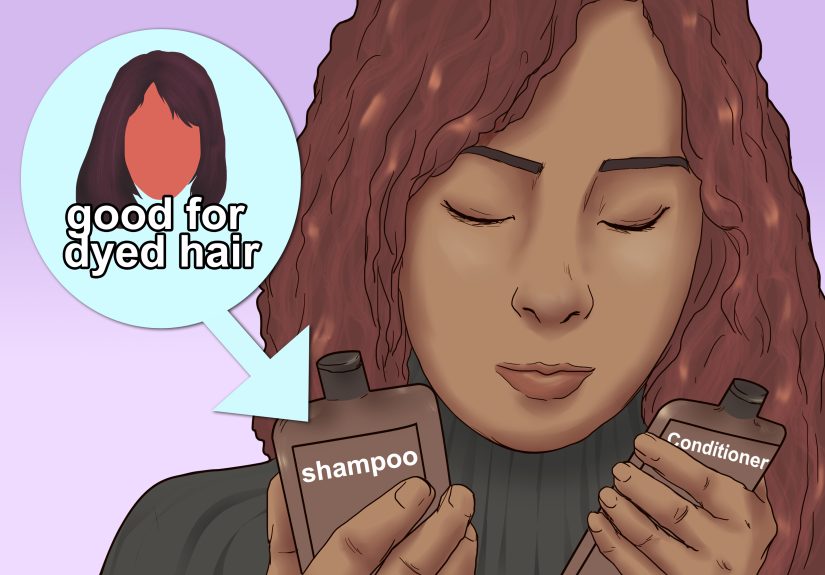
Colored Afro-textured hair usually needs more moisture than before. Use a sulfate-free, color-safe shampoo and a slippery conditioner. Wash less often if your scalp allows, and focus on keeping the hair supple between wash days with leave-in conditioner, cream, or a light sealing oil where needed.
Deep condition regularly
A weekly deep-conditioning treatment is often the difference between color that looks luxe and color that looks like it lost a fight. Look for formulas that improve softness and slip. If your hair feels overly soft, gummy, or weak, add a balanced strengthening treatment occasionally. If it feels stiff and hard, back off protein and go heavier on hydration.
Be gentle with heat
Freshly colored hair plus frequent flat-ironing is a risky romance. Heat styling can accelerate dryness and fading. If you use heat, use a protectant and keep the temperature reasonable. Your future ends are begging you.
Sleep like you care
Satin bonnets, satin scarves, and satin pillowcases help reduce friction and moisture loss. Cotton is cozy for sheets, less cozy for maintaining shiny dyed curls.
Use cooler water when possible
Very hot water can dry the hair and speed up color fading. You do not need to suffer through an iceberg shower, but lukewarm water is usually a friendlier choice for color-treated coils.
Common Mistakes to Avoid
- Going too light too fast: dramatic lifting is where major breakage often begins.
- Coloring right after a relaxer: chemical overlap can push the hair past its limit.
- Ignoring the patch test: your scalp should not be the test lab.
- Applying permanent color over the full length every time: repeated overlap is rough on textured ends.
- Skipping aftercare: color without moisture is basically a breakup waiting to happen.
- Dyeing brows or lashes: absolutely not. Keep hair dye away from the eyes.
When to See a Professional Instead
Book a pro if you want highlights, balayage, platinum, vivid shades on very dark hair, corrective color, or color over previously relaxed or bleached hair. Also get professional help if you have scalp conditions, extensive breakage, or a history of reacting badly to products.
A skilled stylist who understands textured hair can adjust timing, product strength, placement, and aftercare in a way a box kit simply cannot. When the goal is “gorgeous and still attached to my head,” expertise matters.
Real-World Experiences With Dyeing African Hair
One of the most common experiences people describe after dyeing Afro-textured hair is surprise at how different the hair feels, even when the color looks amazing. The mirror says, “You did that.” The fingers say, “Why is this section suddenly thirstier than the rest of my head?” That contrast is very real. Coily and kinky hair can look glossy after coloring while also needing more moisture almost immediately.
Another common experience is discovering that the dream shade on the box and the final result are not close cousins. Dark natural hair often lifts warm, which means red, orange, or gold undertones may show up before the final desired shade does. This is why so many first-time DIY color jobs end with someone standing in bathroom light whispering, “Interesting,” when they clearly mean, “This was not the plan.” Warm undertones are normal, and they do not always mean the process failed. They often mean the hair needs professional toning, a darker glaze, or a more realistic target shade.
Gray coverage is another area where experience teaches humility. Many people with dense, coarse, or resistant strands find that grays along the hairline and temples do not obey the box the way the rest of the hair does. Those areas may need careful saturation, precise timing, or professional formulas designed for stubborn gray. In real life, the struggle is not always the color itself. It is those three silver hairs at the front that act like union leaders.
There is also the very common lesson that dyed African hair responds better to routines than to random acts of panic. People often report that once they switched to color-safe cleansers, regular deep conditioning, lower heat, and satin protection at night, the hair felt far more manageable. In other words, the problem was not always the dye alone. Sometimes it was the old routine trying to manage new hair.
People who lighten their natural hair often talk about a shift in curl behavior. Some see a looser pattern in the lightened sections. Others notice frizz, rougher ends, or hair that tangles faster than before. This does not happen to everyone, but it is common enough to respect. The lived experience here is simple: the blonder the goal, the bigger the maintenance bill.
On the happier side, many people also describe color as liberating. A subtle burgundy, cinnamon brown, or soft copper can make curls pop visually and bring more dimension to twist-outs, braid-outs, and wash-and-gos. Some feel more polished with gray coverage. Others feel more expressive with bold color peeking through braids or silk presses. The emotional side of hair color matters. It can be playful, confidence-boosting, and deeply personal.
The smartest dye experiences usually have three things in common: realistic expectations, slower changes, and serious moisture afterward. The worst experiences usually involve rushing, overlapping chemicals, or assuming one viral video equals a cosmetology license. Hair color is chemistry, not manifesting.
So if you are planning to dye African hair, think of the process as a partnership with your texture, not a battle against it. Respect the strand, respect the scalp, keep the moisture coming, and choose a color plan that your hair can actually live with. That is how you get hair that turns heads for the right reasons.
Final Thoughts
Dyeing African hair can be beautiful, safe, and deeply satisfying when it is done with patience and good technique. The healthiest approach is to protect the scalp, patch test every time, avoid rushing into dramatic lightening, and build your routine around moisture and low breakage. If you are aiming for subtle change, at-home color may work well. If you are chasing a major transformation, a professional is usually worth every penny.
Color should enhance your texture, not punish it. So go ahead and enjoy the auburn, the espresso gloss, the honey ribbons, or the bold temporary red. Just make sure your curls, coils, and kinks are still speaking to you afterward.
Note: This article is for educational purposes and does not replace advice from a licensed stylist or dermatologist, especially if you have scalp irritation, a history of allergic reactions, or significant hair loss.