Table of Contents >> Show >> Hide
- What Is a Triangular Prism?
- The Formula for the Volume of a Triangular Prism
- How to Find the Volume of a Triangular Prism in Simple Steps
- Example 1: Basic Triangular Prism Volume Problem
- Example 2: Using the Area of the Triangle First
- Example 3: Real-Life Triangular Prism Problem
- Why the Formula Works
- Common Mistakes to Avoid
- Quick Practice Problems
- How to Check Your Answer
- When You Might Use Triangular Prism Volume in Real Life
- Helpful Memory Trick
- Experience-Based Tips for Learning Triangular Prism Volume
- Conclusion
Finding the volume of a triangular prism sounds like something a geometry textbook might whisper dramatically before a quiz. But the good news is this: once you understand the shape, the formula is surprisingly friendly. No secret math handshake required.
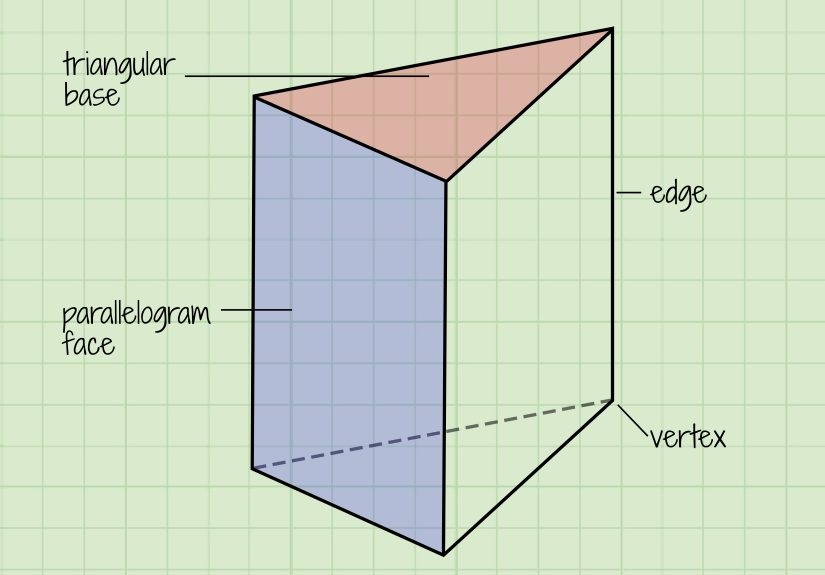
A triangular prism is a three-dimensional solid with two matching triangular faces connected by three rectangular faces. Think of a camping tent, a Toblerone chocolate bar, or a doorstop with excellent posture. To find its volume, you simply calculate how much space is inside it. In math language, volume tells you the amount of cubic space a 3D object holds.
The main formula is:
Volume = Area of the triangular base × Length of the prism
Because the base is a triangle, you usually write the formula like this:
V = 1/2 × base × height × length
That is the big idea. First, find the area of the triangle. Then multiply that area by the length of the prism. Simple, neat, and far less scary than it looks when your teacher writes it on the board at lightning speed.
What Is a Triangular Prism?
A triangular prism is a solid shape with two identical triangles on opposite ends. These triangles are parallel, congruent, and connected by rectangular sides. The word “prism” means the shape has the same cross-section all the way through. In other words, if you sliced it like a loaf of bread, each slice would show the same triangle.
This is why triangular prisms show up in real life more often than people notice. Roof frames, ramps, wedges, tents, packaging, and certain engineering supports can all resemble triangular prisms. Geometry is not hiding in a dusty notebook; it is standing there in your garage wearing a hard hat.
Parts of a Triangular Prism
Before using the formula, it helps to know the three measurements involved:
- Base of the triangle: One side of the triangular face.
- Height of the triangle: The perpendicular distance from the base of the triangle to the opposite vertex.
- Length of the prism: The distance between the two triangular faces.
The most common mistake is mixing up the height of the triangle with the length of the prism. The triangle’s height belongs to the flat triangular face. The prism’s length stretches the triangle into a 3D object. They are cousins, not twins.
The Formula for the Volume of a Triangular Prism
The formula for the volume of a triangular prism is:
V = 1/2 × b × h × l
In this formula:
- V means volume.
- b means the base of the triangle.
- h means the height of the triangle.
- l means the length of the prism.
You may also see it written as:
V = B × l
Here, B represents the area of the triangular base. Since the area of a triangle is 1/2 × base × height, both versions of the formula mean the same thing. One version just shows all the steps in one line.
How to Find the Volume of a Triangular Prism in Simple Steps
Let’s break the process down into small, non-panic-inducing steps.
Step 1: Identify the Triangle’s Base
Look at the triangular face of the prism. Choose the side labeled as the base. In many textbook problems, the base is already given. For example, the triangle may have a base of 8 inches.
Remember, the base of the triangle is not always the bottom side in a drawing. Math diagrams love to rotate shapes just to keep life spicy. Use the labeled measurement or the side that pairs with the perpendicular height.
Step 2: Find the Triangle’s Height
The height of the triangle is the straight, perpendicular distance from the base to the opposite corner. It should form a right angle with the base. If the problem gives you this number, excellent. If not, you may need another method, such as the Pythagorean theorem, but most beginner problems provide it directly.
For example, if the triangle has a base of 8 inches and a height of 5 inches, you have enough information to find the area of the triangular base.
Step 3: Calculate the Area of the Triangular Base
Use the triangle area formula:
Area = 1/2 × base × height
Using the example above:
Area = 1/2 × 8 × 5 = 20 square inches
This means the triangular face covers 20 square inches. But volume is not square units; volume is cubic units. So we are not finished yet. Put down the victory confetti for just one more step.
Step 4: Multiply by the Length of the Prism
Now multiply the triangular base area by the length of the prism:
Volume = 20 × 12 = 240 cubic inches
So, if the triangular base has an area of 20 square inches and the prism is 12 inches long, the volume is:
240 cubic inches
That is the answer. The prism can hold 240 little cubic inches of space, assuming those tiny cubes are very organized and do not complain about cramped living conditions.
Example 1: Basic Triangular Prism Volume Problem
Suppose a triangular prism has a triangular base with a base length of 6 centimeters, a triangle height of 4 centimeters, and a prism length of 10 centimeters. Find the volume.
Step 1: Write the formula.
V = 1/2 × b × h × l
Step 2: Substitute the numbers.
V = 1/2 × 6 × 4 × 10
Step 3: Multiply carefully.
1/2 × 6 × 4 = 12
12 × 10 = 120
Answer: 120 cubic centimeters
The final unit is cubic centimeters because volume measures three-dimensional space.
Example 2: Using the Area of the Triangle First
Sometimes a problem gives you the area of the triangular base instead of the base and height. That actually makes your job easier, which is rare in math and should be appreciated.
Imagine a triangular prism has a triangular base area of 35 square feet and a length of 9 feet.
Use:
Volume = Base area × Length
Volume = 35 × 9 = 315
Answer: 315 cubic feet
In this case, you do not need to calculate the triangle’s area because the problem already handed it to you like a tiny mathematical gift basket.
Example 3: Real-Life Triangular Prism Problem
Let’s say you are helping design a small triangular garden bed cover. The triangular end has a base of 3 feet and a height of 2 feet. The cover is 8 feet long. What is the volume inside the cover?
V = 1/2 × 3 × 2 × 8
V = 3 × 8
V = 24 cubic feet
The volume inside the cover is 24 cubic feet. That tells you how much space is enclosed by the triangular prism shape.
Why the Formula Works
The volume of any prism is found by multiplying the area of its base by its height or length. A rectangular prism uses a rectangular base. A cylinder uses a circular base. A triangular prism uses a triangular base. Same family recipe, different ingredient.
For a triangular prism, the base is a triangle. Since the area of a triangle is half the area of a rectangle with the same base and height, the formula includes 1/2. Once you have the triangle’s area, multiplying by the prism length stretches that area through space.
Think of it like stacking identical triangular sheets. One sheet has area. Stack many sheets in a straight line, and suddenly you have volume. Congratulations, your flat triangle has gone 3D and is now applying for a promotion.
Common Mistakes to Avoid
Mistake 1: Forgetting the 1/2
The triangle area formula includes 1/2. If you forget it, your answer will be twice as large as it should be. That is not “close enough”; that is your triangular prism suddenly pretending to be a luxury apartment.
Mistake 2: Confusing Triangle Height with Prism Length
The triangle height is part of the triangular face. The prism length is the distance between the two triangular faces. If you swap these numbers, you may still get the same result in multiplication sometimes, but your setup will be confusing. In more complex problems, that confusion can lead to wrong answers.
Mistake 3: Using Square Units Instead of Cubic Units
Area uses square units, such as square inches or square meters. Volume uses cubic units, such as cubic inches or cubic meters. If your answer is volume, the unit should have a little cubed symbol or the word “cubic.”
Mistake 4: Measuring the Slanted Side Instead of the Height
The height of the triangle must be perpendicular to the base. A slanted side is not the same thing unless the triangle is arranged in a special way and the side forms a right angle. When in doubt, look for the right-angle marker.
Quick Practice Problems
Practice Problem 1
A triangular prism has a triangle base of 10 inches, a triangle height of 7 inches, and a prism length of 6 inches. Find the volume.
V = 1/2 × 10 × 7 × 6
V = 35 × 6 = 210 cubic inches
Practice Problem 2
A triangular prism has a triangular base area of 18 square meters and a length of 11 meters. Find the volume.
V = 18 × 11 = 198 cubic meters
Practice Problem 3
A tent is shaped like a triangular prism. The triangular end has a base of 5 feet and a height of 4 feet. The tent is 9 feet long. What is the volume?
V = 1/2 × 5 × 4 × 9
V = 10 × 9 = 90 cubic feet
How to Check Your Answer
One easy way to check your answer is to estimate before calculating. If the triangle base is 8 and the height is 5, the triangle area should be half of 40, which is 20. If the prism length is 12, then 20 times 12 gives 240. The numbers should feel reasonable.
You can also check the unit. If all measurements are in inches, your volume should be in cubic inches. If the problem uses mixed units, such as inches and feet, convert them before multiplying. Mixed units are like wearing one sneaker and one roller skate: technically possible, but not recommended.
When You Might Use Triangular Prism Volume in Real Life
Triangular prism volume appears in construction, packaging, architecture, design, landscaping, and engineering. If someone needs to calculate the amount of material inside a triangular-shaped space, this formula can help.
For example, builders may estimate the volume of roof spaces. Designers may work with triangular packaging. Students may use the formula to understand how three-dimensional shapes relate to two-dimensional bases. Even if you do not plan to become a geometry professor, knowing how to find volume builds stronger problem-solving skills.
Helpful Memory Trick
Here is a simple way to remember the formula:
Triangle first, then stretch.
First, find the area of the triangle. Then, stretch that triangle along the prism’s length by multiplying. This phrase keeps the process clear and prevents the formula from turning into alphabet soup.
Experience-Based Tips for Learning Triangular Prism Volume
After working through many geometry problems, one thing becomes obvious: most mistakes happen before the actual multiplication begins. Students often know the formula but are unsure which number goes where. That is completely normal. Geometry problems are partly about calculation and partly about reading the diagram like a tiny detective with a ruler.
A useful habit is to label the measurements before solving. Write “triangle base” beside the base of the triangular face, “triangle height” beside the perpendicular height, and “prism length” along the long direction of the prism. This simple labeling step can save you from grabbing the wrong number. It may feel extra at first, but it is like putting labels on moving boxes. Future you will be grateful.
Another practical tip is to solve in two stages instead of rushing into the full formula. First, calculate the area of the triangular base. Pause. Check it. Then multiply by the prism length. This method makes the problem easier to follow and reduces careless errors. It also helps you understand what the numbers mean instead of just shoving them into a formula and hoping math takes pity on you.
Visual learners often benefit from imagining the triangular prism as a stack of identical triangles. Picture one triangle, then imagine it repeated again and again along the length of the prism. The area of one triangle tells you the size of each slice. The length tells you how far the slices continue. Volume is the total space made by all those slices together.
It is also smart to practice with real objects. Look at a tent, a wedge-shaped doorstop, or triangular packaging and try to identify the triangular face and the length. You do not need to measure everything perfectly; the goal is to train your eyes to recognize the shape. Once you can spot triangular prisms in everyday life, the formula starts feeling less like a school assignment and more like a useful tool.
When checking homework, pay close attention to units. Many correct calculations lose points because the final answer says “square inches” instead of “cubic inches.” Area is flat. Volume is 3D. If the shape can hold space, fill space, or describe inside capacity, the answer should be cubic units.
Finally, do not memorize the formula without understanding why it works. The formula is not magic. It comes from a very logical idea: volume of a prism equals base area times length. Since the base is a triangle, you use the triangle area formula first. Once that clicks, triangular prism volume becomes much easier to remember. Geometry may still wear a serious face, but underneath, it is mostly patterns and common sense.
Conclusion
Finding the volume of a triangular prism is simple when you break it into steps. Start with the triangular base, calculate its area using 1/2 × base × height, and then multiply by the length of the prism. The final answer should always be written in cubic units.
The key is understanding what each measurement means. The base and height belong to the triangle, while the prism length stretches that triangle into a three-dimensional solid. Once you remember “triangle first, then stretch,” the formula becomes much easier to use.
Whether you are solving homework, preparing for a test, helping with a building project, or just trying to make peace with geometry, the volume of a triangular prism is one of those skills that becomes easier with practice. And unlike some math topics, this one has a formula that behaves itself nicely.