Table of Contents >> Show >> Hide
- What Are the 5 Great Lakes?
- The Classic Great Lakes Mnemonic: HOMES
- Want the Lakes in Order? Use a Different Mnemonic
- How to Remember Each Lake by Personality
- Use the Flow of Water to Lock In the Order
- Draw a Quick Map, Even a Bad One
- Try a Memory Palace for the Great Lakes
- How to Make the Memory Stick for More Than Five Minutes
- Common Mistakes People Make
- Best Mnemonic Devices for Different Types of Learners
- Real-Life Experiences With Remembering the Great Lakes
- Final Takeaway
- SEO Tags
Note: This article is for general education and memory practice. The mnemonics below include both commonly taught classics and fresh, reader-friendly ways to make the Great Lakes stick in your brain for the long haul.
Trying to remember the five Great Lakes can feel weirdly harder than it should. There are only five of them. They are very famous. They are literally giant. And yet, the moment someone asks you to name them, your brain may confidently answer, “Lake… Wet?”
If that sounds familiar, welcome. You are in good company. The good news is that learning how to remember the 5 Great Lakes does not require a photographic memory, a geography degree, or a dramatic montage set to inspirational music. You just need a few solid mnemonic devices, a little logic, and a trick that fits the way you remember things.
In this guide, we will cover the classic Great Lakes mnemonic, a few better-for-some-people alternatives, memory techniques that actually help information stick, and simple ways to remember the lakes in order. By the end, you should be able to name the Great Lakes without breaking eye contact with your quiz, your child’s homework, or your pub trivia team.
What Are the 5 Great Lakes?
Before we get clever, let’s get clear. The five Great Lakes are:
- Lake Superior
- Lake Michigan
- Lake Huron
- Lake Erie
- Lake Ontario
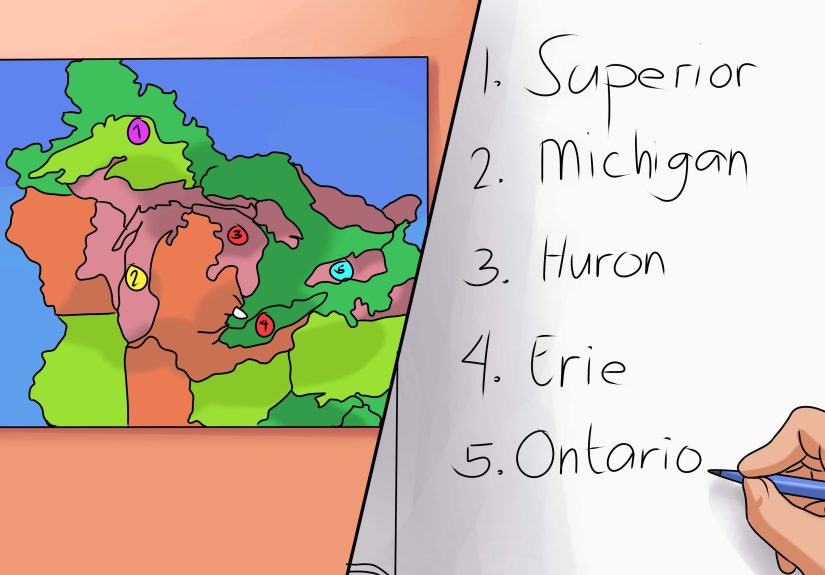
If you want them from west to east on a map, the order is Superior, Michigan, Huron, Erie, Ontario. That matters because a lot of people learn a mnemonic that helps them remember the names, but not necessarily the map order. That is where confusion sneaks in wearing loafers and carrying a clipboard.
It also helps to know that the Great Lakes are not just random big puddles with excellent branding. They form the largest freshwater surface system on Earth and support transportation, recreation, regional economies, ecosystems, and drinking water for millions of people. So yes, memorizing them is school-friendly, trivia-friendly, and honestly just a good life upgrade.
The Classic Great Lakes Mnemonic: HOMES
The best-known mnemonic for the Great Lakes is HOMES:
- H = Huron
- O = Ontario
- M = Michigan
- E = Erie
- S = Superior
This mnemonic has been taught for generations because it is short, easy to say, and attached to a word most people already know. “Homes” is familiar. It feels comfortable. It does not sound like a robot coughed on a Scrabble board. That familiarity is exactly what makes it work.
Still, HOMES has one important downside: it helps you remember which lakes belong on the list, but it does not match the west-to-east order on the map. So if your teacher, child, or trivia host asks for the Great Lakes in geographic order, HOMES may get you most of the way there and then politely abandon you at the curb.
Want the Lakes in Order? Use a Different Mnemonic
If you need to remember the Great Lakes from west to east, try this instead:
Super Men Help Every One
- Super = Superior
- Men = Michigan
- Help = Huron
- Every = Erie
- One = Ontario
Is it a little cheesy? Absolutely. Does cheesy often work better than serious? Also absolutely.
You can also make your own sentence. In fact, self-made mnemonics are often even more memorable because your brain has to build the connection, not just borrow it. Here are a few playful examples:
- Smart Maps Help Explain Oceans
- Sunny Mornings Have Extra Oatmeal
- Sailors Make Harbors Easy Overnight
They do not have to be profound. They just have to be memorable. Your brain loves weird. This is not the time to be elegant.
How to Remember Each Lake by Personality
Another great strategy is to attach a simple identity or “personality” to each lake. Instead of memorizing five floating names, you remember five distinct characters. Suddenly, geography gets a little more like a sitcom cast.
Lake Superior: The Giant
Think of Lake Superior as the overachiever. It is the largest by volume, the deepest, and the coldest of the Great Lakes. If one lake was going to wear a dramatic winter coat and say, “I was born for this,” it would be Superior.
Memory cue: Superior is superior in size.
Lake Michigan: The All-American One
Lake Michigan stands out because it is the only Great Lake located entirely within the United States. That makes it easy to tag mentally as the lake with the all-American passport situation.
Memory cue: Michigan is the one fully in the U.S.
Lake Huron: The Connector
Lake Huron often gets less attention in casual conversation, but it sits right in the chain and is closely tied to the flow between the upper and lower lakes. Think of it as the link holding the system together.
Memory cue: Huron helps connect the system.
Lake Erie: The Shallow, Warm One
Lake Erie is the shallowest of the Great Lakes, which means it tends to warm up faster than the others. It is also highly productive biologically. Erie is the lake that feels like it got to spring first and actually texted the group chat about it.
Memory cue: Erie is easier to warm.
Lake Ontario: The Last Stop
Lake Ontario sits at the downstream end of the Great Lakes chain before water continues toward the St. Lawrence River. If the lakes were a relay race, Ontario would be the final runner before the handoff.
Memory cue: Ontario is the outflow-side lake.
Use the Flow of Water to Lock In the Order
One of the smartest ways to remember the Great Lakes is to stop treating them like a random list and start seeing them as a moving system. Water generally flows from Superior and Michigan into Huron, then through Lake St. Clair into Erie, over Niagara Falls, and finally into Ontario before reaching the St. Lawrence River.
That means the order is not arbitrary. It has logic. And logic is the best friend of memory.
If you imagine water taking a road trip east, the sequence suddenly becomes easier:
- Start at Superior
- Meet Michigan
- Move to Huron
- Drop into Erie
- Finish at Ontario
When information has movement, your brain is more likely to retain it. Static lists are sleepy. Stories travel better.
Draw a Quick Map, Even a Bad One
You do not need artistic talent here. In fact, a slightly lopsided sketch may work even better because you will remember making it. Draw Superior on top, Michigan hanging down on the left, Huron on the right, Erie below that, and Ontario farther east.
Now label them. Then redraw the map from memory later the same day.
This works because memory improves when you combine words with visuals. You are not just reading the names; you are placing them in space. That gives your brain more than one route back to the answer.
And if your map looks like a potato wearing headphones, that is fine. Geography teachers may prefer accuracy, but memory loves participation.
Try a Memory Palace for the Great Lakes
If you like vivid mental images, use a simple memory palace. Picture walking through your home and assigning one lake to each room:
- Front door: Superior, because it is the grand entrance
- Kitchen: Michigan, because it is all-American and familiar
- Hallway: Huron, the connector
- Bathroom: Erie, the shallow one that heats up quickly
- Back porch: Ontario, the final stop before everything flows out
Walk through the route in your mind. The sillier the image, the better. See Superior wearing a crown at the door. See Erie in a steamy bathroom. See Ontario waving goodbye from the porch like the last guest at a family reunion.
Yes, this sounds ridiculous. That is exactly why it works.
How to Make the Memory Stick for More Than Five Minutes
Learning the Great Lakes once is easy. Remembering them next week is the real sport. To improve long-term recall, use three simple steps:
1. Say Them Out Loud
Do not just read the mnemonic. Speak it. Then say the lake names. Out-loud repetition helps reinforce the pattern and reduces the “I knew it a second ago” effect.
2. Space Out Your Review
Review the lakes once after an hour, again later that day, then the next day, then a few days later. This spaced repetition approach is much stronger than cramming them ten times in a row and hoping your brain signs the paperwork.
3. Test Yourself Without Looking
Cover the list and try to write the lakes from memory. Then do it in reverse. Then do it by map order. Self-testing is where memory stops being a wish and starts being a skill.
Common Mistakes People Make
When people struggle to remember the Great Lakes, a few patterns show up again and again:
- They mix up HOMES with map order. HOMES is useful, but it is not west to east.
- They forget Ontario belongs at the end. It often gets lost because it sounds less “Midwestern road trip” than the others.
- They know the names but not the layout. A quick sketch fixes that fast.
- They review passively. Reading is not the same as recalling.
- They never personalize the memory trick. If HOMES does not click, build your own mnemonic.
The big lesson? There is nothing wrong with your memory if the first trick does not work. You may just need a different door into the information.
Best Mnemonic Devices for Different Types of Learners
For Word Lovers
Use HOMES or create your own sentence for the lakes in order.
For Visual Learners
Sketch the map and color-code each lake.
For Story Thinkers
Imagine water traveling from Superior to Ontario like a five-stop journey.
For Creative Learners
Turn each lake into a character: Superior the giant, Michigan the American, Huron the connector, Erie the warm-up act, Ontario the final exit.
For Students Studying for a Quiz
Use all of the above for one minute each. The more ways you encode the information, the more likely you are to retrieve it under pressure.
Real-Life Experiences With Remembering the Great Lakes
One reason this topic sticks with people is that learning the Great Lakes often happens in very human moments. Maybe it starts in elementary school, with a worksheet, a map, and a teacher who says, “You will need to know these forever,” and everyone in class silently doubts that claim. Years later, someone asks you to name the Great Lakes, and suddenly that teacher appears in your memory like a prophecy fulfilled.
For many adults, the experience of remembering the Great Lakes is tied to rediscovering old school knowledge. You might be helping a child with homework and realize that you still remember HOMES from decades ago. Or maybe you remember only half of it and become irrationally determined to recover the other half, because nothing motivates the human spirit quite like refusing to be defeated by fifth-grade geography.
Students often have a very specific experience with this topic too: the moment when the list stops being random. At first, Superior, Michigan, Huron, Erie, and Ontario can feel like five names in a blender. Then one good mnemonic lands, or one little map sketch makes sense, and suddenly the whole thing clicks. That click is satisfying in a way that is hard to explain unless you have ever gone from “I absolutely cannot remember this” to “Wait, I can do this in order now.”
Travel can make the memory even stronger. People who have visited Chicago may connect that experience to Lake Michigan. Someone who has seen Niagara Falls may remember that Erie flows toward Ontario. People from Michigan, Ohio, New York, Wisconsin, or other Great Lakes states often carry the lakes in a more personal way. The names are not just geography terms; they are weather, beaches, fishing trips, family drives, state pride, and local identity.
There is also a shared experience of mixing up the order and pretending you did not. Plenty of people know HOMES perfectly but hesitate when asked to place the lakes on a map. That is not failure; it is just proof that memorizing a list and understanding a system are different tasks. The good part is that once you connect the names to the map and the flow of water, the memory becomes sturdier and much harder to lose.
Teachers, parents, and tutors often notice that the most memorable moment comes when learners invent their own phrase. A child may come up with something goofy like “Super Monkeys Hug Every Otter,” and suddenly the order is unforgettable. It is not polished. It is not poetic. But it belongs to them, and ownership makes memory stronger. The same thing happens with adults. The minute you build your own mental hook, the Great Lakes stop being external information and start becoming knowledge you can actually carry around.
In that sense, remembering the five Great Lakes is a small but useful lesson in how memory works in everyday life. Facts stick better when they are familiar, visual, emotional, organized, or slightly absurd. The Great Lakes happen to be perfect for this because they are important, distinctive, and easy to turn into a story. Once you do that, you are not memorizing five names anymore. You are remembering a giant freshwater system with a beginning, a middle, and an end.
Final Takeaway
If you just want the fastest answer, use HOMES to remember the names and Super Men Help Every One to remember the west-to-east order. Then reinforce the memory by sketching a quick map, saying the names out loud, and testing yourself later instead of immediately peeking.
That combination works because it gives your brain multiple hooks: language, order, imagery, and repetition. In other words, you are not hoping to remember the Great Lakes. You are setting a trap for forgetting.
And that, frankly, is how most good studying works.