Table of Contents >> Show >> Hide
- What Was NASA’s Ingenuity Mars Helicopter?
- Why Flying on Mars Is So Difficult
- Ingenuity’s Record-Breaking Mission by the Numbers
- What Happened During Ingenuity’s Final Flight?
- Why Ingenuity’s Final Flight Was Still a Victory
- Ingenuity and Perseverance: A Perfect Mars Partnership
- The Legacy of Ingenuity Mars Helicopter
- Experiences and Reflections: What Ingenuity Teaches Us About Big Dreams
- Conclusion: Ingenuity’s Final Flight Was Not the End of the Dream
- SEO Tags
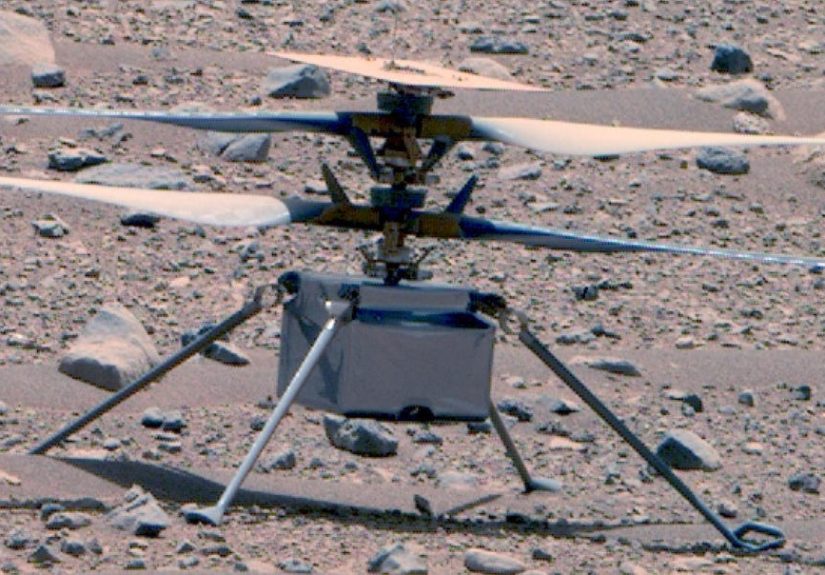
Some machines retire with a gold watch. NASA’s Ingenuity Mars Helicopter retired with damaged rotor blades, a place in aerospace history, and the sort of résumé that makes every cautious mission planner quietly whisper, “Okay, that was ridiculous.” Designed as a short technology demonstration, Ingenuity was expected to make up to five experimental flights over about 30 Martian days. Instead, it flew 72 times, survived almost three years on Mars, scouted terrain for the Perseverance rover, and proved that powered, controlled flight on another world was not science fiction wearing a lab coat.
Its final flight came on January 18, 2024. The small helicopter climbed, hovered, descended, lost contact near the surface, and later revealed damage to its rotor blades. NASA officially declared the mission complete on January 25, 2024. That could sound like a sad ending, but only if you ignore the wildly important part: Ingenuity had already done more than anyone reasonably asked of it. It had crossed the line between experiment and exploration tool.
In the thin air of Mars, where the atmosphere is only a tiny fraction as dense as Earth’s, even getting off the ground once was a triumph. Doing it 72 times was the robotic equivalent of entering a bake sale with one cupcake and accidentally opening a national dessert chain.
What Was NASA’s Ingenuity Mars Helicopter?
Ingenuity was a lightweight, solar-powered helicopter that traveled to Mars attached to the underside of NASA’s Perseverance rover. Perseverance landed in Jezero Crater on February 18, 2021, beginning a mission focused on geology, ancient habitability, sample collection, and the search for signs that Mars may once have supported microbial life.
Ingenuity’s job was different. It was not built to drill rocks, analyze soil chemistry, or collect samples. Its purpose was elegantly simple and incredibly difficult: demonstrate that powered flight was possible on Mars. On April 19, 2021, Ingenuity lifted about 10 feet above the Martian surface, hovered briefly, and landed safely. That first flight became a “Wright Brothers moment” for planetary exploration.
A Tiny Aircraft With a Giant Assignment
The helicopter weighed about 4 pounds on Earth and had to fly in a hostile environment with bitter cold, dust, limited solar energy, delayed communication, and no human pilot holding a joystick in real time. Commands had to be uploaded in advance. Ingenuity then flew autonomously, using sensors and onboard software to manage its own motion.
That autonomy mattered because Mars is too far away for live piloting. Radio signals take several minutes to travel between Earth and Mars, so “turn left now” would arrive long after “now” had packed a bag and left town. Ingenuity had to think fast enough for itself.
Why Flying on Mars Is So Difficult
On Earth, helicopters push air downward to create lift. On Mars, there is much less air to push. That means a Martian helicopter must be very light, spin its rotor blades extremely fast, and still remain stable in unpredictable conditions. It is like trying to swim in a pool where someone removed most of the water but still expects a perfect butterfly stroke.
Mars also brings punishing temperature swings. At Jezero Crater, nighttime temperatures can become dangerously cold for electronics and batteries. Ingenuity was solar-powered, meaning dust, winter sunlight, and seasonal changes could all affect its energy budget. Unlike Perseverance, which uses a nuclear power system, Ingenuity had to wake up each Martian day and hope the Sun gave it enough juice to keep warm and fly.
The First Flight Changed the Mission
NASA originally treated Ingenuity as a technology demonstration. If it flew five times, the team could call the experiment a success, high-five responsibly, and move on. But the helicopter kept working. After its first flights, NASA shifted Ingenuity into an operations demonstration role. That meant it could help show how aerial vehicles might support future rover missions.
Ingenuity began scouting routes, photographing terrain, and giving mission planners a new perspective on the Martian landscape. Rovers are excellent explorers, but they see the world from ground level. A helicopter can look ahead, spot hazards, and help identify scientifically interesting targets. On Mars, a little altitude can save a lot of wheel trouble.
Ingenuity’s Record-Breaking Mission by the Numbers
By the end of its mission, Ingenuity had completed 72 flights, logged about 128.8 minutes of flight time, and traveled roughly 10.5 miles across the Martian surface. It reached altitudes near 79 feet and speeds above 22 miles per hour. For a craft designed for a short test campaign, those numbers are not merely impressive. They are borderline impolite to expectations.
Its flights became more ambitious over time. It moved from cautious vertical hops to longer scouting missions. It operated from dozens of airfields. It survived emergency landings, dusty conditions, winter power challenges, and changing terrain. Every extra flight produced engineering data that future mission designers can use.
From Passenger to Pioneer
Ingenuity arrived on Mars as a passenger. Perseverance carried it safely to the surface, deployed it, and served as its communication relay. But once the helicopter proved itself, it became a pioneer in its own right. It was no longer just a clever add-on tucked under a rover. It became the first aerial scout on another planet.
That matters because planetary exploration has always been limited by mobility. Landers stay put. Rovers drive slowly and carefully. Orbiters see from far above. A rotorcraft fills the gap between those worlds. It can inspect terrain from low altitude, cross obstacles that would trap wheels, and reach places a rover might never attempt.
What Happened During Ingenuity’s Final Flight?
Ingenuity’s 72nd flight was intended as a short vertical hop to help determine its location after a previous emergency landing. The helicopter rose to about 40 feet, hovered for several seconds, and began descending. Near the surface, it lost communication with Perseverance, which served as its relay back to Earth.
Communication was later restored, but images showed that one or more rotor blades had been damaged during touchdown. Since the blades were essential for safe flight, NASA concluded that Ingenuity could no longer fly. The helicopter remained upright and in contact, but its flying days were over.
The First Aircraft Accident Investigation on Another World
NASA and its partners later analyzed the final flight in what became the first aircraft accident investigation conducted for another planet. The likely cause involved Ingenuity’s navigation system struggling over steep, relatively featureless sand ripples. The helicopter relied on visual features on the ground to estimate motion. When there were not enough distinct features to track, its navigation data became unreliable.
The suspected chain of events included inaccurate velocity estimates, a hard landing, and rapid attitude changes that placed too much stress on the spinning rotor blades. In plain English: Mars gave the helicopter a bland sandy landing zone, the navigation system had too little visual information, and the aircraft came down badly. Even on another planet, aviation still has a way of saying, “Terrain matters.”
Why Ingenuity’s Final Flight Was Still a Victory
It is tempting to focus on the broken blades, but that misses the larger achievement. Ingenuity did not fail because it was poorly designed. It ended because it was pushed far beyond its original design environment and kept contributing until the final moments. A helicopter built for five flights did 72. A short experiment became an operational scout. A cautious proof of concept became a new category of planetary exploration.
NASA did not lose a helicopter so much as complete an unexpectedly rich mission. Ingenuity returned data about aerodynamics, navigation, autonomy, power management, thermal survival, dust exposure, flight planning, and terrain interaction. The final landing itself became useful data. Engineers now have a better understanding of what future Mars aircraft need: stronger navigation systems, better hazard detection, improved landing logic, and perhaps support from future Mars mapping or navigation networks.
The Little Helicopter That Changed Mission Design
Before Ingenuity, flying on Mars was a bold idea. After Ingenuity, it became a proven capability. Future missions can build on its lessons. Aerial scouts could help rovers choose safer paths, inspect cliffs, map lava tubes, survey deltas, or carry small scientific instruments. Larger rotorcraft may one day travel farther and faster than any rover could.
Ingenuity also showed that small, high-risk technology demonstrations can produce enormous value. Not every mission element has to be a massive flagship spacecraft to change the future. Sometimes the side experiment becomes the headline.
Ingenuity and Perseverance: A Perfect Mars Partnership
Perseverance is still exploring Jezero Crater, a location chosen because scientists believe it once held a lake and river delta. That ancient watery environment may have preserved clues about Mars’ past habitability. The rover’s mission involves studying rocks, collecting samples, testing technology, and helping prepare for future human exploration.
Ingenuity supported that larger mission by showing what the landscape looked like from above. Aerial images helped mission teams understand terrain and think differently about route planning. In places where rover drivers had to worry about sand, rocks, slopes, and hidden obstacles, the helicopter could provide a sneak preview.
A New Way to Explore Ancient Mars
Jezero Crater is not just a random parking lot with better branding. It is a scientifically rich site with evidence of ancient water activity. More than 3.5 billion years ago, river channels likely carried water and minerals into the crater. Those deposits are exactly the kind of places scientists want to study when asking whether Mars ever had environments suitable for life.
Ingenuity did not search for life directly, but it helped prove that future aerial vehicles could assist missions that do. Imagine a drone flying ahead of astronauts, scouting a safe route across a crater rim, or inspecting a canyon wall before a rover commits to a risky path. Ingenuity made those scenarios feel less like movie material and more like engineering homework.
The Legacy of Ingenuity Mars Helicopter
Ingenuity’s legacy is larger than Mars. NASA’s Dragonfly mission, planned for Saturn’s moon Titan, represents another major step in planetary rotorcraft exploration. Titan is very different from Mars, with a thick atmosphere and exotic chemistry, but the broader idea is connected: aircraft can explore worlds in ways wheels cannot.
Ingenuity proved that aerial mobility is not a gimmick. It is a tool. On planets and moons with atmospheres, flying robots can expand the reach of science. They can gather context, reduce risk, and open terrain that would otherwise remain unreachable.
Why the Public Loved Ingenuity
Part of Ingenuity’s charm was its underdog status. It was small, solar-powered, and slightly fragile compared with the rugged rover that carried it. Perseverance looked like a mobile laboratory. Ingenuity looked like a science fair project that got accepted into a space agency and refused to be intimidated.
People love explorers that outperform their job description. Ingenuity did exactly that. It became a symbol of elegant engineering: light enough to fly, smart enough to navigate, tough enough to survive, and bold enough to keep trying.
Experiences and Reflections: What Ingenuity Teaches Us About Big Dreams
Ingenuity’s story feels powerful because it mirrors a very human experience: being asked to do one thing, discovering you can do more, and then becoming part of something bigger than the original plan. Almost everyone has had an “Ingenuity moment” in life, even if it did not involve carbon-fiber rotor blades and a 140-million-mile commute.
Think about the student who signs up for one difficult class and discovers a career path. Think about the small business that begins with one product and becomes a trusted brand. Think about the writer who drafts one article and finds a voice. Ingenuity began as a test. Then it became a scout. Then it became a teacher. The lesson is not that every experiment will succeed 72 times. The lesson is that carefully designed experiments can create possibilities nobody fully expected.
There is also a lesson in resilience. Ingenuity did not fly in friendly conditions. It faced cold nights, dust, limited energy, software challenges, sensor issues, emergency landings, and unfamiliar terrain. Yet the mission team adapted. They changed operating strategies, updated software, adjusted flight plans, and kept learning. That is a useful model for any ambitious project on Earth. Progress rarely means perfect conditions. More often, it means solving the problem that showed up after you solved the previous problem.
The final flight is part of that lesson too. Ingenuity did not end with a graceful museum landing. It ended with damage. But that damage did not erase the achievement. In fact, the final flight produced knowledge that may make future aircraft safer. Many real breakthroughs end with scuffed paint, broken parts, or a notebook full of warnings. Exploration is not a polished commercial. It is a conversation with the unknown, and the unknown can be a little rude.
For readers, students, engineers, and dreamers, Ingenuity offers a refreshingly practical kind of inspiration. It says: build carefully, test honestly, expect trouble, and leave room for surprise. It also says that small things can matter enormously. A 4-pound helicopter changed how scientists think about exploring Mars. That should make all of us suspicious of the phrase “too small to matter.”
In a culture obsessed with giant rockets and billion-dollar spectacles, Ingenuity reminded the world that elegance still counts. Its greatest achievement was not simply that it flew. It proved a new method of exploration with modest hardware, smart software, and a team willing to trust a tiny machine in an alien sky. That is the kind of story that sticks because it combines intelligence with nerve. Mars did not make flying easy. Ingenuity flew anyway.
Conclusion: Ingenuity’s Final Flight Was Not the End of the Dream
Ingenuity has made its final flight on Mars, but its influence is still gaining altitude. The helicopter proved that powered, controlled flight is possible on another planet, supported the Perseverance rover, expanded NASA’s understanding of aerial exploration, and gave future mission designers a treasure chest of real-world data.
Its broken blades are not a symbol of failure. They are the final punctuation mark on a mission that rewrote expectations. Ingenuity did not merely perform beyond Earth’s wildest dreams. It helped move those dreams off Earth entirely.