Table of Contents >> Show >> Hide
- First, What Do You Mean by “Sinking”? Subsidence vs. Settlement
- Why Land Sinks in the U.S.: The Big Causes Experts Watch
- 1) Groundwater pumping: the heavyweight champion of subsidence
- 2) Coastal subsidence: when “sea level rise” is only half the story
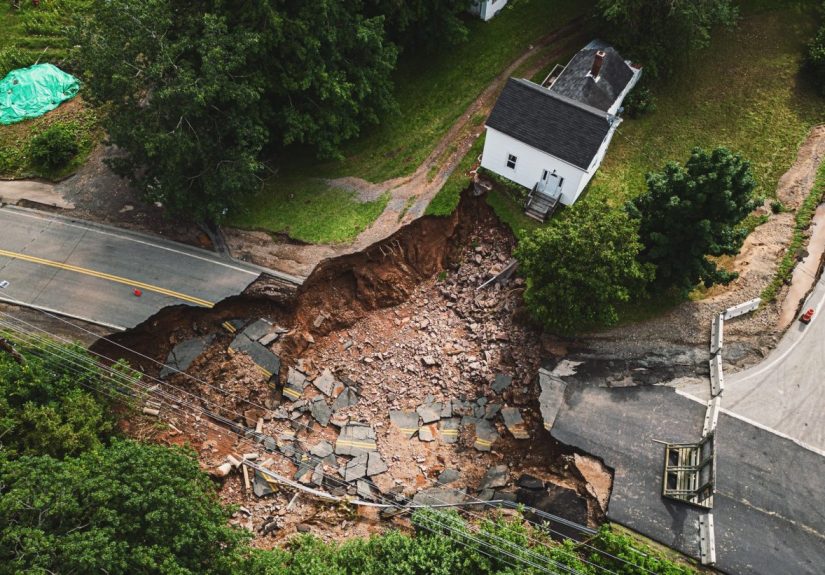
- 3) Sinkholes: the “surprise trapdoor” category
- 4) Expansive clay soils: not sinking, but still destructive
- 5) Mining and underground voids: the hidden legacy problem
- 6) Permafrost thaw: when the ground stops being “perma” anything
- Is It Actually Your Land… or Just Your House? Clues You Can Spot
- DIY Checks That Won’t Make a Geotechnical Engineer Facepalm
- When to Call the Pros (and Which Pros to Call)
- What Fixes Actually Work (and Which Ones Are Mostly Wishful Thinking)
- Insurance, Disclosures, and the “Adulting” Part of the Conversation
- Prevention: How to Reduce Risk Before Your House Does the Leaning-Tower Thing
- Homeowner Experiences: The “Wait, Was That Crack Always There?” Files
- Conclusion: So… Is the Land Under Your House Sinking?
Imagine waking up one morning, walking to the kitchen, and realizing your coffee is slowly migrating to one side of the mug.
Either your house is haunted… or your floor isn’t level anymore.
“Is my land sinking?” is one of those homeowner questions that starts smallthen spirals into late-night doom-scrolling about sinkholes,
clay soils, and whether your neighborhood was secretly built on pudding. The truth is less dramatic (usually) but still important:
ground movement is real, it’s common in certain regions, and it can range from “meh” to “call a professional yesterday.”
Let’s break down what experts say about land subsidence, foundation settlement, sinkholes, and the practical steps
you can take to protect your home (and your sanity).
First, What Do You Mean by “Sinking”? Subsidence vs. Settlement
Homeowners use “sinking” as a catch-all, but experts separate it into a few different buckets:
-
Land subsidence: the ground surface lowers over a wide areasometimes inches, sometimes feetoften due to groundwater pumping,
soil compaction, resource extraction, or natural geologic processes. -
Foundation settlement: your structure moves because the soil under (or around) the foundation changes. This can be uneven
(differential settlement), which is the one that makes doors stick and walls crack. - Sinkholes: localized collapse into an underground void, often in limestone (karst) terrain, and sometimes triggered by changes in groundwater.
- Shrink-swell movement: clay-rich soils expand when wet and shrink when dry. This can lift or drop parts of a foundation like a slow-motion trampoline.
Translation: if your home is shifting, it might be because the land is sinking, or because the soil under your foundation is misbehaving, or both.
The fix depends on which problem you actually haveso the goal is diagnosis before demolition.
Why Land Sinks in the U.S.: The Big Causes Experts Watch
1) Groundwater pumping: the heavyweight champion of subsidence
In many parts of the U.S., the most common driver of land subsidence is simple: we pump water out of underground aquifers,
and the sediments compress as the water pressure drops. Think of it like letting air out of a mattress. You don’t get the same thickness back.
This is a known issue in places that rely heavily on groundwaterparts of California’s Central Valley, Arizona, and the Houston-Galveston region, for example.
In the Houston area, scientists have documented land sinking tied to compaction of fine-grained clays and silts when groundwater is withdrawn.
2) Coastal subsidence: when “sea level rise” is only half the story
Along the Gulf Coast, parts of the Mid-Atlantic, and other low-lying areas, the land can slowly subside due to natural sediment compaction,
groundwater and hydrocarbon extraction, and deltaic processes. In coastal Louisiana, subsidence rates vary widely and can be high enough
to significantly amplify flood risk over time.
Homeowners often hear about sea level rise, but the local reality is “relative sea level rise”a combination of the ocean rising
and the land lowering. That’s why two coastal towns can face totally different flooding futures.
3) Sinkholes: the “surprise trapdoor” category
Sinkholes get the headlines because they’re dramatic. They’re also regionally predictable. If your area sits on limestone, dolomite,
gypsum, or saltrocks that dissolve in watervoids can form underground. Sometimes the roof holds for years. Sometimes it doesn’t.
Florida is the poster child, but karst terrain exists in many states (Kentucky, Tennessee, Missouri, Texas, Pennsylvania, and others).
Experts generally recommend contacting your state geological survey if you suspect sinkhole activity, because geology is local and
the “right next step” varies by terrain.
4) Expansive clay soils: not sinking, but still destructive
In many neighborhoods (especially across Texas, parts of Colorado, and other clay-rich regions), what looks like “sinking”
is often moisture-driven movement. During wet seasons, clay swells and pushes upward (heave).
During drought, it shrinks and drops (settlement).
This can create a cruel illusion: you fix a crack in spring, and it reappears in summer like it’s paying rent.
The issue isn’t your house being “bad”it’s the soil cycling like it’s training for an underground marathon.
5) Mining and underground voids: the hidden legacy problem
In some regions, older underground mines (coal, salt, etc.) can leave voids that eventually collapse, causing surface subsidence.
It’s uncommon in many areas, but where it exists, it’s a known hazard category and can affect property, roads, and utilities.
Some states even have specific mine-subsidence insurance programs or disclosures.
6) Permafrost thaw: when the ground stops being “perma” anything
In Alaska and other cold regions, thawing permafrost can cause uneven ground and rapid subsidence, damaging roads,
foundations, and water infrastructure. It’s a reminder that “sinking land” isn’t always about pumping watersometimes
it’s about the very ground structure changing as climate conditions shift.
Is It Actually Your Land… or Just Your House? Clues You Can Spot
Before you assume your entire neighborhood is slowly sliding into the Earth, look for patterns. Experts often start with
the difference between widespread movement and localized movement.
Common signs of foundation movement
- Cracks in drywall, plaster, brick, or stuccoespecially stair-step cracks in masonry
- Doors and windows sticking, rubbing, or suddenly refusing to latch (the drama!)
- Sloping or uneven floorsnoticeable enough that furniture “wants” to drift
- Gaps between walls and ceilings, around window frames, or at baseboards
- Exterior separationcracks in the foundation itself, or gaps near porches and patios
Signs that point more toward broader land subsidence
- Multiple homes nearby showing similar issues (not just yours)
- Roads, sidewalks, or curbs with consistent sinking or rippling patterns
- Changes in drainage patternswater pooling where it never used to
- In coastal or flood-prone areas, “sunny day” nuisance flooding becoming more common
Important reality check: not all cracks are catastrophic. Homes move a little as materials expand/contract with seasons.
But if you’re seeing new cracks that grow, repeated repairs that fail, or a fast change after heavy rain or drought, it’s time to investigate.
DIY Checks That Won’t Make a Geotechnical Engineer Facepalm
You can do some low-risk sleuthing before hiring pros. The goal isn’t to “diagnose” the geology yourself. The goal is to document changes,
rule out obvious water issues, and gather clean information for an expert to interpret.
1) Document cracks like you’re building a tiny evidence file
- Take photos with a coin or ruler for scale.
- Date the photos.
- Mark the ends of a crack lightly in pencil so you can see if it lengthens.
2) Check your water management
Water is the silent boss of soil behavior. Walk around your home and look for:
- Downspouts dumping water next to the foundation
- Negative grading (soil sloping toward the house)
- Leaky exterior faucets or irrigation overspray soaking one side
- Clogged gutters overflowing in storms
If you fix nothing else, fix drainage. It’s the most common “cheap fix” that prevents expensive problems later.
3) Watch doors and windows (they rat you out)
If one door sticks seasonally, it might be humidity. If multiple doors stick permanently or get worse quicklyespecially after
a drought, heavy rain, plumbing leak, or landscaping changelog it.
4) Use a long level, not vibes
A 4–6 foot level can tell you more than “it feels weird.” Measure floors in a few locations and write it down.
If the slope changes over time, that trend matters.
When to Call the Pros (and Which Pros to Call)
If your home is actively changingor if you see sudden depressions in the yarddon’t rely on internet theories.
Call the right professional for the problem in front of you.
If you suspect a sinkhole or sudden ground collapse
- Start with your state geological survey (they often track sinkholes and local geology hazards).
- Then consult a licensed geotechnical engineer or professional geologist for site-specific evaluation.
- If there’s structural impact, add a structural engineer.
If you suspect foundation settlement or soil movement
- Structural engineer for the house itself (what’s moving, what’s safe, what’s urgent).
- Geotechnical engineer for the soil conditions and “why.”
- Surveyor if you need elevation measurements, documentation, or baseline monitoring.
If you live in a known subsidence region
Look for regional monitoring resources: federal science agencies, local subsidence districts, state water agencies, and satellite-based studies.
Experts increasingly use satellite radar techniques (InSAR) to detect subtle ground movement across large areasuseful for spotting trends
even before the damage becomes obvious.
What Fixes Actually Work (and Which Ones Are Mostly Wishful Thinking)
Drainage fixes: boring, affordable, and surprisingly powerful
Many foundation problems get worse because water concentrates around the home. Common improvements include:
- Extending downspouts well away from the foundation
- Improving grading so water flows away
- Repairing plumbing leaks (including under-slab leaks)
- Managing irrigation to avoid saturating one side of the home
Stabilizing foundations: the “make it stop moving” category
If a professional confirms significant settlement, solutions depend on foundation type and soil:
- Underpinning with piers (steel push piers or helical piers) to transfer load to deeper, stronger layers
- Grade beam or pier reinforcement for certain raised foundations
- Slab lifting (mudjacking/foam) in select situationsuseful sometimes, but not a cure-all
The best fixes address the cause and the structure. Stabilizing a foundation while ignoring chronic drainage problems is like
buying new tires for a car with nails scattered across the driveway.
Sinkhole remediation: specialized and site-specific
True sinkholes often require a geotechnical plan, which may include compaction grouting, excavation and backfill, or structural reinforcement,
depending on the mechanism. This is not the moment for “my cousin has a backhoe.”
Regional land subsidence: you can’t jack up an entire city
When broad subsidence is happening (for example, from long-term groundwater pumping), homeowners can’t “fix the ground” alone.
Meaningful mitigation usually involves regional water managementreducing pumping, switching to surface water supplies, recharging aquifers,
and better long-term planning. As a homeowner, your best move is to:
- Understand your regional risk
- Monitor your property
- Invest in drainage and foundation resilience
- Adjust flood planning if subsidence increases local flood exposure
Insurance, Disclosures, and the “Adulting” Part of the Conversation
This topic gets complicated fast because insurance treats causes differently. A few general realities experts emphasize:
- Foundation movement from soil conditions may be excluded under some policies.
- Sinkhole coverage varies by state and policy type; in places like Florida, testing and classification matter a lot.
- Mine subsidence can have special coverage options in certain states with legacy mining.
If you’re seeing signs of movement, document everything. Photos, dates, contractor notes, engineering reportskeep them organized.
Whether you’re filing an insurance claim or preparing for resale disclosures, documentation turns “I swear it got worse” into evidence.
And if you’re buying a home? Ask questions. Look at seller disclosures. Check whether your area is known for expansive soils,
sinkholes, or subsidence monitoring. This is the least romantic part of house hunting, but it’s cheaper than regret.
Prevention: How to Reduce Risk Before Your House Does the Leaning-Tower Thing
You can’t control the geology, but you can control a lot of the “trigger” conditions around your home.
Keep water away from the foundation (yes, again)
If you’re tired of hearing “drainage,” imagine how tired your foundation is of hearing “surprise puddle.”
Clean gutters, extend downspouts, and keep the soil slope working in your favor.
In expansive clay regions, aim for moisture consistency
The goal is not “always wet” or “always dry.” It’s stable. Wild swingsdrought followed by aggressive wateringcan intensify movement.
Some homeowners use soaker hoses strategically during drought to maintain more uniform soil moisture near the foundation
(with guidance appropriate to the local soil and landscaping).
Be cautious with big trees close to the house
Trees can draw moisture from soils and contribute to shrinkage near the foundation, especially during dry periods.
That doesn’t mean you need to declare war on all landscapingjust be intentional about placement, irrigation, and root behavior.
Fix plumbing leaks fast
A slow leak can saturate soil in one zone and cause uneven movement. If you smell mustiness, see unexplained water bills, or notice warm spots on floors,
investigate.
500+ words of experiences section added near the end, per request
Homeowner Experiences: The “Wait, Was That Crack Always There?” Files
Experts can measure millimeters and model aquifers, but homeowners usually experience “sinking land” as a series of tiny, mildly annoying clues
that slowly form a conspiracy board in your brain.
A classic story starts with a door. Not a dramatic doorjust the bathroom door that suddenly rubs the frame like it’s trying to sand itself down.
You assume humidity. Then a month later the bedroom door joins the rebellion. Next comes the cabinet that won’t close flush, and now you’re
suspiciously staring at every hinge in the house like a detective in sweatpants.
In clay-heavy regions (parts of Texas are famous for this), homeowners often describe a seasonal cycle: spring rains arrive and a hairline crack
disappears, then summer drought hits and the crack reopens like it missed you. People patch the drywall, repaint, and celebrateuntil the next
weather swing undoes their work. Many eventually learn the hard way that the crack was the symptom, not the disease, and that managing drainage
and moisture consistency matters more than buying the fanciest spackle known to humanity.
In sinkhole-prone areas, the experience is different: it’s less “slow drama” and more “why is there a new dip in my yard?”
Homeowners report soft spots that feel springy underfoot, fence posts that start leaning, or a patio that suddenly separates from the house
just enough to make you wonder if your concrete is trying to escape. The anxiety spike is realbecause sinkholes are the one category where
“it happened fast” is not just a horror-movie line. Even when the issue turns out to be ordinary settling, the process teaches people
to document changes, call the right experts, and avoid DIY experiments that create bigger problems.
In subsidence regions like parts of the Gulf Coast, homeowners often notice changes indirectly. A neighbor mentions their driveway feels off.
A low spot collects water after every storm. Someone replaces flooring and discovers the subfloor isn’t level. Then a local article pops up about
groundwater pumping and land subsidence, and suddenly you realize the issue isn’t limited to your houseit’s regional. That realization can be oddly
comforting (“it’s not just me”) and also unsettling (“it’s not just me”).
Another common experience is the “repair shuffle.” A homeowner hires a contractor to fix interior cracks, but the cracks return. They replace windows,
thinking drafts caused sticking, but the sticking remains. They re-tile a bathroom and later notice new grout lines separating. Eventually, someone
recommends a structural engineer or geotechnical evaluation, and the homeowner finally gets a clear explanation: water is pooling near the foundation,
the soil is moving, or the foundation needs stabilization. The most frequent regret you hear is simple: “I wish I’d gotten a proper diagnosis earlier.”
The most reassuring stories tend to involve boring fixes: extending downspouts, improving grading, repairing leaks, and monitoring movement over time.
Homeowners who treat it like a long gamedocumenting changes, addressing water, and using professionals when neededoften end up with the best outcome:
a stable home and fewer 2 a.m. Google searches that begin with “is it normal if my floor…”
Conclusion: So… Is the Land Under Your House Sinking?
Sometimes, yesthe land really is sinking, especially in areas affected by groundwater pumping, coastal subsidence, mining voids, or thawing permafrost.
Other times, it’s not the whole neighborhood droppingit’s your foundation reacting to drainage problems, clay shrink-swell cycles, or localized soil changes.
The expert approach is surprisingly consistent: observe, document, fix water problems, and bring in the right professionals
when the signs persist or accelerate. If you do that, you’ll be ahead of most peopleand your floors will be less likely to audition for a ski slope.
If you’re worried, start simple: take photos, check drainage, measure changes over time, and seek qualified help when needed. The ground may be powerful,
but you’ve got something stronger: a plan.