Table of Contents >> Show >> Hide
For years, the wellness industry sold us a glossy little fantasy: wake up at 5 a.m., drink something green, fear a carbohydrate, buy a powder with a moon on the label, and somehow become your “best self” by lunch. It was part nutrition, part aspiration, part shopping spree. And somewhere between the smoothie bowls and the moral panic over seed oils, wellness stopped acting like a helpful guide and started behaving like a very judgmental roommate.
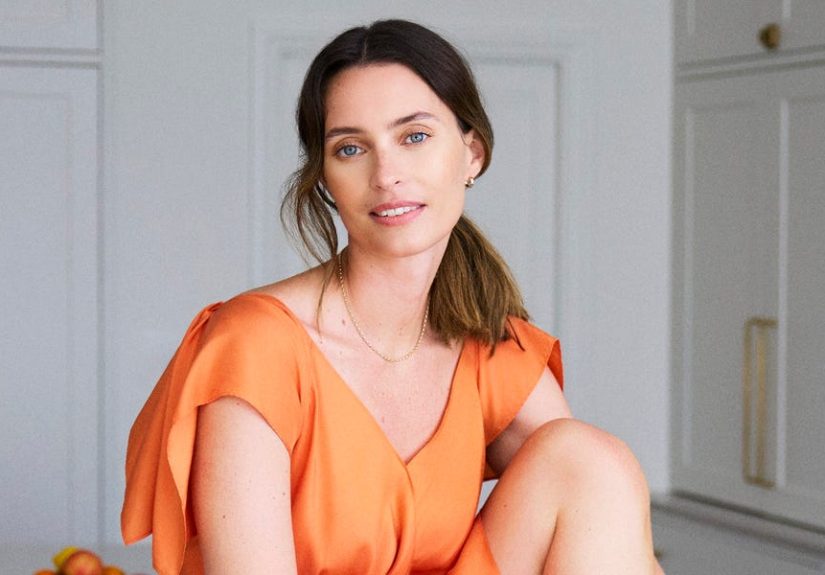
That is why Ella Mills, founder of Deliciously Ella, has become such an interesting voice in this conversation. She helped shape modern wellness culture, but she has also become one of the people most willing to say the quiet part out loud: some of what passes for wellness today is not healthy at all. Not because caring about food is bad. Not because eating more plants is a scam. But because the culture surrounding “health” can become rigid, anxious, expensive, performative, and weirdly mean.
Mills’ criticism lands because she is not speaking as an outsider throwing tomatoes from the cheap seats. She is someone who built a global brand after her own health crisis, watched “clean eating” become a trend machine, and now seems increasingly determined to pull the conversation back toward sanity. Her broader point is simple and refreshing: health should make life feel bigger, steadier, and more livable. If your routine makes you scared of dinner, suspicious of every ingredient, and one spiraling TikTok away from buying beef liver capsules at 2 a.m., something has gone off the rails.
Why Ella Mills’ message matters right now
There is a reason her warning resonates. The modern wellness industry no longer sits on the fringe, whispering about herbal teas in a dimly lit corner. It is mainstream, algorithmic, and wildly profitable. It influences how people eat, shop, exercise, sleep, age, parent, and think about illness. It also blurs important lines: between evidence and anecdote, between support and shame, between prevention and obsession, and between genuine nourishment and expensive theater.
That makes Mills’ critique more than a celebrity lifestyle sound bite. It reflects a deeper shift happening across nutrition, medicine, and public health. More experts are pushing back on the idea that health must be extreme to be meaningful. More clinicians are warning that “healthy eating” can turn disordered when it becomes all-consuming. More researchers are highlighting just how fast misinformation spreads online. And more consumers are realizing that some of the loudest voices in wellness are selling certainty first and science second.
In other words, the industry has a branding problem and a trust problem. It has glamorized behaviors that can quietly harm people while using the language of self-care. That is a hard combo to beat. It is also why Mills’ insistence on balance feels less like a rebrand and more like a necessary correction.
The toxic side of wellness is not one thing. It is a whole ecosystem.
1. It turns food into a moral test
One of the most corrosive habits in wellness culture is the moral language around food. Meals are framed as “clean” or “dirty,” “good” or “bad,” “healing” or “toxic.” That might seem harmless at first, but it changes the emotional tone of eating. Breakfast stops being breakfast and becomes a character reference. Suddenly, a salad is virtue, a sandwich is weakness, and dessert is practically a confession.
This is where a pursuit of health can become psychologically unhealthy. When food choices carry moral weight, people do not simply eat; they perform goodness. They feel proud when they follow the rules and guilty when they do not. Over time, that can create a rigid, joyless relationship with food that looks disciplined from the outside but feels exhausting on the inside.
That is one reason conversations around orthorexia keep appearing in public health discussions. Orthorexia is often described as an unhealthy obsession with eating “pure” or “healthy” foods. It is not just about nutrition. It is about control, anxiety, and identity. The point is not that everyone who reads ingredients labels is in danger. The point is that wellness culture often rewards the very mindset that can slide into disordered eating while still calling it “healthy.” That is a problem with a yoga mat and good lighting.
2. It confuses “natural” with “safe” and “effective”
The word natural has been one of the most successful sales pitches of the last decade. It sounds calm, earthy, and morally superior. It also sounds reassuringly unlike “chemicals,” a word the internet has somehow managed to weaponize despite the inconvenient fact that water is, in fact, a chemical.
But natural does not automatically mean safe, and popular does not automatically mean evidence-based. That is where the wellness industry often gets slippery. Supplements, powders, adaptogens, detox kits, and miracle blends are marketed with just enough scientific vocabulary to sound smart, while avoiding the burden of actually proving much. Consumers are left with a vibe, a before-and-after photo, and a checkout button.
This matters because many people genuinely assume that wellness products face the same scrutiny as medications. They do not. In the United States, supplements are regulated differently from drugs, and that gap matters. When a market thrives on implication rather than proof, consumers can spend a fortune chasing benefits that are uncertain, overstated, or irrelevant to their needs. Sometimes they can even risk harmful interactions or side effects. A gold label and a botanical name do not magically create clinical evidence.
3. It sells detox fantasies people do not need
If wellness culture had a mascot, it might be a mason jar full of something swamp-colored and deeply committed to “eliminating toxins.” The detox narrative is one of the industry’s most durable myths because it is emotionally satisfying. It suggests that modern life has contaminated you and that salvation can be purchased in three easy payments.
There is just one tiny issue: the human body already has organs that handle detoxification. They are called the liver and kidneys, and they have been working overtime for humanity without demanding a promo code. That does not mean diet is irrelevant to health. It means the popular detox story often turns normal biology into a marketing opportunity.
When Mills criticizes the toxic side of wellness, this kind of rhetoric is exactly what deserves scrutiny. The problem is not that people want to feel better. The problem is that the industry often encourages fear first, then sells relief. It teaches people to interpret ordinary fatigue, bloating, cravings, or imperfect eating as signs of internal contamination. That is not empowerment. That is anxiety with better packaging.
4. It thrives on misinformation, especially online
Wellness used to spread through magazines, TV shows, and bestselling books. Now it moves at internet speed. That shift has supercharged the problem. Social media rewards certainty, novelty, outrage, and simplicity. Unfortunately, nutrition science tends to prefer nuance, context, and annoying phrases like “it depends.” Guess which one gets better engagement.
As a result, health content online often sounds like this: “Three foods ruining your hormones.” “Why your coffee is destroying your gut.” “The ingredient doctors will not talk about.” It is dramatic, memorable, and often detached from reality. The audience gets a hit of clarity. The creator gets views. Actual science gets left in the parking lot.
That online environment is especially powerful because people do not come to wellness content only for facts. They come for hope, structure, identity, community, and explanations for how they feel. That makes them vulnerable to confident half-truths. Mills seems to understand this tension well: people need useful guidance, but what they often receive is a mix of fear, absolutism, and monetized confusion.
Where the conversation needs more nuance
To say parts of wellness culture are toxic is not the same as saying health habits do not matter. They do. Eating more vegetables is good. Moving your body helps. Sleep matters. Chronic disease prevention matters. Cooking at home can be wonderful. Reducing overreliance on heavily marketed junk food is sensible. None of that is the issue.
The issue is what happens when those reasonable ideas are turned into purity systems. For example, concern about ultra-processed foods is not invented from thin air. There is a growing body of research linking certain ultra-processed foods with poor health outcomes. But nuance still matters. Not every processed food is equal. Not every packaged product is a villain. And “processed” is not a synonym for poison. When people lose that distinction, nutrition advice becomes panic content.
The same is true of plant-based eating, a space Mills helped popularize. A plant-forward diet can absolutely support health. But when that message hardens into inflexible identity rules, food fear, or public superiority, the healthy core gets swallowed by the culture around it. A black bean bowl should not come with a side of moral judgment.
Mills’ strongest point, then, is not that people should stop caring about wellness. It is that the definition of wellness must be rebuilt around what is sustainable, evidence-informed, accessible, and emotionally sane. That is a much less glamorous message than “transform your life in 14 days,” which is probably why it is more trustworthy.
What the wellness industry must change
Stop moralizing food
Health communication should help people make informed choices, not make them feel impure for liking toast. Food is nourishment, culture, pleasure, memory, and sometimes convenience. When the industry treats every meal like a referendum on personal worth, it creates shame instead of health.
Stop overpromising
If a product supports hydration, say that. If it contains protein, say that. But stop pretending every snack is a revolution, every supplement is “game-changing,” and every habit is the missing piece of human existence. Less miracle language, more honesty.
Stop treating fear as a marketing funnel
People should not need to feel terrified of seed oils, bread, coffee, bananas, or dinner at a friend’s house in order to buy into a healthier lifestyle. Fear may convert well, but it is a terrible long-term health strategy.
Start respecting evidence
That does not mean every tip requires a clinical trial. It does mean claims should be proportional to proof. Influencers and brands need to stop borrowing scientific language they do not intend to honor. Public trust is not built with vague talk about “toxins,” “inflammation,” and “boosting” everything in sight.
Start making wellness more accessible
One reason Mills’ current position stands out is that it pushes against the luxury version of wellness. Real health cannot depend on whether someone can afford boutique supplements, weekly cold plunges, or lunch that costs the same as a utility bill. A healthier culture is one that values ordinary habits: affordable produce, balanced meals, movement, sleep, social support, and reliable information.
The real-world experience of toxic wellness culture
What does this look like in everyday life? Usually, not dramatic enough for a documentary and not subtle enough to ignore. It often starts innocently. Someone decides they want to feel better, eat better, sleep better, or get more energy. That is a reasonable goal. Then the internet arrives like an overcaffeinated life coach and turns “I want to feel healthier” into a scavenger hunt for personal purity.
First comes the cleanup phase. Out goes sugar, then dairy, then gluten, then anything processed, then anything with ingredients that sound remotely scientific, which is unfortunate because chemistry is how language works. Grocery shopping becomes less about hunger and more about hazard detection. A person who once bought pasta in three seconds now spends 20 minutes reading the label on almond crackers and wondering if sunflower lecithin is a moral failure.
Then there is the social part. Wellness culture often presents itself as self-care, but many people experience it as self-surveillance. Dinner with friends becomes complicated. Travel feels stressful. Birthday cake becomes a negotiation. Instead of asking, “Will this taste good?” or “Am I hungry?” the internal monologue becomes, “Will this inflame me? Disrupt my hormones? Undo my progress? Make me a person who lacks discipline?” That is a heavy emotional tax to attach to lunch.
Another common experience is the endless sense of almost. Almost optimized. Almost balanced. Almost healed. Almost glowing. The industry is brilliant at keeping people in a state of unfinished improvement, where they are well enough to function but worried enough to keep buying. One more test, one more protocol, one more powder, one more “non-toxic” swap, one more morning routine. There is always another rung on the ladder, and the ladder mysteriously ends at the checkout page.
For some people, this becomes expensive. For others, it becomes isolating. For many, it becomes mentally loud. They are not just making health choices; they are managing a constant stream of low-grade anxiety dressed up as discipline. Even the language gets strange. People stop talking about food as food and start talking about “fuel,” “clean ingredients,” “gut support,” and “hormone-safe snacks,” as if every granola bar is either a cure or a crime scene.
That is why Ella Mills’ criticism matters on a human level. She is pointing to the lived experience beneath the branding. Health should not feel like a full-time compliance job. It should not rob meals of pleasure or make ordinary people feel perpetually behind. A healthy life leaves room for flexibility, context, appetite, and joy. It allows someone to care about nutrition without building an identity around dietary perfection. It lets health be supportive instead of domineering.
Plenty of people who step back from extreme wellness describe a surprising emotion: relief. Relief at not having to micromanage every bite. Relief at not thinking about “toxins” every time they drink coffee. Relief at realizing that sustainable health usually looks less like a cinematic morning routine and more like common sense repeated consistently. Cook when you can. Eat some plants. Sleep more. Move around. Get medical advice from qualified professionals. Do not panic because somebody on social media said your oat milk is a conspiracy.
Conclusion: wellness should make life better, not smaller
Ella Mills’ warning about the toxic side of wellness lands because it identifies the central contradiction of the industry: a culture that talks constantly about feeling good can still make people feel fearful, guilty, obsessive, and never quite enough. That contradiction needs to change.
The next era of wellness should be less theatrical and more humane. Less purity, more proportion. Less influencer certainty, more evidence. Less fear-based selling, more practical support. And above all, less obsession with being perfect and more attention to what actually helps people live well over time.
That version of wellness may be less flashy. It may not trend as hard. It may never look as glamorous as a refrigerator stocked entirely by someone with ring lights and affiliate links. But it has one major advantage: it actually sounds healthy.