Table of Contents >> Show >> Hide
- Why Door and Window Alarms Matter
- How Door and Window Alarms Work
- The Best Types of Door and Window Alarms
- Features to Compare Before Buying
- Where Should Entry Sensors Be Installed?
- Installing Door and Window Sensors Correctly
- Avoid False Alarms and Security Gaps
- Protecting Privacy in a Connected Security System
- Real-World Experiences and Lessons from Family Homes
- Conclusion: Build Protection in Layers
A door or window alarm is a small device with a surprisingly important job: noticing the moment an entry point opens and making sure someone knows about it. Depending on the model, that warning may be a piercing siren, a friendly chime, a smartphone notification, or a signal sent to a professional monitoring center.
These alarms can help deter intruders, alert parents when a child approaches an unsafe area, identify a window left open, and provide reassurance while a family is sleeping or traveling. They are also affordable enough that homeowners do not need a movie-villain security budget to protect the most vulnerable parts of a house.
Choosing the best door and window alarms, however, requires more than buying the loudest box on the shelf. The right system must match the home, household routines, existing technology, and specific safety risks.
Why Door and Window Alarms Matter
Doors and operable windows are natural access points, so perimeter protection should be an early part of a home security plan. Contact sensors can provide an immediate warning before someone moves farther into the house. They also offer information that a camera may miss, such as whether a basement window has been opened without anyone crossing its field of view.
Family safety involves more than burglary prevention. According to the U.S. Consumer Product Safety Commission, approximately 5,600 children age 12 or younger received emergency-department treatment after window falls in 2024. About one-third required hospitalization. A window alarm cannot physically prevent a fall, but it can warn caregivers that a protected window has opened.
Alarms are equally useful on doors leading to pools, workshops, garages, balconies, medicine storage areas, or exterior stairs. In other words, the household’s most important alarm may not be on the front door. It may be guarding the back door that a curious three-year-old recently learned to operate.
How Door and Window Alarms Work
Most entry sensors use two components: a sensor containing a reed switch and a separate magnet. One component is installed on the frame and the other on the moving door or window. When they are aligned, the system recognizes the entry as closed. Opening it separates the magnet from the switch and triggers the selected response.
A basic standalone alarm sounds locally. A smart sensor communicates with a hub, security base station, or compatible smart-home controller. The system can then send mobile notifications, activate a siren, turn on lights, begin camera recording, or contact a monitoring service.
Contact sensors have one notable limitation: they detect opening, not necessarily broken glass. If someone breaks a fixed picture window without disturbing the frame, an ordinary contact sensor may remain blissfully unaware. Accessible fixed windows may require an acoustic glass-break detector, vibration sensor, security film, or other physical protection.
The Best Types of Door and Window Alarms
Standalone Alarms for Simple, Affordable Protection
Standalone magnetic alarms are ideal for apartments, dorm rooms, sheds, travel, and households that do not want another app demanding attention. Installation usually takes a few minutes with adhesive strips, and no Wi-Fi connection or monthly fee is required.
The GE Personal Security door and window alarm is a widely available example. It offers a loud local alarm and a lower-key chime mode. The alarm setting suits exterior entries, while the chime can announce everyday movement through a front or patio door. Its weakness is equally clear: it cannot notify someone who is away from home.
Long-Range Smart Sensors for Large Properties
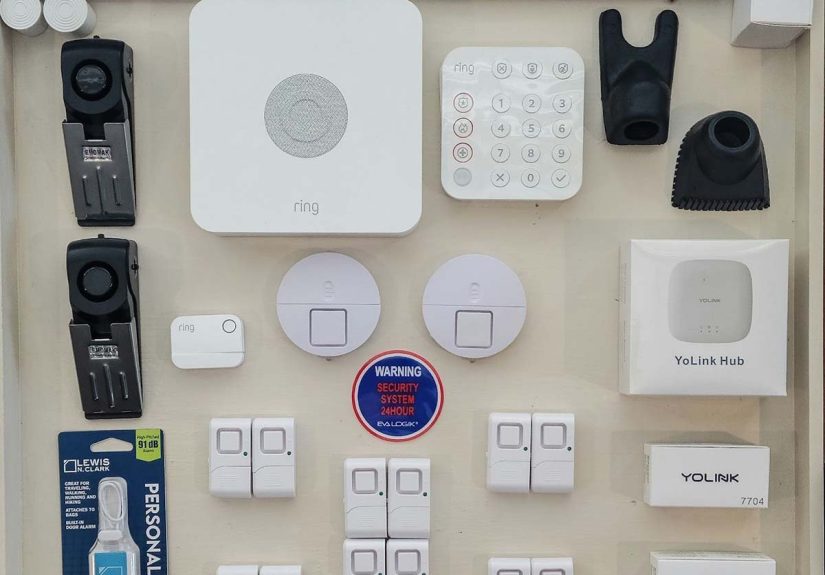
Standard Wi-Fi or Bluetooth devices can struggle around detached garages, workshops, barns, and distant gates. The YoLink starter system addresses this problem with long-range, low-power wireless communication. It uses a hub for app notifications and can cover entry points far beyond the practical reach of many conventional sensors.
YoLink is particularly attractive when a family needs numerous sensors without purchasing a complete professional security system. Remember that some packages require a separate siren for a loud warning inside the house. A phone notification alone is not much help when the phone is charging downstairs in silent mode.
Whole-Home Security Systems
Entry sensors from SimpliSafe, Ring Alarm, ADT, Vivint, Abode, and similar ecosystems make sense when the goal is coordinated protection. These platforms combine door and window sensors with keypads, motion detectors, sirens, cameras, smoke or carbon-monoxide detection, cellular backup, and optional professional monitoring.
SimpliSafe Entry Sensors can generate a base-station chime while the system is disarmed and trigger an alarm when armed. The manufacturer estimates battery life of up to five years, although placement and use affect the actual result. Ring Alarm Contact Sensors integrate naturally with Ring’s base station and broader camera ecosystem. Neither is a truly independent accessory; compatibility with the required platform should be confirmed before ordering a cart full of tiny white rectangles.
A Consumer Reports home security buying guide recommends evaluating reliability, wireless quality, setup, alerts, expandability, pricing transparency, app performance, and monitoring satisfactionnot simply the equipment’s initial price.
Matter and Thread Sensors for Smart Homes
The Aqara Door and Window Sensor P2 is a strong option for households building around Matter and Thread. It can work with major smart-home platforms and supports local automations, but it requires a compatible Matter controller and Thread border router.
This category is best for people who want automations as well as alerts. Opening a door could illuminate a hallway, while an open window could pause the air conditioner. Buyers should verify which features their chosen platform supports because a Matter logo does not guarantee that every app exposes every possible setting.
Pool-Access Door Alarms
A door leading toward a swimming pool needs a purpose-built approach. The CPSC’s residential pool barrier guidance recommends audible alarms on doors that provide pool access and identifies UL 2017 performance criteria. These include a distinct sound, adequate volume, automatic reset, and an adult-accessible temporary deactivation control positioned out of a young child’s reach.
A pool door alarm is one layer, not a substitute for supervision, fencing, self-closing and self-latching gates, compliant covers, water-safety skills, or local code requirements. When a child is missing, check the pool first.
Features to Compare Before Buying
- Alert method: Decide whether the household needs a siren, chime, phone notification, monitoring response, or a combination.
- Sound level: The alarm should be audible from sleeping areas without being installed where it could sound directly beside someone’s ear.
- Battery reporting: Low-battery warnings are essential. Long advertised battery life is useful only if the system announces when that life is nearly over.
- Wireless range: Consider walls, floors, metal frames, detached buildings, and the distance to the hubnot merely the manufacturer’s open-air estimate.
- Power and internet backup: Whole-home systems are more resilient when the base station includes backup power and cellular communication.
- Open-too-long alerts: These can identify a door left ajar, protect pets, reduce wasted heating or cooling, and prevent the freezer from becoming an expensive puddle.
- Tamper protection: Some systems warn users if a sensor is removed or its enclosure is opened.
- Subscription requirements: Confirm which notifications, recordings, automations, and emergency services work without a paid plan.
- Indoor or outdoor rating: An indoor sensor placed on a damp gate may retire much earlier than expected.
Where Should Entry Sensors Be Installed?
Begin with every exterior door, including the door between the garage and living area. Next, cover ground-floor windows and upper-level windows accessible from a porch, roof, deck, tree, or exterior stairway. Basement windows and sliding patio doors deserve special attention because they may be less visible from the street.
Families with small children may also place sensors on balcony doors, pool-access doors, selected bedroom windows, workshops, cleaning-supply cabinets, and medicine storage. An entry sensor can even monitor a liquor cabinet or gun-safe door, although it must never replace secure, purpose-built storage.
For window-fall prevention, combine electronic alerts with physical safeguards. The CPSC recommends window guards or stops, limiting appropriate openings to four inches, moving climbable furniture away from windows, and never relying on an insect screen to hold a child. At least one suitable escape route must remain available where required.
Installing Door and Window Sensors Correctly
- Clean the surfaces. Remove dust, moisture, and grease before applying adhesive.
- Check the gap. Hold both pieces in place and confirm that they remain within the manufacturer’s maximum separation when closed.
- Test before sticking. Pair the sensor, close the entry, and open it several times before committing to the final position.
- Account for movement. Wood can swell, frames may shift, and sliding doors can wobble. Leave practical clearance without exceeding the allowed sensor gap.
- Name every device clearly. “North basement window” is much more useful during an alert than “Sensor 14.”
- Test every operating mode. Verify the local chime, armed alarm, remote notification, household sharing, and monitoring response where applicable.
Do not install a sensor where the two pieces collide. On unusually deep or decorative molding, use approved spacers or alternate placement recommended by the manufacturer. Metal doors can also affect magnets and wireless performance, so conduct repeated tests before trusting the installation.
Avoid False Alarms and Security Gaps
False alarms often begin with poor alignment, weak adhesive, depleted batteries, incorrect entry delays, or family members who do not understand the system. Create separate user codes where supported, teach everyone how to disarm the alarm, and use a realistic delay on frequently used doors.
Test sensors monthly and after battery changes, software updates, renovations, or severe weather. Review the app for devices marked offline. A silent sensor that has been disconnected for six months is less a security product and more an unusually expensive wall decoration.
Physical security still matters. Combine alarms with solid deadbolts, reinforced strike plates, working window locks, appropriate lighting, and trimmed landscaping. Security bars should have compliant quick-release mechanisms where emergency escape is required; the National Fire Protection Association emphasizes planning for safe egress.
Protecting Privacy in a Connected Security System
A contact sensor reveals less than an indoor camera, but its activity history can still indicate when people arrive, leave, or sleep. Use a unique account password, enable multifactor authentication, install firmware updates, secure the home router, and remove access for former residents or service providers.
If cameras are added, the Federal Trade Commission recommends researching encryption, updating software, replacing default credentials, protecting remote access, and considering a separate network for connected cameras. Avoid positioning cameras in private areas unless there is a compelling reason and everyone affected understands the arrangement.
Real-World Experiences and Lessons from Family Homes
The Apartment That Needed Noise, Not an Ecosystem
A renter in a small apartment may assume a complete smart security package is necessary. In practice, two standalone alarms can sometimes solve the immediate problem. One goes on the front door and another on an accessible bedroom window. The renter avoids drilling holes, contracts, and complicated setup while gaining a loud warning at night.
The experience also reveals the limitation of local alarms: no one receives a message when the apartment is empty. When travel becomes frequent, the renter may upgrade the main entrance to a smart sensor while keeping the inexpensive window alarm as a second layer. Mixing technologies is perfectly reasonable when each device has a clear job.
The Family That Discovered a Pool-Door Problem
Imagine parents installing a general-purpose contact sensor on a patio door and assuming the pool area is covered. During testing, the app notification arrives quietly, but the indoor sound cannot be heard from the upstairs bedroom. The system technically detected the opening, yet it did not provide the urgent household warning the situation required.
The lesson is that pool access demands purpose-specific protection. The family replaces the setup with a suitable audible door alarm, verifies the sound from sleeping areas, checks the adult bypass control, and confirms that the door closes and latches automatically. Fencing, supervision, and other barriers remain in place. The test uncovers the weakness before an emergency doeswhich is exactly why testing matters.
The Large House with One Unreliable Window
In a multistory home, every sensor may work except the basement unit farthest from the base station. Its status alternates between online and offline because concrete, ductwork, and distance weaken the signal. Replacing the battery provides temporary optimism but no lasting cure.
Moving the hub slightly, adding the system’s approved range extender, or choosing long-range technology can resolve the problem. This experience demonstrates why advertised range should be treated as a starting point rather than a promise. Houses contain walls, pipes, appliances, and other objects that apparently enjoy bullying radio signals.
The Chime That Became More Valuable Than the Siren
Some parents initially install an entry sensor for burglary protection and later discover that its everyday chime is the most frequently useful feature. It announces when a younger child opens the back door, when an older child returns from school, or when a pet has nudged an improperly closed patio door.
After several days, however, constant chiming can become background noise. The family improves the setup by assigning distinct tones to priority doors and disabling unnecessary announcements during busy periods. A pool or balcony door keeps an unmistakable alert, while the front door receives a softer chime. Thoughtful configuration makes warnings meaningful instead of turning the house into an overenthusiastic convenience store.
The Vacation Alert That Prevented a Mess
A smart contact sensor can protect comfort as well as security. While a family is traveling, an open-too-long notification reports that the back door is not fully closed. A trusted neighbor checks the house and discovers that the latch did not catch after the last suitcase was carried outside.
No intruder was involved, but the alert prevents rain, insects, escaped pets, and unnecessary air-conditioning loss. This is a good example of why remote status, alert history, and trusted-user access may be worth more than flashy automation. The best alarm is often the one that communicates a small problem early enough to keep it small.
Conclusion: Build Protection in Layers
The best door and window alarm is the one that reliably covers a specific risk and delivers a warning the household will notice. Standalone alarms provide inexpensive local protection, smart sensors offer remote awareness, and complete security systems coordinate multiple layers with optional professional monitoring.
Start with exterior doors and accessible windows, then address child-safety areas, pool access, garages, and vulnerable storage. Install every sensor carefully, test it regularly, maintain its battery, and support it with locks, barriers, lighting, safe escape planning, and family habits.