Table of Contents >> Show >> Hide
- What Is the Mogensen J39 Chair?
- Why the J39 Is Called the People’s Chair
- The Design Details That Make the J39 Special
- Mogensen J39 Chair Dimensions and Everyday Fit
- How Comfortable Is the Mogensen J39 Chair?
- Best Rooms for a Mogensen J39 Chair
- Choosing the Right J39 Finish
- How to Style the J39 Chair
- New vs. Vintage Mogensen J39 Chairs
- How to Care for a Mogensen J39 Chair
- Is the Mogensen J39 Chair Worth It?
- Everyday Experiences With the Mogensen J39 Chair
- Final Thoughts
The Mogensen J39 Chair is proof that a dining chair does not need to perform acrobatics to become famous. It does not swivel, recline, glow, connect to Wi-Fi, or come with a user manual written by someone who clearly dislikes humans. Instead, it offers something much rarer: a solid wood frame, a woven paper-cord seat, thoughtful proportions, and a design language that still looks fresh decades after its debut.
Designed by Danish furniture master Børge Mogensen in 1947, the J39 is widely known as the “People’s Chair.” That nickname is not just a cute marketing accessory. It reflects Mogensen’s belief that well-made furniture should serve everyday life rather than sit in a corner looking expensive and emotionally unavailable.
Today, the Mogensen J39 Chair remains one of the most recognizable examples of Danish Modern furniture. It works in a farmhouse kitchen, a minimalist dining room, a cozy breakfast nook, a creative studio, or even a restaurant that wants to look stylish without making diners feel as though they are eating inside a museum.
What Is the Mogensen J39 Chair?
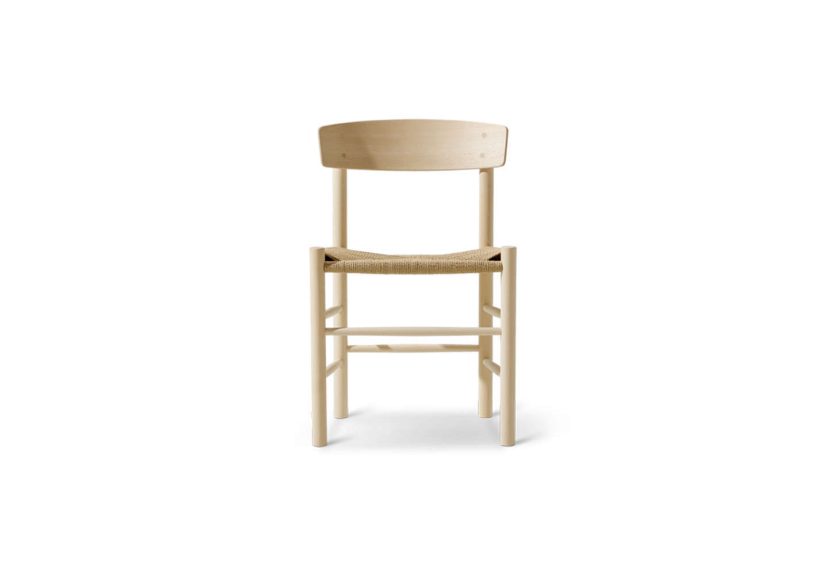
The J39 is a wooden dining chair originally designed by Børge Mogensen, one of the most influential figures in Danish Modern design. Its simple form includes straight legs, visible joinery, a gently curved backrest, and a handwoven seat made from paper cord.
At first glance, the chair may seem almost too simple. That is part of its charm. The J39 does not rely on decorative drama. Instead, it earns attention through proportion, craftsmanship, and the quiet confidence of a design that knows it does not need to shout across the room.
The chair was originally associated with FDB Møbler, a Danish cooperative furniture company known for making quality design more accessible to everyday households. It later became closely connected with Fredericia Furniture, which continues to produce the design in several finishes and material combinations.
Modern versions of the J39 generally feature a solid wood frame in materials such as beech, oak, or walnut, depending on the selected finish. The traditional seat uses woven paper cord, while newer versions may include upholstery inspired by later Mogensen prototypes.
Why the J39 Is Called the People’s Chair
Børge Mogensen believed furniture should support people’s lives rather than dominate them. His work often focused on durability, function, natural materials, and shapes that could feel at home in both modest houses and more formal public settings.
The J39 Chair captures that philosophy beautifully. It was designed to be useful, durable, and visually calm. Rather than chasing trends, it uses familiar forms that feel almost archetypal: four legs, a supportive back, a woven seat, and honest wood construction.
That simplicity helped the chair travel across decades without looking trapped in a particular era. In the 1950s, it fit naturally into Danish homes. In the 1970s, it blended with warmer wood interiors. Today, it looks equally comfortable beside limewashed walls, polished concrete floors, vintage rugs, or a table that cost more than a small moon landing.
The phrase “People’s Chair” also reflects its versatility. The J39 has appeared in private homes, cafés, educational spaces, dining rooms, churches, conference settings, and other shared environments. It is a chair designed for actual sitting, not merely for appearing in a photograph beside a bowl of decorative lemons.
The Design Details That Make the J39 Special
A Curved Backrest With a Purpose
The gently curved backrest is one of the chair’s defining details. It softens the otherwise disciplined structure and gives the chair a more welcoming silhouette. From a distance, the J39 looks straightforward. Up close, the curve adds character and makes the design feel more human.
This detail also prevents the chair from looking overly rigid. Many minimalist dining chairs can become visually cold, especially in rooms with stone, metal, glass, or very sharp architectural lines. The J39 brings in warmth without becoming rustic or overly casual.
The Handwoven Paper-Cord Seat
The paper-cord seat is the J39’s visual signature. It gives the chair texture, depth, and a handcrafted quality that upholstered chairs often lack. The weave catches light differently throughout the day, which means the chair can look subtly different in a bright breakfast nook than it does under warm evening lighting.
Paper cord is also one of those materials that becomes more interesting as it ages. Like natural wood, it develops patina over time. A new J39 Chair may look crisp and refined, while an older one can feel softer, richer, and more personal.
That said, the woven seat is not indestructible superhero armor. It deserves normal care and should not be treated like a waterproof picnic bench. The charm of paper cord comes from its natural character, and natural materials tend to appreciate a little common sense.
Visible Joinery and Honest Construction
The J39 Chair does not hide its structure. Its wooden joints, legs, rails, and backrest are part of the visual story. This is a hallmark of Mogensen’s design approach: the material should look like itself, and the construction should not pretend to be something else.
That honesty gives the chair a sense of permanence. A plastic chair may be fun for a season. A heavily padded chair may feel luxurious for a few years. But a solid wood chair with visible craftsmanship has a different emotional effect. It feels like an object that belongs in a home for a long time.
Mogensen J39 Chair Dimensions and Everyday Fit
Current versions of the Mogensen J39 Chair are generally compact enough for apartments and city dining spaces while still feeling substantial at the table. Measurements can vary slightly by production version and retailer, but many versions are approximately 19 inches wide, 17 inches deep, and around 30 inches tall, with a seat height near 18 inches.
Those proportions make the chair useful in rooms where bulky seating would overwhelm the layout. It can slide neatly under a dining table, work beside a desk, or sit against a wall without making the space feel crowded.
The J39 is particularly useful for people who want a dining chair that looks intentional from every angle. Its profile is narrow enough to keep a room visually open, but the woven seat and curved back prevent it from disappearing into the background.
How Comfortable Is the Mogensen J39 Chair?
Comfort is personal. One person’s “perfectly supportive” is another person’s “I would like a cushion, a snack, and a nap immediately.” Still, the J39 is designed as a practical dining chair rather than a decorative accent piece.
The curved backrest provides support for normal seated use, while the woven paper cord offers a little more visual and physical softness than a solid wood seat. The chair is best suited for meals, conversation, reading, working at a table, and everyday sitting rather than marathon gaming sessions or a three-hour holiday dinner hosted by someone who refuses to serve dessert until everyone has discussed politics.
For longer periods of sitting, some owners choose to add a thin seat pad. This can introduce extra comfort while preserving the chair’s iconic profile. Leather, linen, wool, or simple fabric pads can work well, depending on the room’s overall style.
Best Rooms for a Mogensen J39 Chair
Dining Rooms
The J39 is most often used as a dining chair. A set of four, six, or eight can create a cohesive look around a rectangular, round, or extendable dining table. It pairs particularly well with solid wood tables, especially oak, walnut, and simple Shaker-inspired designs.
Kitchens and Breakfast Nooks
In a kitchen, the J39 brings warmth without adding visual clutter. Light oak or soaped oak works beautifully in Scandinavian-inspired spaces, while painted beech versions can add color to a more playful room.
Home Offices
A single J39 Chair can also work as an occasional desk chair, especially in a home office designed to feel more like a living space than a corporate cubicle. It is ideal for shorter work sessions, writing, reading, or video calls where you want your background to say, “Yes, I have taste,” without saying, “Please ask me about my furniture.”
Entryways and Bedrooms
Because the chair has such a clean silhouette, it can also work as a spare seat in a bedroom, a landing spot in an entryway, or a useful chair for putting on shoes. It is practical enough to earn its place and attractive enough to avoid looking like temporary furniture.
Choosing the Right J39 Finish
The Mogensen J39 Chair is available in a range of wood finishes and colors. Common options include natural beech, painted beech, oiled oak, soaped oak, lacquered oak, black finishes, and walnut. Exact availability can vary by retailer and production collection.
Natural oak is a strong choice for warm, relaxed interiors. It pairs well with linen, wool, ceramics, and other natural materials. Soaped oak has a lighter, softer appearance that works beautifully in airy Scandinavian, coastal, or modern farmhouse spaces.
Walnut gives the chair a more formal and dramatic presence. It can look excellent in mid-century interiors, darker dining rooms, or spaces with brass, leather, and deep-toned textiles.
Painted versions are useful when you want the J39 silhouette but need more color. A black J39 can look crisp and architectural. Blue, red, green, or gray versions can add personality without turning the chair into a cartoon character at the dinner table.
How to Style the J39 Chair
The J39 is remarkably easy to style because it does not compete with everything around it. It can complement minimalist interiors, vintage-inspired spaces, Scandinavian rooms, Japanese-influenced interiors, and even more traditional homes.
For a classic Danish Modern look, pair J39 Chairs with an oak dining table, a wool pendant lamp, ceramics, and a neutral rug. For a more contemporary setting, combine black J39 Chairs with a white plaster wall, a dark stone table, and sculptural lighting.
For a relaxed farmhouse-inspired room, mix natural wood J39 Chairs with a vintage pine table, woven textiles, and handmade pottery. The chair’s paper-cord seat keeps the look elevated, so the room feels collected rather than costume-like.
Mixed seating can also work well. Two J39 Chairs at the ends of a table can be paired with benches or other dining chairs along the sides. The key is to repeat a material, color, or wood tone somewhere else in the room so the arrangement looks intentional rather than like a furniture-based group project gone wrong.
New vs. Vintage Mogensen J39 Chairs
Buying a new J39 Chair gives you access to current finish options, manufacturer standards, and consistent dimensions. It is a good choice for people who want a matching set, a specific wood treatment, or the reassurance of purchasing from an authorized retailer.
Vintage J39 Chairs can offer more history and character. Older examples may show worn paper cord, softened wood finishes, minor marks, and signs of previous life. Those details can be charming, but they should be inspected carefully.
When shopping vintage, pay close attention to the condition of the paper-cord seat, the stability of the frame, the quality of any refinishing work, and the authenticity of the construction. A chair that wobbles dramatically may have a great story, but it is not ideal if you prefer to finish dinner with your drink still inside the glass.
How to Care for a Mogensen J39 Chair
Care depends on the chair’s specific finish. Oiled wood, soaped wood, lacquered wood, painted wood, and walnut each have different maintenance needs. It is best to follow the current manufacturer’s care guidance for the exact version you own.
For everyday use, keep the chair away from prolonged moisture, wipe spills promptly, and avoid placing it in direct harsh sunlight for long periods. The paper-cord seat should be treated gently and protected from excessive soaking or abrasive cleaning.
The good news is that the J39 is designed to age gracefully. Small signs of use can become part of its character rather than proof that your furniture has given up on life. Natural wood and paper cord often look better after years of normal use, not worse.
Is the Mogensen J39 Chair Worth It?
The Mogensen J39 Chair is worth considering for people who value timeless design, natural materials, craftsmanship, and furniture that can remain relevant for decades. It is not the cheapest dining chair on the market, and it is not trying to be. The value comes from its design history, lasting materials, recognizable silhouette, and ability to work in many different interiors.
It is also a chair with unusual flexibility. You can use it in a formal dining room today, move it into a kitchen later, then eventually use it as an extra chair in a bedroom or home office. That kind of adaptability is rare in furniture that is also visually distinctive.
In a world full of furniture designed for quick trends and quicker replacements, the J39 feels refreshingly stubborn. It quietly insists that useful objects can also be beautiful, and that simple design can still have plenty of personality.
Everyday Experiences With the Mogensen J39 Chair
Living with a Mogensen J39 Chair is less about owning a flashy design object and more about noticing how often it quietly improves ordinary moments. It is the chair you pull out for breakfast when the room is still half awake. It is the chair that looks good with a bowl of cereal, a laptop, a stack of mail, or a dinner plate that may or may not contain something you confidently called “rustic.”
In the morning, the paper-cord seat can make the chair feel warmer and more inviting than a hard wooden surface. The woven texture adds a little softness to the room before coffee has done its heroic work. The chair’s slim shape also helps a kitchen or dining area feel less crowded, especially in smaller homes where every inch seems to be negotiating for rent.
During the day, the J39 can shift into a useful work chair for short stretches. It does not pretend to replace a fully adjustable ergonomic office chair, and it should not be asked to survive an eight-hour spreadsheet marathon. But for answering emails, writing a grocery list, paying bills, reading, or joining a video call, it creates a calm and focused place to sit.
At lunch or dinner, the chair’s real personality appears. The curved backrest and woven seat create a relaxed experience that encourages people to linger. It feels casual enough for pizza night and refined enough for a dinner party. That balance is one of the reasons the J39 has lasted so long: it does not force every meal to become an event, but it makes everyday meals feel slightly more considered.
The chair also changes the mood of a room when it is empty. A group of J39 Chairs around a table gives the space rhythm. The repeated backs create a quiet pattern, while the paper cord introduces texture without clutter. Even when nobody is sitting down, the chairs make the room feel ready for life to happen.
Guests often notice the J39 because it looks familiar and unusual at the same time. It has the friendliness of a traditional wooden chair, but the proportions and woven seat give it a more intentional design presence. People may not know its name, but they often recognize that it feels different from an ordinary dining chair.
Over time, the experience becomes more personal. A small mark on the wood might remind you of a busy holiday meal. A softened paper-cord seat may show where people naturally sit. The chair gradually collects evidence of daily life without becoming visually tired. It does not demand perfection from its owner, which is probably one of the nicest things a piece of furniture can do.
The J39 also works beautifully when life changes. It can move from an apartment dining table to a larger home, from a formal dining room to a sunny kitchen, or from the main table to a spare bedroom. Instead of feeling outdated after a redesign, it tends to adapt. That flexibility makes it feel less like a purchase for one room and more like a long-term companion for several chapters of home life.
Ultimately, the Mogensen J39 Chair is enjoyable because it makes ordinary spaces feel more grounded. It is not trying to become the loudest item in the room. It simply offers a place to sit, a beautiful material palette, and the rare confidence of a design that has already survived changing trends, changing homes, and more than a few questionable dining-room paint colors.
Final Thoughts
The Mogensen J39 Chair remains a design classic because it succeeds at the basics. It is useful, attractive, durable, adaptable, and deeply connected to the idea that good furniture should improve everyday life. Whether you choose a new Fredericia version or a carefully selected vintage piece, the J39 offers more than a place to sit. It brings history, craftsmanship, texture, and quiet Danish confidence into the room.
Research basis verified from Fredericia, Design Within Reach, Hive Modern, Danish Design Store, 1stDibs, Rarify, Architectural Digest, and related design sources.