Table of Contents >> Show >> Hide
- What Is Narcolepsy in Children?
- Symptoms of Narcolepsy in Children
- Why Narcolepsy in Children Is Often Missed
- What Causes Narcolepsy in Children?
- How Narcolepsy Is Diagnosed in Children
- Treatment for Narcolepsy in Children
- When to See a Doctor
- What Is the Outlook for Children With Narcolepsy?
- Family Experiences: What Living With Pediatric Narcolepsy Can Actually Feel Like
If your child seems to fall asleep at strange times, zones out in class, or suddenly looks “lazy” after getting what should be enough sleep, narcolepsy may not be the first thing that comes to mind. Most parents think of bedtime battles, too much screen time, or the eternal mystery known as “Why are you tired when you just woke up?” But narcolepsy in children is real, medical, and often misunderstood.
Narcolepsy is not a character flaw, a motivation problem, or your child trying to get out of math. It is a chronic neurologic sleep disorder that affects how the brain controls sleep and wakefulness. In children, it can show up as overwhelming daytime sleepiness, cataplexy, vivid dreamlike experiences, broken nighttime sleep, and behavior or attention changes that can look suspiciously like other conditions.
The tricky part is that pediatric narcolepsy often hides in plain sight. A child may be labeled distracted, moody, clumsy, oppositional, or “not trying hard enough” long before anyone considers a sleep disorder. That delay matters, because untreated narcolepsy can affect school, safety, mood, friendships, and family life. The good news is that once it is recognized, treatment can make a big difference.
What Is Narcolepsy in Children?
Narcolepsy is a long-term disorder of the sleep-wake system. Children with narcolepsy feel excessive daytime sleepiness even after what looks like a full night of sleep. Their brains have trouble keeping a stable line between wakefulness and rapid eye movement, or REM, sleep. That means features of dreaming sleep can intrude into the daytime, which is why narcolepsy can involve cataplexy, sleep paralysis, and hallucinations around sleep transitions.
Type 1 vs. Type 2 Narcolepsy
There are two main types. Narcolepsy type 1 usually includes cataplexy, which is a sudden loss of muscle tone triggered by strong emotions such as laughter, excitement, surprise, or frustration. Type 1 is also linked to low levels of hypocretin, also called orexin, a brain chemical that helps support wakefulness.
Narcolepsy type 2 causes excessive daytime sleepiness but does not include cataplexy. Its cause is less clear, and in some children the picture changes over time. A child who first seems to have type 2 may later develop cataplexy and be reclassified as type 1. In other words, narcolepsy likes to keep doctors humble.
Symptoms of Narcolepsy in Children
The symptoms of childhood narcolepsy do not always follow a neat checklist. Some are dramatic. Others are sneaky enough to blend into ordinary childhood chaos. Here are the signs families and clinicians watch for most closely.
1. Excessive daytime sleepiness
This is the hallmark symptom. A child may feel sleepy all day, fall asleep during class, nap unexpectedly, or seem mentally foggy even when they are technically awake. Some children do not fully doze off but look irritable, inattentive, or emotionally flat. Others have clear “sleep attacks” that seem to come out of nowhere.
In younger children, narcolepsy may also show up as a return of daytime napping after naps were already dropped. In older kids and teens, it may look like constant fatigue, poor concentration, and a mysterious inability to stay alert during boring tasks. Unfortunately, school contains many boring tasks. Science confirms this. Mostly.
2. Cataplexy
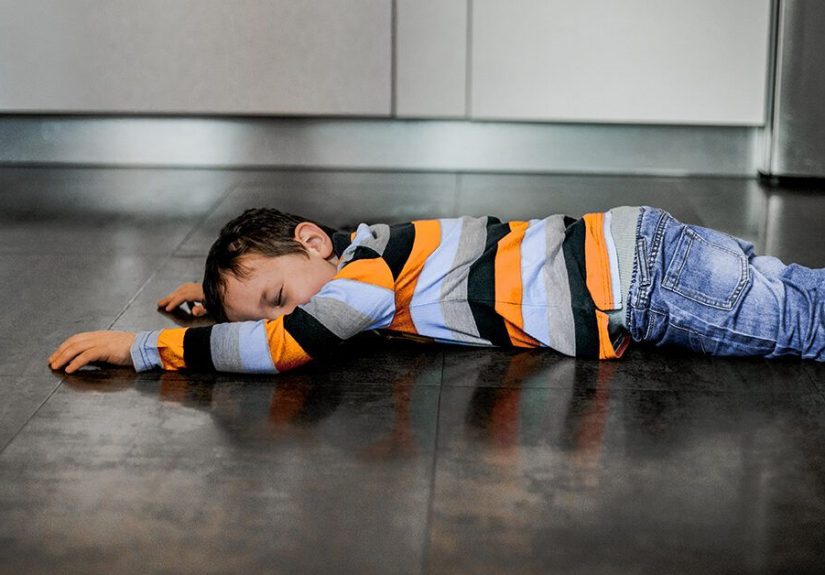
Cataplexy is one of the most distinctive symptoms of narcolepsy type 1. During an episode, a child stays conscious but suddenly loses muscle strength. The weakness may be mild, such as facial drooping, slack jaw, head bobbing, or slurred speech. It can also be stronger, leading to knee buckling or a full collapse.
In children, cataplexy can be especially confusing because it may look like clumsiness, fainting, a movement disorder, or even a behavioral issue. It is often triggered by emotion, especially laughter. A kid can go from giggling at a joke to looking like their body hit the “pause” button for a few seconds.
3. Hallucinations and sleep paralysis
Some children experience vivid dreamlike images or sounds when falling asleep or waking up. These are called hypnagogic or hypnopompic hallucinations. They can be intense, realistic, and frightening, especially for kids who are not sure what is happening.
Sleep paralysis may also occur. This is the temporary inability to move or speak while falling asleep or waking up. It is usually brief, but to a child, a few seconds can feel like a full-length movie trailer for doom.
4. Broken nighttime sleep
Many people assume narcolepsy means sleeping a lot all the time. Ironically, children with narcolepsy often sleep poorly at night. They may fall asleep fast, then wake frequently, move around, talk, act out dreams, or have vivid dreams and nightmares. So yes, the child can be sleepy all day and still have messy nighttime sleep. Narcolepsy loves contradictions.
5. Other signs that often get missed
Pediatric narcolepsy can also come with attention problems, memory complaints, hyperactivity, mood changes, low motivation, automatic behaviors, and academic struggles. Some children continue an activity while partly asleep and later have little memory of it. Weight gain or obesity can occur, and some children with type 1 narcolepsy may also show early puberty. When all of this shows up together, it can confuse families and clinicians alike.
Why Narcolepsy in Children Is Often Missed
Narcolepsy is commonly underdiagnosed and misdiagnosed in children because its symptoms overlap with more familiar conditions. Daytime sleepiness can be mistaken for depression, ADHD, poor sleep hygiene, medication side effects, or just plain boredom. Cataplexy may be read as clumsiness, falls, or odd behavior. Hallucinations may raise concern for a psychiatric disorder. Teachers may assume the child is unmotivated. Parents may think the child is simply exhausted from modern kid life, which, to be fair, is exhausting.
The result is that many children go years without an answer. During that time, they may struggle with grades, self-esteem, friendships, sports, and family routines. A child who is repeatedly told to “just try harder” may start believing they are the problem, when the real problem is a brain-based sleep disorder.
What Causes Narcolepsy in Children?
In narcolepsy type 1, the main biological issue is a severe loss of brain cells that produce hypocretin, also known as orexin. This chemical helps regulate wakefulness and keeps REM sleep where it belongs. When hypocretin signaling drops, the boundary between sleep and wake becomes unstable.
Researchers believe type 1 narcolepsy is likely related to an autoimmune process in many cases, meaning the body’s immune system may mistakenly damage those wake-promoting cells. Genetics appear to influence risk, but narcolepsy is not usually inherited in a simple, direct way. Most children with narcolepsy do not have a strong family history of the disorder.
Type 2 narcolepsy is less well understood. It may involve a milder or different disturbance in the same sleep-wake systems. Scientists are still working through the details, because the brain, while impressive, has never been especially cooperative about offering simple explanations.
How Narcolepsy Is Diagnosed in Children
Diagnosis starts with careful listening. Doctors will ask about sleep patterns, daytime sleepiness, naps, school performance, mood, cataplexy-like episodes, hallucinations, medications, and family observations. In children, parents and caregivers often provide essential clues because kids may not realize their symptoms are unusual.
Sleep logs and actigraphy
Before formal testing, a clinician may ask the family to track sleep with a diary or an actigraph, a wrist-worn device that estimates sleep and wake patterns over time. This helps show whether the child is truly getting enough time in bed and whether another sleep issue may be part of the picture.
Overnight polysomnogram and MSLT
The standard sleep-lab workup usually includes an overnight polysomnogram, or PSG, followed the next day by a multiple sleep latency test, or MSLT. The PSG measures brain waves, breathing, oxygen levels, heart rate, movement, and other signals during sleep. It helps rule out other conditions such as obstructive sleep apnea and shows whether nighttime sleep is disrupted.
The MSLT measures how fast a child falls asleep during a series of daytime nap opportunities and whether REM sleep appears unusually quickly. Together, the PSG and MSLT remain the gold-standard tests for narcolepsy diagnosis.
Additional testing
In select cases, specialists may consider measuring hypocretin in spinal fluid, though that requires a lumbar puncture and is not used routinely for every child. Blood tests or imaging may also be used when doctors need to rule out other medical explanations for sleepiness.
Treatment for Narcolepsy in Children
There is no cure for narcolepsy at this time, but treatment can substantially improve functioning, safety, and quality of life. The best approach is usually not one magic pill. It is a strategy. Think of it as building a stability plan for the brain’s sleep system.
Medication options
Medication choices depend on the child’s age, symptoms, and medical history. For pediatric narcolepsy, specialists may use medications to reduce excessive daytime sleepiness, cataplexy, hallucinations, and nighttime sleep disruption.
FDA-approved pediatric options now include oxybate-based treatments for certain children, and pitolisant has expanded pediatric approval for excessive daytime sleepiness and cataplexy in eligible age groups. Sodium oxybate and related oxybate formulations are important options for many children, especially when cataplexy is a major issue. Some wake-promoting medicines and stimulants may also be used, including off-label options, depending on specialist judgment. Antidepressants are sometimes prescribed to help control cataplexy, sleep paralysis, or hallucinations.
The right medication plan should always be individualized. Dose, timing, side effects, sleep schedule, and school routine all matter. In pediatrics, small changes can make a big difference, which is a polite medical way of saying timing is everything.
Lifestyle and behavior strategies
Medicine helps, but daily habits matter too. Most children benefit from a consistent sleep-wake schedule, planned short naps, regular physical activity, and avoiding sleep deprivation. Heavy meals, sedating medications, and long periods of passive sitting can make daytime sleepiness worse.
Children with narcolepsy also benefit from structure. A predictable routine can reduce symptoms and make medication work more smoothly. That may include set bedtimes, set wake times, planned activity breaks, and careful attention to overall health, mood, and weight.
School accommodations are not optional fluff
School support can be just as important as medication. A child with narcolepsy may need scheduled naps, extra time for tests, flexible deadlines, movement breaks, permission for water or snacks, help with note-taking, or a modified schedule during treatment adjustment. These accommodations are not special favors. They are tools that help a child access learning while living with a neurologic disorder.
Teachers and school staff should understand that daytime sleepiness is a symptom, not an attitude problem. When the environment changes, many children do dramatically better academically and emotionally.
Safety matters, especially as kids get older
Narcolepsy can affect safety around water, cooking, biking, climbing, and, eventually, driving. Teens with narcolepsy may need careful guidance about when they are truly alert enough to drive and whether local rules require medical clearance. Families should also think about supervision during swimming and other activities where a sudden sleep episode or cataplexy could be dangerous.
When to See a Doctor
Talk with a pediatrician or sleep specialist if your child has ongoing daytime sleepiness, falls asleep in class, has episodes of weakness triggered by emotion, experiences vivid dreamlike events around sleep, or seems to have unexplained declines in focus, grades, or mood. The same goes for a child who sleeps “enough” on paper but still looks exhausted all the time.
Early evaluation matters because narcolepsy can mimic other conditions, and treatment can prevent months or years of unnecessary struggle.
What Is the Outlook for Children With Narcolepsy?
Narcolepsy is usually lifelong, but that does not mean childhood has to be defined by it. With diagnosis, medication, school support, healthy routines, and family education, many children do very well. They can learn, play, travel, compete, socialize, and grow into capable adults. The goal is not perfection. The goal is stability, safety, and a child who feels understood instead of blamed.
That shift is huge. Once a child learns, “I am not lazy, and I am not broken,” treatment becomes more than symptom control. It becomes relief.
Family Experiences: What Living With Pediatric Narcolepsy Can Actually Feel Like
For many families, the journey to a narcolepsy diagnosis starts with confusion rather than clarity. A parent may first notice a child sleeping in the car after school every day, dozing during homework, or acting silly and unfocused when they are actually exhausted. At first, it may seem like a schedule problem. Then it becomes a school problem. Then a behavior problem. Then a mystery.
Parents often describe the early phase as a strange mix of guilt and frustration. They may wonder whether bedtime is too late, whether stress is the cause, or whether their child is quietly struggling with depression or attention issues. Teachers might report zoning out, missing instructions, or falling asleep in class. Meanwhile, the child may feel embarrassed, confused, or angry because they cannot explain why staying awake feels harder for them than it does for everyone else.
Once cataplexy enters the picture, things can get even more unsettling. Families sometimes notice facial drooping during laughter, knees buckling during excitement, or odd body movements that seem to appear out of nowhere. Because these episodes can look unusual, parents may fear seizures, fainting, or a serious neurologic problem before they ever hear the word narcolepsy.
After diagnosis, many families feel relief first. Finally, there is a name for what has been happening. But relief is usually followed by adjustment. Narcolepsy treatment is not a one-day fix. It often takes time to fine-tune medication, build routines, talk with schools, and learn how symptoms change during growth and adolescence. Families may need to become part parent, part sleep scheduler, part school advocate, and part detective.
Children also have their own emotional process. Some are relieved to know they are not lazy. Others feel different from friends and resent the need for medication or scheduled naps. Older kids may worry about sports, social life, sleepovers, or driving in the future. Even when symptoms improve, the social side of narcolepsy can linger. A child may still fear being seen as weird, dramatic, or unreliable.
What helps most is usually not one dramatic moment. It is a series of practical wins. A teacher who understands. A medication schedule that finally clicks. A child who stops getting in trouble for sleepiness. A family that learns how to spot symptom flares before things go off the rails. A morning that starts without chaos. A report card that improves. A laugh that no longer ends in panic.
Many parents also say that education changes everything. Once relatives, teachers, coaches, and friends understand that narcolepsy is a real neurologic condition, blame tends to shrink and support tends to grow. That support can be powerful. Kids do better when the adults around them stop asking, “Why aren’t you trying harder?” and start asking, “What helps you function best?”
In real life, living with pediatric narcolepsy is rarely neat. There are good stretches, rough patches, medication adjustments, school meetings, and days when the child feels totally fine until they suddenly do not. But families often become remarkably skilled at adapting. They learn that success may look different than it did before, but it is still absolutely possible. And for many children, the biggest change is not just better wakefulness. It is being understood.