Table of Contents >> Show >> Hide
- Portable A/C vs. Window A/C: The Quick Verdict
- How a Window A/C Works
- How a Portable A/C Works
- Cooling Performance: Window A/C Wins Most Rooms
- Energy Efficiency: Window A/C Is Usually Cheaper to Run
- Noise: The Quietest Choice Is Usually a Window Unit
- Installation: Portable A/C Is Easier, But Not Magic
- Space and Design: Portable Units Take Up Real Estate
- Humidity Control: Proper Sizing Matters
- Cost: Window A/C Often Offers Better Value
- When a Portable A/C Is the Better Choice
- When a Window A/C Is the Better Choice
- Buying Tips Before You Choose
- Real-World Experiences After Using Both
- Final Verdict: Which Is Better?
When summer starts acting like it owns the deed to your house, one question suddenly becomes more important than your streaming password: should you buy a portable A/C or a window A/C? Both promise cooler rooms, better sleep, and fewer arguments with your thermostat. But after comparing how they install, cool, drain, hum, rattle, roll, and generally behave in real homes, the answer is surprisingly clear: a window air conditioner is usually the better choice for cooling power, efficiency, noise, and long-term value. A portable air conditioner, however, can still be the hero when your window, lease, or living situation refuses to cooperate.
So, is this a battle of champions? Not exactly. It is more like a race between a practical sedan and a folding bicycle. Both can get you somewhere. One is simply better for most daily drives.
Portable A/C vs. Window A/C: The Quick Verdict
If you have a standard double-hung window and permission to install a unit, choose a window A/C. It generally cools faster, uses less energy for the same comfort level, takes up no floor space, and tends to be quieter because much of the noisy mechanical action sits outside the room.
Choose a portable A/C if you cannot use a window unit, live in a rental with restrictions, have casement or sliding windows, need to move cooling between rooms, or want a less permanent setup. Just know that “portable” does not mean “effortless.” You still need a vent hose, a window kit, a decent seal, and enough patience to deal with a machine that may sound like a small appliance doing CrossFit.
How a Window A/C Works
A window air conditioner sits partly inside and partly outside your window. The indoor side pulls warm room air across cold coils, sends cooled air back into the room, and removes humidity along the way. The outdoor side releases heat outside, where it belongs. That separation is the secret sauce. Heat is not invited back into your room wearing a fake mustache.
Because the compressor and condenser are positioned outside or at the window line, a window A/C can reject heat efficiently. It also does not usually create the same negative-pressure problem that hurts many single-hose portable models. In everyday terms, it cools the room without constantly stealing the already-cooled air it just worked hard to make.
How a Portable A/C Works
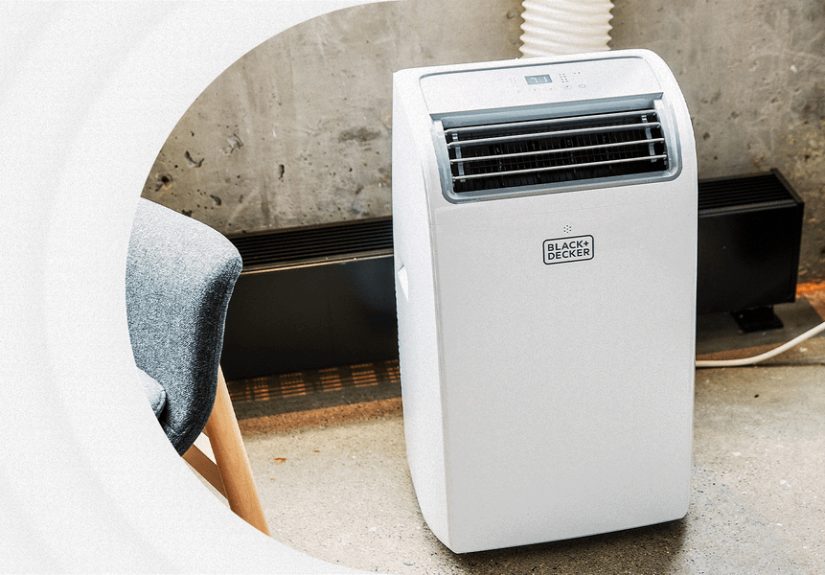
A portable air conditioner sits on the floor and vents hot air through a hose connected to a window panel. It still uses refrigeration, so it is a real air conditioner, not a fan wearing sunglasses. But because the whole unit sits inside the room, it must move heat out through that hose.
There are two main types: single-hose portable A/Cs and dual-hose portable A/Cs. A single-hose model pulls indoor air across internal components and exhausts some of that air outdoors. That can create negative pressure, which draws warm air back in through cracks, gaps, doors, and poorly sealed windows. A dual-hose portable A/C uses one hose to bring in outdoor air for cooling its hot side and another hose to exhaust heat. This setup is usually more efficient and more comfortable.
Cooling Performance: Window A/C Wins Most Rooms
In real-world cooling, window units usually beat portable units. The difference becomes obvious in bedrooms, home offices, and living rooms that get strong afternoon sun. A properly sized window A/C can cool the space more directly and hold temperature more steadily. It feels less like the machine is fighting the room and more like it is calmly doing its job.
Portable A/Cs can cool a room, especially small to medium spaces, but they are more sensitive to setup. A loose window kit, long exhaust hose, sunny room, or single-hose design can reduce performance quickly. In a small bedroom, a good dual-hose portable unit may feel perfectly acceptable. In a large open living area, it may huff, puff, and still leave you negotiating with humidity.
Example: 250-Square-Foot Bedroom
For a 250-square-foot bedroom, a properly sized window A/C often delivers fast, stable cooling. A portable A/C can work too, but it may need more time, more fan noise, and a better window seal to achieve similar comfort. If the room is shaded and closed off, the portable unit has a fair chance. If the room gets direct afternoon sun, the window unit usually pulls ahead.
Example: 450-Square-Foot Living Room
For a larger living room, the window A/C advantage grows. A portable model may be rated for the space, but rating labels can be confusing. With portable A/Cs, shoppers the space, but rating labels can be confusing. With portable A/Cs, shoppers should pay attention to the DOE or SACC cooling capacity rather than only the bigger marketing BTU number. A window A/C with a similar practical cooling capacity will often feel stronger and more consistent.
Energy Efficiency: Window A/C Is Usually Cheaper to Run
Energy efficiency is where window units become hard to beat. Because they reject heat directly outdoors and avoid the worst air-pressure losses, window air conditioners usually provide more cooling per watt. ENERGY STAR-certified room air conditioners also include efficiency-focused design improvements, better sealing materials, and clearer installation instructions.
Portable A/Cs are improving, especially dual-hose and inverter models, but many still consume more electricity for the same comfort. Single-hose models are the biggest offenders because they may exhaust cooled indoor air and pull warmer air back into the room. That is like filling a bathtub while the drain is open, except the bathtub is your electric bill.
Noise: The Quietest Choice Is Usually a Window Unit
Noise matters because most people run air conditioners while sleeping, working, studying, or attempting to hear dialogue in a movie without subtitles. Window A/Cs often sound quieter inside the room because the loudest components are partly outdoors. Modern U-shaped and saddle-style window units can be especially pleasant because their design places more mechanical noise outside the living area.
Portable units keep the compressor, fan, and airflow inside the room. Even when the decibel rating looks reasonable, the sound can feel more present because it is coming from a box on the floor. Some people like the steady white noise. Others feel like they are sharing the room with a determined mini-fridge.
Installation: Portable A/C Is Easier, But Not Magic
This is the portable A/C’s best category. You do not need to lift a heavy machine into a window opening, balance it carefully, or worry as much about exterior support. Most portable units come with a window panel kit and an exhaust hose. You roll the unit near a window, connect the hose, seal the panel, plug it in, and start cooling.
But portable installation still matters. A poorly sealed window kit allows hot air to leak back in. A kinked or overly stretched hose reduces airflow. Placing the unit far from the window can make the machine work harder. Portable A/Cs are easy to install compared with window units, but they are not “plug it in anywhere and summon winter.” Physics, annoyingly, still attends every meeting.
Window A/C installation is more demanding. You must confirm window compatibility, check the unit’s weight, use the included side panels and insulation, and make sure the unit is secure and level enough for drainage. Once installed properly, though, a window unit is usually more convenient day to day.
Space and Design: Portable Units Take Up Real Estate
A window A/C occupies the window. That can block part of the view and reduce natural light, but it does not steal floor space. For small bedrooms, apartments, and offices, that is a major advantage.
A portable A/C sits on the floor, needs clearance around it, and has a hose running to the window. If your room is already tight, the hose can become the least elegant piece of decor you own. It is not ugly in the way a broken appliance is ugly, but it definitely says, “I am here because summer made threats.”
Humidity Control: Proper Sizing Matters
Both portable and window air conditioners remove moisture as they cool. However, sizing matters. An oversized unit can cool the air too quickly and shut off before removing enough humidity. The result is a room that feels cold but clammy, which is nobody’s dream unless you are storing lettuce.
A properly sized window unit often provides better humidity control because it cycles more predictably and cools efficiently. Portable models can remove humidity too, but they may require draining depending on the unit, room humidity, and operating conditions. Some are self-evaporative most of the time, while others need manual draining or a continuous drain hose.
Cost: Window A/C Often Offers Better Value
Window air conditioners usually cost less upfront for the same practical cooling ability. Small window units can be very affordable, and even smart inverter models often provide strong value when you consider energy savings over time.
Portable A/Cs often cost more for comparable real-world cooling. You are paying for mobility, flexible installation, and a design that works where a window unit cannot. That can be worth it, especially in rentals or unusual rooms. But if both options are available, the window unit usually stretches your dollar further.
When a Portable A/C Is the Better Choice
A portable air conditioner makes sense when a window unit is not practical. For example, you may live in an apartment building that bans window units. You may have crank-out casement windows, sliding windows, security bars, or historic windows that cannot support a traditional unit. You may also want temporary cooling in a guest room, garage office, or dorm-style space.
Portable A/Cs are also useful during emergencies. If your central air fails during a heat wave, a portable unit can cool one room enough to make sleeping possible. In that situation, it does not have to win an efficiency contest. It just has to stop your pillow from feeling like toast.
When a Window A/C Is the Better Choice
A window A/C is better when your window type allows it, your building permits it, and you want the best mix of cooling power, efficiency, quiet operation, and value. It is especially good for bedrooms, offices, nurseries, small apartments, and single rooms used daily.
Look for proper BTU sizing, ENERGY STAR certification, inverter technology if your budget allows, and strong installation materials. U-shaped and saddle-style units can be excellent if you want lower noise and more window flexibility.
Buying Tips Before You Choose
1. Measure the Room First
Measure length times width to calculate square footage. Do not guess based on vibes. A room that “feels medium” at 3 p.m. in July may actually be a solar-powered oven with furniture.
2. Match BTU to the Space
More BTUs are not always better. Too little capacity means the unit runs constantly. Too much capacity can reduce dehumidification. For portable A/Cs, compare the DOE or SACC rating because it better reflects real-world cooling than older, larger ASHRAE numbers.
3. Check the Window Type
Window units usually work best in double-hung windows. Portable units are more flexible but still need a place to vent. Make sure the included window kit fits your window height or width.
4. Think About Noise
For bedrooms, prioritize quieter models. A few decibels can matter when the unit is three feet from your pillow and you are trying to sleep instead of listening to the Ballad of the Compressor.
5. Plan for Maintenance
Clean filters regularly. Check seals. Drain portable units when needed. Keep heat-producing electronics away from thermostats. A little maintenance can prevent a lot of sweaty disappointment.
Real-World Experiences After Using Both
After spending time with both types in everyday rooms, the difference becomes less about spec sheets and more about lifestyle. The window A/C feels like a committed roommate: not especially glamorous, but dependable, efficient, and mostly out of the way. Once installed, it simply stays there and cools. You turn it on, set the temperature, and forget about it until the filter needs cleaning.
The portable A/C feels more like a helpful friend who arrives with three bags and asks where to put the hose. It is flexible, but you notice it. You notice the floor space it takes. You notice the exhaust hose. You notice whether the window panel seal is tight. You notice the sound because the whole machine is inside the room with you, participating in the evening.
In a bedroom, the window unit usually creates a calmer experience. It cools the room faster before bedtime and holds the temperature better overnight. The air feels more evenly conditioned, especially when the unit is correctly sized. With a portable unit, comfort depends heavily on setup. When the hose is short, the panel is sealed, and the room is small, it can be perfectly livable. When the hose leaks or the room is sunny, the unit seems to work hard without quite reaching that crisp, hotel-room coolness people secretly want.
In a home office, the portable A/C has one big advantage: you can point the airflow where you sit. If your desk is in a rental room where a window unit is not allowed, a portable model can save your productivity and your mood. But on video calls, noise may become an issue. A window unit, especially a modern inverter or U-shaped design, often fades into the background more easily.
In a living room, the window A/C again tends to win. Larger shared spaces punish weak airflow and inefficient cooling. A portable A/C may cool the area near the unit while the far side of the room remains warm. Fans can help circulate air, but they do not create extra cooling. They just move the comfort around like a polite but underpaid assistant.
The biggest lesson is this: the best air conditioner is not the one with the loudest marketing claim. It is the one that fits your room, your window, your rules, and your tolerance for noise. If both are possible, buy the window A/C. If only a portable unit works, choose a dual-hose model when possible, pay attention to the DOE/SACC rating, seal the window kit carefully, and keep expectations realistic. Portable A/Cs are not useless; they are situational. Window A/Cs are not perfect; they are just better for most people most of the time.
Final Verdict: Which Is Better?
Window A/C is better for most homes. It wins on cooling performance, energy efficiency, noise control, floor-space savings, and long-term value. If you can install one safely and legally, it should be your first choice.
Portable A/C is better when flexibility matters more than efficiency. It is the right pick for renters, unusual windows, temporary setups, and rooms where window units are not allowed. For the best results, choose a dual-hose portable A/C, size it correctly, and seal the exhaust panel like your comfort depends on itbecause it does.
In the grand showdown of portable A/C vs. window A/C, the window unit takes the trophy. The portable unit gets a respectful nod, a participation medal, and a reminder to keep its hose straight.