Table of Contents >> Show >> Hide
- Psoriasis vs. Keratosis Pilaris at a Glance
- What Is Psoriasis?
- What Is Keratosis Pilaris?
- Are Psoriasis and Keratosis Pilaris Related?
- How Doctors Diagnose the Difference
- Treating Psoriasis
- Treating Keratosis Pilaris
- What If You Have Both Conditions?
- When to See a Dermatologist
- Common Questions
- Real-Life Experience: What Managing Texture and Flares Can Feel Like
- Conclusion
Medical note: This article provides general education, not a diagnosis or personalized treatment plan. A dermatologist can distinguish psoriasis, keratosis pilaris, eczema, folliculitis, and other look-alike conditions. Seek prompt care for severe pain, widespread redness, fever, pus, rapidly worsening skin, or new joint swelling.
Rough, red, or scaly skin can turn an ordinary bathroom mirror into a detective board. Is that patch psoriasis? Are those tiny bumps keratosis pilaris? Did your skin simply wake up and choose texture?
Psoriasis and keratosis pilaris can both create noticeable patches and may become more obvious when skin is dry. Beyond that surface resemblance, however, they are very different conditions. Psoriasis is a chronic, immune-mediated inflammatory disease that may affect the skin, nails, joints, and overall health. Keratosis pilaris is a harmless condition in which dead skin cells and keratin plug hair follicles, producing small, rough bumps. Neither condition is contagious.
Psoriasis vs. Keratosis Pilaris at a Glance
| Feature | Psoriasis | Keratosis pilaris |
|---|---|---|
| Underlying process | Immune-driven inflammation and unusually rapid skin-cell turnover | Keratin and dead skin cells plugging hair follicles |
| Typical appearance | Raised, well-defined, scaly or inflamed patches; appearance varies by skin tone | Tiny, evenly scattered, rough bumps that resemble goosebumps |
| Common locations | Scalp, elbows, knees, trunk, skin folds, hands, feet, and nails | Upper arms, thighs, buttocks, and sometimes the cheeks |
| Common sensations | Itching, burning, stinging, soreness, or cracking | Usually painless; may feel dry, itchy, or irritated |
| Health significance | Chronic inflammatory disease that can be associated with joint symptoms and other health concerns | Benign and mainly a texture or cosmetic concern |
| Typical treatment | Moisturizers, prescription topicals, phototherapy, oral medication, or biologic therapy | Moisturizers, gentle exfoliation, keratolytic ingredients, and sometimes topical retinoids |
What Is Psoriasis?
Psoriasis develops when an overactive immune response drives inflammation and speeds skin-cell production. Cells accumulate at the surface, forming thickened, scaly areas. Genetics influence susceptibility, while triggers such as stress, infection, skin injury, certain medications, smoking, and weather changes may start or worsen flares. Triggers vary widely between people.
How psoriasis may look and feel
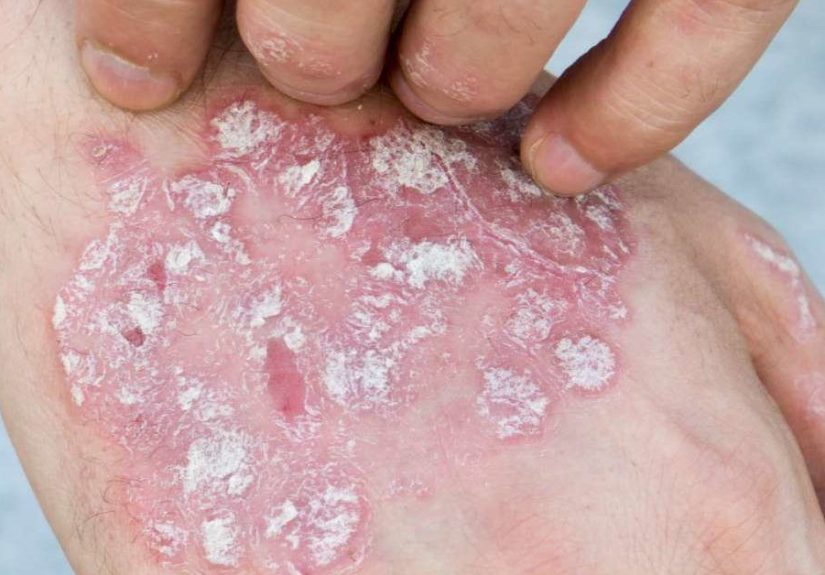
Plaque psoriasis usually causes raised, inflamed patches with scale. On lighter skin, plaques may look pink or red with silvery-white scale; on darker skin, they may appear violet, gray, deep brown, or darker than nearby skin. Psoriasis may itch, burn, sting, crack, or bleed. Scalp flaking and nail pitting, thickening, discoloration, or lifting can also occur.
Psoriasis can extend beyond the skin
Psoriasis is more than a cosmetic rash. Some people develop psoriatic arthritis, which can cause joint pain, morning stiffness, swelling, heel pain, or swollen fingers and toes. Nail changes sometimes accompany joint disease. Persistent joint symptoms deserve medical attention because early assessment and treatment may help protect function.
What Is Keratosis Pilaris?
Keratosis pilaris, often nicknamed “chicken skin,” develops when keratin and dead skin cells collect around hair follicles. The result is a field of tiny, firm bumps that may be skin-colored, white, pink, red, brown, or darker than nearby skin. The bumps often feel more dramatic than they looklike very fine sandpaper wearing a sweater.
Keratosis pilaris commonly appears on the backs of the upper arms, thighs, buttocks, and cheeks. It often begins in childhood, becomes especially noticeable during adolescence, and may become less prominent with age. It tends to stand out more in cold, dry weather and may occur alongside dry skin or atopic dermatitis. Most importantly, it is harmless and does not transform into skin cancer.
What keratosis pilaris usually does not do
Classic keratosis pilaris does not usually form large, sharply bordered plaques, produce thick sheets of scale, crack deeply, or affect the nails and joints. It may become red or itchy when irritated, but significant pain, drainage, crusting, or rapidly spreading redness suggests that something else may be happening, such as folliculitis, eczema, or an infection.
Are Psoriasis and Keratosis Pilaris Related?
They are not considered two versions of the same disease. Psoriasis is primarily an immune-mediated inflammatory condition. Keratosis pilaris is a follicular keratinization disorder. Both can run in families, both can look worse when skin is dry, and both involve keratin in broad biological terms, but those similarities do not establish a direct causal relationship. A person can have both simply because each condition is common enough to coexist.
One practical complication is that psoriasis may occasionally appear as small bumps, while irritated keratosis pilaris may look red and rash-like. Location, scale, follicular pattern, nail findings, symptoms, and the history of flares help clinicians tell them apart.
How Doctors Diagnose the Difference
A clinician usually begins with the skin’s appearance and texture, the affected areas, symptoms, family history, and timing. Keratosis pilaris is commonly diagnosed by inspection; testing is rarely necessary. Psoriasis is also often a clinical diagnosis, but a dermatologist may gently scrape the scale, examine the scalp and nails, ask about joint symptoms, or occasionally perform a small skin biopsy when the presentation is unusual.
Before an appointment, take clear photos and note itching, pain, bleeding, triggers, medications, and family skin conditions. This is more useful than arriving with 47 screenshots labeled “maybe this?”
Treating Psoriasis
Psoriasis treatment depends on its type, location, severity, effect on daily life, medical history, and joint involvement. Goals include reducing inflammation, scale, itch, and excessive skin-cell growth. There is no universal best option; a therapy that works beautifully for one person may be a complete diva for another.
Topical treatment
Mild psoriasis is often treated with moisturizers and topical corticosteroids, vitamin D analogs, retinoids, calcineurin inhibitors for selected sensitive areas, salicylic acid, or coal tar. Potency and location matter: an elbow treatment may be unsuitable for the face or folds. Follow steroid instructions rather than adopting a “more cream, more victory” strategy.
Phototherapy and systemic medication
More extensive or stubborn psoriasis may be treated with medically supervised phototherapy, oral medications, injectable biologics, or combinations of therapies. These treatments require individualized screening and monitoring. A tanning bed is not a homemade substitute for phototherapy; uncontrolled ultraviolet exposure can burn the skin, aggravate psoriasis, accelerate skin aging, and increase skin-cancer risk.
Supportive skin care
Use short, lukewarm showers, fragrance-free cleansers, and thick moisturizers after bathing. Avoid picking scale, and track possible patterns involving stress, illness, medication, weather, or friction. A flare is not evidence that you failed at skincare.
Treating Keratosis Pilaris
Keratosis pilaris does not require treatment unless the texture, dryness, itch, redness, or appearance bothers you. Even then, management usually controls the bumps rather than permanently curing the tendency to develop them. Results are gradual, and the bumps may return when treatment stops.
Moisturize and loosen the plugs
Useful over-the-counter products may contain urea, lactic acid, glycolic acid, or salicylic acid. These ingredients moisturize, soften excess keratin, or help dead cells shed. Start slowly, especially on sensitive skin, because stinging and irritation can make the area look redder. Do not combine every exfoliating acid in your cabinet on night one. Your upper arms are not a chemistry fair.
Exfoliate gently, not heroically
A soft washcloth or gentle application can help, but hard scrubbing, picking, and abrasive body tools may inflame follicles and worsen discoloration. Apply moisturizer after bathing while the skin is still slightly damp. Use a humidifier when indoor air is dry, avoid very hot water, and choose fragrance-free products if irritation is a problem. A dermatologist may recommend a topical retinoid or another option when basic care is not enough.
What If You Have Both Conditions?
A routine can accommodate both, but the products should match the specific area. A bland, fragrance-free moisturizer is a sensible foundation. Apply prescription psoriasis medication only where directed. Use keratolytic products for keratosis pilaris cautiously and keep them away from cracked, raw, or highly inflamed psoriasis unless your clinician approves. Acids and retinoids can sting compromised skin, while vigorous exfoliation may aggravate psoriasis through irritation or injury.
Introduce one new product at a time and patch-test it on a small area. This makes it easier to identify the culprit when your skin files a formal complaint. Sunscreen is also useful because redness and post-inflammatory color changes can become more noticeable after sun exposure, and some topical treatments increase sun sensitivity.
When to See a Dermatologist
Schedule an evaluation when you are unsure of the diagnosis, symptoms interfere with sleep or daily activities, over-the-counter care is not helping, or the rash affects the face, genitals, palms, soles, scalp, or nails. Seek care sooner for widespread or rapidly worsening inflammation, fever, pus, severe tenderness, open skin, or signs of infection.
Anyone with psoriasis should mention new joint pain, prolonged morning stiffness, swollen fingers or toes, heel pain, reduced range of motion, or recurring tendon pain. Also have a clinician examine any new rough spot on sun-exposed skin that enlarges, bleeds, changes, or does not heal. Actinic keratosis is a separate sun-damage condition with precancerous potential; it should not be dismissed as ordinary keratosis pilaris.
Common Questions
Can keratosis pilaris turn into psoriasis?
No evidence indicates that ordinary keratosis pilaris transforms into psoriasis. A person may have both, and one rash may be mistaken for the other, but they arise through different processes.
Should you pop keratosis pilaris bumps?
No. Picking can cause inflammation, scabbing, infection, and lingering discoloration. Gentle, consistent care is slower than squeezing, but it is also much less likely to turn three tiny bumps into a month-long souvenir.
Is psoriasis contagious?
No. You cannot catch psoriasis through touch, shared towels, swimming pools, or close contact. Keratosis pilaris is also noncontagious.
Real-Life Experience: What Managing Texture and Flares Can Feel Like
The following examples are composites based on commonly reported experiences, not the medical history of one identifiable person.
Many people first treat every rough patch as simple dryness. They buy an “ultra smoothing” bottle, scrub like they are sanding a porch, and wonder why the skin becomes angrier. With keratosis pilaris, squeezing and scouring seem logical because the bumps feel clogged. In practice, irritation often creates more redness. The turning point is usually boring but effective: shorter showers, gentle cleanser, lactic acid or urea used gradually, moisturizer, and no picking. Skin care prefers consistency over dramatic speeches.
Psoriasis creates a different rhythm. A quiet month may be followed by plaques after illness, stress, cold weather, or no obvious trigger. Clothing becomes strategic: dark shirts reveal scalp flakes, while short sleeves may invite questions from self-appointed deputy dermatologists. Repeatedly explaining that psoriasis is not contagious can be exhausting.
Treatment can be inconvenient. Ointments feel greasy, scalp products need time, phototherapy must fit around work, and insurance can complicate prescriptions. When therapy fails, people may blame themselves even though psoriasis often requires adjustment. A better approach is a clinician-guided experiment: track symptoms, follow directions, report side effects, and revise.
Having psoriasis and keratosis pilaris together can be oddly confusing because improvement is measured differently. Psoriasis treatment may flatten a plaque and reduce itch, while a keratosis pilaris lotion gradually softens hundreds of tiny bumps. One area can improve while another appears unchanged. Photos taken every few weeks under similar lighting may reveal progress that the daily mirror hides.
On deeper skin tones, inflammation may look purple, gray, or dark brown, and discoloration may remain after bumps or plaques calm down. Lingering color does not always mean active disease, but it can make progress feel incomplete. Sun protection, gentle care, and a clinician experienced with diverse skin tones can help.
The most useful practical lesson is that “smooth immediately” is usually the wrong goal. For keratosis pilaris, aim for softer texture and less irritation over several weeks. For psoriasis, aim for control: fewer plaques, less scale, better sleep, less pain, and a plan for flares. If joint symptoms appear, the goal expands beyond skin comfort to protecting mobility and long-term health.
There is also value in simplifying the bathroom shelf. A gentle cleanser, moisturizer, sunscreen, condition-specific treatment, and patience often outperform a rotating cast of twelve active ingredients. When something burns, cracks the skin, or makes redness persist, stop and reassess rather than assuming discomfort proves the product is “working.” Skin is an organ, not a stubborn countertop.
Visible skin conditions can affect mood, plans, intimacy, and self-image even when someone else calls them “mild.” That impact is legitimate. Ask for treatment that fits real life and seek support when embarrassment or anxiety becomes heavy. Success is not perfect skin; it is fewer symptoms, fewer surprises, and more days when your skin is not running the meeting.
Conclusion
Psoriasis and keratosis pilaris may both create rough-looking skin, but they differ in cause, appearance, health significance, and treatment. Psoriasis is an immune-mediated inflammatory disease that may require prescription or systemic care and attention to possible joint symptoms. Keratosis pilaris is a benign follicular plugging condition that usually responds best to gentle moisturization, carefully chosen keratolytic ingredients, and time.
When the pattern is unclear, skip the aggressive scrubbing and get a professional diagnosis. The right label is not merely a nameit is the shortcut to a safer, more effective plan.