Table of Contents >> Show >> Hide
- What Are Richlite Kitchen Countertops?
- Why Homeowners Choose Richlite Countertops
- Richlite Countertop Colors and Design Possibilities
- How Richlite Compares With Other Countertop Materials
- Pros and Cons of Richlite Kitchen Countertops
- How Much Do Richlite Countertops Cost?
- Cleaning and Maintenance Tips for Richlite Countertops
- Best Kitchen Styles for Richlite Countertops
- Installation Considerations
- Who Should Choose Richlite Countertops?
- Real-Life Experience With Richlite Kitchen Countertops
- Final Verdict: Are Richlite Kitchen Countertops Worth It?
Note: This article is based on current manufacturer information, countertop care guides, green-building suppliers, design publications, and kitchen-remodeling resources.
Some countertop materials enter the kitchen wearing a tuxedo. Marble arrives dramatic and expensive. Granite walks in like it owns the island. Laminate says, “I can do this for less.” Then there is Richlite, the quiet overachiever made mostly from paper that somehow behaves like a serious architectural surface. Yes, paper. Before anyone imagines a countertop melting into papier-mâché after taco night, let’s be clear: Richlite kitchen countertops are not made from yesterday’s grocery list and good intentions. They are made from layers of paper compressed with resin under high heat and pressure until the result becomes a dense, durable, warm-looking surface used in kitchens, restaurants, furniture, wall panels, marine applications, skate ramps, cutting boards, and other places where ordinary paper would politely surrender.
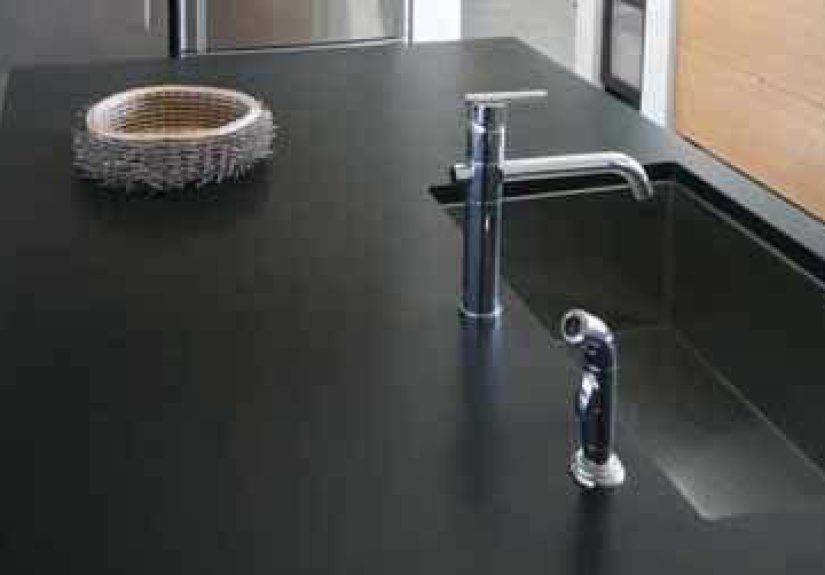
For homeowners looking beyond quartz and granite, Richlite offers a rare mix of sustainability, performance, and character. It is smooth without looking plastic, modern without feeling cold, and durable without needing the “please don’t breathe near the counter” energy of some high-maintenance stones. It is especially popular in contemporary kitchens, minimalist homes, eco-conscious remodels, and spaces where a matte black or earthy surface can make cabinets look instantly more intentional.
The big question is simple: are Richlite countertops right for a real kitchen where coffee spills, hot pans, knife slips, children’s science experiments, and late-night sandwich construction all happen? The answer is yes for many households, but with a few important footnotes. Richlite is tough, attractive, and repairable, but it also develops a patina, can show scratches, and should still be treated with normal countertop respect. Think of it less like a glossy showroom princess and more like a well-made leather jacket: it gets better if you like character, and slightly annoying if you expect it to look untouched forever.
What Are Richlite Kitchen Countertops?
Richlite is a paper-composite surface made by saturating layers of paper with thermosetting resin, then compressing them into solid panels using high heat and pressure. The finished slab is dense, nonporous, machinable, and strong enough for residential and commercial uses. Although the idea of a paper countertop sounds suspiciously like something your crafty cousin would pitch after watching one too many DIY videos, Richlite has a long industrial background. The company has been manufacturing in Tacoma, Washington since 1943, and the material’s history includes demanding uses well beyond the home kitchen.
In countertop form, Richlite is often grouped with “paper composite countertops” or “recycled paper countertops.” It competes with materials such as PaperStone, solid surface, butcher block, soapstone, quartz, and laminate, but it has its own personality. It feels warmer than stone, quieter than quartz, and more substantial than laminate. Its matte finish and through-color construction give it a refined, understated look that works especially well with wood cabinetry, flat-panel doors, open shelving, black fixtures, brass hardware, and industrial-style kitchens.
One of the most appealing things about Richlite is that it does not try too hard to imitate marble or granite. It is not pretending to be a dramatic slab pulled from a mountain. Instead, it offers a clean, solid, organic surface with subtle visual depth. Dark colors can resemble soapstone, blackened steel, or aged leather. Warmer tones can feel earthy and modern without shouting for attention. In a kitchen design world where every other surface is trying to look like Calacatta marble in a luxury hotel lobby, Richlite’s confidence is refreshing.
Why Homeowners Choose Richlite Countertops
1. Richlite Has a Warm, Modern Look
Richlite countertops have a soft matte appearance that can make a kitchen feel calmer and more grounded. Unlike polished stone, they do not bounce every overhead light into your eyeballs. Unlike some synthetic surfaces, they do not look overly shiny or artificial. The visual effect is elegant but relaxed, which is why designers often use Richlite in modern, Scandinavian-inspired, industrial, rustic-modern, and eco-friendly kitchens.
Black Richlite countertops are particularly popular because they deliver the drama of dark stone without the same coldness or veining. A matte black Richlite island can pair beautifully with white oak cabinets, creamy walls, handmade tile, or stainless-steel appliances. It gives the kitchen a chef’s-table mood without making the room feel like a nightclub that serves sourdough.
2. It Is Durable Enough for Daily Kitchen Life
Richlite is known for impressive density and impact resistance. It is designed to handle daily wear, food prep, moisture, and normal household cleaning. The surface is nonporous, which means it does not absorb liquids the way unfinished wood can. That is a major advantage in kitchens, where olive oil, wine, tomato sauce, lemon juice, coffee, and mystery sticky substances have a way of appearing without witnesses.
Richlite is also heat resistant up to about 350°F, according to manufacturer guidance. That makes it more heat tolerant than many homeowners expect from a paper-based material. Still, the smart move is to use trivets or hot pads for cookware straight from the oven or stove. A countertop can be heat resistant and still not deserve to be treated like a pizza stone.
3. Richlite Is Repairable and Refinishable
One reason Richlite appeals to practical homeowners is that many surface marks can be addressed. Light scratches, scuffs, and wear can often be softened or refinished with appropriate pads, oils, enhancers, or professional help, depending on the surface finish. This is different from some countertop materials where damage feels permanent, emotionally devastating, and expensive enough to require a family meeting.
Because the color runs through the material, Richlite does not have a thin decorative layer that peels away like laminate. That through-color quality helps with edges, cutouts, and long-term repairability. If you prefer materials that age honestly rather than pretend nothing happened, Richlite fits the brief.
4. It Offers Sustainability Appeal
Richlite is often chosen by homeowners who want more sustainable kitchen countertops. The material uses paper from responsibly managed or recycled sources, depending on the product line, and is manufactured into long-lasting panels. Its durability matters because sustainability is not only about what something is made from; it is also about how long it stays useful. A countertop that lasts for decades beats a “green” product that needs replacing before your blender warranty expires.
For environmentally minded remodels, Richlite can be especially attractive when paired with low-VOC finishes, energy-efficient appliances, reclaimed wood, water-saving fixtures, and cabinets made from responsibly sourced materials. It is not the only eco-friendly countertop option, but it is one of the more design-forward choices.
Richlite Countertop Colors and Design Possibilities
Richlite is available in a range of solid colors, many inspired by natural landscapes and earthy tones. Popular options often include deep black, charcoal gray, chocolate brown, warm brown, reddish brown, and other muted shades. The exact color availability can change by collection, so homeowners should always review current samples before ordering. This is not the moment to trust your laptop screen, which may turn “warm brown” into “haunted espresso” depending on brightness settings.
Because Richlite is a natural-looking composite rather than a printed pattern, color variation can occur. That variation is part of the charm. The surface can darken and develop a patina over time, especially in high-use areas. Some homeowners love that evolving look. Others may prefer the more consistent appearance of engineered quartz. Before choosing Richlite, it is wise to ask yourself whether you like materials that age visibly. If you admire leather, copper, soapstone, wood, and honed surfaces, Richlite will probably make sense. If you want a countertop that looks exactly the same on day 2,000 as it did on installation day, you may need to date around before committing.
How Richlite Compares With Other Countertop Materials
Richlite vs. Quartz
Quartz countertops are extremely popular because they are durable, nonporous, and available in many patterns, including stone-look designs. Compared with quartz, Richlite feels warmer, looks more understated, and has a more natural matte character. Quartz usually offers more color and pattern variety, especially if you want marble-like veining. Richlite, however, wins points for its unique tactile quality and repairable, patina-friendly personality.
For busy households that want a highly uniform surface with minimal visual change, quartz may be the safer choice. For homeowners who want a distinctive, sustainable, modern surface with character, Richlite deserves serious consideration.
Richlite vs. Granite
Granite is a natural stone with dramatic movement, excellent heat resistance, and strong resale familiarity. Richlite is more consistent, softer-looking, and generally warmer to the touch. Granite can feel grand and traditional, while Richlite often feels architectural and modern. Granite may need sealing depending on the stone, while Richlite needs care based on its finish and level of use.
If you love natural veining and one-of-a-kind stone patterns, granite is hard to beat. If you want a smooth, dark, refined surface without busy movement, Richlite may be more visually satisfying.
Richlite vs. Butcher Block
Butcher block brings warmth, beauty, and a classic kitchen feel. It also requires regular maintenance and can be vulnerable to water damage if neglected. Richlite gives some of that warm, organic feeling while offering a nonporous surface and stronger resistance to moisture. It does not replace the golden glow of real wood, but it can provide a similar sense of softness in a more contemporary way.
Homeowners sometimes combine both materials: Richlite around the sink and cooking zones, butcher block on a baking station or smaller accent area. That mix can look fantastic, especially when the kitchen needs both durability and warmth.
Richlite vs. Laminate
Laminate is budget-friendly, widely available, and much better looking than it was in decades past. Richlite is more premium, more durable, more substantial, and more repairable. It also costs more. Laminate is a practical choice for tight budgets, rental properties, or fast refreshes. Richlite is better suited for homeowners who want a long-term countertop with stronger design identity and a more elevated feel.
Pros and Cons of Richlite Kitchen Countertops
Pros
Richlite offers a strong list of advantages. It is durable, nonporous, moisture resistant, and heat resistant up to about 350°F. It has a warm tactile quality that stone cannot easily match. The surface is through-color, which helps with edges and refinishing. It can be machined with woodworking tools by skilled fabricators, allowing custom details, integrated drainboards, shaped edges, and creative installations. It also brings sustainability appeal, especially for homeowners who want something beyond the usual quartz-and-granite conversation.
Another major benefit is style. Richlite countertops have a quiet confidence. They do not need glitter, sparkle, or dramatic fake veining to look good. They simply sit there looking handsome while your backsplash tries to get all the attention.
Cons
The biggest drawback is that Richlite changes over time. It develops patina, and darker colors may show crumbs, dust, fingerprints, or surface marks more easily. Scratches can happen, especially if someone uses the counter as a cutting board. The surface is repairable, but “repairable” is not the same as “magically immune.” You should still use cutting boards, trivets, and common sense.
Cost can also be a consideration. Richlite is not usually a bargain-basement countertop. Depending on slab thickness, color, region, fabrication complexity, and installation details, it can land in a price range similar to premium solid surface, quartz, soapstone, or other mid-to-high-end materials. Availability may also be more limited than mainstream countertop choices, so finding an experienced fabricator is important.
How Much Do Richlite Countertops Cost?
Richlite countertop pricing varies widely based on location, material thickness, supplier, fabrication, edging, sink cutouts, backsplashes, delivery, and installation. As a general planning range, homeowners should expect Richlite to cost more than laminate and many basic butcher block options, while often competing with quartz, solid surface, soapstone, and some stone countertops. Older industry references have placed installed Richlite pricing around the upper-middle countertop category, but actual quotes can differ significantly by market.
The smartest approach is to request quotes from fabricators who have experience with paper-composite countertops. Ask whether the quote includes templating, fabrication, sink and faucet cutouts, edge profiles, installation, finishing, removal of old countertops, and any support needed for overhangs. Countertop quotes have a charming habit of looking simple until every small detail shows up wearing a price tag.
Cleaning and Maintenance Tips for Richlite Countertops
Daily cleaning is straightforward. Use warm water, mild soap, and a soft cloth or sponge. For most kitchen messes, that is enough. Avoid harsh abrasive cleaners unless the manufacturer or fabricator recommends them for your specific finish. Wipe spills promptly, especially acidic or strongly colored liquids, not because Richlite is helpless, but because every countertop appreciates basic manners.
Use cutting boards for chopping, slicing, and heroic watermelon surgery. Use trivets for hot pans. Avoid dragging rough ceramic dishes, cast-iron pans, or heavy appliances across the surface. If a scratch or burn mark appears, consult your care guide or fabricator. Some light marks can be improved with refinishing pads or approved maintenance products, while deeper damage may require professional refinishing.
Richlite’s patina is part of its identity. Over time, the surface may become richer, darker, or more polished in high-use zones. For many owners, this is the point. The counter starts looking like it belongs to a home where people actually cook. If you prefer a showroom-perfect look every day, choose a finish and maintenance routine carefully before installation.
Best Kitchen Styles for Richlite Countertops
Modern Minimalist Kitchens
Richlite works beautifully in minimalist kitchens because it brings texture without clutter. A matte black or charcoal Richlite countertop can anchor flat-panel cabinets, hidden pulls, slab backsplashes, and integrated appliances. It adds depth without screaming, which is basically the design version of having excellent manners.
Warm Contemporary Kitchens
Pair Richlite with white oak, walnut, maple, or painted cabinets for a warm contemporary look. The material’s softness balances straight lines and modern fixtures. Add handmade tile, unlacquered brass, or matte black hardware for a kitchen that feels curated but not fussy.
Industrial and Chef-Inspired Kitchens
Because Richlite has roots in commercial and industrial applications, it feels right at home with stainless steel, open shelving, concrete floors, and restaurant-style lighting. It can create a serious cooking atmosphere without turning the kitchen into a stainless-steel bunker.
Eco-Friendly Remodels
For green kitchen renovations, Richlite fits naturally alongside low-waste design choices. It pairs well with reclaimed materials, energy-efficient lighting, water-conscious fixtures, and durable cabinetry. It is an especially good option for homeowners who want sustainability without sacrificing style.
Installation Considerations
Richlite should be fabricated and installed by professionals who understand the material. While it can be machined using woodworking equipment, that does not mean every countertop installer has the right experience. Proper handling, cutting, finishing, seam planning, edge treatment, and sink installation matter. Ask potential fabricators whether they have completed Richlite projects before and whether they can show photos or references.
Discuss edge profiles early. Richlite can support simple eased edges, bevels, thicker stacked edges, and custom shapes. Because the color runs through the slab, exposed edges can look clean and intentional. Also talk about overhangs, especially for islands with seating. Richlite has strong span capabilities, but design, thickness, and support should still be confirmed by the fabricator.
Sink choice is another important detail. Undermount sinks can look sleek, but installation must be done carefully to protect edges and ensure proper sealing. Integrated drain grooves may be possible in some designs, giving the countertop a custom, European-inspired look. If you want those details, bring them up before the quote, not after the slab is already cut and everyone is pretending not to panic.
Who Should Choose Richlite Countertops?
Richlite kitchen countertops are ideal for homeowners who want a durable, sustainable, design-forward surface with warmth and character. They are especially well suited for people who appreciate matte finishes, natural aging, and materials that tell a story over time. If you like soapstone, leathered stone, butcher block, aged copper, or honed surfaces, Richlite will probably feel familiar in the best way.
Richlite may not be the best choice for someone who wants a bright white countertop, dramatic stone veining, ultra-glossy shine, or a surface that never shows evidence of use. It is also not the cheapest countertop option. But for the right homeowner, Richlite offers a rare combination: it is practical, good-looking, sustainable, and just unusual enough to make guests ask, “What is this?” That is a nice question to get, especially when the answer begins with “paper” and ends with everyone touching the counter like it is a museum exhibit.
Real-Life Experience With Richlite Kitchen Countertops
Living with Richlite countertops is a little different from admiring a sample in a showroom. The sample will show the color and finish, but the real personality appears after weeks and months of actual use. In a working kitchen, Richlite quickly proves that it is not delicate. You can set down grocery bags, prep vegetables, slide plates across it, wipe up coffee, and use the space like a real human instead of a nervous museum guard. The surface feels solid and grounded, but not cold. That warmth is one of the first things many homeowners notice. Stone can feel chilly in the morning; Richlite feels more like a dense, smooth worktable.
One common experience is that dark Richlite looks stunning immediately after cleaning. A matte black or charcoal counter can make the whole kitchen feel sharper, calmer, and more expensive. Then, five minutes later, a toast crumb appears. Dark counters are honest like that. They do not hide flour, salt, dust, or powdered sugar very well. This is not a deal breaker, but it is worth knowing. If your household includes enthusiastic bakers, snacky children, or adults who eat crackers like raccoons in a pantry, a very dark surface may ask for more frequent wiping.
Scratches are another real-world topic. Richlite can scratch if you cut directly on it or drag rough objects across it. The good news is that minor wear often blends into the overall patina, especially on darker colors. The less good news is that people who expect a flawless surface may notice every new mark at first. Over time, the anxiety usually fades. The counter begins to look lived-in rather than damaged. Much like hardwood floors, denim, or a favorite leather bag, Richlite becomes more relaxed as it ages.
Heat performance is generally reassuring, but careful homeowners still use trivets. In everyday use, a warm mug, plate, or baking sheet that has cooled slightly is unlikely to cause drama. But a screaming-hot cast-iron skillet should go on a trivet, not directly on the countertop. This is not because Richlite is weak; it is because replacing countertop sections is much less fun than owning a five-dollar hot pad.
Cleaning is easy in practice. A damp cloth and mild dish soap handle most messes. Greasy fingerprints, coffee rings, and sauce splatters usually wipe up without fuss. The surface does not have grout lines, natural stone pores, or wood grain openings that collect gunk. That makes Richlite especially pleasant around sinks and prep zones. The kitchen feels easier to reset at the end of the day, which matters if your cooking style involves turning one simple dinner into a full countertop crime scene.
The best experience with Richlite comes when expectations are clear. It is not a fake-marble quartz substitute. It is not a budget laminate replacement. It is not butcher block. It is its own material: dense, warm, matte, durable, and willing to age. Homeowners who understand that tend to love it. They enjoy the way it softens a modern kitchen, the way it pairs with natural wood, and the way it avoids the visual busyness of veined stone. Richlite is a countertop for people who want performance with personality. It does not beg for attention, but it quietly makes the whole kitchen feel more considered.
Final Verdict: Are Richlite Kitchen Countertops Worth It?
Richlite kitchen countertops are absolutely worth considering if you want a surface that combines durability, sustainability, warmth, and modern style. They are not perfect, and that is part of the point. They develop patina, require sensible care, and cost more than basic budget materials. But they also offer a look and feel that many mainstream countertops cannot match.
For the right kitchen, Richlite can be the design decision that makes everything else click. It works with wood cabinets, painted cabinets, stainless appliances, handmade tile, open shelving, and minimalist details. It feels substantial without feeling cold. It is practical without being boring. And it gives homeowners a great dinner-party line: “Actually, the countertop is made from paper.” That sentence alone may be worth at least one backsplash sample.