Table of Contents >> Show >> Hide
- Why the gearbox matters more than the average person thinks
- From clever concept to world-class hardware
- What makes UltraFan different from a regular turbofan?
- Why airlines and aircraft makers care so much
- The catch: a brilliant test is not the same thing as immediate service
- What this says about the future of aviation
- Experiences related to the topic: what this milestone really feels like on the ground
- Conclusion
If jet engines had group chats, the gearbox would probably be the quiet genius in the corner. Not flashy. Not loud. Definitely not asking for attention. And yet, in Rolls-Royce’s UltraFan program, the gearbox is exactly the part that made aerospace people sit up straighter, spill a little coffee, and say, “Wait, that thing can handle how much power?”
That is the big headline behind Rolls-Royce testing what has been described as the world’s most powerful turbofan gearbox. The company’s UltraFan development effort is not just another routine engine update with shinier metal and a fresh brochure. It is a serious attempt to rethink how a giant commercial jet engine should work in a world obsessed with fuel burn, emissions, durability, and the brutal economics of airline operations.
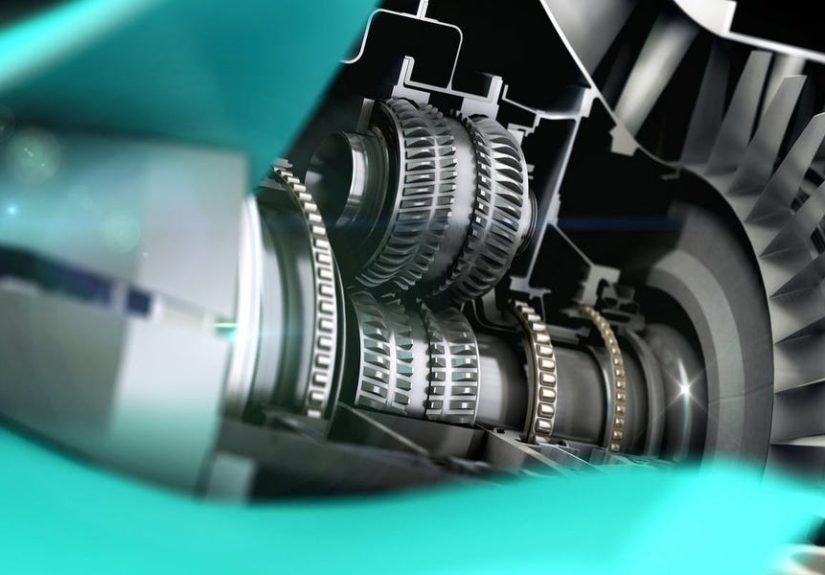
At the center of that rethink is a geared architecture. In plain English, Rolls-Royce wants the fan at the front of the engine and the turbine at the back to spin at the speeds they each like best, rather than forcing them into an awkward compromise. That sounds simple. It is not simple. It is engineering-level “let’s build a mechanical beast that can survive enormous loads without turning itself into very expensive confetti” simple.
And that is exactly why this story matters. The gearbox test is not just a laboratory flex. It is a signal about where large commercial aviation may be headed next.
Why the gearbox matters more than the average person thinks
Most travelers never look at a jet engine and wonder whether the fan and turbine are having a healthy speed-management relationship. They just want the flight to leave on time and their carry-on to fit in the overhead bin without an emotional support negotiation. But inside a modern turbofan, speed matters a lot.
In a conventional turbofan, the fan and turbine are mechanically linked. That creates a design compromise because the big front fan prefers to spin more slowly, while the turbine deep inside the engine is happiest at much higher rotational speeds. A gearbox lets both parts do their jobs more efficiently by allowing the turbine to spin faster while the fan turns slower.
That matters because a larger, slower fan can move a tremendous amount of air more efficiently. In aviation, efficiency is not just a nice gold star. It affects fuel costs, operating range, emissions, noise, and even what kinds of aircraft an engine can realistically power. When fuel bills can make finance teams sweat through their spreadsheets, a better engine architecture gets attention very quickly.
So when Rolls-Royce put its UltraFan power gearbox through testing, it was not performing a mechanical magic trick for applause. It was validating the core idea behind a future family of engines that could reshape both widebody and, potentially, narrowbody commercial aircraft.
From clever concept to world-class hardware
The UltraFan program has been building toward this moment for years. Early reporting on the gearbox tests highlighted the ambition clearly: this was not a modest component upgrade, but a planetary power gearbox designed for output levels that sound more like something from a power plant than a passenger jet. Early low-power testing focused on the basics, such as oil systems, low-speed operation, and stability. That may not sound glamorous, but in aviation, “the oil system works” is the kind of sentence that prevents much uglier sentences later.
As development progressed, the power figures got more dramatic. Rolls-Royce later announced that the gearbox had reached 87,000 horsepower, or 64 megawatts, during testing in Germany, setting a world aerospace record. That is the kind of number that makes even seasoned aerospace engineers nod slowly and say, “All right, that’s serious.”
Then came the wider UltraFan demonstrator milestones. Rolls-Royce completed the first tests of the new engine architecture in 2023 using 100% sustainable aviation fuel, which was significant for two reasons. First, it marked the first time in more than half a century that the company had tested an all-new aero-engine architecture. Second, it connected engine efficiency with the aviation industry’s push toward lower lifecycle emissions. In other words, this was not just about raw power. It was about making future gas turbines cleaner, smarter, and more economically relevant in a decarbonizing world.
Later in 2023, Rolls-Royce ran the UltraFan technology demonstrator to maximum power. The company also said product-representative testing achieved 85,000 pounds of thrust in November 2023. That is a major step because it showed the gearbox was not just a heroic standalone component on a test rig. It was helping power a complete demonstrator engine designed to prove the full architecture under realistic conditions.
In short, the gearbox headline is impressive on its own, but it becomes much more meaningful when viewed as part of a larger story: the gradual proving-out of an entire next-generation propulsion system.
What makes UltraFan different from a regular turbofan?
A very big fan, for starters
One of UltraFan’s attention-grabbing features is its huge fan diameter, reported at 140 inches. That is not a decorative detail. Bigger fans can deliver major efficiency gains, especially when paired with a geared design that lets them rotate at lower, more optimal speeds. The result is a high-bypass engine architecture built around moving a lot of air efficiently rather than merely bullying the atmosphere with brute force.
Lighter, tougher materials
Rolls-Royce has also leaned heavily on advanced materials, including carbon-composite fan blades with titanium leading edges and a composite casing. These materials help reduce weight while preserving strength, durability, and resistance to damage. In aircraft design, cutting weight without sacrificing integrity is a little like getting a king-size mattress up four flights of stairs and discovering it somehow also pays your utility bills. It changes everything.
A cleaner-burning future
The UltraFan story is also tied closely to sustainable aviation fuel. Rolls-Royce’s first tests of the demonstrator and its maximum-power campaign were linked to 100% SAF capability, which matters because future aviation is unlikely to depend on a single silver-bullet technology. Batteries will help in some segments. Hydrogen may help in others. But for large aircraft over long distances, highly efficient gas turbines running on lower-carbon fuels are still expected to carry much of the load for years to come.
Scalable ambition
Another important point is that UltraFan is not being pitched as one single engine with one single destiny. Rolls-Royce has described the technology as scalable across a broad thrust range, roughly 25,000 to 110,000 pounds. That gives the company flexibility to pursue future applications in both narrowbody and widebody markets, depending on what aircraft manufacturers want and when they are ready to launch new programs.
Why airlines and aircraft makers care so much
Airlines do not buy engines because they are romantic about gear systems. They buy engines because operating economics are ruthless. Fuel remains one of the biggest costs in commercial aviation, and even a single-digit efficiency improvement can become financially enormous across a fleet over many years. So when Rolls-Royce says UltraFan technology can deliver around a 10% efficiency improvement over the Trent XWB and around a 25% gain compared with the first generation of Trent engines, people in airline boardrooms pay attention.
There is also a strategic angle. Aircraft manufacturers are studying what the next generation of airplanes might look like in the 2030s. That includes both future widebodies and future narrowbodies. Rolls-Royce has already indicated it is developing a smaller UltraFan-related demonstrator as it explores technology for the next generation of single-aisle jets. In 2026, the company also announced funding support tied to UltraFan 30 work, with planned ground testing later in the decade.
This matters because the biggest commercial aviation gains often arrive when airframe design and engine design evolve together. You do not just bolt tomorrow’s engine onto yesterday’s airplane and expect fireworks. Well, you might get fireworks, but not the kind the certification authorities enjoy.
In other words, Rolls-Royce is not just testing a gearbox. It is trying to stay ready for the next aircraft cycle before that cycle officially begins.
The catch: a brilliant test is not the same thing as immediate service
Now for the fine print, because every aerospace success story comes with several binders of it. A record-setting gearbox test does not mean passengers are boarding UltraFan-powered flights tomorrow. Engine development is long, expensive, and unforgiving. Demonstrators exist to prove technologies, gather data, expose weaknesses, and refine designs before real-world certification enters the chat with a 700-page checklist.
Rolls-Royce itself has treated UltraFan as a technology platform rather than a guaranteed near-term production engine. Some features can be transferred into existing Trent products sooner, which may be one of the smartest commercial outcomes in the short term. That way, the company can harvest practical benefits from the program while larger future applications continue to mature.
There is also timing. The next truly new commercial aircraft platforms are still being shaped, debated, and delayed in the way only large aerospace programs can be. That means UltraFan’s long-term success will depend not only on engineering excellence, but also on airline demand, aircraft manufacturer strategy, certification timelines, supply chain resilience, and the pace of SAF adoption.
So yes, the gearbox is a monster. But even monsters have to wait for a boarding gate assignment.
What this says about the future of aviation
The bigger lesson here is that commercial aviation is not standing still. The industry’s path to lower emissions will almost certainly be messy, layered, and full of trade-offs. There will not be one miracle machine that solves everything overnight. Instead, progress will come from stacked improvements: better thermodynamics, lighter materials, smarter digital monitoring, cleaner fuels, more aerodynamic aircraft, and propulsion systems that squeeze more performance out of every drop of energy.
That is why the Rolls-Royce turbofan gearbox story matters beyond the headline. It represents a kind of engineering philosophy. Rather than accepting the traditional speed compromise inside a giant turbofan, Rolls-Royce is pushing for an architecture that gives each major component a more efficient operating role. That is elegant engineering, but it is also practical business strategy.
For aerospace, the gearbox is a symbol of something bigger: the willingness to attack old problems with expensive, difficult, data-heavy persistence. Nobody gets a record-setting aerospace gearbox by accident. That takes years of modeling, testing, redesign, material science, manufacturing discipline, and probably more coffee than any cardiologist would recommend.
And if those efforts translate into more efficient aircraft in the next generation, then this test will look less like an isolated achievement and more like one of those moments people point back to later and say, “That was the hinge point.”
Experiences related to the topic: what this milestone really feels like on the ground
The most interesting part of the Rolls-Royce gearbox story is that it touches far more people than just propulsion engineers. For test teams, a milestone like this is the culmination of years spent turning theory into machinery that can survive reality. Long before the public sees a polished photo of a gleaming demonstrator in a testbed, engineers have already lived through the less glamorous experiences: design reviews, manufacturing tolerances, lubrication questions, thermal behavior, vibration analysis, instrumentation problems, and the kind of patient troubleshooting that makes aerospace progress look more like endurance sport than genius lightning bolt.
For factory and supply-chain teams, a project like UltraFan changes the everyday experience of what “advanced manufacturing” really means. A giant geared engine is not just a bigger version of the old thing. It demands new workflows, new materials handling, tighter integration across suppliers, and an unusually high level of confidence that every major component will behave exactly as intended under massive stress. In that sense, the gearbox is not merely a mechanical device. It is a coordination test for an entire industrial ecosystem.
For airline strategists, the experience is different again. They look at a development like this and see possibility wrapped in uncertainty. Better fuel burn sounds wonderful. Lower emissions sound even better. But they also know that new propulsion architectures must prove themselves over time in reliability, maintenance, and fleet economics. The emotional texture here is a mix of excitement and caution. No airline executive wants to be late to a transformative technology shift, but no airline executive wants to be first in line for a maintenance headache either.
Passengers experience this kind of innovation in a subtler way. Most travelers will never know the term “power gearbox,” and that is perfectly fine. Their version of success is a quieter cabin, lower ticket-price pressure, fewer fuel-related cost shocks, and a sense that flying is becoming more efficient rather than more wasteful. In many ways, the best aerospace technologies are invisible to the people they serve. They simply make the system work better.
There is also the broader public experience. Stories like this remind people that aviation is still one of the few industries where giant, physical, precision-engineered things can feel almost cinematic. In an era of apps, algorithms, and endless digital abstractions, there is something deeply satisfying about a breakthrough that involves gears, thrust, testbeds, metallurgy, and enough power to make your neighborhood leaf blower look like a tired hamster.
That is why this milestone resonates. It is technical, yes, but it is also human. It is about the experience of building toward a future that is cleaner, more efficient, and still thrillingly mechanical. The gearbox may sit inside the engine, out of sight, but the ambition behind it is impossible to miss.
Conclusion
Rolls-Royce testing the most powerful turbofan gearbox in the world is much more than a flashy engineering headline. It is a preview of how the next generation of commercial propulsion may be built: with geared efficiency, giant fans, advanced materials, sustainable fuel compatibility, and a relentless focus on real-world airline economics.
The UltraFan program still has distance to cover before it becomes a routine sight in commercial service. But that does not make the gearbox achievement any less important. Quite the opposite. Major aviation shifts usually begin with difficult component tests, not dramatic passenger unveilings. First comes the hardware. Then the data. Then the confidence. Then, maybe, the future.
And in this case, the future appears to come with a gearbox that is doing the mechanical equivalent of deadlifting a skyscraper while keeping perfect rhythm. Not bad for the “quiet part” of the engine.