Table of Contents >> Show >> Hide
- Why Roblox Parental Controls Matter
- Start With a Parent-Linked Roblox Account
- Set Content Restrictions First
- Lock Down Communication Settings
- Review the Connections List Like a Digital Front Door
- Set Spending Limits Before Robux Starts Flying
- Use Screen Time Limits Without Making Gaming the Villain
- Teach Safety Skills Alongside the Settings
- A Simple Roblox Safety Setup by Age
- Common Mistakes Parents Make With Roblox
- Conclusion
- Related Experiences: What Families Often Notice After Setting Up Roblox Parental Controls
- SEO Tags
Roblox can feel a little like handing your child the keys to a giant digital amusement park. There are games, chat features, private servers, in-game purchases, and about twelve million ways for a kid to say, “But everyone else is allowed to do it.” The good news is that Roblox gives parents more control than many people realize. The even better news is that you do not need a degree in cybersecurity, three cups of coffee, and a stress ball shaped like a headset to use them.
If your goal is safer play, the smartest move is not banning Roblox altogether. It is setting it up properly. With the right parental controls, you can limit chat, manage spending, restrict content maturity, review connections, and put screen time guardrails in place without turning every gaming session into a family courtroom drama. This guide walks you through how to set up Roblox parental controls, what each setting actually does, and how to build a safer, calmer, and more realistic family plan around the platform.
Why Roblox Parental Controls Matter
Roblox is not one single game. It is a platform filled with user-created experiences. That variety is part of the fun, but it is also why parents should not rely on “it’s just a kids’ game” logic. One experience might be a simple obstacle course. Another might lean more social, more competitive, or more intense than you expected. That is exactly why Roblox now includes tools that let parents shape access based on a child’s age, maturity, and habits.
Parental controls help with four big concerns:
- Content exposure: Not every experience is right for every age group.
- Communication: Chat and direct interaction need limits, especially for younger players.
- Spending: Robux can disappear with the speed of a magician doing card tricks.
- Screen time: “Just five more minutes” has never once meant five minutes.
The goal is not to hover over your child like a nervous drone. The goal is to create smart boundaries that fit your family.
Start With a Parent-Linked Roblox Account
The most important step is linking your Roblox account to your child’s account. This is the control center. Once linked, you can manage settings from your own device and view helpful insights such as screen time and connections.
How to link the account
There are two common ways to do this. Your child may receive a Roblox prompt or email asking for parental permission, or you can go directly into the child’s settings and add a parent. In Roblox, go to Settings, then Parental Controls, then Add parent. The parent will need to verify age using a government-issued ID or a credit card and then agree to link the account.
This setup matters because it moves you from “please hand me your tablet so I can poke around for six minutes” to “I can manage this responsibly from my own device.” That is a huge upgrade for busy parents and a huge downgrade for sneaky midnight settings changes.
Who gets what level of control?
For children under 13, parents can directly manage important settings such as privacy, content maturity, screen time, and spending limits. For teens, Roblox also supports parent-linked insights, which can help families stay informed without treating a fourteen-year-old like a toddler with Wi-Fi privileges.
Set Content Restrictions First
If you only change one Roblox setting today, make it this one. Content restrictions determine what kinds of experiences your child can actually play.
Understand Roblox content maturity labels
Roblox uses content maturity labels to describe what players may encounter in an experience. The main labels include Minimal, Mild, Moderate, and Restricted. These labels cover factors like violence, blood, fear, crude humor, gambling references, and other content themes.
For many families, a simple rule works well:
- Younger children: Start with Minimal.
- Elementary-age kids with more experience: Mild may be reasonable.
- Older tweens: Moderate should be a deliberate choice, not the default.
- Restricted: Not for children. Full stop.
How to change content maturity
Go to Settings, Parental Controls, select your child’s account, then open Content restrictions. From there, adjust the content maturity slider to the level that matches your comfort level.
You can also block specific experiences individually. That is useful when a game technically fits the maturity label you chose but still feels like a bad fit for your child. Think of it as the parenting version of saying, “Nice try, but not in this house.”
Do not ignore “Sensitive issues” settings
Roblox also flags certain experiences focused on current sensitive social, political, or religious issues. By default, users under 13 cannot access those experiences. That setting deserves a deliberate review instead of an accidental shrug.
Lock Down Communication Settings
When parents think “online safety,” they usually think chat first, and for good reason. Communication tools are often where problems begin, whether the issue is bullying, pressure, oversharing, or just random nonsense from strangers with too much free time.
Review experience chat and direct chat
Roblox lets parents manage how children communicate inside experiences. Under Communication, you can review settings for Experience chat and Experience direct chat.
Experience chat covers text chat with users in similar age groups within a game. Direct chat is more personal and allows user-to-user messaging inside an experience. For younger children, a more restrictive approach is usually best. If your child is under 9, even enabling experience chat requires parental consent. If your child is under 13, direct chat also requires parental consent.
A good default setup for many families is:
- Turn off anything your child does not truly need.
- Allow chat only when the child is ready for it.
- Revisit the setting later instead of opening every door at once.
Manage party chat and private servers
Roblox also allows settings for Party and Group Party. You can often choose between Connections or No one. For younger kids, “Connections only” or “No one” is usually the safest lane.
Private servers should get the same attention. You can limit private server access to Connections or turn it Off. This matters because a private server sounds cozy, but “private” does not automatically mean “safe.” It only means the crowd is smaller.
Review the Connections List Like a Digital Front Door
One of the most useful Roblox parental tools is the ability to review your child’s connections. In plain English, this is the “Who exactly is hanging around my kid online?” section.
Inside the parent dashboard, go to Connections and select Manage. You can view the people linked to your child’s account, block users, and report them when necessary.
This is where common-sense parenting beats fancy tech. Sit down with your child and ask simple questions:
- Do you know this person in real life?
- Have they ever made you uncomfortable?
- Why are they on your connections list?
If a connection feels off, block first and ask deeper questions second. Roblox also makes reporting available, which matters in cases of harassment, bullying, or suspicious behavior. Kids should know that reporting is not “being dramatic.” It is using the safety tools correctly.
Set Spending Limits Before Robux Starts Flying
Children do not always think of Robux as money-money. They think of it as sparkle points from the universe. Parents, unfortunately, get the credit card statement version of the story.
Use monthly spending restrictions
Roblox allows parents to set a monthly spending limit and choose spending notifications. In Parental Controls, go to Settings You Manage, then Spending restrictions. Set a number you can live with and call it a day.
If your child is brand new to Roblox, starting with a limit of zero is perfectly reasonable. Once your child shows good judgment, you can always increase it. Parenting does not require starting at “yes” and negotiating backward from there.
Remember device-level controls too
Roblox notes that spending limits may not apply on certain console devices and do not stop gift card redemption. That means you should also use device or console parental controls on Xbox, Windows, tablets, or phones. In other words, if you lock the front door but leave the garage open, the raccoon still gets in.
Use Screen Time Limits Without Making Gaming the Villain
Roblox includes built-in daily screen time controls. You can set a daily limit and also review the child’s top experiences from the past week. That second feature is especially helpful because it tells you not just how long your child is playing, but where that time is going.
How to set screen time
Go to Parental Controls, then Screen time, and select Manage. From there, choose a daily limit. Once the limit is reached, your child will see a message and lose access for the rest of the day.
That sounds strict, but it is often easier on families than constant verbal reminders. Technology can take the blame for once. Parents everywhere may now take a brief bow.
Look at patterns, not just totals
If your child spends an hour happily building something creative after homework, that is different from six scattered hours of cranky doom-clicking through random experiences. Use the weekly insights to spot patterns. Ask what your child enjoys, what frustrates them, and which games feel social, creative, or overwhelming.
Teach Safety Skills Alongside the Settings
Parental controls help, but they are not magic. Even the best settings work best when paired with ongoing conversations. Experts across child safety, pediatric health, and family media guidance all point in the same direction: tools matter, but teaching matters more.
Talk about what to do when something feels wrong
Children should know a simple rule: if a player is rude, creepy, pushy, or asks personal questions, stop interacting, block the person, and tell a trusted adult. Kids also need to understand that they should never share personal details like a real name, school, phone number, home address, or private photos in any game or chat setting.
Keep the conversation normal
The best check-ins are not dramatic interrogations under a bright kitchen light. They are casual and repeatable. Try questions like:
- What game are you into right now?
- Who do you usually play with?
- Has anyone been annoying or weird lately?
- Do you know how to block and report someone if you need to?
That tone makes it more likely your child will actually come to you when something happens.
A Simple Roblox Safety Setup by Age
Ages 6 to 8
Use parent-linked controls, set content to Minimal, disable or tightly limit chat, turn private servers off or restrict them heavily, set a short daily limit, and keep spending at zero or near zero. Co-play often.
Ages 9 to 12
Review whether Mild or Moderate makes sense, allow only the communication features your child is ready for, keep connections limited, monitor top experiences, and use spending notifications. This is a strong age for guided independence, not total freedom.
Teens
Teens usually respond better when controls come with conversation and explanation. Linked insights, spending rules, and a family agreement about chat, privacy, and respectful play often work better than surprise restrictions that feel punitive.
Common Mistakes Parents Make With Roblox
- Setting controls once and never checking again: Kids grow, habits change, and platforms update.
- Focusing only on content: Communication, spending, and screen time matter just as much.
- Ignoring device settings: Game-level controls are great, but console and phone settings matter too.
- Skipping the conversation: A child who understands safety is stronger than a child who is only restricted.
- Assuming all “friends” are friends: Online connections need regular review.
Conclusion
Setting up Roblox parental controls for safer play is not about removing all fun from the room like a party host who bans cake and music. It is about creating the right mix of freedom, structure, and visibility. When you link your account, set content limits, review communication options, manage connections, cap spending, and add daily screen time rules, Roblox becomes much easier to manage and much less mysterious.
The best approach is simple: use the built-in tools, add device-level controls where needed, and keep talking with your child. Safer play is not one setting. It is a system. And once that system is in place, everyone gets to relax a little more, including the parent who no longer has to wonder why twenty dollars disappeared into a virtual banana costume.
Related Experiences: What Families Often Notice After Setting Up Roblox Parental Controls
The experience of using Roblox changes a lot once parental controls are actually set up. Not “theoretically set up someday when life is less busy,” but really set up. Many families find that the biggest shift is not technical. It is emotional. The platform feels less chaotic. Parents stop guessing. Kids know the boundaries. And everyone argues a little less because the rules are visible instead of floating around as vague household legends.
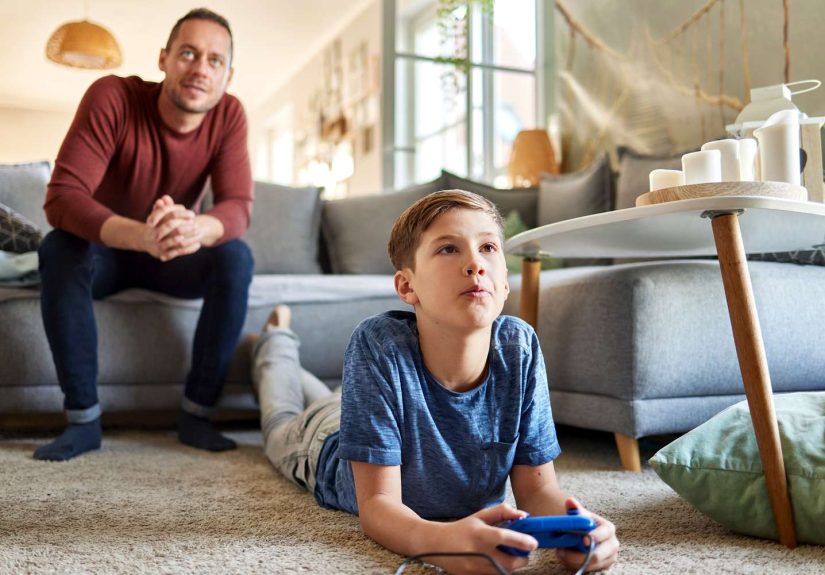
For a younger child, the first noticeable change is usually the pace of play. When content is limited to Minimal and chat is turned off or kept very tight, the experience becomes much more game-focused. Parents often describe this phase as calmer. The child is there to build, race, collect pets, or complete obstacle courses, not to wander into strange social situations. This is often when co-playing works best. A parent might sit nearby, ask what the game is about, and learn enough to understand whether the child is enjoying the platform in a healthy way.
Families with older kids often notice something different: better conversations. Once a child knows that connections can be reviewed and spending has a limit, they start to understand that digital choices are real choices. A ten- or eleven-year-old may begin asking before adding someone, or explain why a certain game is popular. Those conversations are gold. They turn Roblox from a sealed digital box into something parents can understand and supervise without hovering every second.
Another common experience involves spending. Before limits are set, purchases can feel random and emotionally urgent. After limits are added, the tone changes. Kids start planning. They compare whether an item is worth it. They think in terms of “this month’s budget” instead of “I want it now because the hat is shiny.” That shift is surprisingly useful because it teaches self-control in a space children actually care about.
Screen time controls also change household dynamics more than many parents expect. Without limits, every session can become a negotiation. With a daily cap, the app becomes the bad guy, and frankly, that is one of technology’s finest moments. Kids may still complain, but the rule feels more consistent. Over time, families often report fewer battles because the expectation is clear.
Teens are a little different. They usually do not want heavy-handed control, and honestly, that makes sense. What tends to work better is linked insight plus open discussion. Many parents find that teens respond well when the message is, “I’m here to help you stay safe, not spy on every click.” When that trust is present, teens are more likely to mention harassment, scams, uncomfortable chats, or social drama before it turns into a bigger problem.
In short, the lived experience of Roblox safety is rarely about one perfect setting. It is about combining the tools with steady parenting. The result is not flawless peace and quiet because children are still children and games are still games. But it is a much safer, more manageable version of play, and that is a win worth taking.