Table of Contents >> Show >> Hide
- What Is Shape-Shifting Fabric?
- How Can One Fabric Keep You Warm and Cool?
- Why Smart Thermal Textiles Matter
- Real-World Examples of Shape-Shifting and Adaptive Fabric
- Possible Uses for Shape-Shifting Fabric
- The Challenges Before It Reaches Your Closet
- Will Shape-Shifting Fabric Replace Regular Clothes?
- What This Could Mean for the Future of Fashion
- Personal Experiences and Everyday Scenarios: Living With Weather That Cannot Make Up Its Mind
- Conclusion
Imagine opening your closet and finding one jacket that behaves like a cozy sweater on a frosty morning, then quietly transforms into a breathable cooling layer when the afternoon turns into a sidewalk griddle. No frantic outfit change. No “why did I wear this?” regret. No carrying three layers like a confused hiking backpack with arms.
That is the promise behind shape-shifting fabric, a new generation of smart textiles designed to adapt to heat, cold, humidity, sweat, sunlight, and even body movement. Instead of simply trapping warmth like wool or letting air pass through like mesh, these advanced fabrics can change their structure, manage infrared radiation, respond to moisture, or adjust insulation depending on what your body and environment are doing.
The idea sounds like science fiction, but it is built on real materials science. Researchers have already developed adaptive textiles that open or close microscopic pathways, reversible fabrics that warm on one side and cool on the other, programmable fibers that contract with temperature changes, and radiative cooling textiles that help release body heat more efficiently. In plain English: your future hoodie might be smarter than your thermostat. Let’s hope it doesn’t become judgmental.
What Is Shape-Shifting Fabric?
Shape-shifting fabric is a type of smart textile that changes its physical behavior in response to conditions such as temperature, moisture, light, or electrical signals. The change may be visible, like a fiber contracting or expanding, or nearly invisible, like microscopic pores shifting to control heat flow.
Traditional clothing is mostly passive. A cotton T-shirt absorbs moisture. A down jacket traps air. A rain shell blocks wind and water. These are useful, but they do not truly “decide” what to do. Shape-shifting fabric is different because it can respond dynamically. When your body gets warm and humid, the textile may become more breathable or allow more infrared heat to escape. When the air becomes cool and dry, it may tighten, insulate, or reduce heat loss.
The keyword here is adaptive. Instead of forcing the wearer to constantly add or remove layers, adaptive fabric tries to keep the microclimate near the skin more comfortable. That tiny zone between your body and clothing is where comfort is won or lost. When it becomes too hot, sweaty, or clammy, you feel miserable. When it loses too much warmth, you start reaching for another layer.
How Can One Fabric Keep You Warm and Cool?
The human body constantly releases heat. Some of it escapes through conduction, convection, sweat evaporation, and infrared radiation. Most everyday fabrics focus on air and moisture, but advanced thermal textiles also manage infrared radiation, which is the heat your body naturally emits.
1. Moisture-Responsive Fibers
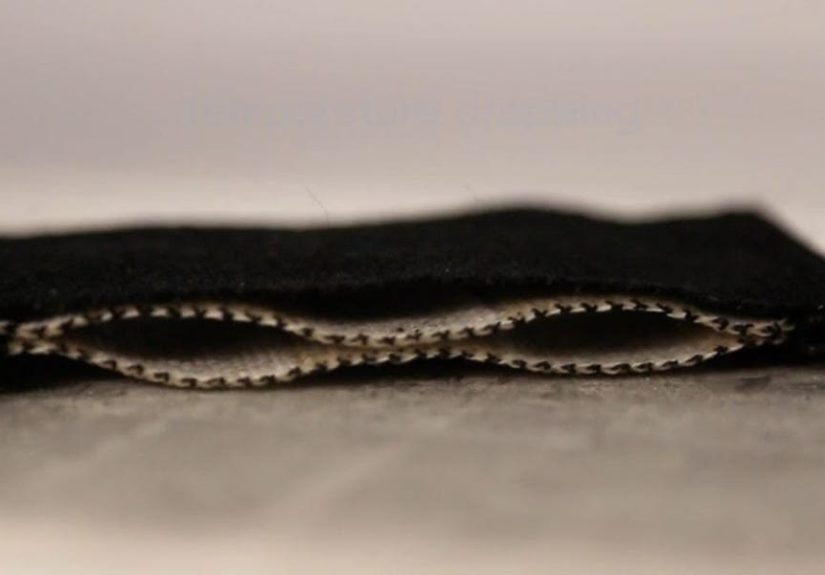
One breakthrough approach uses fibers that react to humidity. When the wearer sweats, moisture causes the yarn structure to change. In warmer, more humid conditions, the fabric allows more heat to pass through. In cooler, drier conditions, it limits heat loss and behaves more like insulation.
This is clever because sweat is basically the body’s “I am overheating” notification. Instead of waiting for you to unzip a jacket or complain dramatically to everyone nearby, the fabric responds directly to the moisture near your skin.
2. Infrared Heat Control
Some researchers are engineering textiles that act like tiny gates for infrared radiation. When the fabric lets infrared radiation escape, the wearer feels cooler. When it blocks or reflects infrared radiation back toward the body, the wearer stays warmer.
This is similar to how a space blanket reflects body heat, except the goal is to make the effect wearable, breathable, washable, and not quite so “lost camper wrapped in aluminum foil.”
3. Reversible Warm-Cool Materials
Another promising design is reversible fabric. One side is optimized for cooling, while the other is optimized for warming. Flip the material one way, and it helps release heat. Flip it the other way, and it helps retain warmth. This could be useful for jackets, blankets, sleeping bags, outdoor gear, and travel clothing.
Think of it as the textile version of a reversible belt, except instead of switching between brown and black leather, you are switching between “office too cold” and “parking lot too hot.”
4. Programmable Shape-Changing Fibers
New fibers can also be designed to physically contract or relax when exposed to temperature changes. These fibers can be woven, knitted, or embroidered into fabric structures. If scaled successfully, they could help garments change fit, thickness, ventilation, or insulation without bulky electronics.
This matters because comfort is not just about temperature. It is also about how clothing moves, stretches, breathes, and feels against the body. A smart fabric that keeps you cool but feels like wearing a plastic grocery bag is not exactly a fashion revolution. It is a punishment with sleeves.
Why Smart Thermal Textiles Matter
Temperature-adaptive clothing is not only about personal comfort. It could also help reduce energy use. Buildings consume large amounts of energy for heating and cooling, and much of that energy is spent making entire rooms comfortable even when only a few people are inside. If clothing can keep individuals comfortable across a wider temperature range, people may rely less on aggressive air conditioning or heating.
For example, an office might not need to be cooled to sweater-weather levels in summer if workers are wearing breathable, heat-releasing textiles. Likewise, a home might not need to be heated as intensely in winter if indoor clothing is better at retaining warmth. Personal thermal management could become a practical partner to smarter buildings and more efficient HVAC systems.
There is also a growing need for cooling fabrics as heat waves become more frequent and intense in many regions. Urban areas are especially challenging because pavement, concrete, glass, and building surfaces absorb and radiate heat. New radiative cooling textiles are being studied for their ability to reflect sunlight and release heat, making them potentially useful for clothing, shade structures, tents, car interiors, and even building materials.
Real-World Examples of Shape-Shifting and Adaptive Fabric
Adaptive Fabric That Reacts to Sweat
One of the best-known examples comes from researchers who created a textile that changes how much heat passes through it depending on temperature and humidity. The fabric uses specially engineered yarns that react when conditions become warm and moist. As the yarn changes, it adjusts the way infrared heat escapes from the body.
This is especially interesting because it does not require batteries, buttons, sensors, or an app that asks for location permissions for no good reason. The fabric’s response is built into the material itself.
MIT’s Shape-Shifting Fiber Concept
MIT researchers have developed programmable fibers that can change shape in response to temperature. These fibers are designed to be compatible with familiar textile methods such as weaving, knitting, and embroidery. That compatibility is important because a miracle fiber is less useful if manufacturers need to reinvent every machine in the textile industry just to make a scarf.
In the future, this kind of fiber could help create garments that adjust ventilation, fit, or insulation automatically. A running shirt might loosen and breathe more during exercise, then return to a warmer structure during cool-down. A winter base layer might adapt to changing body heat during skiing, commuting, or walking the dog, who somehow needs to sniff the same bush for eight minutes.
Reversible Textiles for Heating and Cooling
Stanford researchers have explored reversible textiles that can either warm or cool the wearer depending on which side faces outward. This type of design works by using layers with different thermal-radiation properties. Instead of requiring active power, the fabric’s structure manages heat passively.
The appeal is obvious: one garment could serve multiple conditions. Travelers, hikers, athletes, emergency workers, and anyone living in a climate with dramatic morning-to-afternoon temperature swings could benefit from clothing that adapts without adding weight.
Radiative Cooling Fabric for Urban Heat
Other teams are developing cooling textiles that reflect sunlight while helping body heat escape. Some designs are intended to work not only under direct sunlight but also in cities where hot pavement and buildings radiate heat from multiple directions. That is a major step because real-world heat is messy. It does not politely arrive from one angle like a studio lamp.
For people walking, working, or commuting in hot urban environments, cooling textiles could become a practical layer of protection. They would not replace shade, hydration, or heat-safety planning, but they could help reduce heat stress and improve comfort.
Possible Uses for Shape-Shifting Fabric
Everyday Clothing
The most obvious use is daily apparel: shirts, hoodies, jackets, socks, hats, and base layers that adjust as you move between indoor and outdoor environments. Anyone who has gone from a freezing grocery store to a blazing parking lot knows why this matters.
Sportswear and Outdoor Gear
Athletes generate heat quickly, then cool down just as quickly after stopping. Adaptive fabric could help manage that transition. Cyclists, runners, hikers, skiers, and climbers could benefit from clothing that breathes during high activity and insulates during rest.
Workwear and Protective Clothing
Construction workers, delivery drivers, farm workers, utility crews, warehouse employees, and emergency responders often face tough temperature conditions. Smart textiles could make protective clothing more comfortable without sacrificing safety.
Medical and Senior Care
Temperature regulation can be especially important for older adults, patients recovering from illness, and people with limited mobility. Adaptive bedding, hospital gowns, socks, and blankets could help maintain comfort while reducing the need for constant manual adjustments.
Military and Space Applications
Advanced thermal textiles are also attractive for defense and space environments, where weight, durability, and temperature control are critical. A lighter adaptive garment could reduce the need for bulky layers and help support performance in extreme conditions.
The Challenges Before It Reaches Your Closet
As exciting as shape-shifting fabric sounds, several hurdles remain. First, it must be durable. Clothing is stretched, washed, dried, folded, sweated in, rained on, and occasionally abandoned in a gym bag where biology begins asking philosophical questions. A smart textile must survive real life.
Second, it must be comfortable. If the material is stiff, noisy, scratchy, or not breathable, consumers will reject it. People may admire futuristic fabric in a lab video, but they still want a shirt that feels good during a normal Tuesday.
Third, it must be affordable. Many advanced materials begin as expensive prototypes. To become mainstream, shape-shifting fabric must be made with scalable manufacturing methods and compatible textile processes.
Fourth, it must be safe and sustainable. Researchers and manufacturers need to consider chemical stability, skin contact, recycling, microfiber shedding, and the environmental impact of coatings or nanomaterials. A fabric that saves energy but creates a disposal problem is not a complete win.
Will Shape-Shifting Fabric Replace Regular Clothes?
Not entirely. Cotton, wool, polyester, nylon, and other conventional textiles are not going away. They are inexpensive, familiar, and useful. The future is more likely to be hybrid: traditional fibers combined with smart structures, responsive coatings, infrared-control layers, or programmable yarns.
Your future wardrobe may include a regular cotton T-shirt, a merino sweater, and one or two adaptive garments designed for travel, commuting, workouts, or extreme weather. The smartest clothing will probably be invisible in daily use. You will not think, “Wow, my textile is dynamically regulating thermal radiation.” You will think, “Huh, I’m actually comfortable.” That is the real victory.
What This Could Mean for the Future of Fashion
Fashion has always balanced beauty, function, identity, and comfort. Shape-shifting fabric adds a new ingredient: behavior. Clothing could become less like a static object and more like a responsive system.
Designers may create jackets that subtly open ventilation zones, dresses that change drape with temperature, sportswear that adapts to sweat, or uniforms that protect workers from heat without adding bulk. Outdoor brands may develop lighter all-season layers. Furniture companies may use adaptive textiles in chairs, mattresses, and blankets. Architects may even use fabric-like materials for shading systems and building skins.
The most exciting part is not that fabric can “shape-shift” in a dramatic superhero-costume way. It is that small, quiet changes at the fiber level can make everyday life more comfortable. Sometimes the future does not arrive as a flying car. Sometimes it arrives as a hoodie that stops betraying you in weird weather.
Personal Experiences and Everyday Scenarios: Living With Weather That Cannot Make Up Its Mind
Anyone who has dressed for a chilly morning and regretted it by lunch already understands why shape-shifting fabric is exciting. Picture a typical spring day. You leave home at 7 a.m. wearing a jacket because the air feels crisp. By 1 p.m., the sun is blazing, the sidewalk is radiating heat, and your jacket has become a portable sauna with pockets. By evening, the temperature drops again, and now you are grateful for the same jacket you were quietly insulting a few hours earlier.
This is where adaptive fabric could feel less like a luxury and more like common sense. A commuter could wear one lightweight layer on the train, during a walk to work, inside an air-conditioned office, and back outside again without constantly changing clothes. Students could move from a cold classroom to a sunny sports field without feeling overdressed or underprepared. Travelers could pack less because one garment might handle multiple climates.
Outdoor experiences make the case even stronger. On a hike, your body heats up during the climb, especially when carrying a backpack. Then, the moment you stop for water or reach a windy overlook, sweat cools quickly and you may feel chilled. Traditional layering helps, but it requires constant adjustment. Remove the jacket. Put it back on. Open the zipper. Close the zipper. Repeat until you feel like a low-budget weather station. A fabric that automatically releases heat during exertion and holds warmth during rest could make outdoor activity more comfortable and safer.
Sports are another perfect example. Runners often start cold, become hot within minutes, and then cool rapidly after stopping. Cyclists deal with wind, sweat, sun, and shade in fast-changing combinations. A smart textile that reacts to moisture and temperature could help smooth out those comfort swings. It would not turn a beginner into an Olympic athlete, but it might reduce the “why am I boiling and freezing at the same time?” problem familiar to many active people.
There are also everyday indoor battles. Offices, malls, classrooms, airports, and restaurants often seem controlled by thermostats with emotional issues. One person is sweating, another is shivering, and someone is guarding the thermostat like a dragon protecting treasure. Shape-shifting fabric could reduce those conflicts by giving each person a wider personal comfort zone. Instead of forcing the whole room to match one setting, clothing could help individuals adapt.
For families, adaptive textiles could be useful in blankets, pajamas, baby clothing, and bedding. Parents know that children can kick off blankets, overheat in heavy pajamas, or complain that they are cold exactly three minutes after refusing a sweater. A breathable, temperature-responsive fabric would not solve every household drama, but it could make comfort easier to manage.
The same goes for older adults, who may be more sensitive to temperature changes. A lightweight shawl, cardigan, or blanket that helps regulate warmth without feeling heavy could improve daily comfort. In hospitals or care settings, adaptive bedding might help patients stay comfortable while reducing the need for frequent blanket changes.
Of course, real-world use will decide whether shape-shifting fabric becomes a breakthrough or just another “future of clothing” headline. People will ask practical questions: Can I wash it? Does it stretch? Does it smell after a workout? Does it survive a dryer? Is it affordable? Does it look normal, or will I appear to be dressed for a moon mission? These questions matter because clothing succeeds only when science meets daily habits.
Still, the potential is enormous. Shape-shifting fabric could make clothing more responsive, reduce energy waste, improve outdoor comfort, and help people handle unpredictable weather with fewer layers and fewer complaints. The best version of this technology will not demand attention. It will simply make the wearer feel comfortable in more places, more often. And honestly, if a fabric can keep us from arguing with the thermostat, that alone deserves a standing ovation.
Conclusion
Shape-shifting fabric could change the way we think about clothing. Instead of choosing between warm or cool, future garments may adapt to both. By responding to humidity, temperature, body heat, and infrared radiation, smart textiles could help people stay comfortable in changing weather while also reducing reliance on heating and cooling systems.
The technology is still developing, and challenges such as durability, comfort, cost, washability, and sustainability must be solved before these fabrics become common in everyday wardrobes. But the direction is clear: clothing is becoming more intelligent, more responsive, and more personal.
One day, the most useful item in your closet may not be the thickest coat or the lightest shirt. It may be a shape-shifting fabric that quietly understands when you need warmth, when you need cooling, and when you simply need your outfit to stop making the weather worse.